Clallam County · WA
Tree Service in Clallam County, WA
Sequim and Forks sit in the same county about two hours apart, and one of them is a rain shadow while the other is temperate rainforest. Nearly every decision about trees in Clallam County traces back to that split.
- Based in Kelso, WA
- Planned & larger-scope work
- Licensed & Insured
The Olympic Mountains wring most of the weather out of the westerlies before it reaches the north side of the peninsula, which packs an extreme rainfall gradient into a single county. Species mix, growth rate, decay pressure and failure mode all shift as you drive across it.
Two Climates, One County
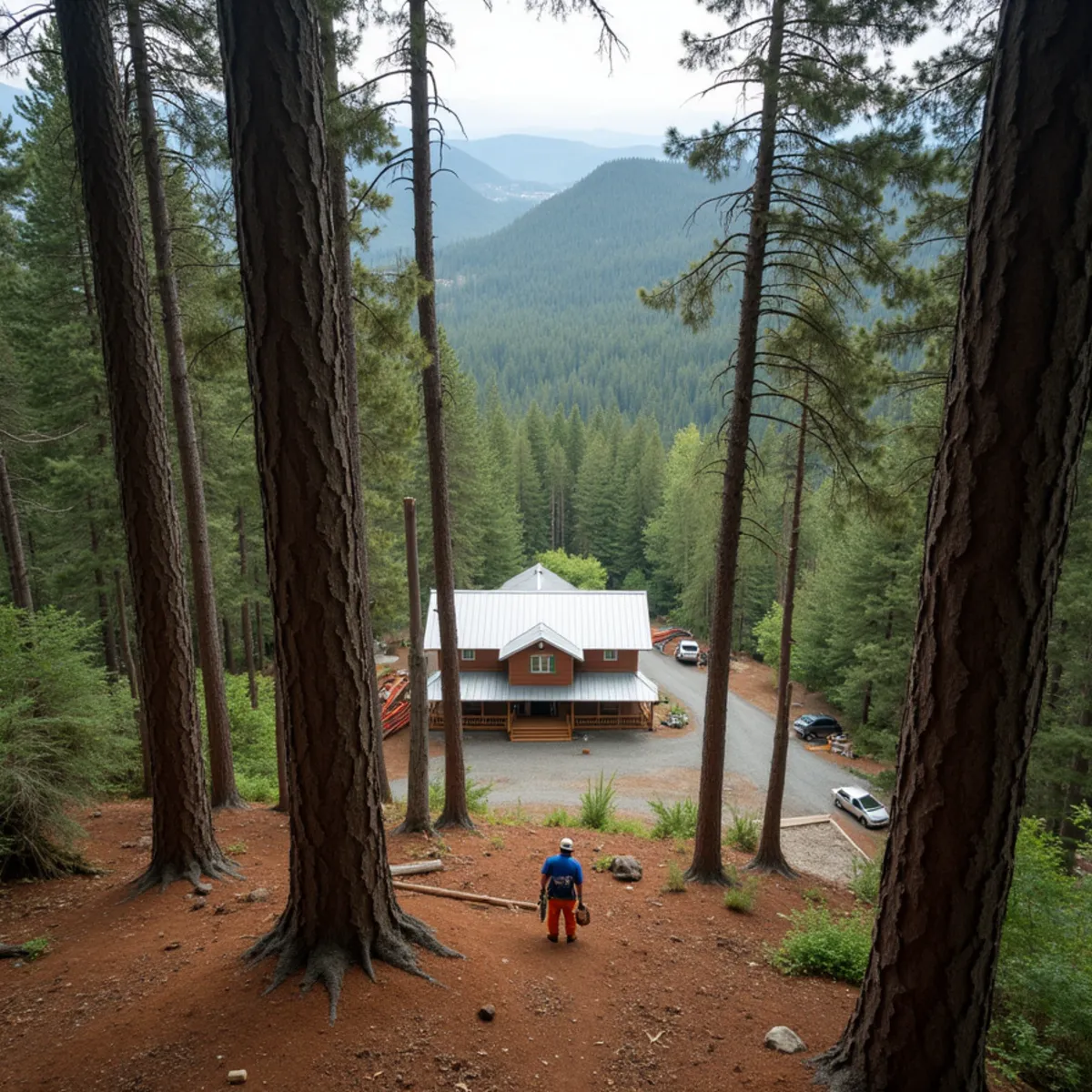
West of the divide — Forks, Beaver, La Push and the river valleys behind them — Sitka spruce, western hemlock and western redcedar grow fast and tall on ground that stays wet most of the year. Bigleaf maples out there carry enough moss, fern and accumulated duff on their limbs to change how those limbs behave in wind. Decay works quickly in that climate, and a wound that would sit dormant for years elsewhere gets colonized.
East of it, the Dungeness Valley and Sequim are dry enough that Douglas fir grows slower and tighter, Pacific madrone holds the bluff edges, and there are small pockets of Garry oak that have no business being that far north. Port Angeles sits between the two and gets a little of each. A pruning approach that works in Sequim is wrong in Forks, and vice versa.
Salt Wind and What the Strait Does to a Crown
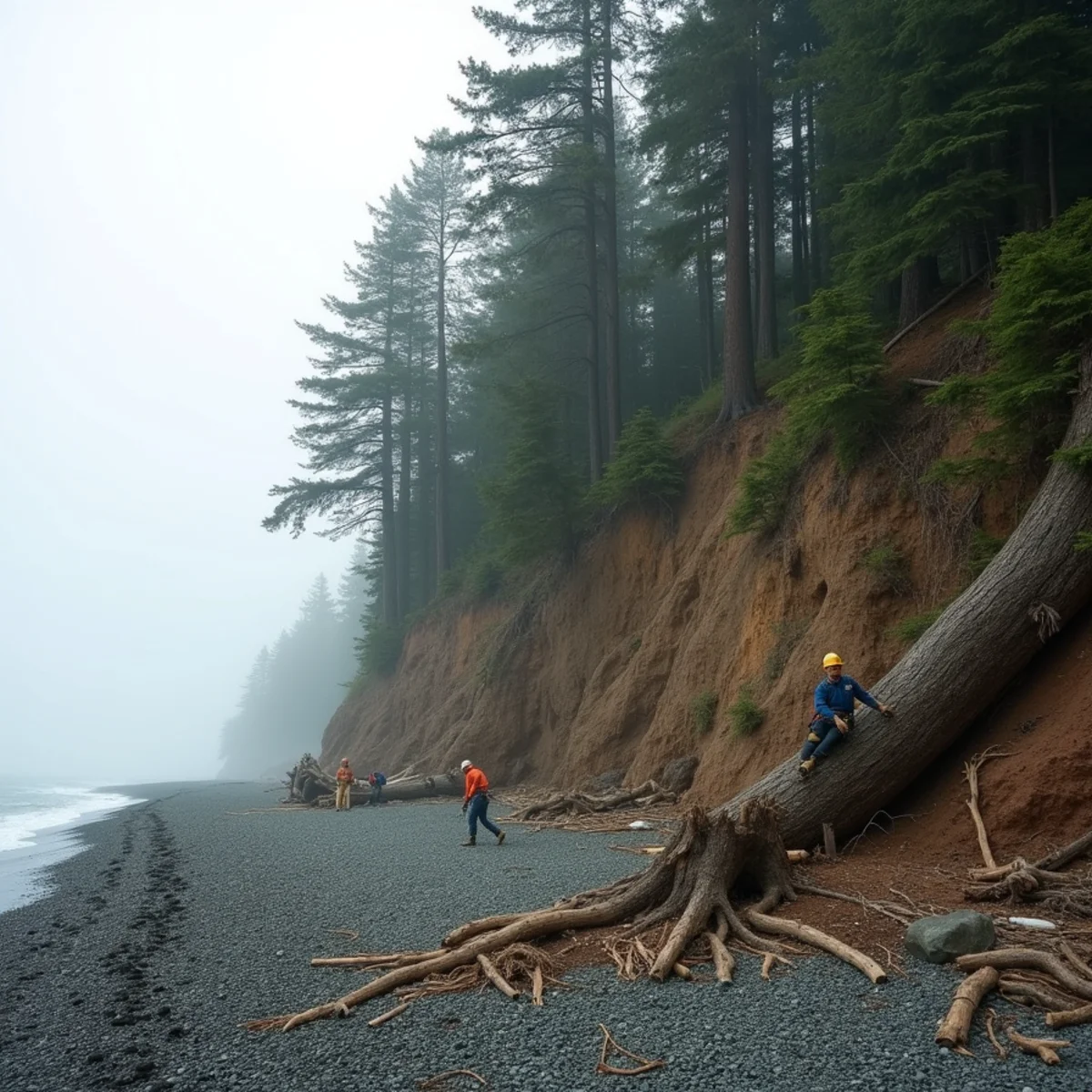
Along the Strait of Juan de Fuca, wind is a design condition rather than an event. Trees on exposed ground at Joyce, Clallam Bay, Sekiu and Neah Bay grow flagged crowns, sheared back on the windward side, with root plates that develop to match a prevailing direction. The gales that cause the real damage are often the ones that swing around to the northeast, because that is the loading those trees never adapted to.
The bluffs move too. Marine feeder bluffs erode by design — that is what keeps Dungeness Spit and the beaches supplied with sediment. A tree that stood well back from an edge does not stay well back. Within a few tree lengths of a bluff, the honest assessment question is not only the condition of the tree but the condition of the ground holding it.
Root Rot Is the Quiet Failure Here
Laminated root rot moves through Douglas fir on the peninsula without announcing itself. The crown thins a little, the tree keeps standing, and then it goes over in an ordinary wind with a root plate that looks like it was barely attached. It spreads root to root, so it shows up in groups rather than singles. One unexplained failure in a stand is a reason to look hard at everything around it, not to call it bad luck.
Red alder is the other slow inevitability. It colonizes every disturbance on this coast, grows fast, and is short-lived by conifer standards. A great deal of the alder now standing over driveways, shops and fence lines on the west end is simply at the end of its natural run, and it tends to fail in wind while it is still fully leafed.
Towns and Areas Across Clallam County
Conditions change quickly between the Dungeness Valley, the Port Angeles waterfront and the west end. Pick your area below for what applies there.
Cities & Communities We Cover in Clallam County
What We Take On in Clallam County
Have a larger job in Clallam County?
Clallam County Questions
Tree Care Reading
Guides Worth a Look
Free On-Site Estimates
Planning larger tree work in Clallam County?
Call and describe the scope. We are based in Kelso — if a closer company serves you better, we will tell you.
- 34 Google reviews
- Licensed & Insured
- Free On-Site Estimates
- Based in Kelso, WA