Stump Grinding Cost Kelso WA: How Deep, What Fills the Hole, and When You Can Replant
The call comes in July, usually from someone who had a tree out in February. The stump was ground, the grindings raked flat, grass seed went down, and by midsummer there is a shallow bathtub-shaped depression — green around the rim, bare in the middle, sitting below the rest of the lawn.
Nothing went wrong. That is what a ground stump does. Grinding turns solid wood into chips, chips hold air, the air leaves over the following year, and the roots below the grind line rot on their own schedule.
How Deep Does Stump Grinding Actually Go?
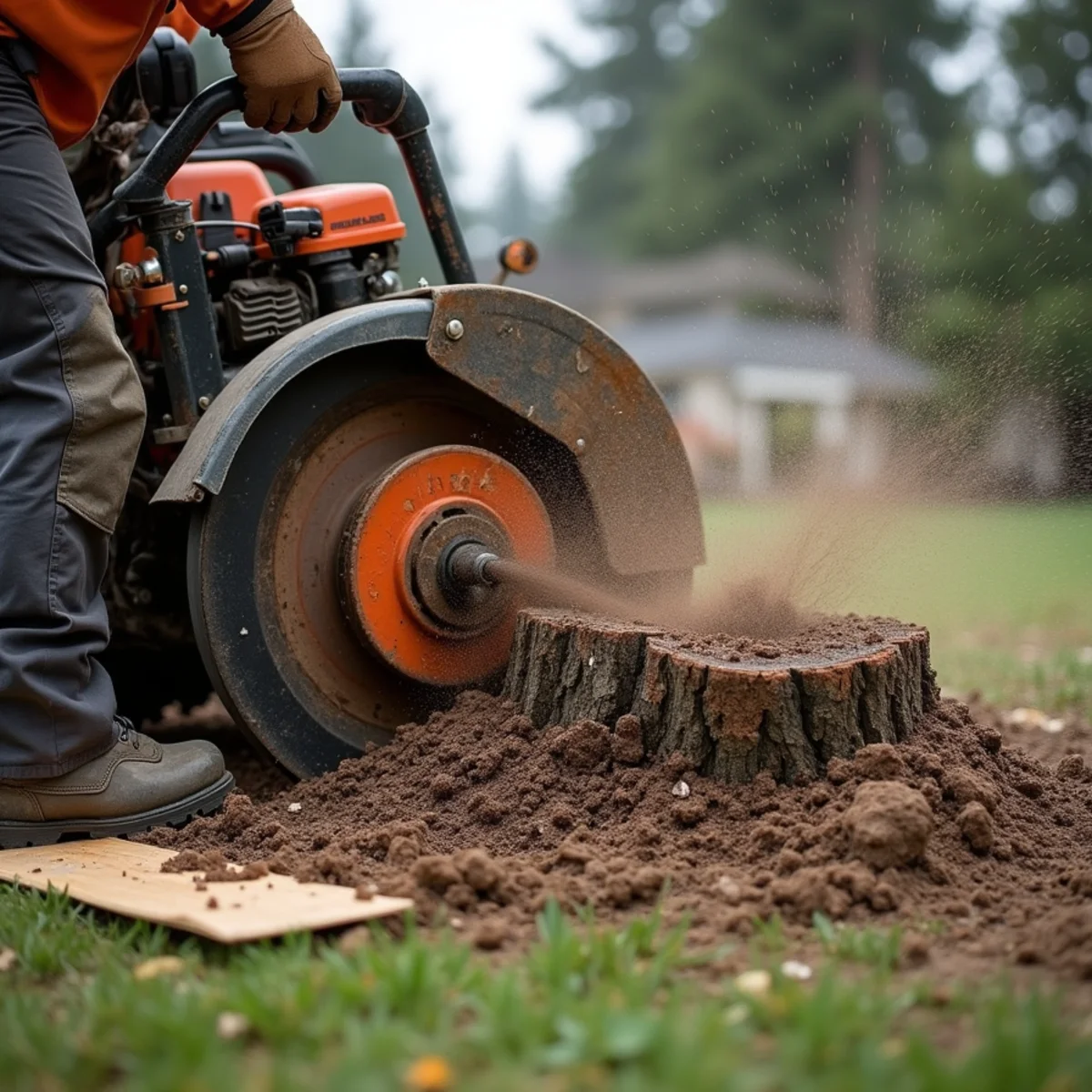
There is no single answer, and anyone who gives you one without asking a question first is guessing. A grinder is a wheel of carbide teeth that takes the stump down in passes, and how far we go is a decision about what that ground becomes next. Deeper always costs more — more passes, more tooth wear, more grindings.
- Lawn — the shallowest useful grind, well clear of a mower blade with room left for topsoil.
- Beds and shrubs — deeper, so plants sit in workable soil instead of on a shelf of buried wood.
- A replacement tree — the deepest and widest grind we do, and still not a complete answer.
- Anything structural, like a post or a slab — grinding is the wrong tool at any depth.
Width matters as much as depth. A stump is not a cylinder — it flares at the base and structural roots run outward like spokes, often an inch or two under the sod. Grind only the visible stump and those roots telegraph through a lawn for years. Chasing them outward is where the extra time goes, which is why stump grinding and removal is priced on the widest point of the flare, not the stump you see.
The Chip Pile Is Bigger Than You Expect
Shredded wood takes up far more room than the same wood did as a stump. Grinding is a fluffing operation: a stump that looked like a coffee table on its side becomes a mound that will not fit back in the hole it came from. Three choices, and we ask before the machine starts.
- Leave the mound on site. Cheapest, fine on a back corner of a rural property.
- Mix the grindings with imported topsoil and grade flat. Sensible for lawns — grindings alone are not soil.
- Haul everything off and backfill with clean topsoil. Most cost, and the only route to a predictable grade.
Settling, Backfill and the Bathtub Effect
The first wet winter does most of the settling, and it continues for years as the roots below the grind line break down. You cannot compact your way out of it, but you can get ahead of it.
- Pull the excess grindings out instead of shoving them all back in.
- Backfill with soil. If chips go back, keep them a minority of the mix.
- Finish slightly proud of the surrounding grade rather than level with it.
- Water it in and walk on it before you seed, so the voids collapse now.
- Plan on one wheelbarrow of topsoil next spring rather than resenting it.
Decomposing wood also pulls nitrogen out of the soil around it. Seed sown into a chip-heavy mix comes up thin and yellow, and the usual reaction is to blame the seed. It is the chips.
Why You Cannot Just Plant a New Tree in the Same Hole
This is the question we get most, and the answer disappoints people. Grinding removes the stump and the top of the flare. It does not remove the root system, which on a mature fir or bigleaf maple runs well past where the branches ended.
Set a young tree into decaying wood and old roots and you have handed it poor drainage through our wet months, a nitrogen deficit, and sometimes live decay fungi such as Armillaria. Better options, in the order we suggest them:
- Offset the planting a few feet into undisturbed soil. Nobody notices in ten years.
- If the spot is fixed, excavate the root mass instead of grinding and backfill with imported soil.
- Change species, especially if root disease killed the original tree.
- Wait. A season or two of decay under a cover of soil makes that ground far more hospitable.
When we quote a tree removal, we say up front whether the stump can simply be ground or whether your plan for that corner calls for excavation. The two are priced very differently.
Concrete, Posts and Anything That Has to Stay Level
If a slab, a footing or a fence post is going where the stump was, grinding is the wrong answer at any depth. Ground stumps settle, and concrete poured over grindings and rotting roots cracks and drops. Structural work needs the root mass excavated and the hole backfilled with compactable material in lifts. A post set in a ground stump hole leans within a couple of seasons — move it down the line, or dig that one hole properly.
Access, Ground Conditions and What Moves the Price
Two identical stumps can be very different jobs. Grinders come in sizes, and the small machines that fit through a standard gate work slower than the ones that do not. Measure your narrowest gate opening before you call — it is the most useful number you can hand us over the phone. On the hillside lots above Kelso, driveway grade and a soft shoulder limit us more often than gate width.
Soil matters too. Around Toutle and Castle Rock we grind in lahar deposits and volcanic ash, which cut easily but pack grit into the mix and wear teeth faster than clean loam. Much of Clark County is heavy clay that holds water and smears instead of crumbling — homeowners in Ridgefield know what that looks like in February. Where the schedule allows we push clay work toward the drier months.
Price follows flare diameter rather than stump height, how deep you need it, how many stumps, access, grit that eats teeth, and whether the grindings stay or go. A whole run of them — an old fence row, a parcel being prepped — is usually cheaper folded into lot clearing and brush removal than priced one at a time.
Decide What Goes There First
Nearly every stump grinding question answers itself once you decide what that patch of ground becomes. Lawn, bed, gravel, a new tree or a slab — each implies a different depth, a different backfill and a different number.
Ryan walks every estimate himself, so the person quoting your stump is the one who has to fit the machine through your gate. If you are tired of mowing around a stump, call Columbia Tree Professionals at (208) 635-2100 for a free on-site estimate anywhere in Cowlitz and Clark County. Licensed and insured, and straight with you about what grinding will and will not fix.