
Cowlitz County · Clark County
Crane-Assisted Tree Removal in Washington
Some trees should not be climbed and cannot be dropped. Those come out on a hook, in sections, over the top of everything you care about.
- Free On-Site Estimates
- Licensed & Insured
- 34 Google reviews
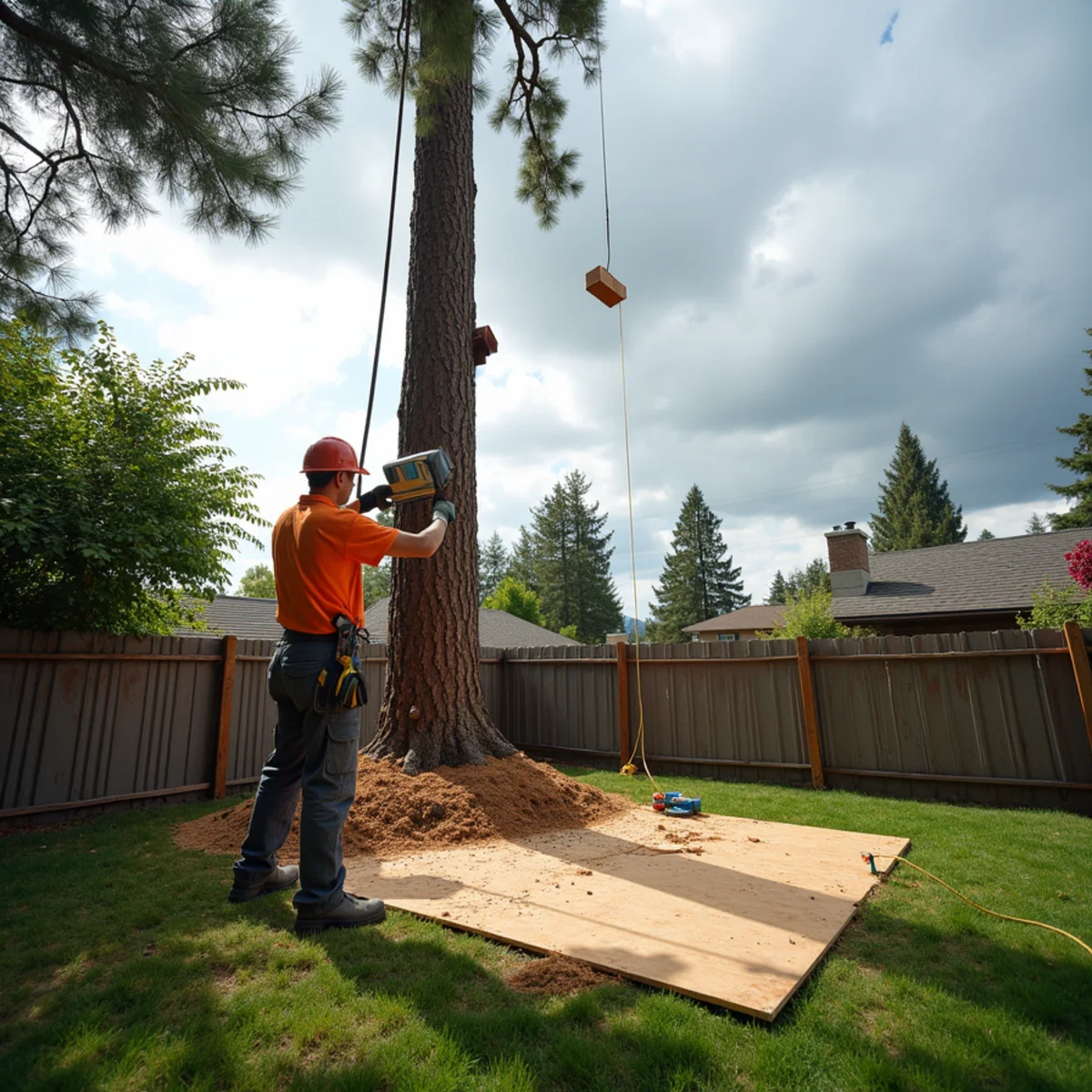
Picture a cottonwood at the back of a lot on one of the old Long-Bell blocks in Longview. Five feet through at the butt, ninety feet of it, and the only way into that backyard is a thirty-eight-inch gate between the house and the neighbor’s fence. There is nowhere to fell it. Every limb over the last thirty feet of that tree sits above a roof, a garage, or somebody else’s greenhouse. A climber can absolutely take it apart — it will just take two long days, several hundred rigged picks, and a lot of trust in wood nobody has been able to inspect from the inside.
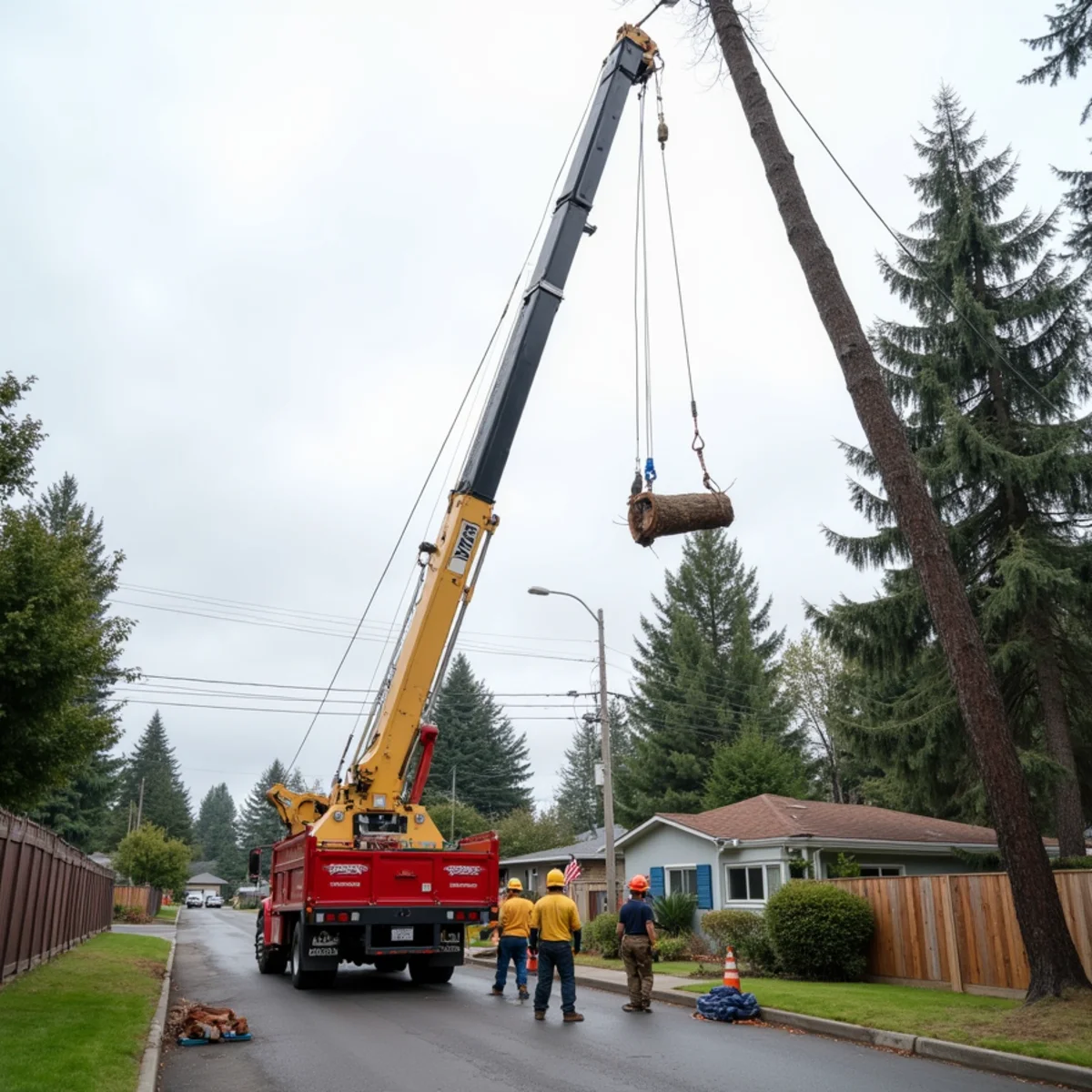
Or a crane parks in the street, the boom goes over the house, and the same tree comes out in fourteen picks before lunch. That is the whole decision in one paragraph. Crane work is not about showing up with bigger equipment. It is about changing the geometry of a job so the heavy pieces travel through the air on a wire rope instead of swinging down through the only clear lane your yard has.
When a Crane Beats a Climber
Most removals do not need one. A fir in an open field gets felled. A maple with a clean drop zone gets felled. We are not going to bring a crane to a job that does not call for it, and we will tell you plainly when it does not. Four situations genuinely change the answer.
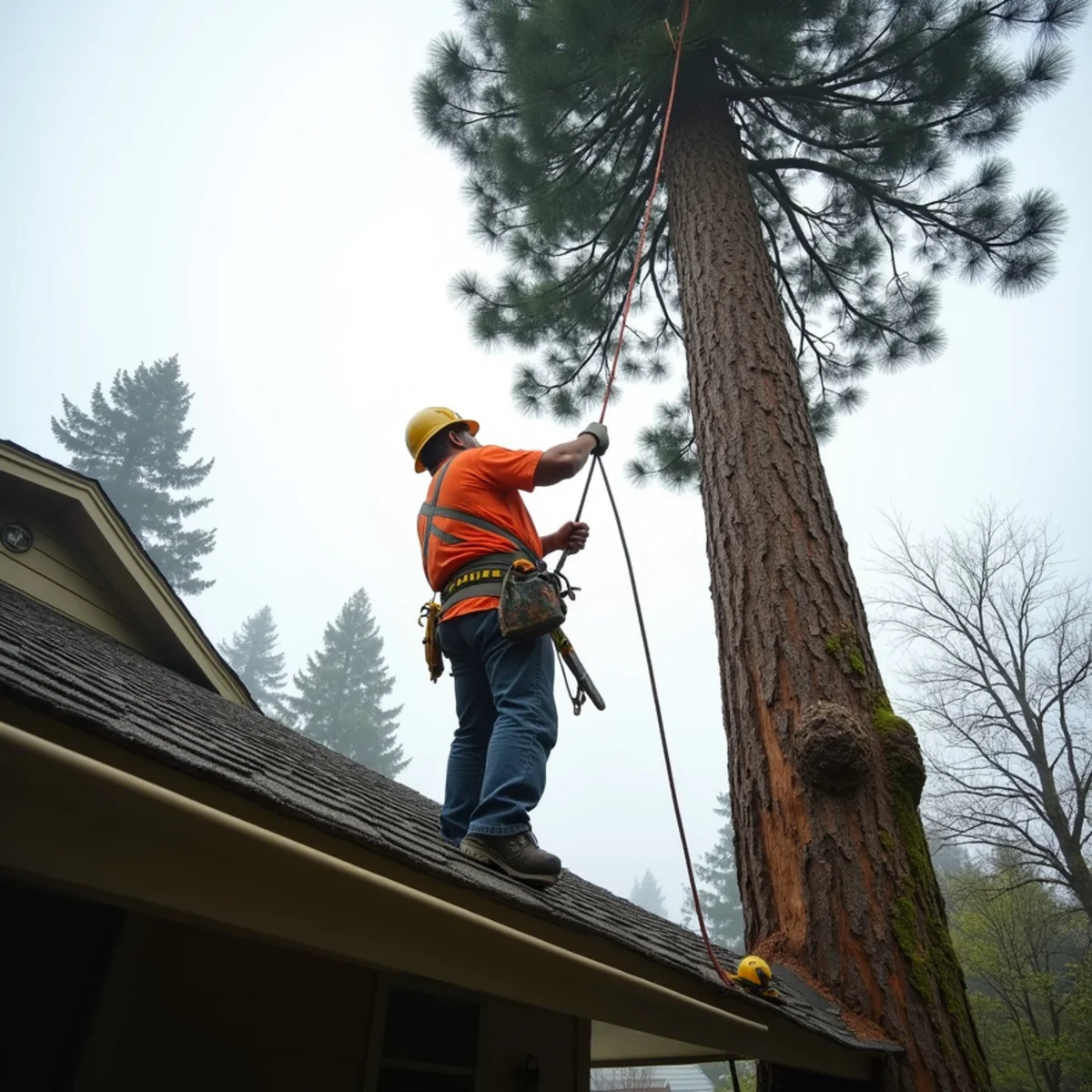
- The spar is not safe to climb. Advanced butt rot, a hollow trunk, carpenter ant galleries, a fire scar, laminated root rot working through the base — a climber has to trust that wood with his life and with every rigging point. If we cannot trust it, we do not put a person in it.
- The lot is landlocked. Fenced backyards on the Longview grid, houses built to the setback line, no alley, no side access wider than a wheelbarrow. Everything that comes down has to be carried out by hand unless it flies out.
- The tree is directly over a structure. Roofs, shops, carports, hot tubs, a neighbor’s addition eighteen inches off the property line. A crane holds the piece before the cut is finished, so nothing is ever falling — it is being carried.
- It is simply enormous. Big cottonwoods and old poplars along the Cowlitz and Columbia bottoms carry limb weights that make conventional rigging genuinely marginal. Weight is the reason, not height.
The Lift Plan Comes Before the Saw
A crane pick is arithmetic done in advance. Every crane has a load chart, and capacity drops sharply as the boom reaches further out. A piece that lifts easily at forty feet of radius may be over the limit at eighty. So before anything is scheduled we work out where the crane sets, how far it has to reach to get over your roof, and what each section of that tree weighs green.
Estimating pick weight is the part people never see. Species matters more than anything — green cottonwood and bigleaf maple are far heavier per cubic foot than a dry fir spar, and decayed wood is unpredictable in the other direction. We size the picks conservatively, then size them down again when the wood looks questionable. Smaller picks mean more of them. More picks are cheap. A boom overloaded on the second lift of the day is not.
Outriggers, Ground Bearing and Where the Machine Actually Sits
The crane is only as stable as what is under the outrigger pads, and those pads concentrate enormous force into four small patches of ground. That means we care about your septic tank and drain field, your side sewer, buried irrigation, a covered basement window well, and the difference between compacted street base and the soft fill along a curb line. We set cribbing and pads to spread the load, and if the only viable setup would sit over something that cannot take it, we say so before we book the job rather than after.
Longview’s Grid Versus Kelso’s Hillsides
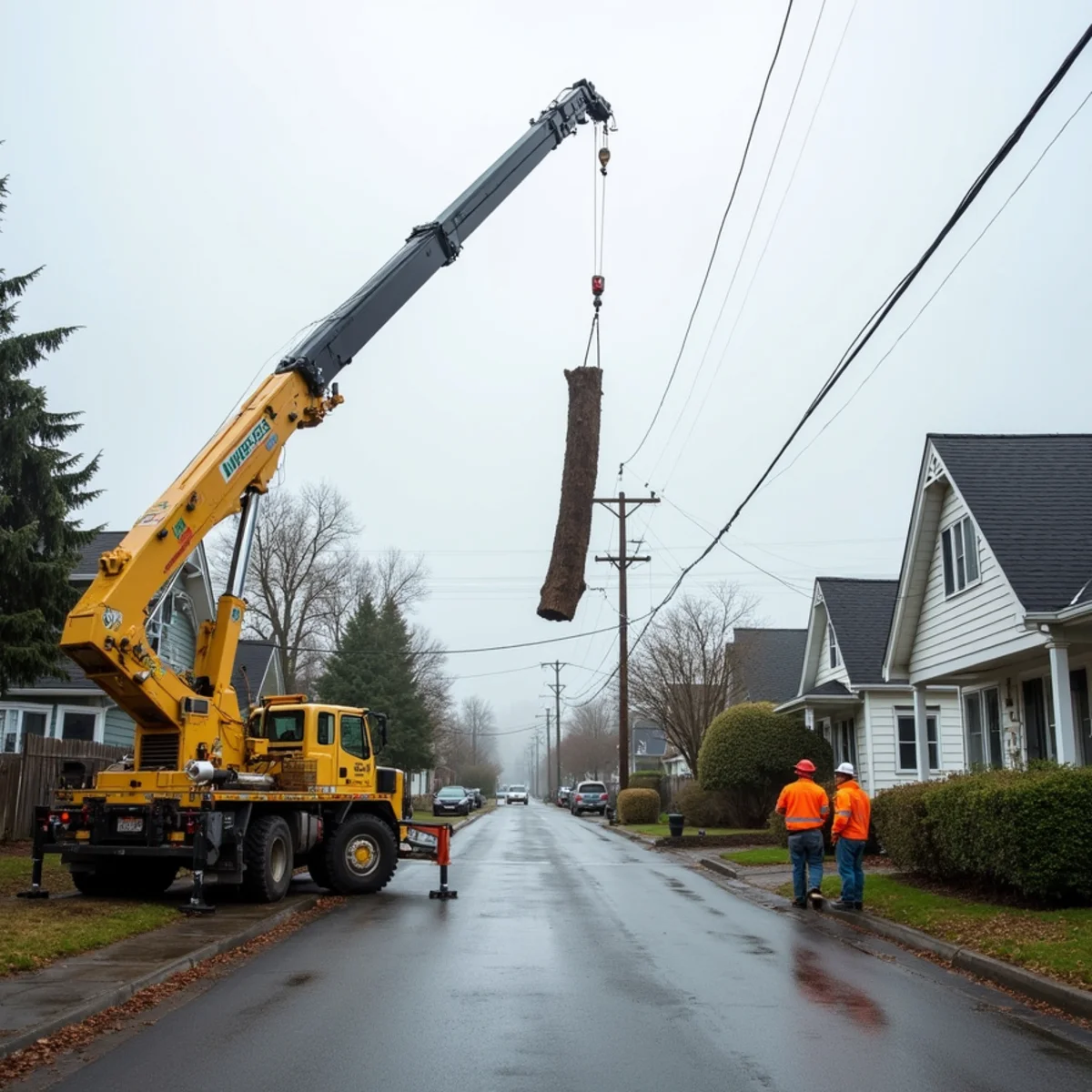
Longview was platted as a planned city, and it shows. Long-Bell laid out wide, straight streets on a regular grid with generous rights-of-way, which is close to ideal for staging a crane. We can usually set in the street, coordinate with the city on lane control where it is needed, and reach most backyards on the block without touching your lawn at all.
Kelso is a different animal. Cut-and-fill driveways climbing the hillsides above the Cowlitz, retaining walls of unknown vintage, switchbacks a chip truck barely negotiates, and streets narrow enough that setting outriggers means blocking the whole thing. Same story on the older parts of the Vancouver east side and up toward Yacolt. On those addresses the honest answer is sometimes that a crane will not fit, and we go back to a climbing and rigging plan. Ryan walks it before anyone commits to a method.
Why the Expensive Machine Often Costs You Less
Here is the part that surprises homeowners. A crane bills at a higher hourly rate than a climbing crew. It also frequently produces a lower total price, because the hours collapse. Work that would take two full days of climbing, rigging, lowering and hand-carrying can finish in a morning, and you are paying for outcomes rather than hours under the tree.
There is a second saving that never appears on a quote. Rigging a heavy limb down over a roof means the roof is exposed for the entire time that limb is moving. A crane picks it, holds it, and swings it away from the structure before it ever travels downward. Less exposure means less chance of a repair conversation with your insurer, and it is the main reason we push for a crane on trees leaning over living space.
How the Pick Goes, Start to Finish
A climber ascends and sets a choker above the intended cut, at the balance point for that section. The operator takes tension until the piece is just supported. The climber makes the cut, the section releases into the sling instead of falling, and the boom carries it out over the house to the drop zone in the street or the driveway. Nobody stands under a suspended load, ever. The ground crew works the drop zone only between picks, and the saw work happens there rather than in the air.
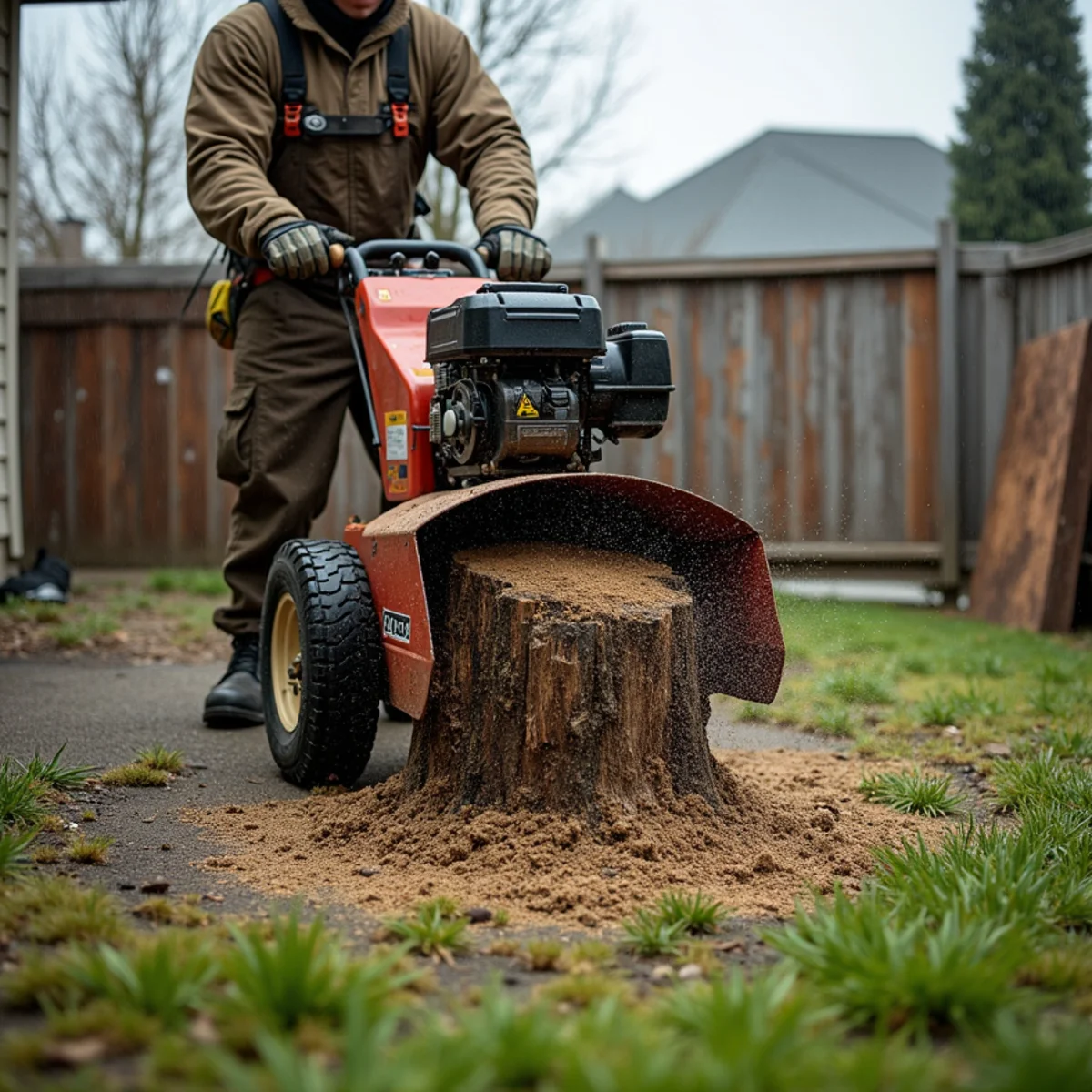
Down on the ground the tree gets processed the same way any of our removals do — brush through the chipper, wood cut to length, chips hauled off or left for your beds if you want them. The stump can be ground the same day or scheduled separately. When we pull out, the street gets swept, because the neighbors did not ask for any of this.
Signs You Need Crane-Assisted Tree Removal
How a Crane-Assisted Tree Removal Job Runs, Start to Finish
Free on-site look, with the method still open
Setup location and reach worked out
Pick weights and sequence planned
Street staging and access arranged
Setup, level and test lift
Pick, process, clean up, walk it with you
What Drives the Price of Crane-Assisted Tree Removal
Crane-Assisted Tree Removal on Real Jobs
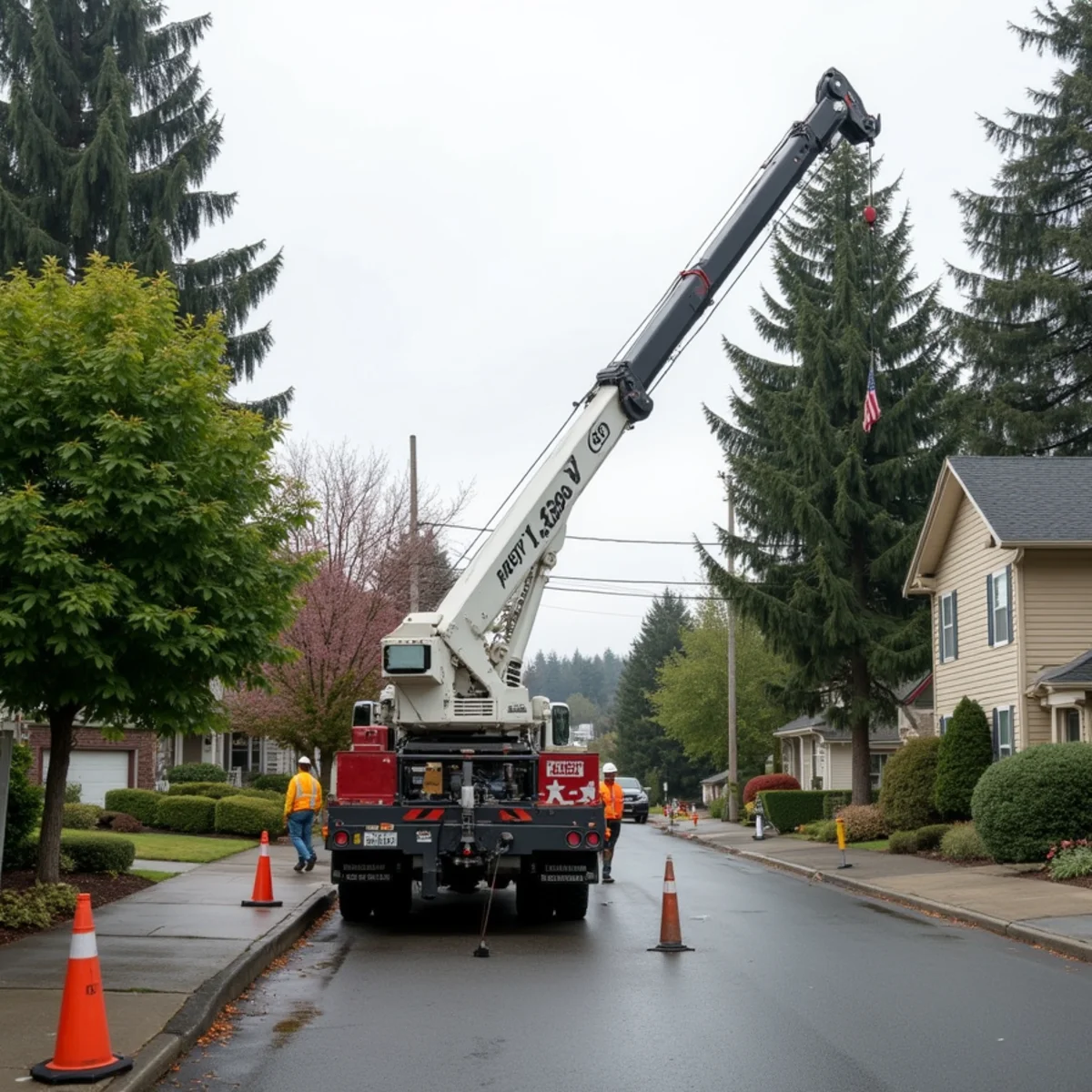
The setup footprint is half the planning. 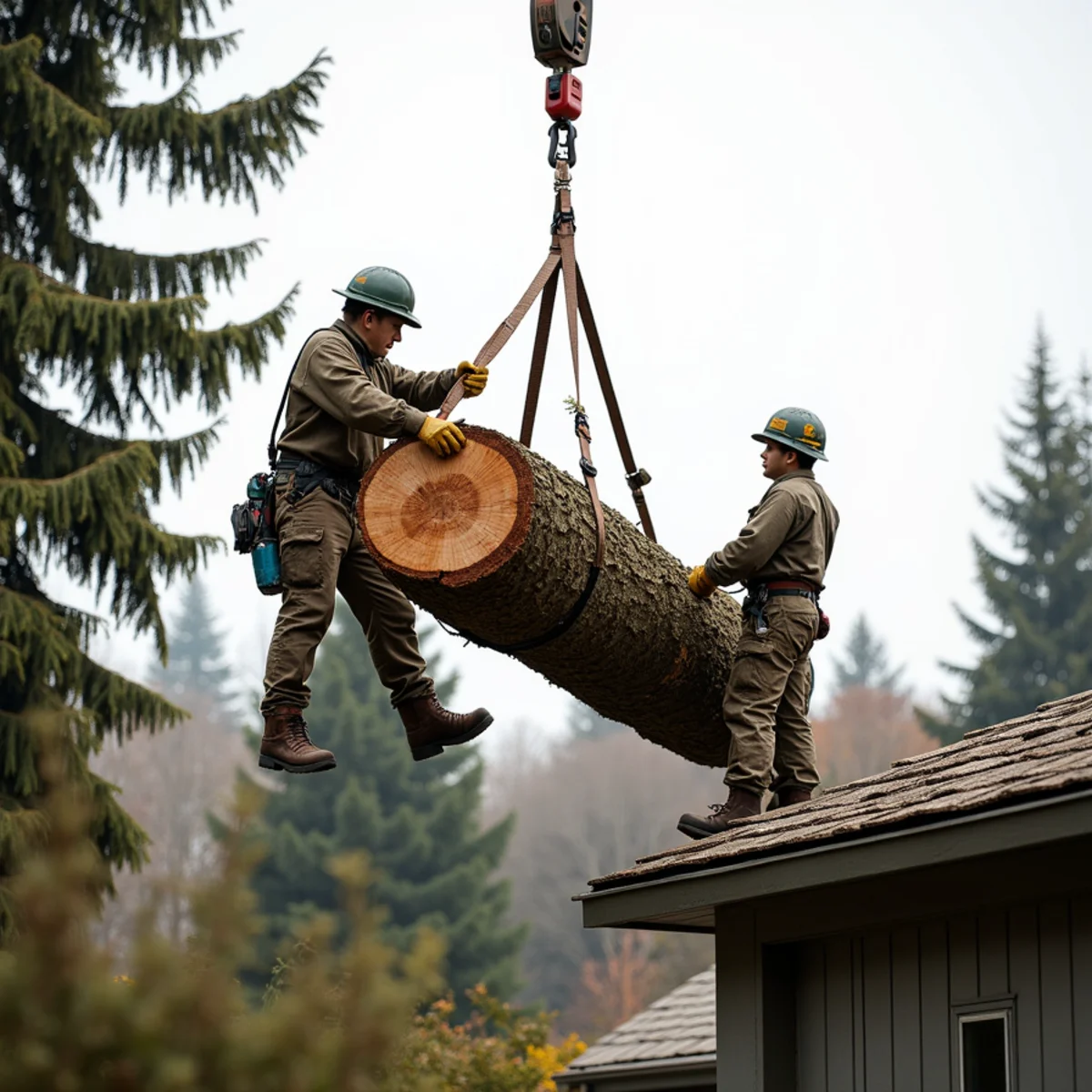
A two-day rigging job becomes a four-hour lift. 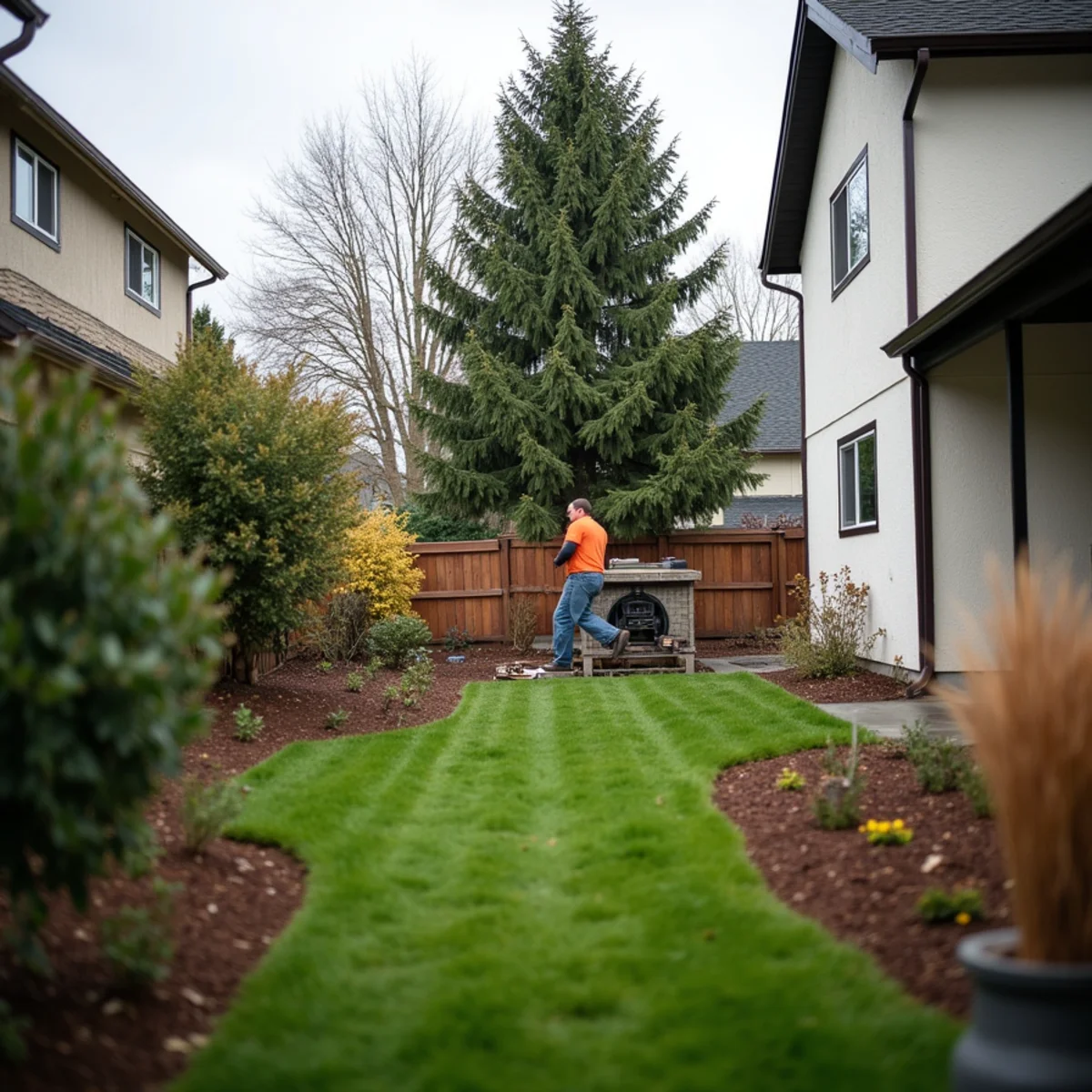
Everything underneath it exactly as we found it.
Get a written price for your crane-assisted tree removal job.
Crane-Assisted Tree Removal Questions, Answered
Often Booked Together
Related Tree Services
Worth Reading First
Before You Book This Work
Free On-Site Estimates
Need crane-assisted tree removal? Let’s take a look.
Ryan Norris walks every estimate himself. Free, on-site, and you’ll get a straight answer about whether the work is necessary at all.
- 34 Google reviews
- Licensed & Insured
- Free On-Site Estimates
- Based in Kelso, WA