
Cowlitz County · Clark County
Stump Grinding & Removal in Washington
We grind to the depth your plans require — not a stock number — then leave the spot ready for sod, soil or a new tree.
- Free On-Site Estimates
- Licensed & Insured
- 34 Google reviews
The stump is the part everybody puts off. The tree comes down, the yard opens up, and that gray disc sits in the lawn for two summers while you mow around it and eventually catch a deck blade on a root that swells a little higher every season. Then somebody wants a fence line through it, or the shed pad lands on top of it, or the ants show up. That is when the phone rings.
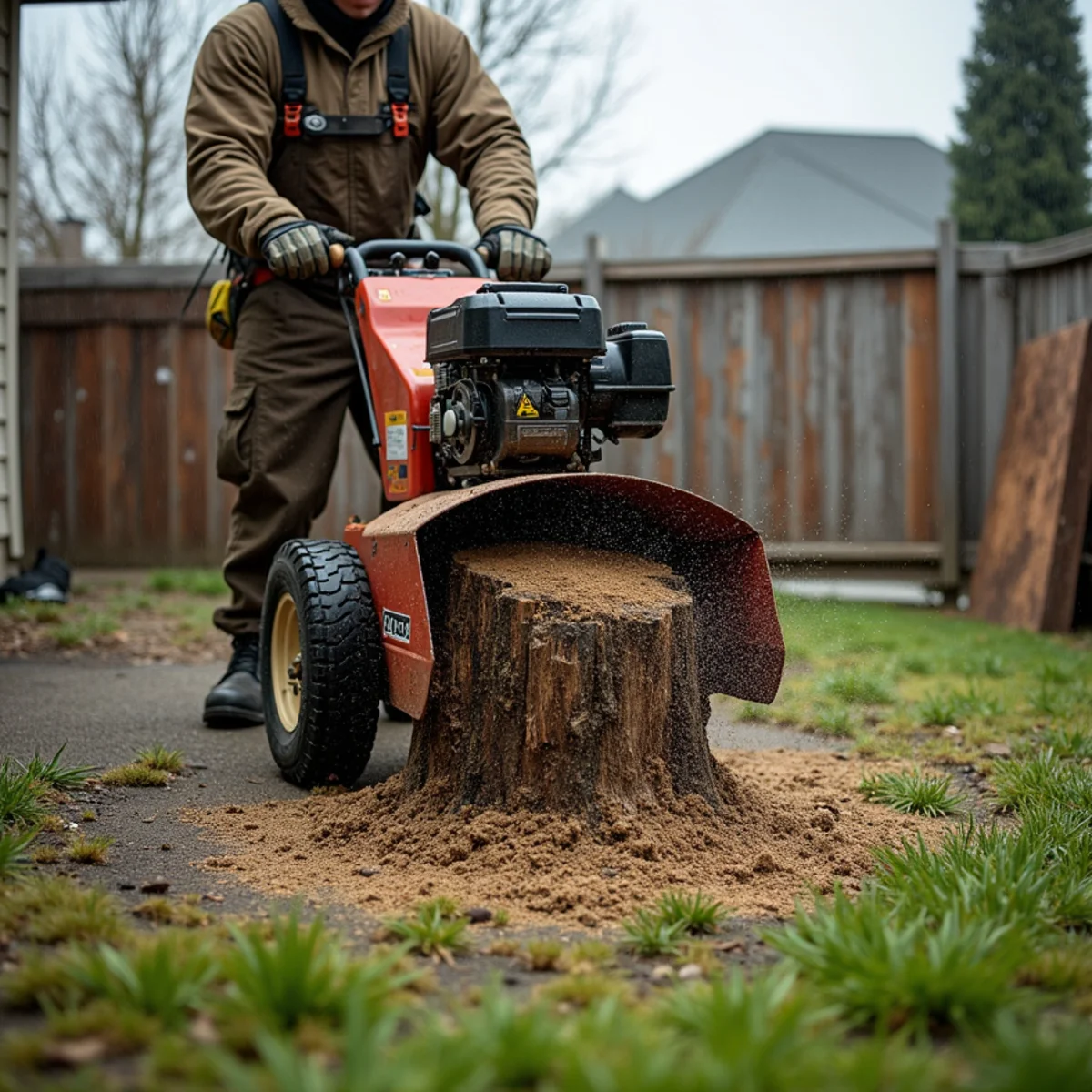
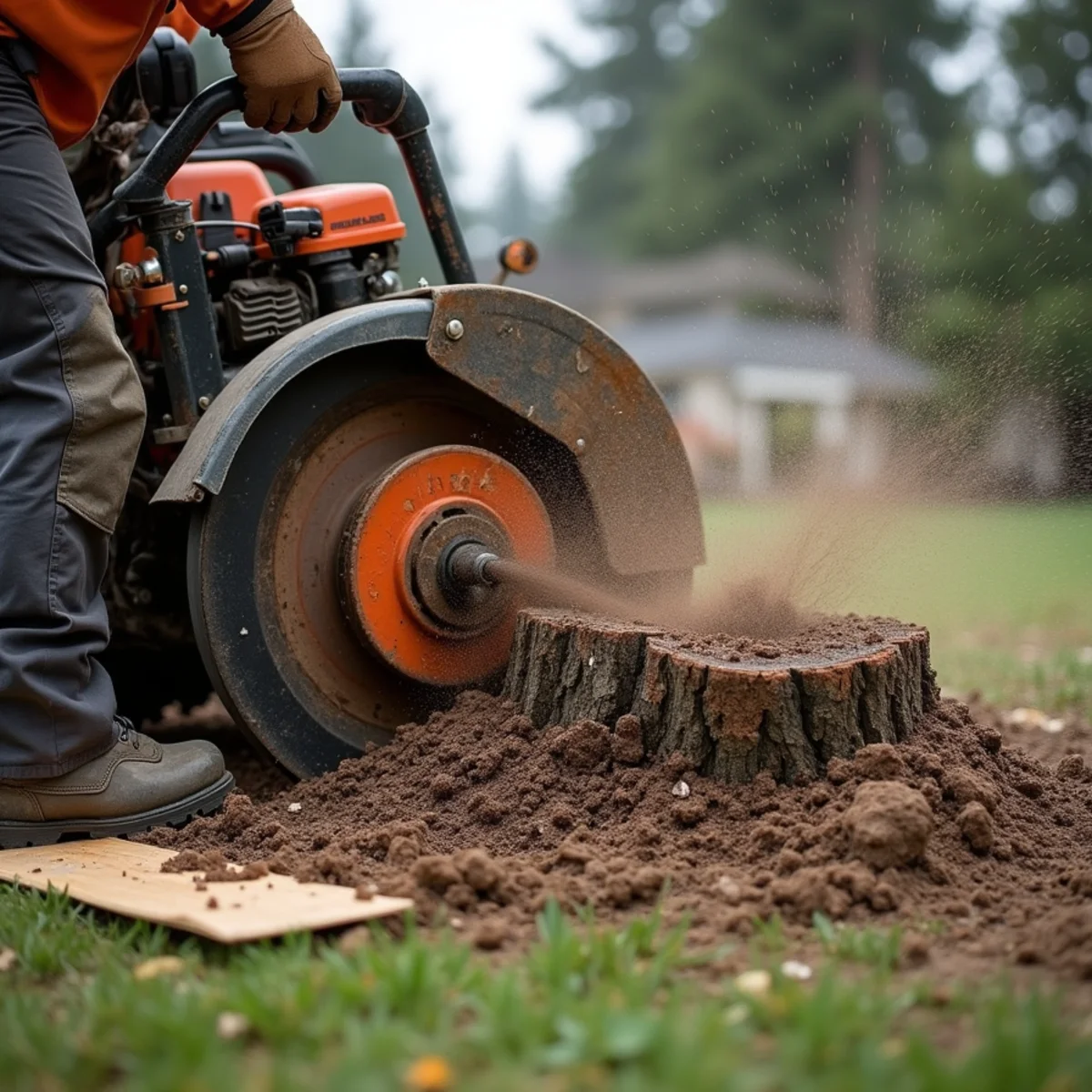
Grinding is not digging. Nobody is opening a crater in your lawn with an excavator unless you have a reason to want one. A grinder is a wheel of carbide teeth turning fast enough to chew wood into shavings, swept side to side, taking the stump down in layers until it sits below the ground around it. You get back a shallow depression full of chips instead of a chunk of trunk.
How Deep We Grind, and Why That Number Moves
People want a single depth. The honest answer is that depth follows your plans for the spot. Enough to put seed or sod over it is one thing. Enough to plant a replacement tree in roughly the same place is considerably more, and much wider than the original trunk footprint, because a young root ball wants soil rather than a pit of decomposing conifer chips. Post holes, footings and hardscape want deeper still, and we need to know that before the machine comes off the trailer.
Depth also gets decided by what nobody can see from above. Rock in a hillside cut above Kelso stops a wheel cold. Buried concrete, an old fence footing, a French drain, a boulder pushed under during construction — carbide meeting any of that is a short, expensive conversation. We grind as deep as the ground allows and say so when it has an opinion.
Surface Roots Are a Separate Decision
The stump is the obvious part. The roots running out from it are what wreck lawns, lift walkways and eat mower blades. We can chase major surface roots out from the collar and grind them flush, worth doing where they cross a path or a mowing line. It is added time, so we price it up front. Two things worth knowing: grinding roots does not remove the whole root system, since fine roots stay in the soil and rot out over several years, and where a tree shares roots with a neighbor of the same species, chasing roots hard can stress the one you are keeping.
Gate Width Decides Which Machine Shows Up
Before anything else we measure the narrowest pinch point between the street and the stump. That one number picks the machine, and the machine sets the day. A compact walk-behind grinder slips through most standard side gates; anything larger means a fence panel comes off or the route changes entirely.
- Measure the opening itself, not the fence line — usable clearance sits between the post faces, and gates run narrower than people guess.
- Look up as well as across. Low eaves, a carport or a hanging limb will stop a machine that fits dimensionally.
- Slope counts as much as width. A steep, soaked side yard on a Columbia Heights lot is a traction problem first.
- Soft ground, irrigation heads, drain-field lines and shallow-set pavers take machine weight badly. We mat over them or reroute.
- If nothing fits, a fence panel comes off and goes back on the same day. Routine, not a catastrophe.
Toutle Ash, River Silt and Clark County Clay
Ground conditions change more across twenty miles here than across some entire states. Up the Toutle valley and around Castle Rock, the 1980 lahar left volcanic ash and pumice sand through the soil, abrasive in a way ordinary dirt is not. It dulls teeth fast. We plan for that and change teeth rather than push dull ones and beat up the machine and your lawn.
Down on the Longview and Kelso flats you get river silt and old fill — easy grinding, uneven drainage, and a hole that holds water longer than the turf around it. East into Clark County toward Battle Ground, Ridgefield and Camas you hit heavy clay, which does not behave like sand. A chip-filled hole in clay can sit proud for a season and then drop noticeably once the wood breaks down. That is why nobody should pour finished hardscape over a fresh grind.
What Fills the Hole, and What It Does Over the Next Year
Grinding produces far more volume than the stump you were looking at. Wood and soil come out fluffed, and a mature fir stump throws a pile that surprises people. You have options, and we do whichever you pick.
- Leave the grindings mounded in the hole and let them settle. Expect the mound to sink over the following months as the wood breaks down.
- Backfill with grindings, cap with clean topsoil, then seed or sod. The usual choice for a lawn.
- Haul the spoil off and bring in soil. Cleanest result, most work, priced accordingly.
- Keep the chips. Coarse for ornamental beds, but excellent on paths and around established shrubs.
Do not plant into the chips. Decomposing wood ties up nitrogen and holds a young root ball in a pocket that dries out hard in July. Either grind wide and deep and replace the material with real soil, or set the new tree a few feet off the old center. That second option is what we would do in our own yard.
Concrete and pavers get the same warning. Poured over fresh grindings, a slab sits on material that is still decomposing and still consolidating, and it will crack or dish. Give it a season, or dig the spoil out and compact proper base in its place. Tell us at the estimate that concrete is coming and we will grind deeper and clear the hole.
The Stump You Leave Becomes a Different Problem
A cut stump is wet wood at ground level with its roots still in wet soil. In western Washington that combination goes one direction. Moisture-loving carpenter ants hollow out the softening heartwood and set up a colony, and a colony twenty feet off the house eventually goes looking for a damp sill plate or a deck ledger. Rot fungi work more quietly, and a few — armillaria especially — do not stop at the stump. They keep moving through the roots toward healthy trees nearby.
Then there is the nuisance side. Alder, bigleaf maple, cottonwood and cherry all sprout from the stump and collar after cutting, and you can spend years cutting the same shoots off the same spot. Grinding out the collar takes most of that energy away — not always instantly with alder, but far faster than mowing sprouts until you sell the house.
Signs You Need Stump Grinding & Removal
How a Stump Grinding & Removal Job Runs, Start to Finish
Free on-site look and measurements
Mark what is buried
Pick the machine and the route
Protect the site and set up
Grind to depth, then chase roots if asked
Backfill, cleanup and a walkthrough
What Drives the Price of Stump Grinding & Removal
Stump Grinding & Removal on Real Jobs
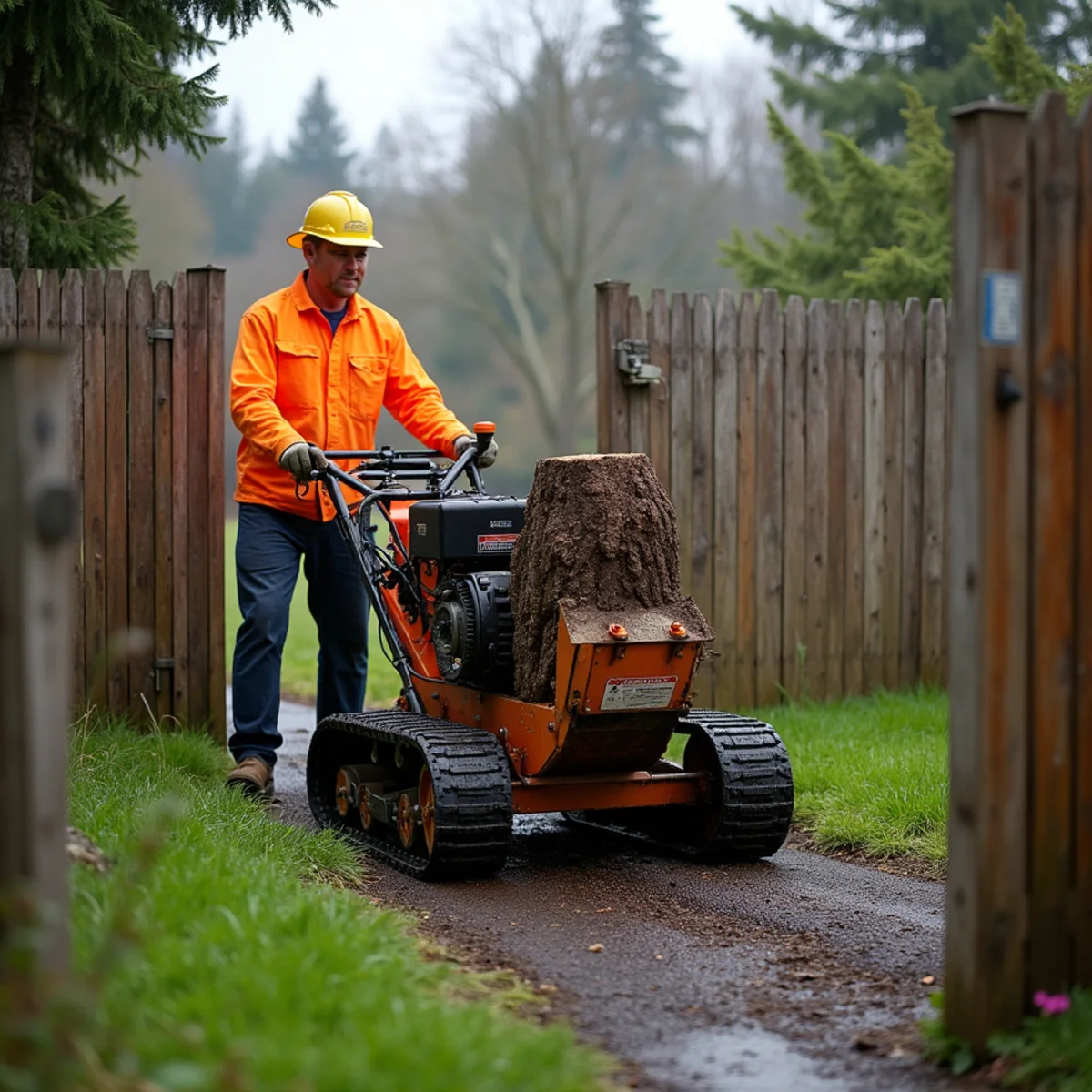
Gate width decides which machine shows up. 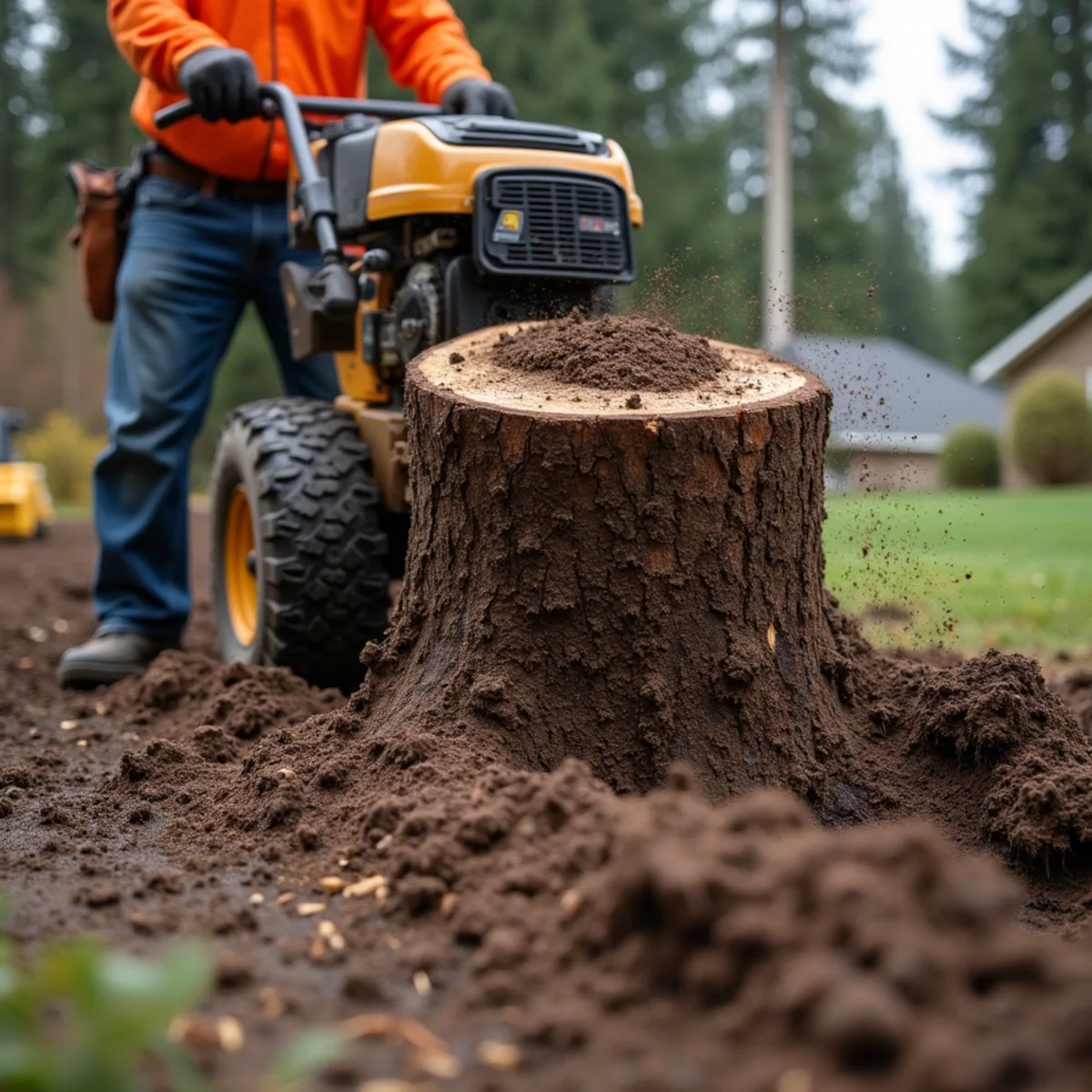
Ground below grade so you can replant or pour. 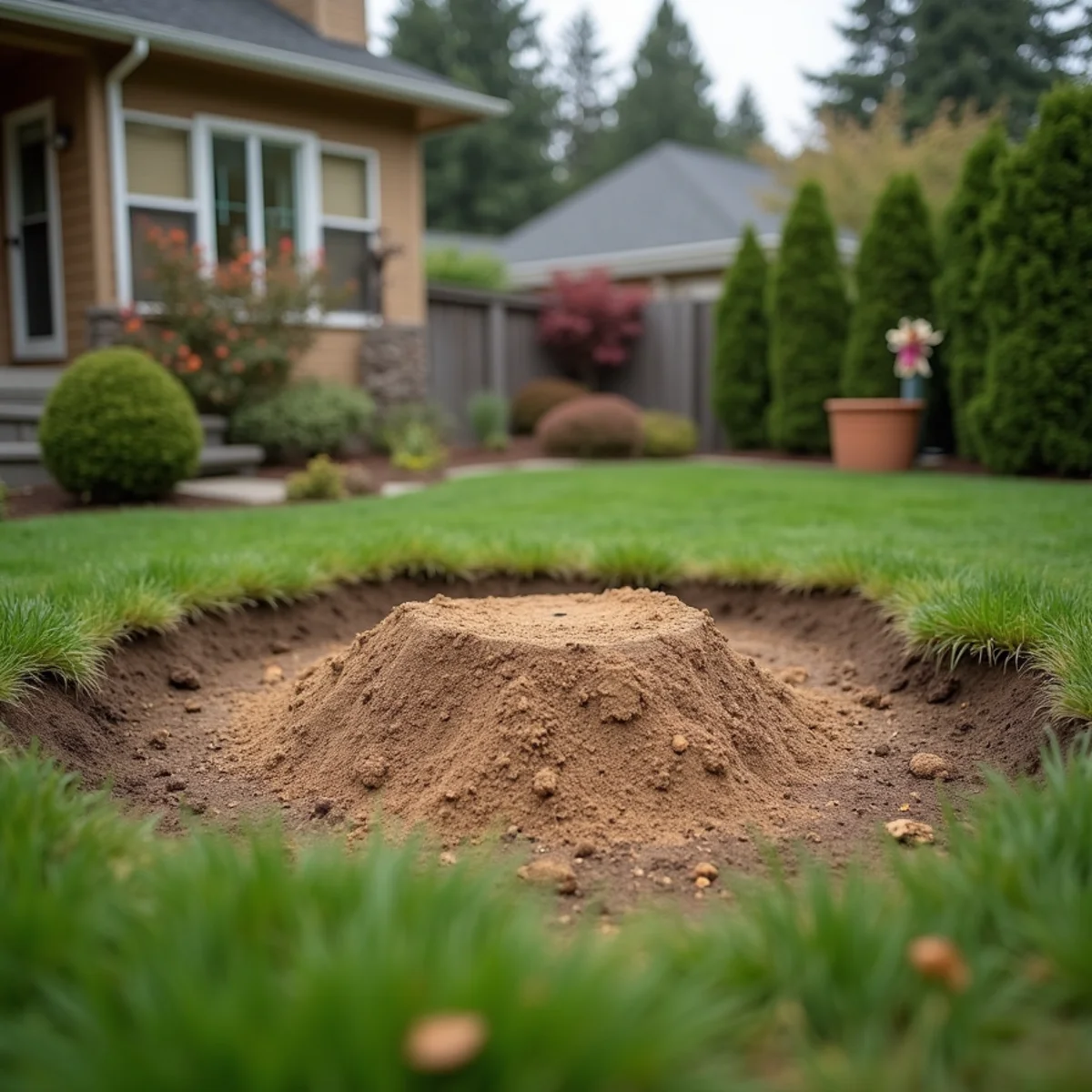
Grindings back in the hole, or hauled off — your call.
Get a written price for your stump grinding & removal job.
Stump Grinding & Removal Questions, Answered
Often Booked Together
Related Tree Services
Worth Reading First
Before You Book This Work
Free On-Site Estimates
Need stump grinding & removal? Let’s take a look.
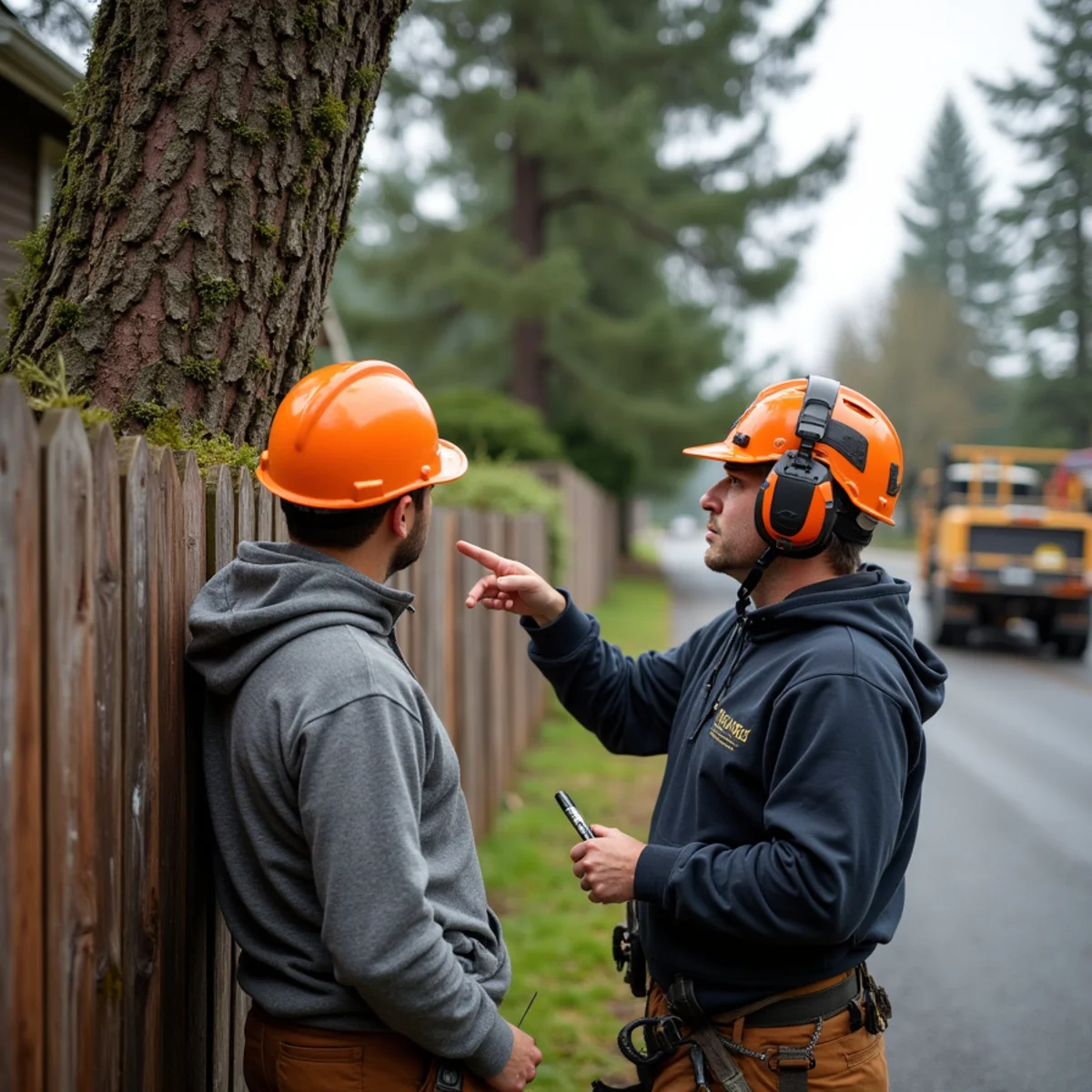
Ryan Norris walks every estimate himself. Free, on-site, and you’ll get a straight answer about whether the work is necessary at all.
- 34 Google reviews
- Licensed & Insured
- Free On-Site Estimates
- Based in Kelso, WA