Cowlitz County · Clark County
Tree Removal in Washington
Sectional removal of large trees in tight backyards, along fence lines and beside buildings, with the debris handled the way you want it handled.
- Free On-Site Estimates
- Licensed & Insured
- 34 Google reviews
The call usually starts with a project, not a problem. Somebody is pouring a shop slab where a bigleaf maple has stood for fifty years. A cottonwood keeps dropping limbs across a new driveway. A row of Leyland cypress planted as a privacy screen back in the early 2000s has turned into a thirty-five-foot wall that shades half the yard and leans on the fence. Nothing is falling on anybody. The tree is simply in the way of what you want to do with your own property, and that is a perfectly good reason to take it down.
That is what separates this work from our hazard tree removal. Hazard work is about a defect and a target — a tree that is going to fail and something valuable sitting underneath it. Planned removal is a decision you get to make on your schedule. There is time to weigh options, sort out a permit if one applies, and pick a dry week. It costs less than the same tree taken down in the dark after a December windstorm, and you get to think about what goes in its place.
Why People Schedule Tree Removal in Cowlitz and Clark County
The reasons repeat themselves across Longview, Kelso, Woodland, Battle Ground and Camas. Most of them have nothing to do with the tree being sick. They have to do with a tree that was planted before anyone imagined the house, the shop, the septic field or the sewer lateral that now shares the same ground.
- Construction and setbacks — a garage pad, an addition, a new driveway or a manufactured home site that needs the footprint clear before the excavator shows up.
- Root conflict — heaved sidewalks and patios, cracked driveway aprons, and repeated backups in an older clay sewer lateral that a cottonwood or willow has found.
- The wrong tree in the wrong place — a Douglas fir planted eight feet off the corner of the house in 1974 that is now ninety feet tall with limbs on the roof.
- Overgrown screens — Leyland cypress, arborvitae and laurel hedgerows that outgrew the job they were planted for and now block light, gutters and the view of the drive.
- Species you never wanted — English holly, cherry laurel and big weedy cottonwoods that seeded themselves along a fence line and are now trunk-sized.
- Yard maintenance you are tired of — a bigleaf maple that fills the gutters every October and keeps the north side of the house permanently mossy.
Sectional Dismantling: Taking a Big Tree Out of a Small Space
Very few of the trees we remove have room to fall. Most stand in a fenced backyard with a shop on one side, a greenhouse on the other and a neighbor thirty feet away. Those trees come out from the top down, in pieces, on ropes.
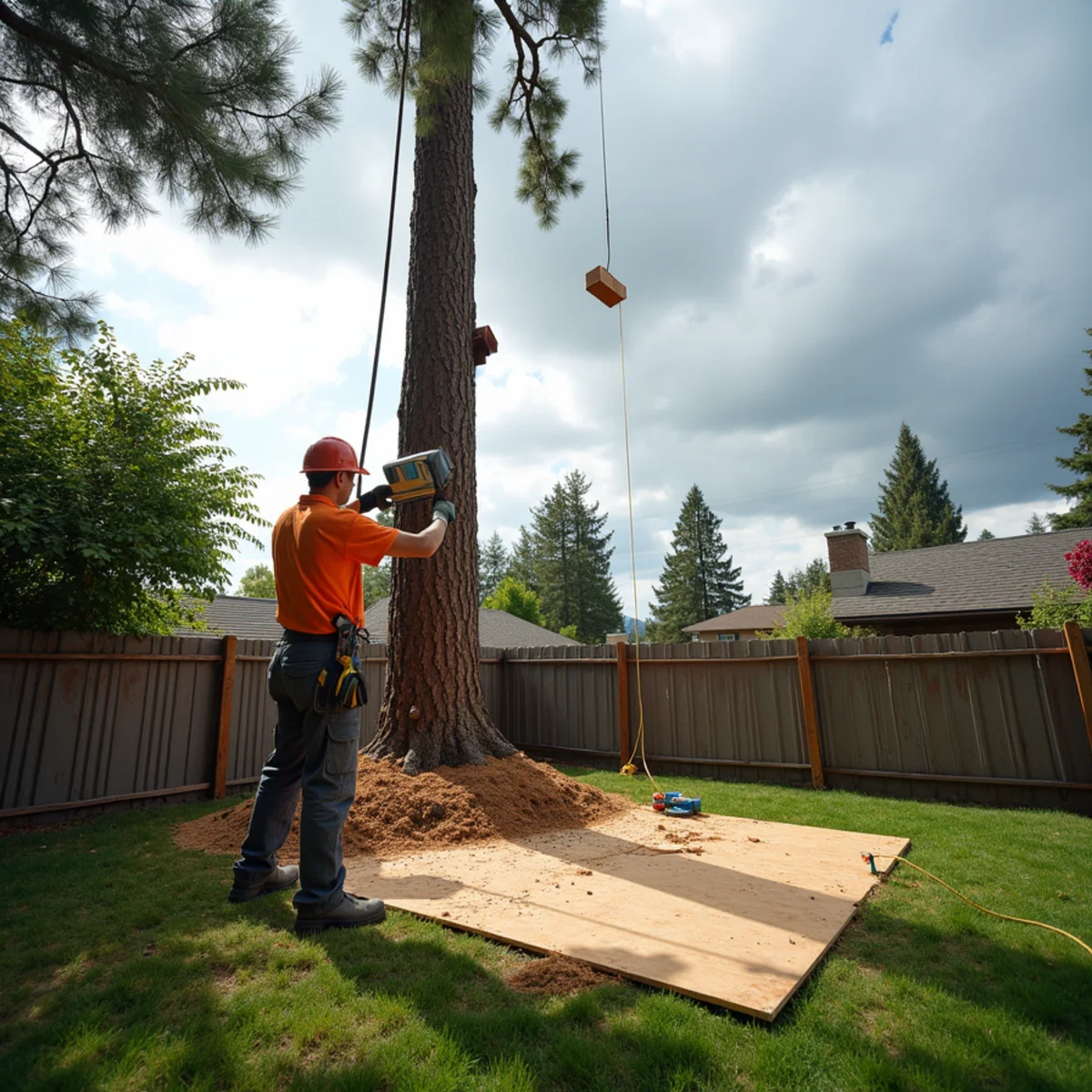
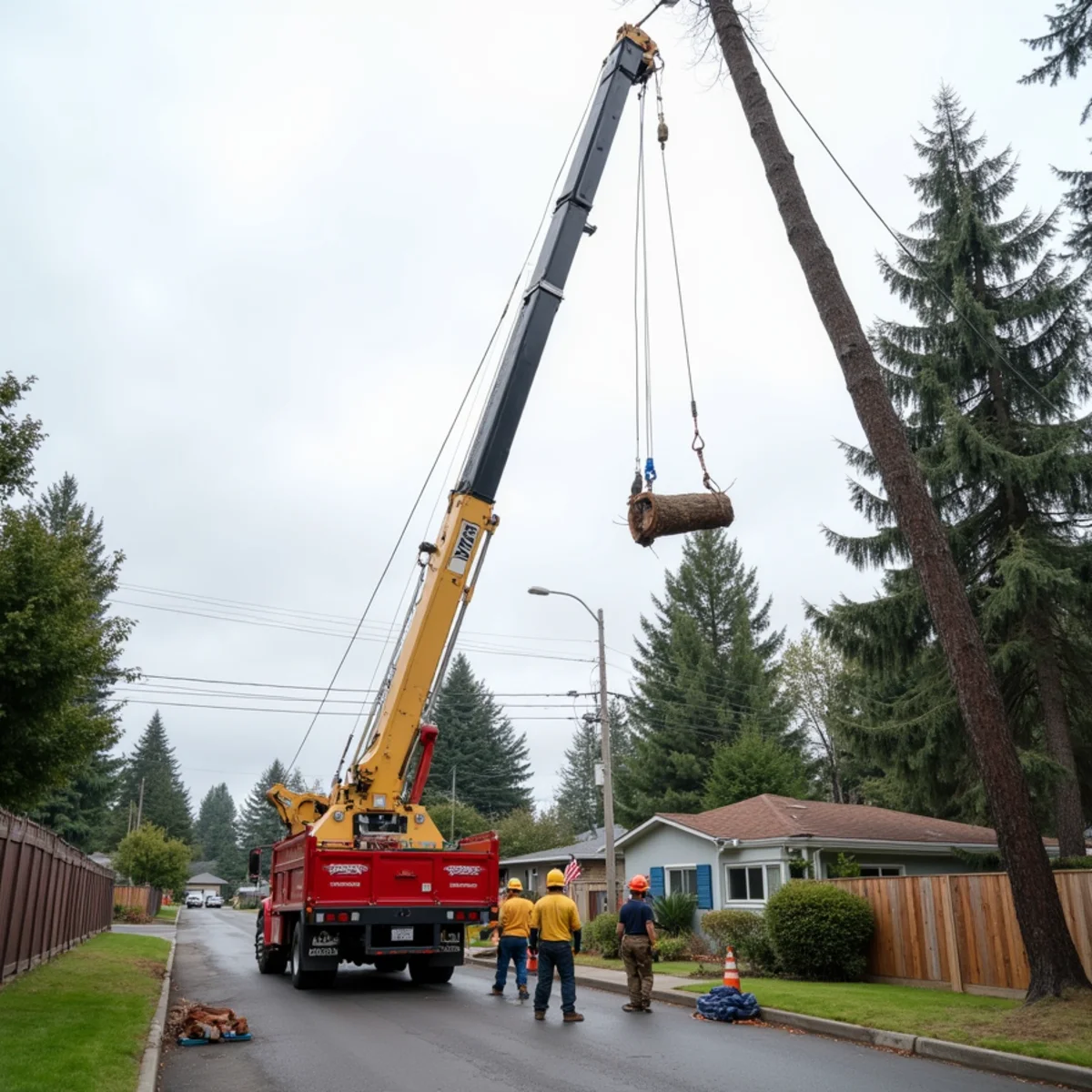
A climber ascends the spar and sets a rigging point above every cut. Limbs get tied off before the saw touches them, then swung clear and lowered through a block to a friction device on the ground. The groundman controls the descent so nothing free-falls and nothing shock-loads the line. Once the limbs are off, the trunk comes down in blocks sized to what the rigging and the landing zone can absorb — sometimes four-foot chunks, sometimes eighteen inches at a time when the target below is a hot tub or a septic lid.
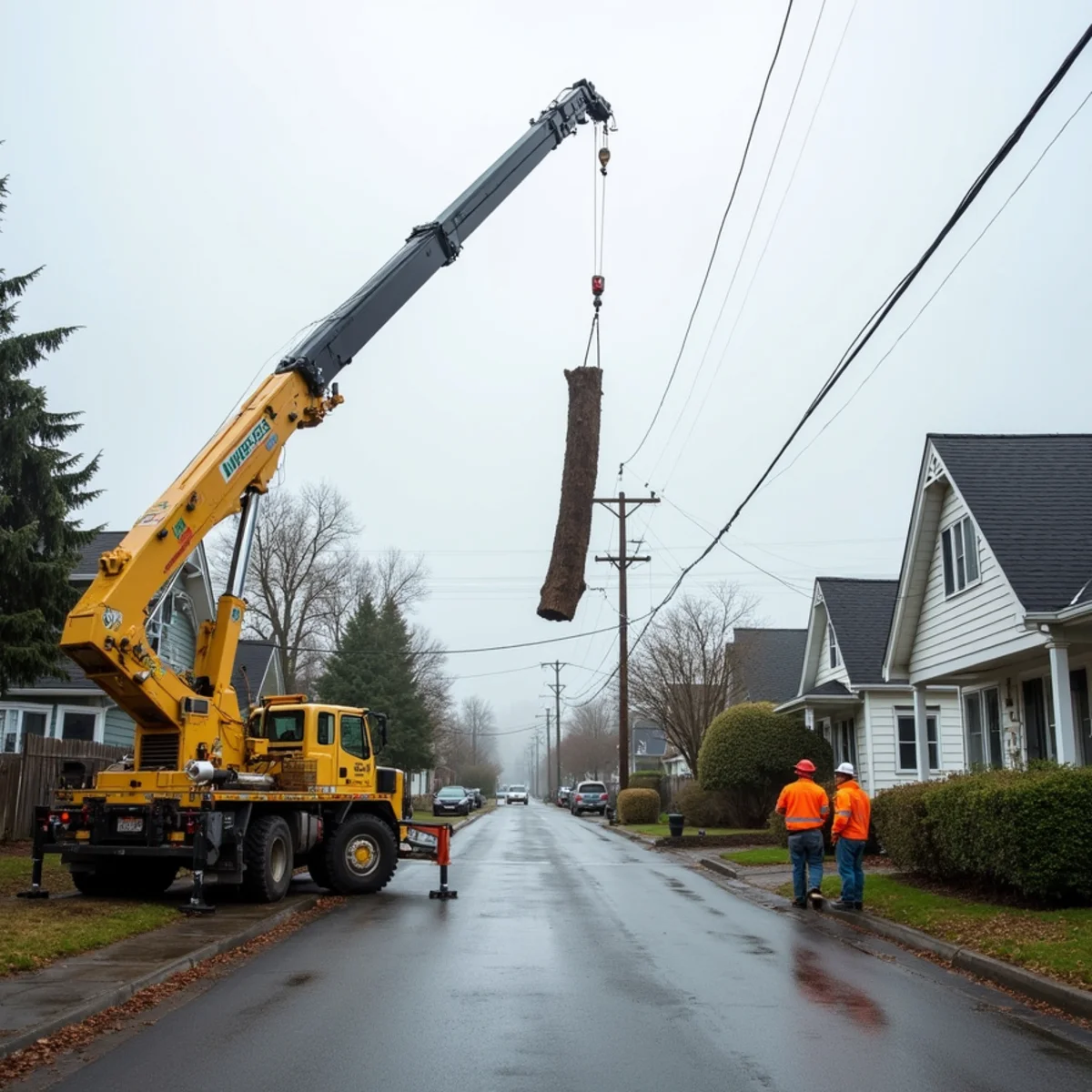
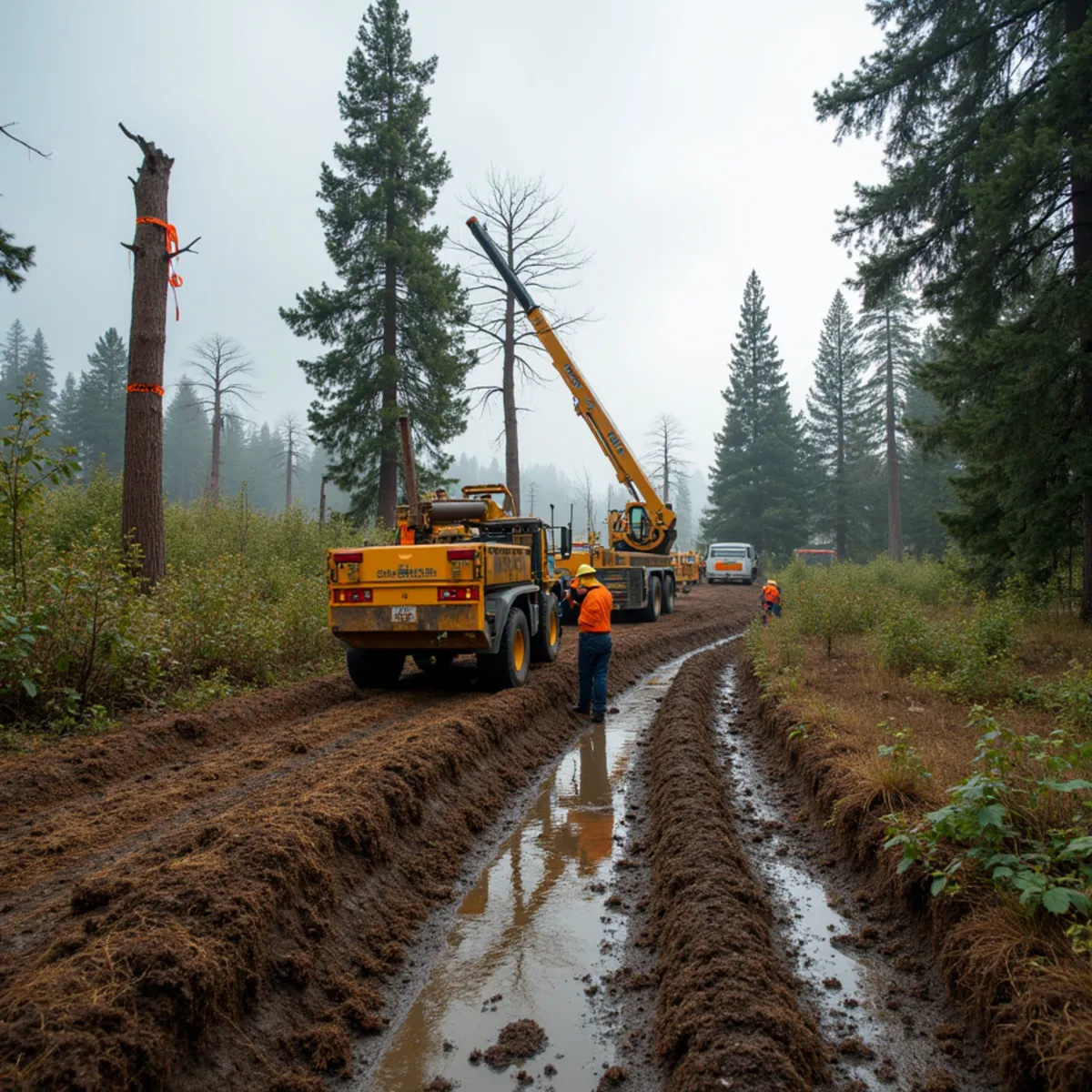
Where the backyard is genuinely landlocked, or the wood is too far gone to trust as an anchor, a crane changes the math. Picking sections out over the roofline can turn two days of careful rigging into a morning, and it keeps the load off the tree entirely.
What the Species Tells Us Before Anyone Climbs
Every tree in this valley behaves differently on the end of a rope, and the plan gets built around that. Douglas fir gives us a straight, strong spar and predictable weight, though the tops go brittle in old stands. Western red cedar is light for its size but carries a wide flare and stringy, hollow butts more often than people expect. Bigleaf maple is the wild card — enormous horizontal limbs, codominant unions, and wet wood that weighs far more than it looks. Cottonwood is weak, fibrous and unreliable at a rigging point, so it frequently gets the crane. Leyland cypress hedgerows come down fast but generate a staggering volume of brush for their height.
What a Tree Removal Actually Includes
Cleanup is part of the job here, not an upsell you discover at the end. When we quote a removal, the price covers taking the tree down and putting your yard back in order. What varies is where the wood ends up, and that is your call.
- All brush and limb wood run through the chipper and hauled, unless you want the chips left for beds and trails.
- Trunk wood bucked to rounds. Stacked where you want it if you burn, split-length if you ask, or hauled off entirely.
- The work zone raked out, including the needle and chip litter that settles into lawn and gravel.
- Ground protection over lawns, beds and soft driveways when the equipment has to cross them.
- A walkthrough with you before the truck leaves, so anything we missed gets handled while we are still standing there.
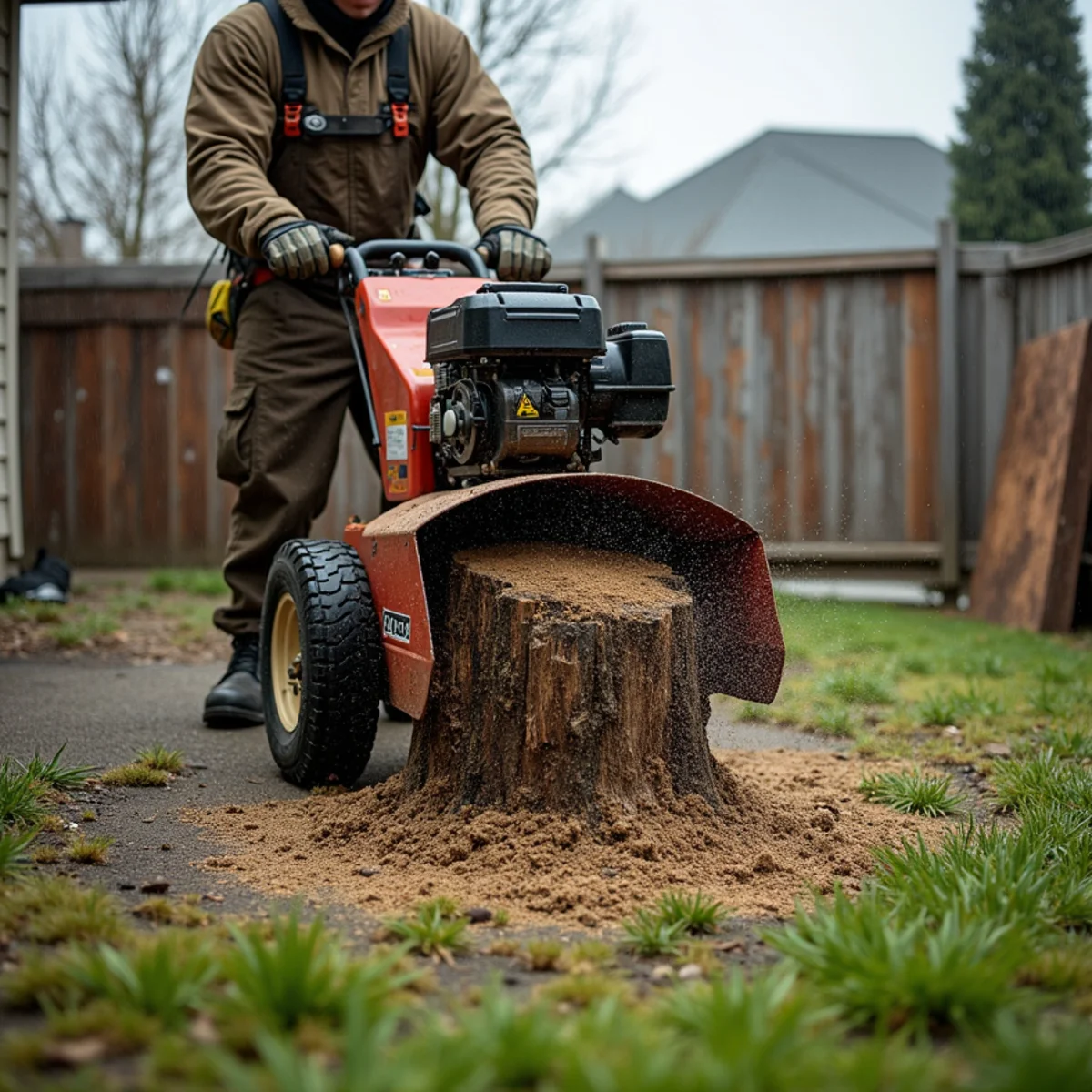
The stump is a separate decision. Grinding is quoted on its own because diameter, depth and access all move the number, and plenty of people are happy to leave a cut stump in a back corner. If the spot is going under lawn, a slab or a new planting, it has to come out.
Permits, Property Lines and Timing
A tree in a private yard in unincorporated Cowlitz County usually comes down without paperwork. A tree in Vancouver, Camas or Battle Ground may not, depending on size, zoning and whether it sits in a critical area, shoreline overlay or a subdivision tract. Trees in the right-of-way belong to the city regardless of who waters them. We check the rules for your specific address during the estimate and tell you what applies before anything is scheduled.
If the trunk straddles a property line, both owners have to agree — that is Washington law, not our policy, and it is worth a conversation with the neighbor first. Removal itself happens year round here: winter gives us bare canopies and clean sightlines, summer gives us firm ground. Ryan walks every estimate himself, at no charge, and will tell you plainly if the tree is worth keeping instead.
Signs You Need Tree Removal (Large & Tight-Quarter)
How a Tree Removal (Large & Tight-Quarter) Job Runs, Start to Finish
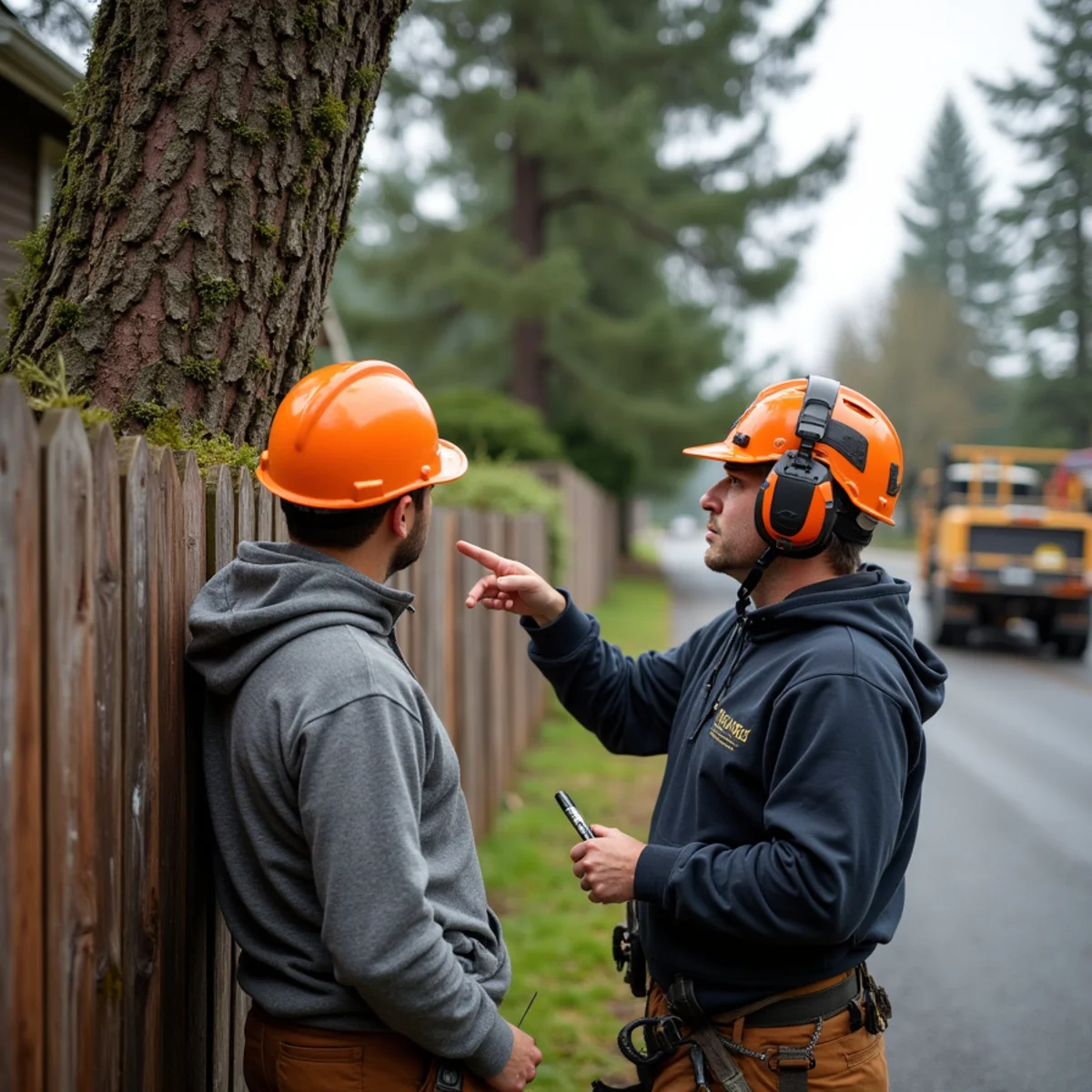
Free on-site estimate with the owner
We pick the method and say why
Permits and neighbors sorted first
Setup, protection and the drop-zone plan
Piece-by-piece dismantling
Wood handled your way, then we rake
What Drives the Price of Tree Removal (Large & Tight-Quarter)
Tree Removal (Large & Tight-Quarter) on Real Jobs
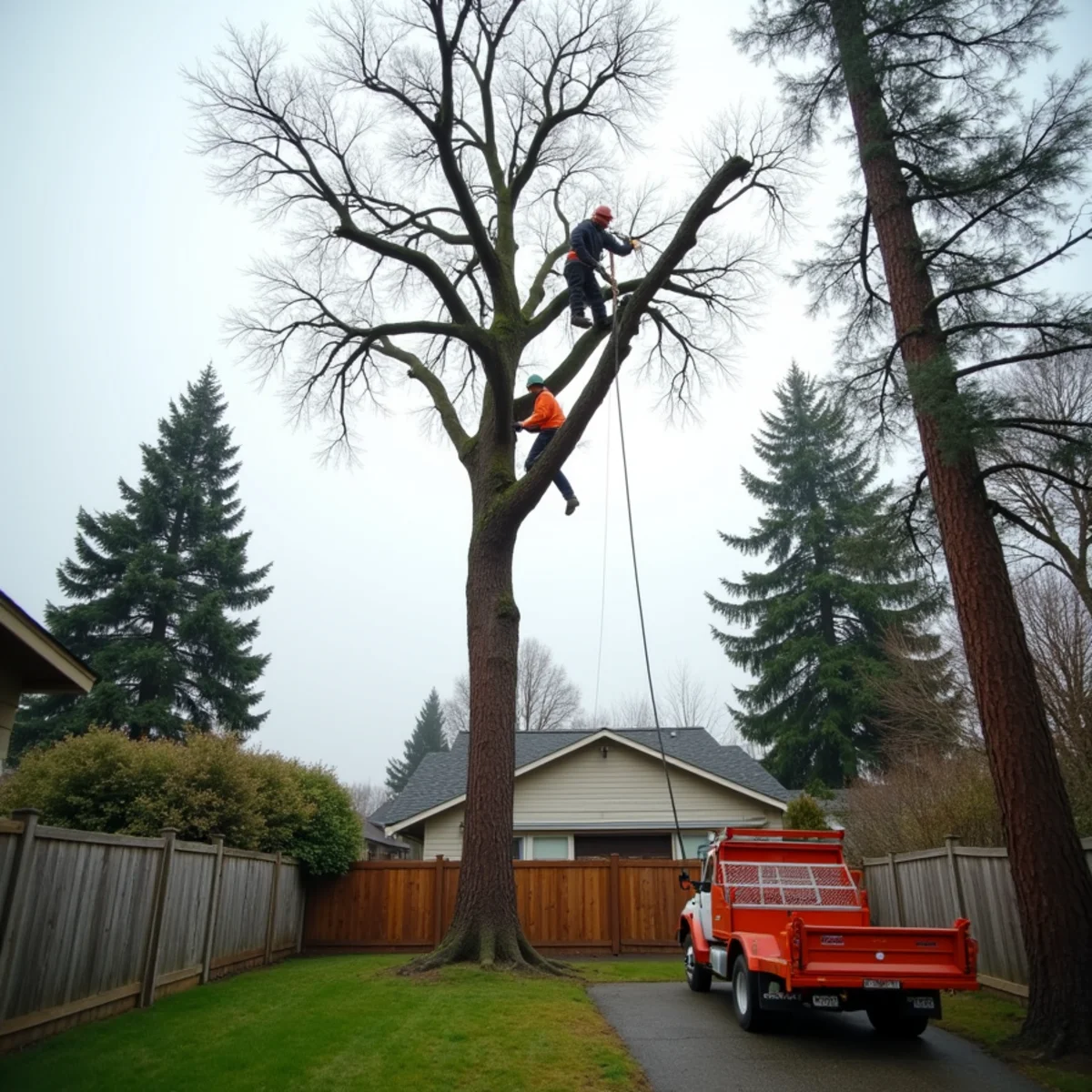
Tight lots come down in pieces, on ropes. 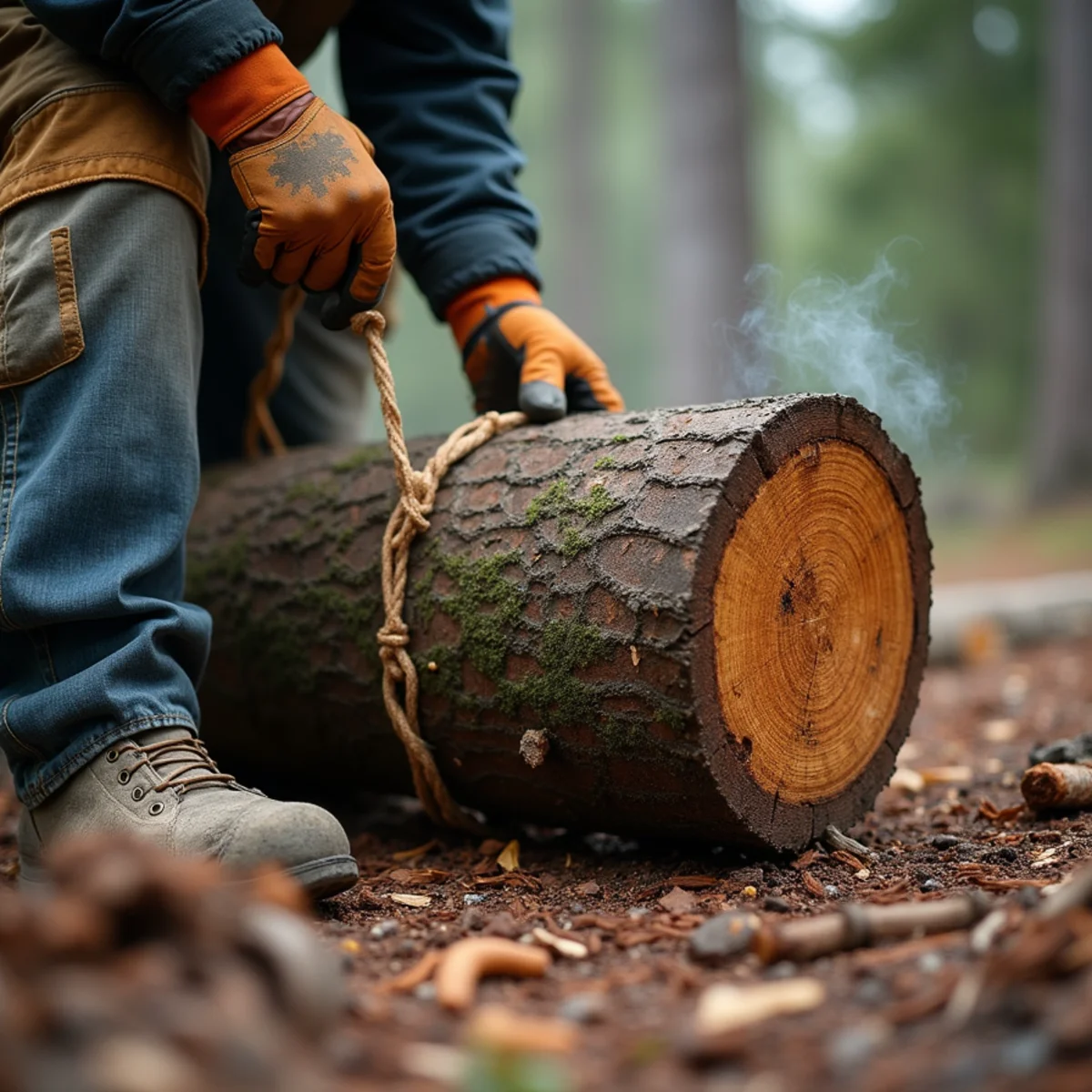
Blocks and friction control the speed of every piece. 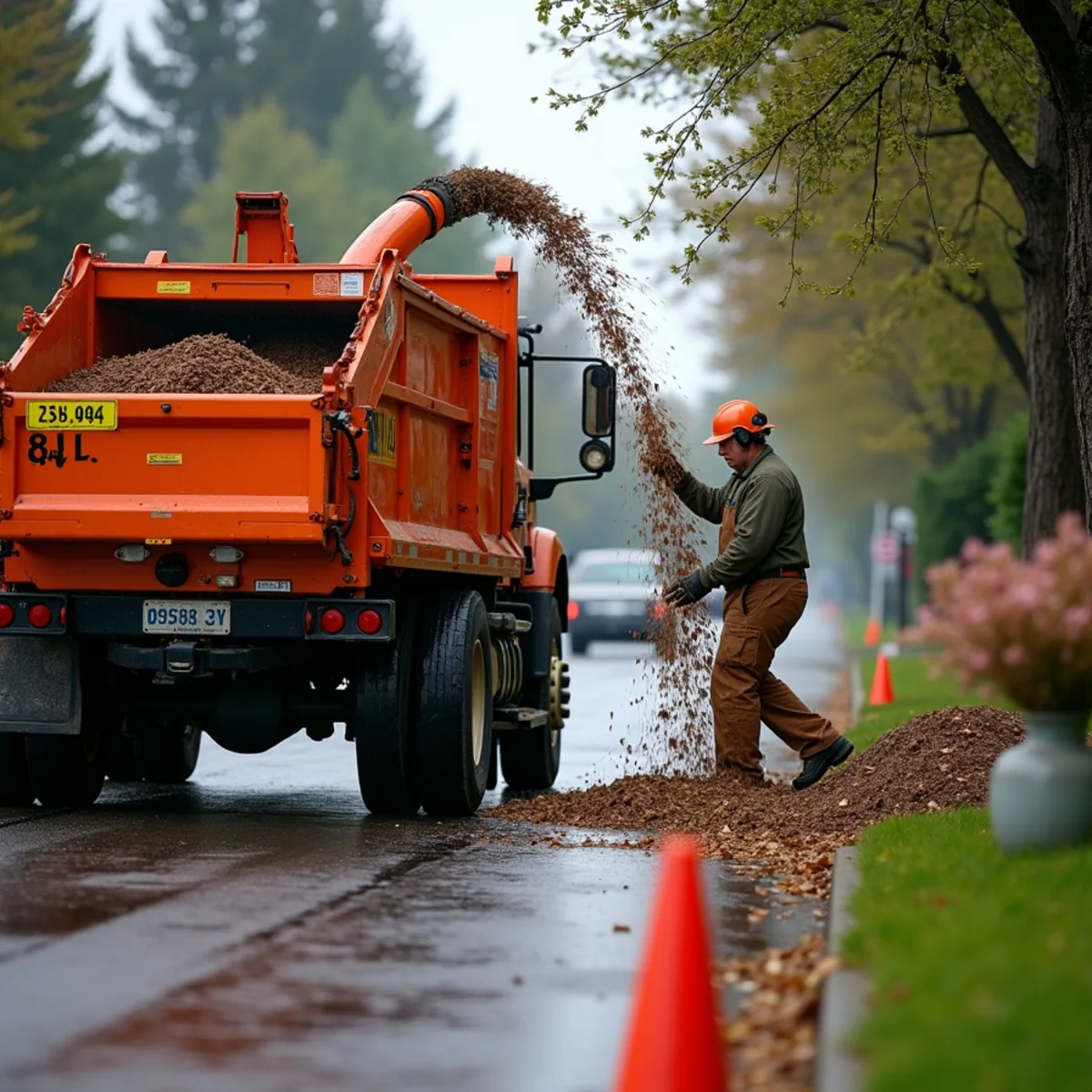
Brush chipped, wood cut to length, site raked.
Get a written price for your tree removal (large & tight-quarter) job.
Tree Removal (Large & Tight-Quarter) Questions, Answered
Often Booked Together
Related Tree Services
Worth Reading First
Before You Book This Work
Free On-Site Estimates
Need tree removal (large & tight-quarter)? Let’s take a look.
Ryan Norris walks every estimate himself. Free, on-site, and you’ll get a straight answer about whether the work is necessary at all.
- 34 Google reviews
- Licensed & Insured
- Free On-Site Estimates
- Based in Kelso, WA