Cowlitz County · Clark County
Tree Trimming & Pruning in Washington
Good pruning is mostly about which cuts you do not make. We will tell you what your tree needs, not just what you asked for.
- Free On-Site Estimates
- Licensed & Insured
- 34 Google reviews
A homeowner off Ocean Beach Highway called about the two bigleaf maples in her front yard. They had spread out over the driveway, dropped a limb on a parked car already, and shaded the house so heavily the lawn underneath had given up. What she asked for on the phone was to have the tops cut off. What they needed was the deadwood cleaned out, the low limbs raised off the drive, and the long outer branches shortened back to laterals that could take over as leaders. Same afternoon of work. Completely different tree in ten years.
That gap — between what people ask for and what the tree needs — is most of the conversation on a trimming estimate. So here is the plain version: what each type of pruning does, when to do it here, and why we will not top a tree for anyone.
The Named Types of Pruning, and What Each One Is For
The industry standard for pruning is ANSI A300, and it sorts the job into a handful of named types. That is not jargon for its own sake. It exists so the person cutting and the person paying agree on what is coming off before a saw runs.
- Crown cleaning — removing dead, dying, broken and crossing branches, and nothing else. It is the lowest-risk pruning there is, it improves almost every tree, and it is what most homeowners actually want when they say the tree looks rough.
- Crown thinning — selectively taking out live branches so wind moves through the canopy instead of pushing on it. Done lightly and evenly. Overthinning strips the interior and leaves a lollipop of foliage on the ends of long limbs, which is worse than doing nothing.
- Crown raising — lifting the lower limbs to clear a driveway, a walkway, a roofline or the sight line backing onto the road. Straightforward, but there is a limit: strip too much off the bottom and you move the tree’s weight up where wind can use it.
- Crown reduction — shortening the overall height or spread by cutting back to a lateral branch large enough to assume the terminal role. This is the honest alternative to topping, and it is the cut that saves trees that have simply outgrown their spot.
- Structural pruning — done on young trees to establish one dominant leader and well-spaced scaffold limbs. Fifteen minutes of work at year six prevents the codominant union that splits at year thirty.
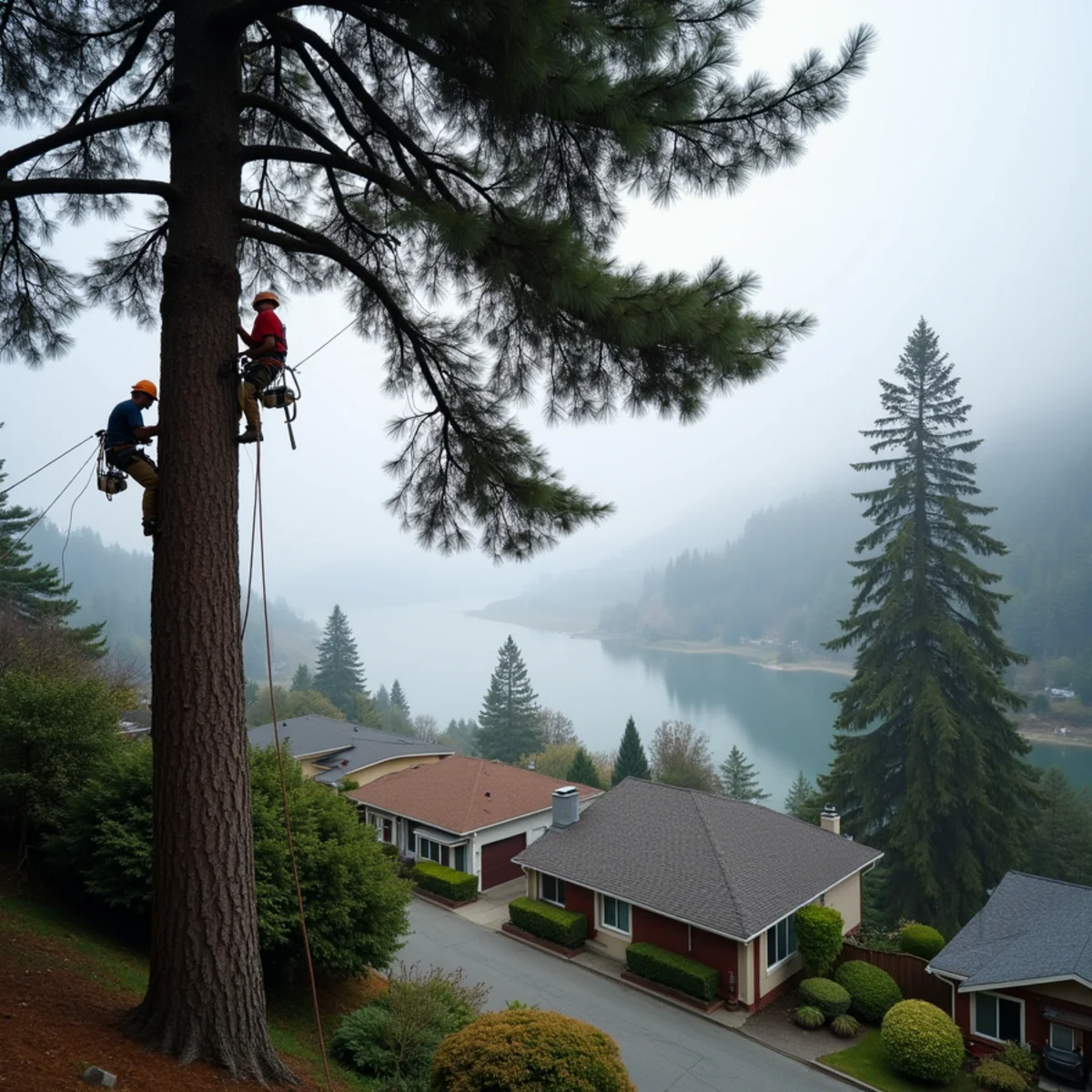
Most residential jobs are a blend of two or three. A mature Douglas fir over a Kelso driveway usually gets cleaning plus raising. A maple crowding a roofline gets cleaning, raising and a modest reduction on the house side. A young tree in a newer Ridgefield or Battle Ground subdivision needs structural pruning, then a few years left alone.
Why We Never Top a Tree
Topping means cutting the leaders back to stubs with no lateral branch left to take over. The tree does not die. That is the problem — people see it leaf out next spring and assume it worked. What actually happens is that the stub cannot seal, so decay works down the inside of the trunk while the tree pushes dormant buds into dozens of fast, upright shoots.
Those shoots attach to the outermost layers of wood rather than anchoring deep in the stem the way an original branch does. They grow fast, they get heavy, and they sit on top of a column of decay. Eight years later you have a taller, denser, weaker tree with failure points at every old cut. That is the hazard tree you end up paying to remove, and removal costs far more than the reduction would have.
There is a cosmetic cost too. Topped conifers never recover their form, and topped maples around Longview and Vancouver are easy to spot by the broom of sprouts on every stub. If a tree is genuinely too tall for its spot, we reduce it to laterals — or tell you plainly that removal is the honest answer.
Timing: When to Prune in Southwest Washington
Deciduous trees are best pruned in the dormant season, roughly December through early March here. The structure is visible with the leaves off, cuts seal quickly once spring growth starts, and insect and disease pressure is at its lowest. Most of our maple, ash and birch work across Longview, Kelso and Woodland happens in that window.
- Deadwood can come out any month. Dead is dead, and a hanging limb over a walkway does not care what the calendar says.
- Storm-broken limbs get cut back to a proper collar as soon as we can get there, whatever the month.
- Fruit trees are pruned in late winter, before bud break, while the buds are visible enough to plan around.
- Heavy live-wood pruning on an already stressed tree gets postponed. Drought-stressed or recently root-damaged trees should not lose canopy in midsummer.
- Conifer clearance work — limbs on the roof, over the drive, into the power drop — is fine most of the year, and we do a lot of it ahead of the fall wind season.
Clearance Work: Roofs, Gutters, Driveways and Buildings
A good share of our trimming calls are not about tree health at all. They are about a fir filling the gutters twice a year, a limb rubbing shingles when the wind comes up the river, or a canopy so tight against the north side of a house that the roof never dries out and moss takes over.
Clearance pruning solves that without gutting the tree. We take the limbs causing the problem, cut them at the collar so they seal, and leave the rest of the canopy balanced. Limbs over a roof come down on a rope, not off the edge of the gutter line.
Fruit Trees
Old apple, plum and cherry trees are everywhere on the rural lots around Castle Rock, Kalama and La Center, and most have not seen a saw in fifteen years. A neglected fruit tree cannot be fixed in one visit; that much wood at once triggers a wall of watersprouts. We stage it over two or three dormant seasons: open the center, remove the crossing and vertical wood, bring the height down to ladder reach, and let the tree adjust between rounds.
What the Yard Looks Like When We Pull Out
Brush goes through the chipper, the ground gets raked, and we walk the property before loading up. One customer had two large trees trimmed in her front yard and mentioned afterward that the crew also ground down the leftover wood and cleaned up past what she expected. That is not a special favor. Ryan, Lance, Bryce and Zack work that way on every job — a crew that leaves a mess undoes the point of hiring one.
Signs You Need Tree Trimming & Pruning
How a Tree Trimming & Pruning Job Runs, Start to Finish
Free on-site look, with the tree in front of us
We agree on the type of pruning, out loud
A written estimate with the scope on it
Setup and site protection
Cuts made at the collar, from inside the canopy
Chip, rake and walk it with you
What Drives the Price of Tree Trimming & Pruning
Tree Trimming & Pruning on Real Jobs
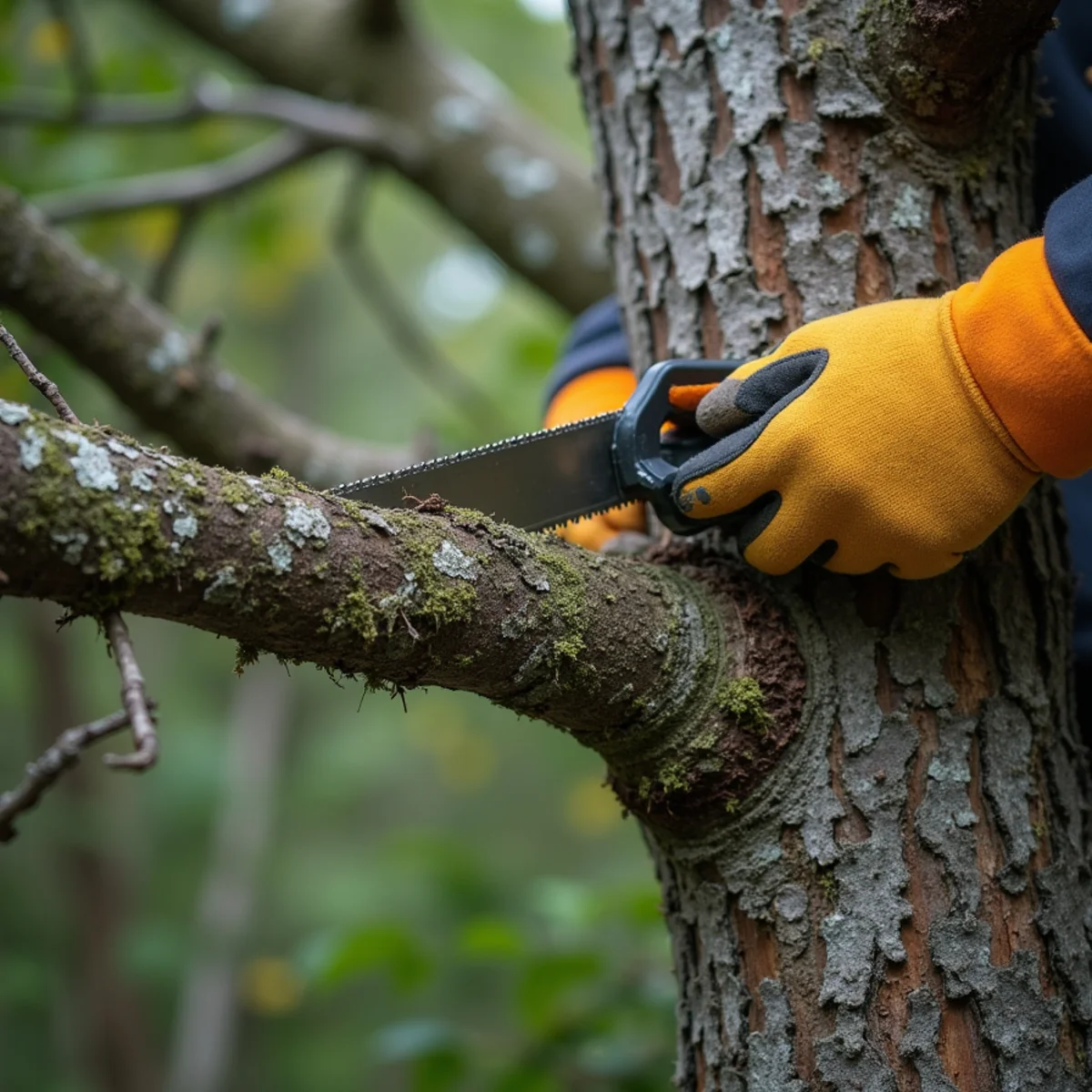
Cut at the collar, never flush, never a stub. 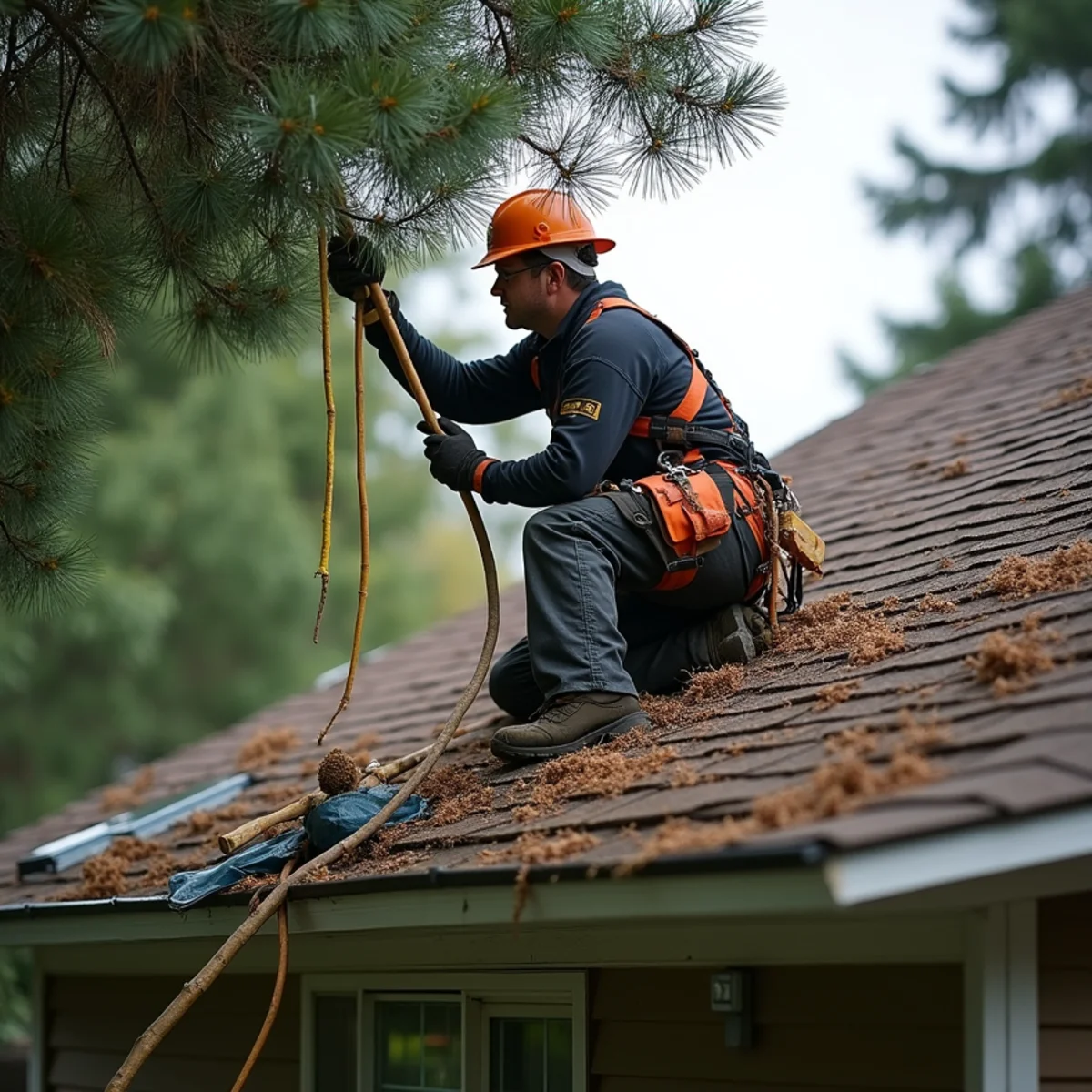
Clearance work keeps moss and debris off the shingles. 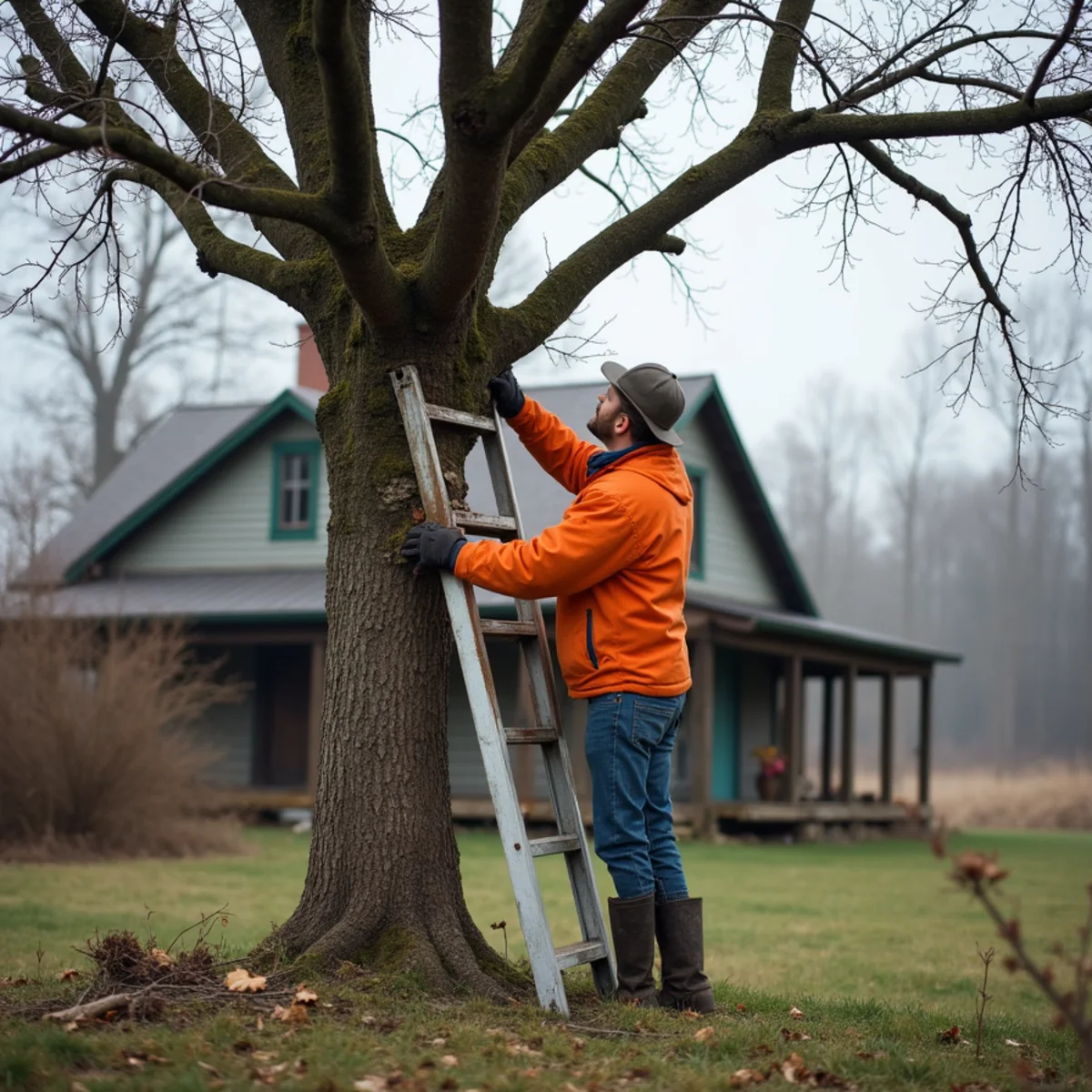
Old orchard trees come back over two or three seasons.
Get a written price for your tree trimming & pruning job.
Tree Trimming & Pruning Questions, Answered
Often Booked Together
Related Tree Services
Worth Reading First
Before You Book This Work
Free On-Site Estimates
Need tree trimming & pruning? Let’s take a look.
Ryan Norris walks every estimate himself. Free, on-site, and you’ll get a straight answer about whether the work is necessary at all.
- 34 Google reviews
- Licensed & Insured
- Free On-Site Estimates
- Based in Kelso, WA