Defensible Space and Tree Thinning in Yacolt, WA and East Clark County
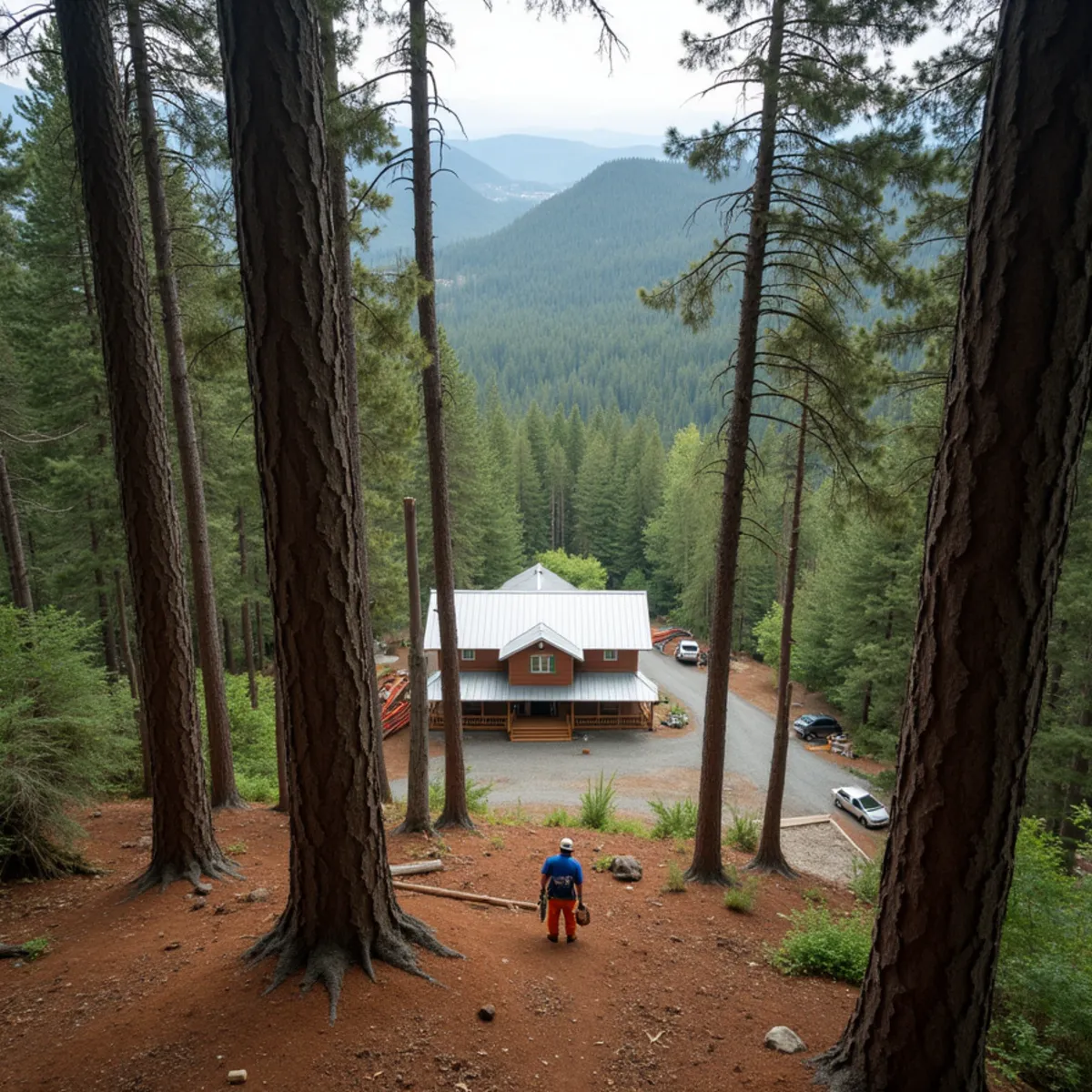
Drive east out of Battle Ground toward Yacolt and the country changes fast. Pasture closes up, the road climbs, and within a few miles you are in second-growth Douglas fir, replanted units nobody ever went back and thinned, and houses tucked into whatever pockets the harvests left alone. Good country to live in, and the kind of ground where three dry weeks and a steady east wind make everybody on the ridge look at their trees differently.
People out here already know this. The Yacolt Burn is a place name around here, not a history lesson, and the Nakia Creek Fire put smoke and evacuation levels in front of families who had never thought hard about what was stacked against their siding. What we get called for now is not panic clearing. It is defensible space and fuel reduction done in zones, in the right order, so the work goes where it changes the outcome.
Defensible Space Is Three Zones, Not One Big Clearing
The most common mistake is treating defensible space as a radius — cut everything inside the line, leave everything outside it. That is not how fire behaves. The ground around a house breaks into three zones, each with a different job. The strip against the building gives embers nothing to catch. The middle zone breaks up fuel so fire cannot climb. The outer zone gets thinned, not cleared.
Zone 1: the noncombustible strip against the house
The ground immediately out from the foundation, and out from any deck, should hold nothing that carries a flame. Ember cast is what burns houses here, not a wall of fire marching across the yard. Embers land in a gutter packed with fir needles or a bark bed against the siding and smolder until they find something structural.
- Fir and cedar needles off the roof and out of the gutters, valleys and roof-to-wall junctions where they pile deepest.
- Bark mulch swapped for gravel, pavers or bare mineral soil closest to the foundation and under decks.
- Firewood, lumber and propane bottles moved away from the wall, not tucked under the eaves out of the rain.
- Limbs pulled back off the roofline so nothing keeps dropping fresh fuel where you just cleaned.
- Resinous shrubs full of dead interior material taken out rather than sheared — juniper is the usual offender.
Zone 2: crown spacing and no ladder fuels
Past that strip the goal changes. You want trees or small groups with real space between the crowns and nothing underneath that lets fire climb into them. Ladder fuels are the whole problem — young fir under a mature overstory, a wall of brush, dead limbs still hanging on the trunk. A surface fire stays a surface fire until something hands it a way up.
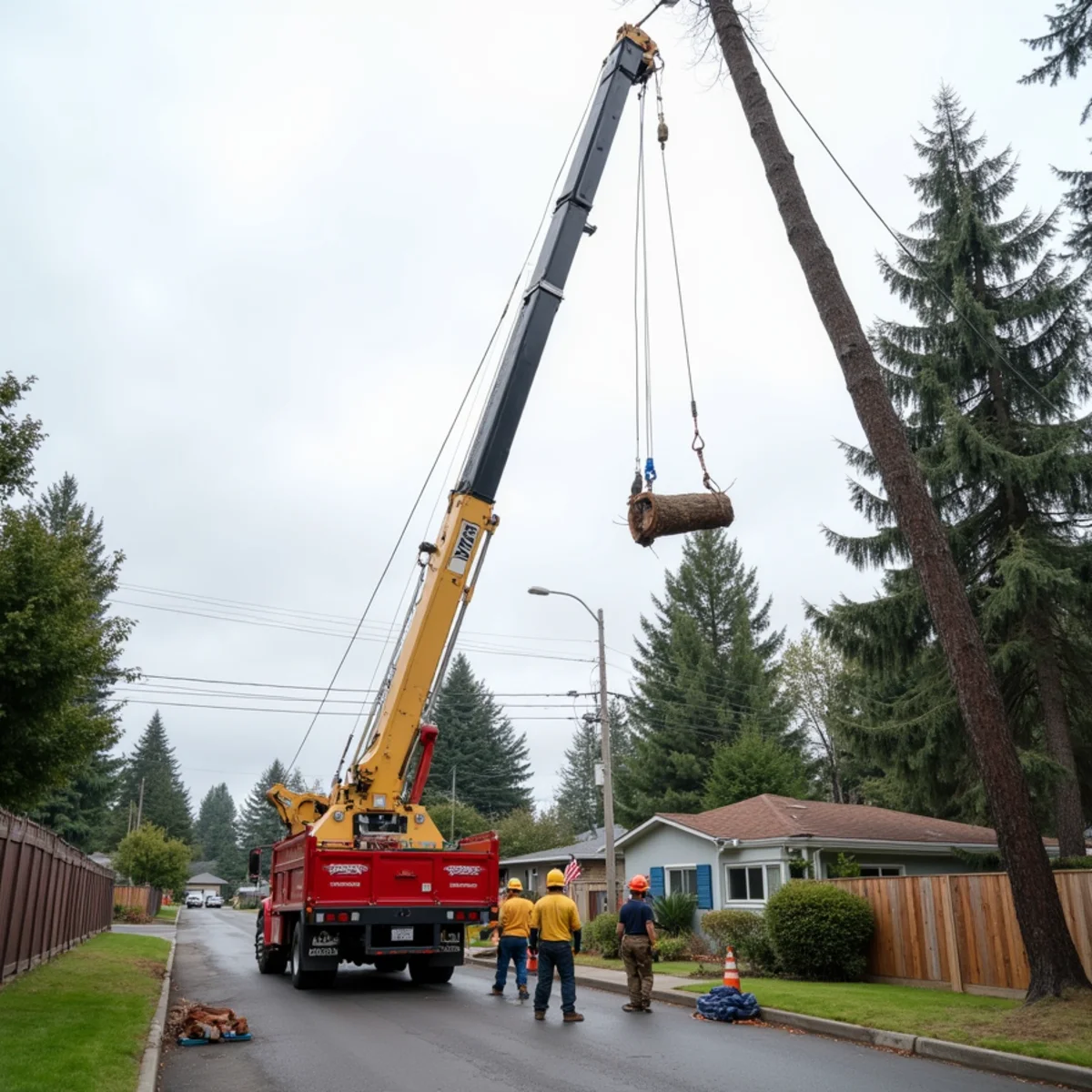
Limbing up is the highest-value work on most properties. The rule of thumb is six to ten feet of clear trunk on a mature tree, and never more than the bottom third of the live crown — past that you start hurting the tree you are trying to keep. Smaller stems get proportionally less, and in a young stand they usually should come out rather than get limbed. Our tree trimming and pruning crews handle that on the same visit as the thinning, because it is one decision, not two.
Zone 3: thinned, not cleared
The outer zone is where people either overspend or do nothing. Clearing it creates its own problems: erosion on these slopes, blowdown along the exposed edge, and a flush of blackberry and scotch broom more flammable in August than the fir you took out. What you want is thinning — fewer stems, a broken-up canopy, dead and suppressed material gone. That is a different job from lot clearing and brush removal, which earns its keep when you are building but is the wrong tool for a fuel break.
Why a Doghair Fir Stand Uphill of the House Is the Worst Case
If there is one thing to fix on a place around Yacolt or Amboy, it is usually a dense stand of young Douglas fir on the slope above the house. Regeneration comes in thick after a harvest or a blowdown, nobody pre-commercially thins it, and you end up with small stems shoulder to shoulder, crowns locked together, dead limbs down to the ground, and a dry needle mat underneath.
That is continuous fuel from the duff to the top of the canopy with no break in it. Put it on a slope and you add the one thing fire likes better than fuel — preheating. Flames lean into the unburned material above them and the whole thing runs uphill. A doghair stand above a house is a fuse pointed at the building.
Sequence the Work So It Actually Does Something
- Start at the house: roof, gutters, the strip against the foundation, under the decks. Cheapest work on the list, and it addresses the ignition source that takes homes.
- Open the driveway and turnaround. If an engine cannot get in and back out, the rest matters less.
- Break the ladder fuels in the middle zone. Limb up, cut out understory conifers, pull brush back from under the mature trees.
- Thin the outer zone uphill first. That slope is where fire is most likely coming from, so it is where thinning buys the most.
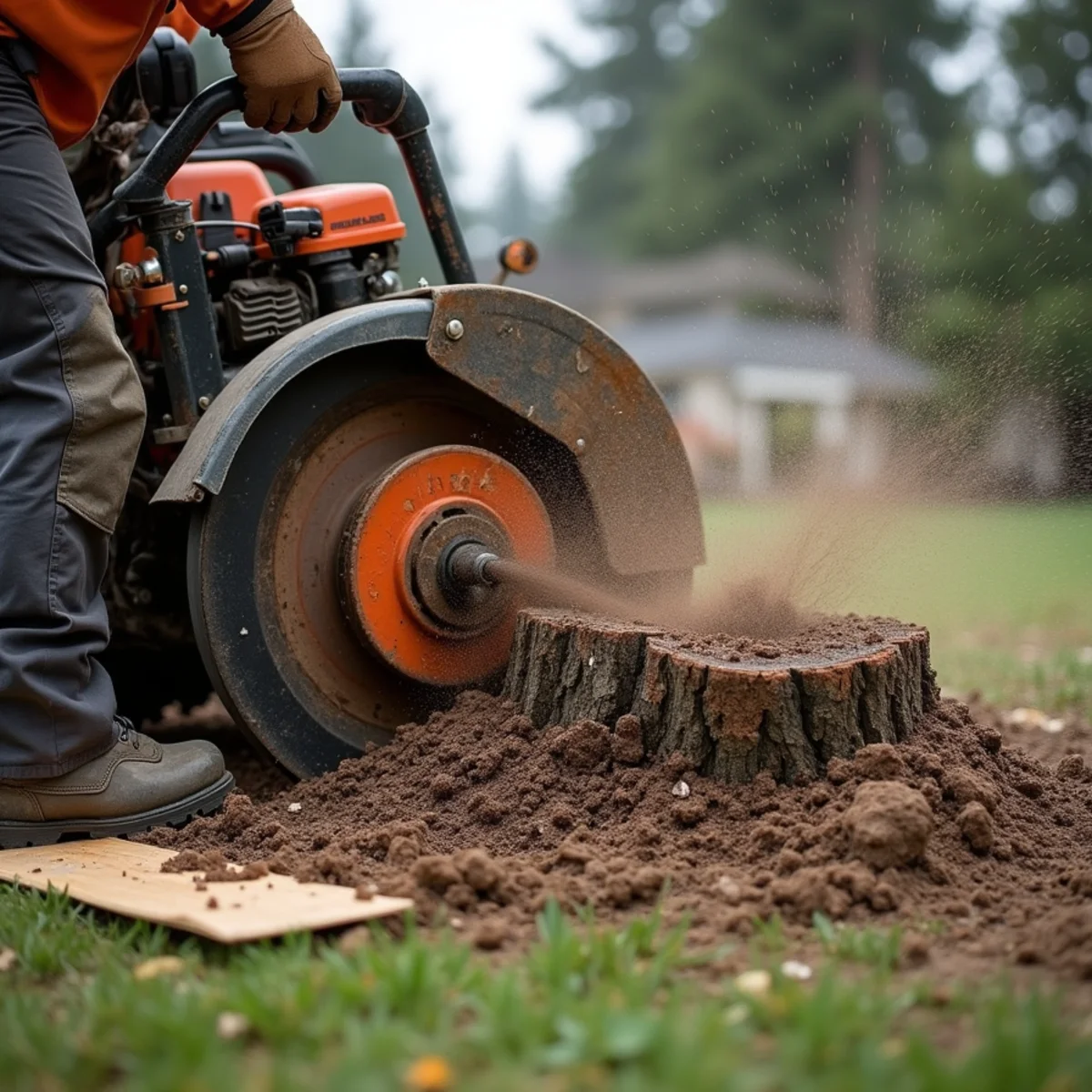
- Deal with the slash. Everything you cut is now fuel on the ground. Chip it, haul it, or burn it in a legal window.
- Put it on a cycle. Needles fall every year and brush comes back. Ground treated five seasons ago and never touched since is most of the way back to where it started.
Rules on outdoor burning, permits for work near streams and steep slopes, and what counts as a regulated critical area vary parcel to parcel out here, and burn windows shift with conditions. Verify with the county and your fire district for your address before you light a pile or cut near water.
Keep the Documentation for Your Insurer
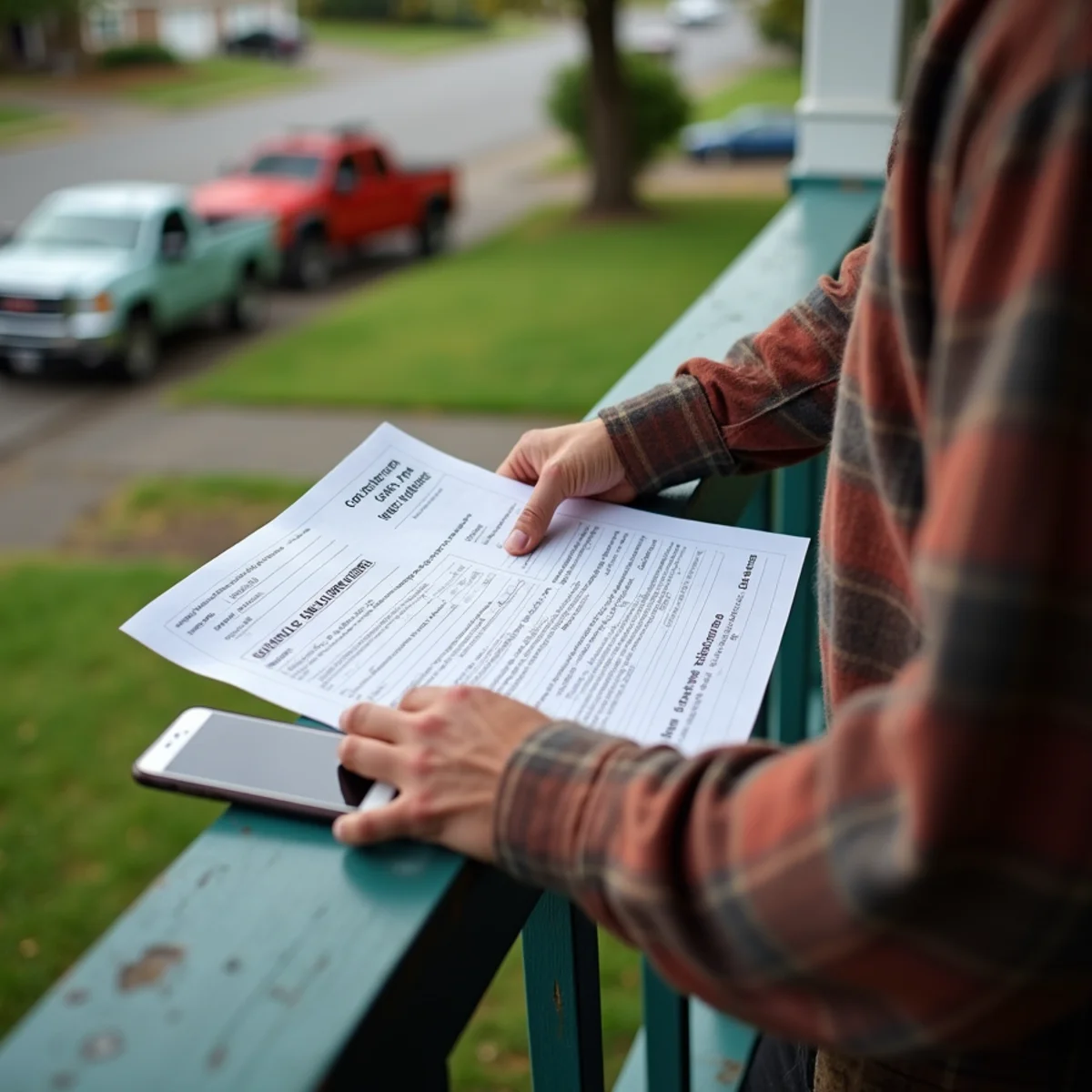
Carriers writing policies in the wildland-urban interface have gotten far more interested in what surrounds the building. Some ask for photos at renewal, some send an inspector, some tie coverage to specific mitigation. Dated before-and-after photos, plus an invoice describing what was removed and where, is worth keeping. This is general information, not insurance advice — your policy, your carrier and your agent govern what applies to you.
Where to Start
Most properties do not need the whole list in one season. They need the ground closest to the house done properly, the driveway opened, and a plan for the hillside above. Ryan walks every estimate himself, looks at the slope, the stand and the structure together, and tells you what would change the outcome and what would just be money spent. Free on-site estimates across Clark and Cowlitz County — call (208) 635-2100.