Columbia Tree Professionals LLC logo
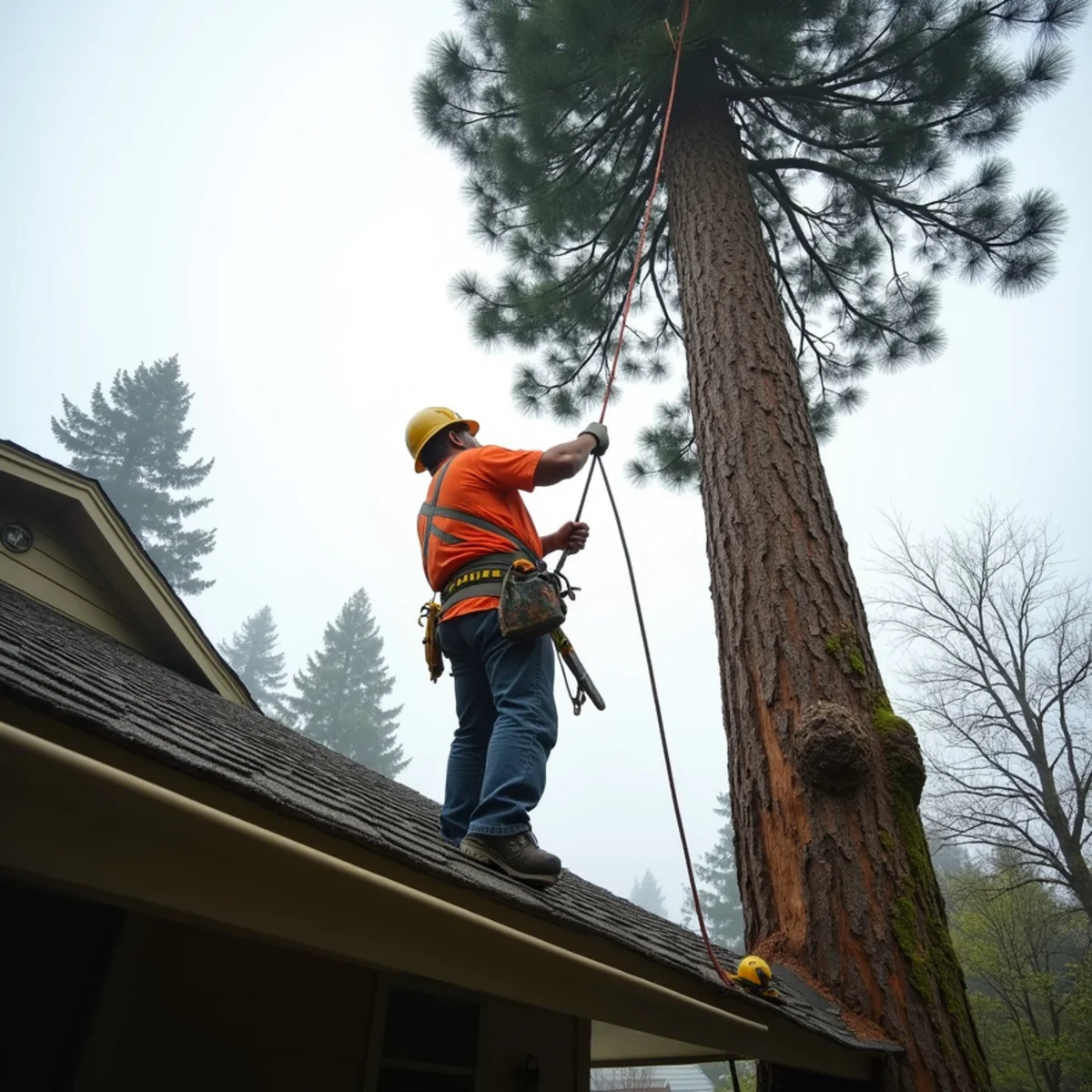
Climber rigging down a leaning Douglas fir beside a home in Cowlitz County, Washington

Cowlitz County · Clark County

Hazard Tree & Limb Removal in Washington

When a tree threatens your house, shop or driveway, you need a straight answer before you need a chainsaw. We give you both.

  • Free On-Site Estimates
  • Licensed & Insured
  • 34 Google reviews

Want a straight answer on your hazard tree & limb removal job? We come look for free and put the price in writing.

Most of the trees we take down were fine ten years ago. Something changed — a neighbor cleared the lot next door and exposed a fir that spent forty years growing inside a stand, a wet winter softened the ground under a root plate, or a codominant union finally split after one too many south winds up the river. The tree did not become dangerous overnight. It just finally showed you.

A hazard tree is not simply a big tree or a dead tree. In arborist terms it is a tree with a structural defect, a likelihood of failure, and a target underneath it worth protecting. All three have to line up. A hollow maple in the back corner of five acres is a wildlife tree. The same maple eight feet off your bedroom is a problem that needs solving this month, not next spring.

What Actually Makes a Tree Hazardous in Southwest Washington

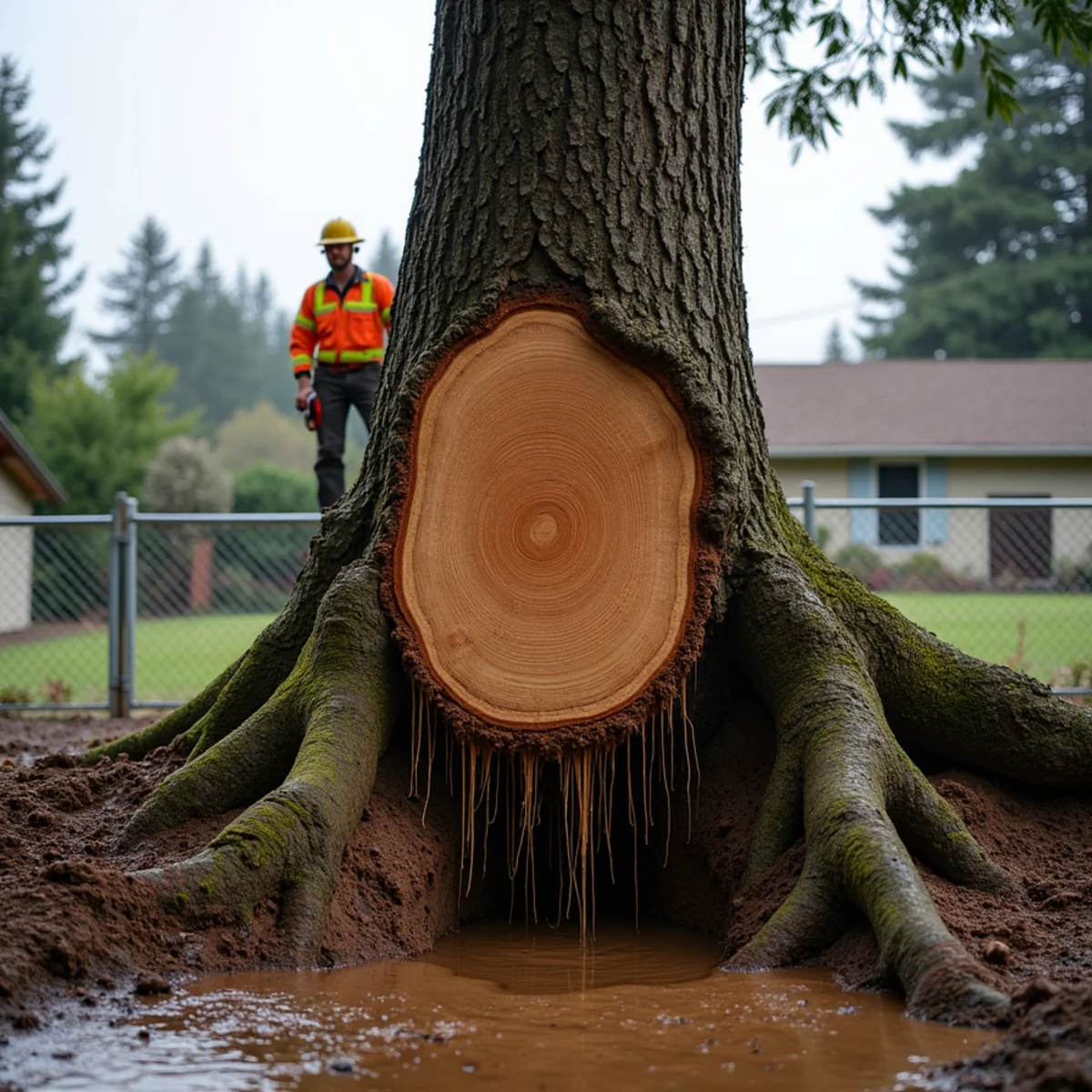
Our failures here follow patterns, and they are not the same patterns you would see in Spokane or the Puget Sound lowlands. The Columbia River valley funnels south and southwest wind straight up through Kalama, Longview and Kelso, and it arrives in November and December on ground already saturated from weeks of rain. Saturated soil plus wind load is how a perfectly healthy-looking Douglas fir ends up on its side with a twelve-foot root plate standing in the air.

That combination is why we care as much about what is under a tree as what is above it. On filled floodplain lots along the dike districts, on the flatter Longview grid, and on the hillside cuts around Kelso and Columbia Heights, the rooting depth is often far shallower than the canopy suggests. We look for heaving soil on the windward side, cracks in the ground, moss lines that no longer sit level, and root flare that disappears under years of built-up bark mulch.

Defects We Look For First

  • Codominant stems with included bark — two trunks of near-equal size joined in a tight V, with bark pinched inside the union instead of wood. These split under snow and wind load, and bigleaf maple does it constantly.
  • Root plate movement — soil cracking or lifting on the side opposite the lean, which means the tree is already failing and is being held up by whatever roots remain.
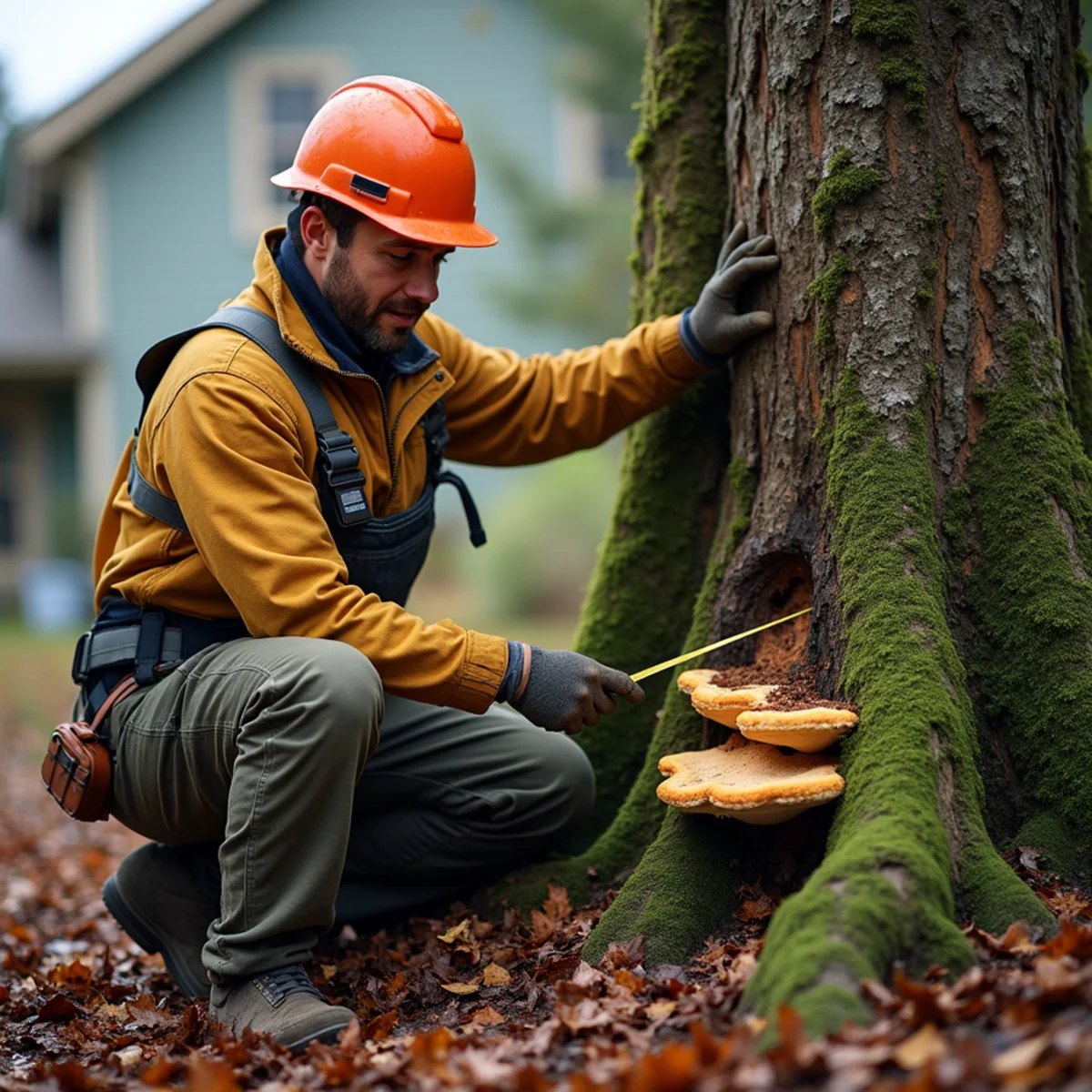
  • Conks and fruiting bodies at the root collar — the visible sign of decay that has usually been working through the base for years before it shows.
  • Hangers and widow-makers — broken limbs caught in the canopy after a storm. These kill more homeowners than the removal itself ever would.
  • Cavities and seams on the trunk, especially where a large limb tore out and never sealed.
  • Sudden lean with fresh soil disturbance, as opposed to the gradual phototropic lean a tree grows into over decades. One is an emergency; the other usually is not.

We Will Tell You When the Tree Can Stay

This is the part that surprises people. A good share of the hazard calls we walk end with us recommending something other than removal — a crown reduction to cut the sail area, a cable between two leaders, deadwood cleaned out of the canopy, or simply a note to check it again next year. Removal is permanent and it is the most expensive option on the menu. If it is not the right call, we will say so, and we will explain what we saw well enough that you can judge for yourself.

Ryan walks every estimate personally. That matters more than it sounds. The person telling you whether the tree stays or goes is the same person who has to rig it out if it goes, and who carries the liability if the assessment is wrong. There is no incentive here to sell you a removal you do not need, and no commissioned salesperson between you and the crew.

How We Take Down a Tree That Cannot Simply Be Felled

Almost nothing we remove has room to fall. The trees that worry people are the ones eight feet from a roofline, over a fence, beside a shop, or hemmed in by a septic field and a garden the homeowner has spent a decade building. Those come out in pieces, on ropes, under control.

A climber ascends and sets rigging above each cut. Limbs are tied off, cut, and lowered rather than dropped. As the spar comes down, blocks and friction devices control the speed of every piece so the load never shock-loads the rigging or the ground crew. On tight lots we often set ground protection over lawns and beds first — one of the reviews we are proudest of is from a customer who noted we did not damage a single flower.

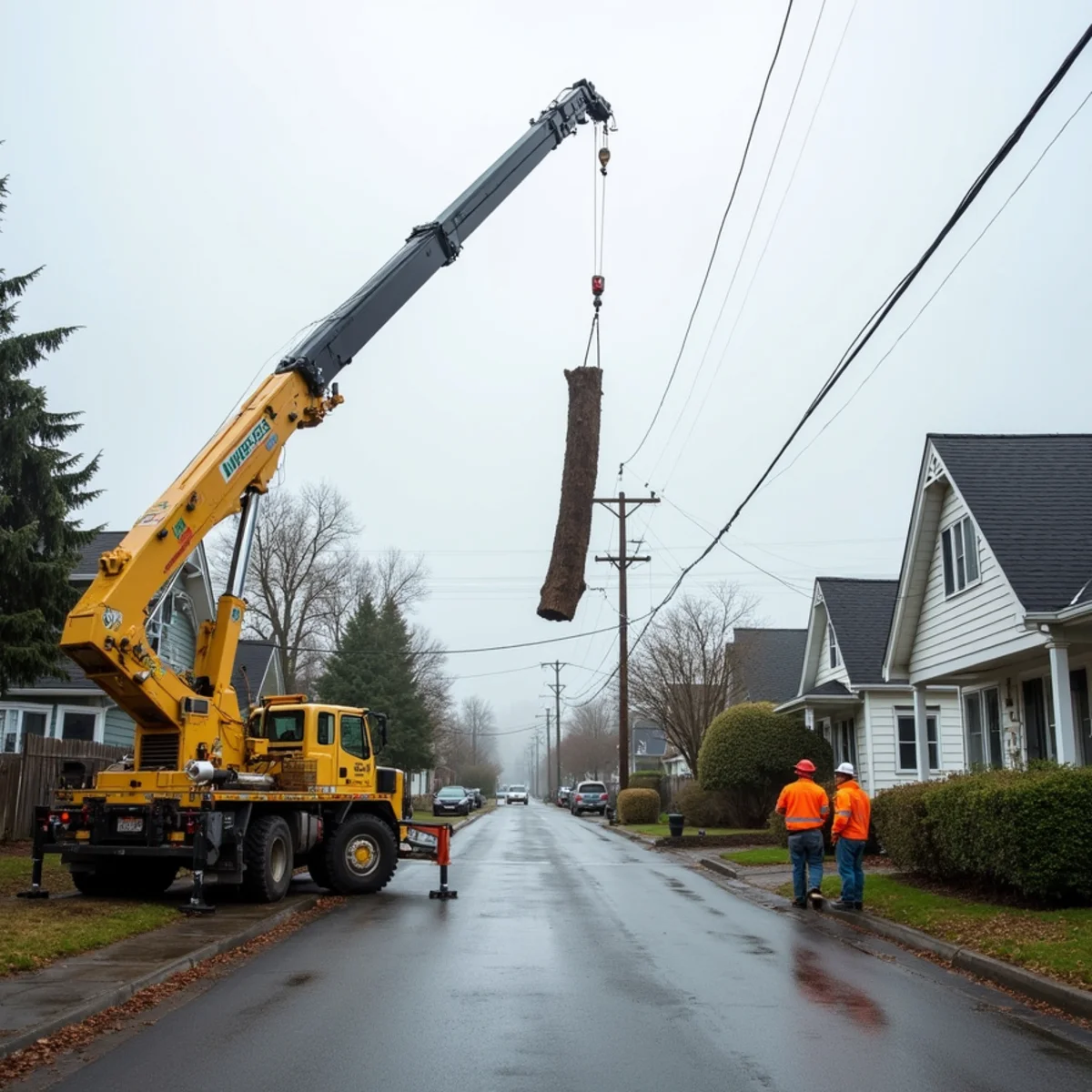
Where a backyard is genuinely locked in, or the wood is too decayed to safely climb, we bring a crane and pick the tree out in sections. It sounds like the expensive option and often is not, because a crane can turn a two-day rigging job into a four-hour lift with less risk to everything underneath it.

What Happens to the Mess

Cleanup is part of the job, not a line item we hope you forget to ask about. Brush goes through the chipper, the wood is cut to length, and the site is raked before we leave. If you burn, say the word and we will leave the rounds stacked — we have done it plenty of times, and one customer ended up with a winter of firewood neatly stacked against the wall. If you want the chips for beds, they stay. If you want everything gone, everything goes.

Signs You Need Hazard Tree & Limb Removal

The tree leans more than it used to

A lean that changed recently, especially with cracked or heaving soil on the uphill side, means the root plate is moving. This is the single most urgent sign on this list.

A limb is hung up in the canopy

Broken branches caught overhead come down without warning, in no wind, on no schedule. Do not park, play or work underneath one.

Mushrooms or conks at the base

Fruiting bodies at the root collar mean decay is already established in the structural roots or butt of the trunk. What you see outside is the late stage of something that started years ago.

A split or crack in a main union

Two trunks joined in a tight V with a visible seam are pulling apart. Snow load or a hard south wind finishes the job.

The crown is thinning from the top down

Dieback that starts at the top and works inward often points to root disease rather than anything happening in the canopy.

The neighbors just cleared their lot

Trees that grew up sheltered inside a stand have never carried full wind load. Expose one edge and the remaining edge trees become the most likely failures on the block.

How a Hazard Tree & Limb Removal Job Runs, Start to Finish

  1. You call, we come look — free

    Tell us what you are seeing and we will schedule an on-site visit. No charge, no obligation, and no pressure to decide while we are standing there.

  2. An honest assessment, out loud

    We walk the tree, the root collar and the target underneath it, then tell you plainly whether it needs to come down, can be reduced or cabled, or simply monitored. If we think you can keep it, we say so.

  3. A written estimate with the scope spelled out

    You get the price, what is included, what happens to the wood and debris, and whether any permit applies. No verbal ballparks that grow later.

  4. Site protection and setup

    We mark the drop zone, protect lawns and beds where needed, confirm utility clearances, and brief the crew on the rigging plan before anyone leaves the ground.

  5. Controlled, piece-by-piece removal

    Limbs are rigged and lowered rather than dropped. The spar comes down in sections under friction control. Nothing falls that we have not decided will fall.

  6. Full cleanup and a walkthrough

    Brush chipped, wood cut to length or hauled, site raked. We walk it with you before we pull out, and we handle the stump if you want it gone.

What Drives the Price of Hazard Tree & Limb Removal

We do not publish flat rates, because a tree is not a product — two firs of the same height on two different lots are genuinely different jobs. Here is what actually moves the number, so you can compare quotes on the same terms.

Size and species
Height, trunk diameter and wood density all drive the hours. A 100-foot Douglas fir is not twice the work of a 50-foot fir — it is considerably more, because everything about the rigging scales with weight.
What is underneath it
A tree with a clear drop zone is the cheapest tree we will ever take down. A tree over a roof, a shop, a fence or a septic field has to come out piece by piece on ropes, and that is where the hours go.
Access for equipment
If we can get a chipper and truck close, cleanup is quick. Backyard-locked lots, narrow Kelso hillside driveways and long rural pulls mean everything moves by hand, which adds time.
Crane versus climb
Bringing a crane costs more per hour and often less per job. On a decayed spar that is unsafe to climb, it is not really optional — it is the only responsible method.
Condition of the wood
Sound wood is predictable. Advanced decay is not, and it changes the entire approach, because a climber cannot trust hollow wood to hold a rigging point.
What you want left behind
Hauling everything off costs more than leaving rounds stacked for firewood or chips spread on your beds. Stump grinding is priced separately by diameter and depth.

Hazard Tree & Limb Removal on Real Jobs
Photographs from actual work in Cowlitz and Clark County — not stock.

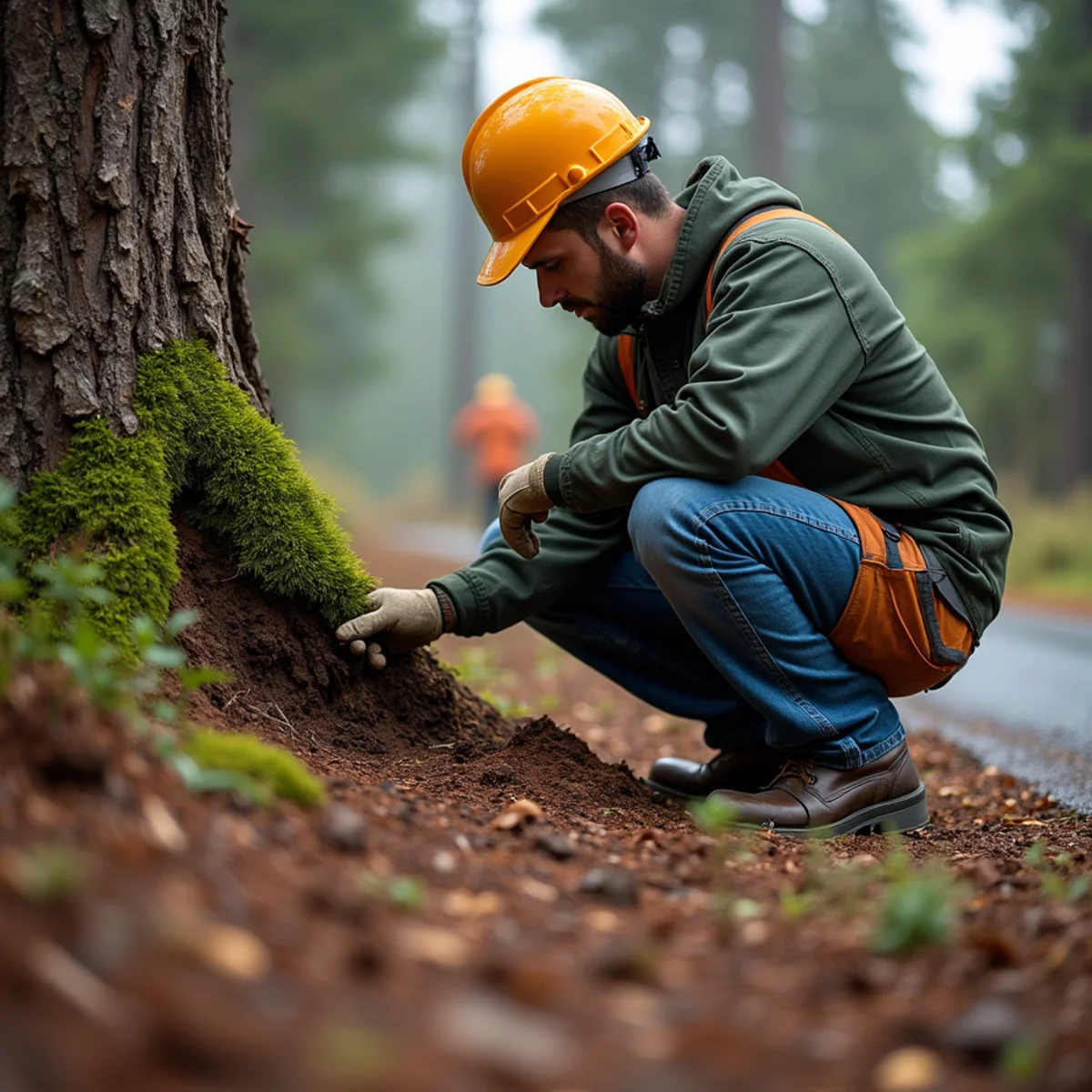
  • Arborist examining the root collar of a leaning Douglas fir for decay in Cowlitz County
    Every hazard call starts at the base, not the canopy.
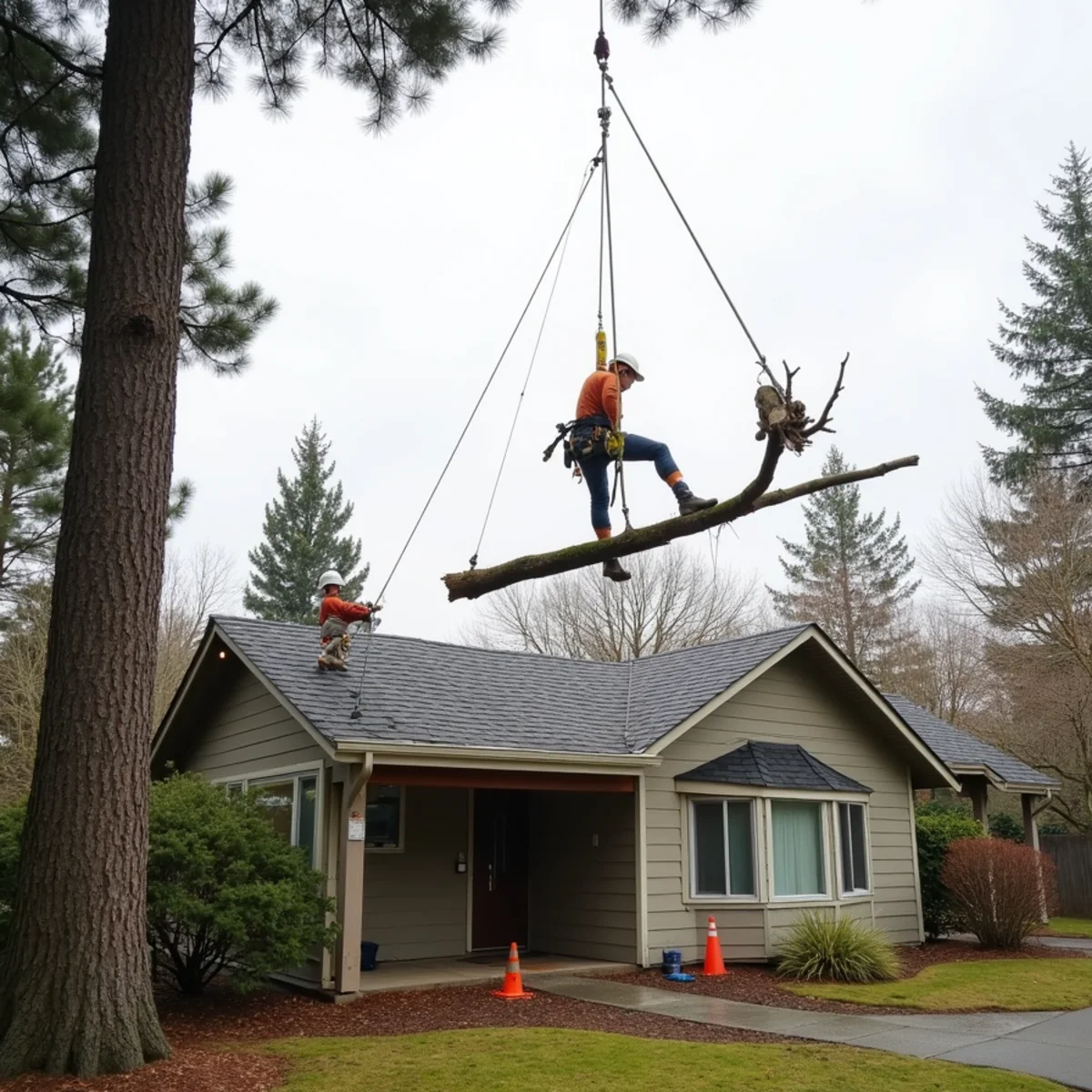
  • Climber lowering a rigged limb over a house roofline on a tight Kelso lot
    Nothing falls that we have not decided will fall.
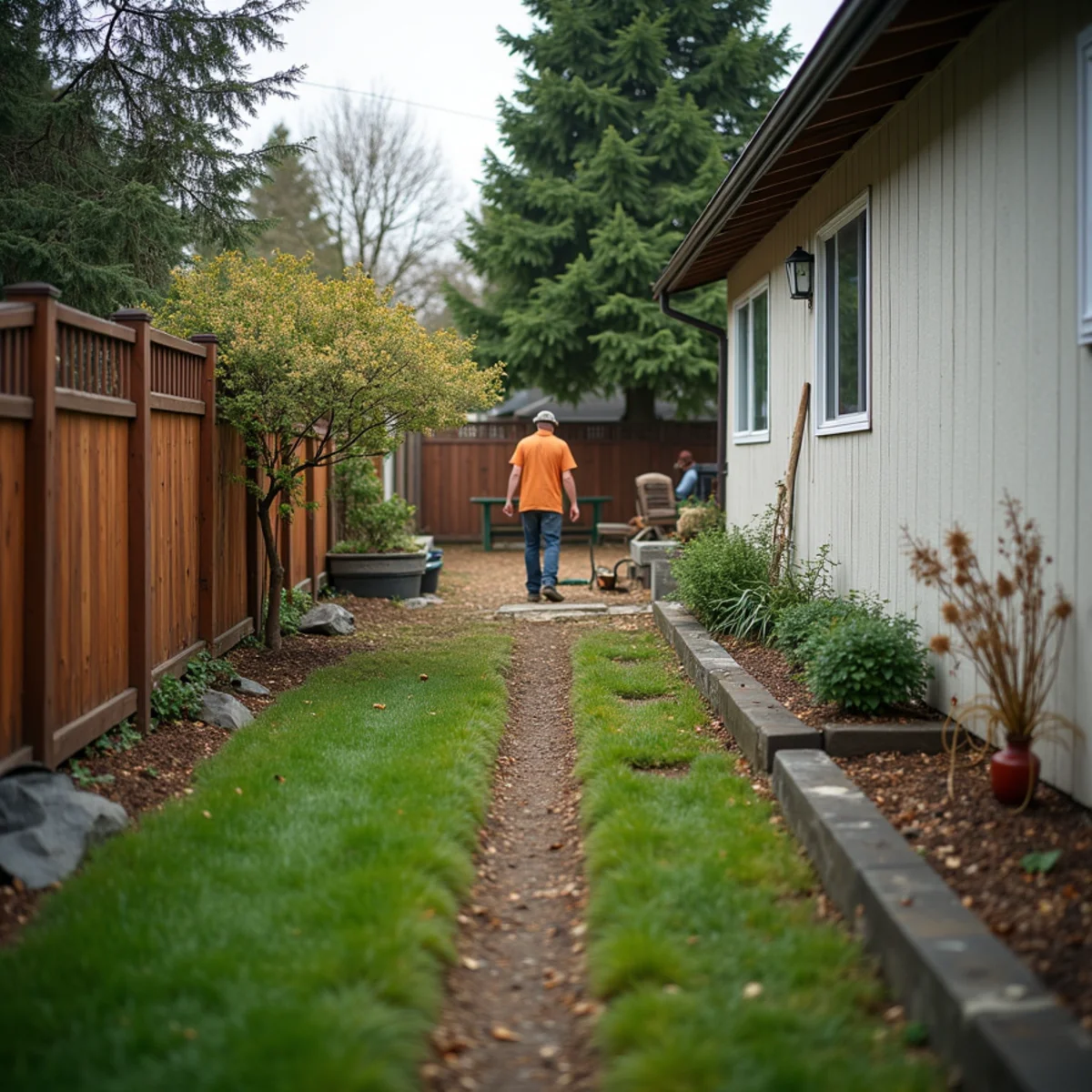
  • Yard raked clean after a hazard tree removal beside a Southwest Washington home
    Cleanup is part of the job, not an upsell.

Get a written price for your hazard tree & limb removal job.

Free on-site estimate, no obligation, and an honest opinion on whether the work is even necessary.

Hazard Tree & Limb Removal Questions, Answered

  • The honest answer is that some of it you can judge and some of it you cannot. A fresh lean with cracked soil, a hung-up limb over a driveway, or a visible split in a main union are all things you should act on now. Thinning crowns, old scars and gradual leans are much harder to read from the ground and frequently turn out to be fine. That is exactly what a free on-site assessment is for — we would rather drive out and tell you the tree is healthy than have you guess.

Often Booked Together

Related Tree Services
Most jobs touch more than one of these. We handle all of it with the same crew, so nothing gets handed off.

All services
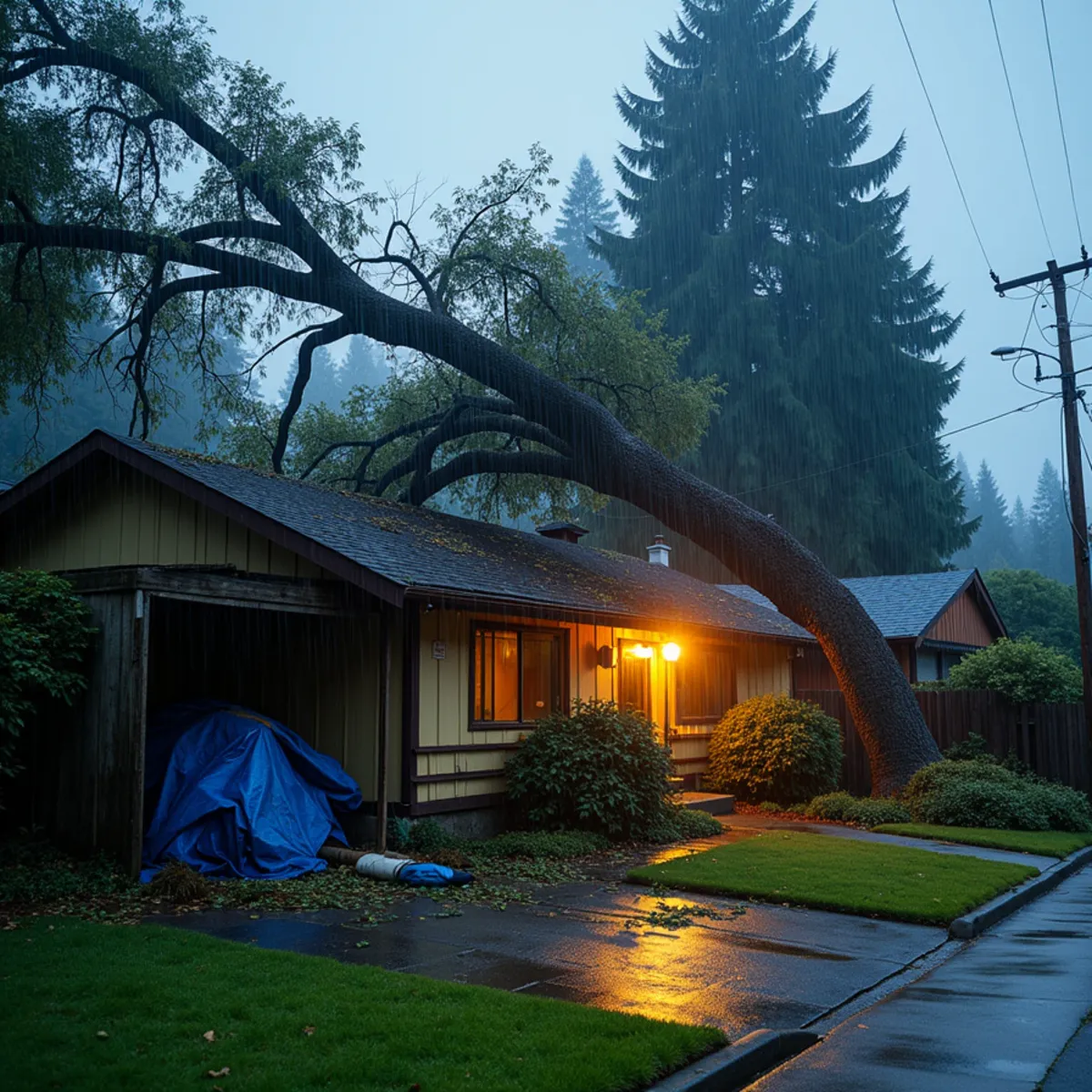
Crew removing a storm-fallen Douglas fir from a house roof after a windstorm in Kelso, Cowlitz County, Southwest Washington

Emergency & Storm Damage Response

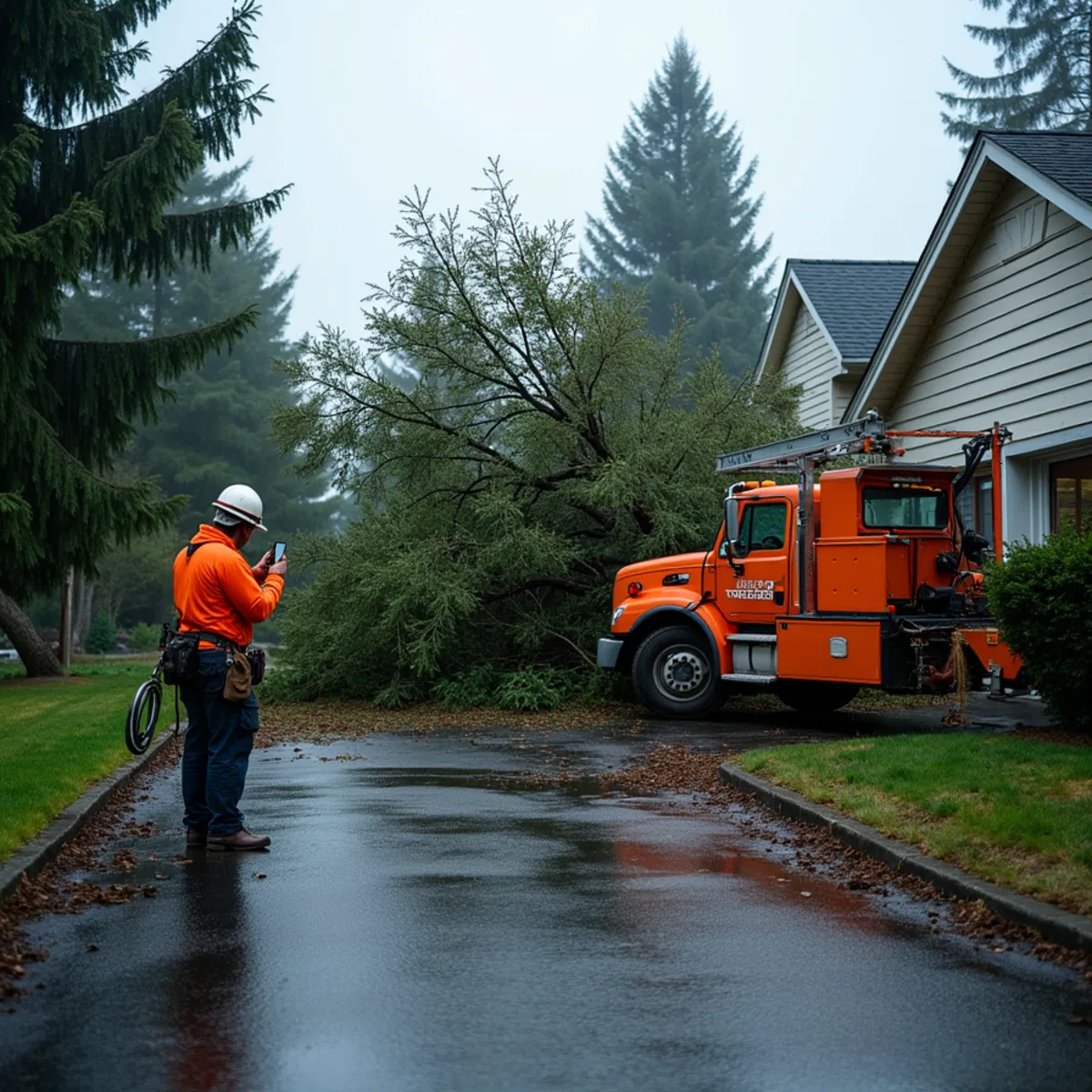
Trees on structures, blocked driveways and limbs hung up in the canopy — documented for your insurer, then taken apart in the right order.

Learn more
Crane lifting a cut section of a large cottonwood over a rooftop during a tree removal in Longview, Cowlitz County, Washington

Crane-Assisted Tree Removal

For trees over rooflines, backyard-locked lots and spars too decayed to climb — lifted out in controlled sections instead of rigged down piece by piece.

Learn more

Worth Reading First

Before You Book This Work
Two articles that cover the parts of this job most homeowners have questions about.

All articles
Uprooted Douglas fir with its root plate standing on end beside a home after a winter windstorm in Cowlitz County, Southwest Washington
Tree Health

Why Douglas Firs Uproot in the Columbia River Wind Corridor

South wind funneled up the river valley, winter-saturated ground and a shallow root plate are what put healthy Douglas firs on their side here. Here is the mechanism, and the warning signs you can read from the ground.

5 min read
Large Douglas fir fallen across the roof of a house after a windstorm in Cowlitz County, Southwest Washington
Storm & Emergency

A Tree Just Hit Your House: What to Do in the First 24 Hours

A tree on the roof at four in the morning is not the moment to improvise. Here is the exact order of operations — who to call, what to photograph, and what not to touch — from a crew that has worked these calls all over Southwest Washington.

5 min read

Free On-Site Estimates

Need hazard tree & limb removal? Let’s take a look.

Ryan Norris walks every estimate himself. Free, on-site, and you’ll get a straight answer about whether the work is necessary at all.

  • 34 Google reviews
  • Licensed & Insured
  • Free On-Site Estimates
  • Based in Kelso, WA
(208) 635-2100Tap to call — free estimateGet a QuoteFree on-site estimate