How to Check If a Tree Service Is Licensed in Washington — and What That Actually Means
The Monday after a hard south wind, half the driveways on a street have a strange truck in them. Someone knocks, points at the leaning fir in your back corner, and says the crew is already working in the neighborhood and can take it out today. Cash is easier. A chipper is running two houses down, which makes it feel legitimate. That knock is how a lot of homeowners here end up with a caved-in shed or an injured worker in the yard.
Everyone tells you to hire someone licensed, bonded and insured. In Washington that phrase does not mean what most people think. There is no state license for tree work — no exam, no arborist board, no tree-service license number to look up. What exists instead is four separate things you can verify yourself in about ten minutes, and one of them is the one nearly everybody skips.
What "Licensed" Actually Refers To Here
A company doing tree work for hire in Washington is generally required to register as a contractor with the Department of Labor and Industries. That registration is what people mean when they say license. It is not a test of skill and says nothing about whether the climber can rig a spar over your roof. What it proves is that the business exists on paper under a legal name and UBI number, has posted a surety bond, and carries liability insurance on file.
Registration tells you the company is accountable and traceable. Competence is a separate question. A registered outfit can still be careless; an unregistered one leaves you nowhere to go when something breaks.
The Four Things to Verify
- Active L&I contractor registration under the exact legal business name printed on your estimate.
- An active surety bond. It is small relative to most tree work and exists to give you a formal claim path — not to fund a new roof.
- General liability insurance in force on the days your job actually happens, not on file at some point in the past.
- Workers compensation for every person who sets foot on your property. This is the one homeowners never ask about, and the one with the sharpest teeth.
How to Look It Up Yourself
L&I publishes a free public search called Contractor Verify. You need no account and no cooperation from the contractor. Work through it in this order.
- Ask on the phone for the exact legal business name and the UBI number. A company that hesitates has told you something.
- Search Contractor Verify by name or by UBI. Business names get reused and misspelled, so the UBI is cleaner.
- Confirm the status reads active, then check the effective date. A registration issued weeks ago on a company advertising decades of experience deserves a question.
- Read the bond and insurance rows, including expiration dates and the surety and carrier names.
- Check the lawsuits and infractions section — claims against the bond are public.
- Confirm there is a workers compensation account with hours actually being reported, not a dormant owner-only account on a company that arrives with a crew of four.
Ten minutes of this beats any badge on a truck door. Do it whether you are booking a routine prune or a formal tree risk assessment and arborist report for a permit or insurance file.
Workers Comp Is the One That Lands on You
Tree work sits near the top of the injury tables for a reason. Sixty feet up, a running saw, gravity, rigging under load. If a climber without workers compensation coverage is hurt in your tree, the medical bills and lost wages do not evaporate. The worker looks for a responsible party, and the owner who hired the crew is a natural place to start. Homeowner policies vary on whether they respond.
This is general information rather than advice on your situation — your policy language, your insurer and, if it comes to it, your attorney govern what happens on a claim. The practical version: ask whether everyone on the crew is covered, then verify it. That includes the after-hours crew that turns up for storm damage and emergency tree work, when nobody wants to slow down and read paperwork.
What a Real Certificate of Insurance Shows
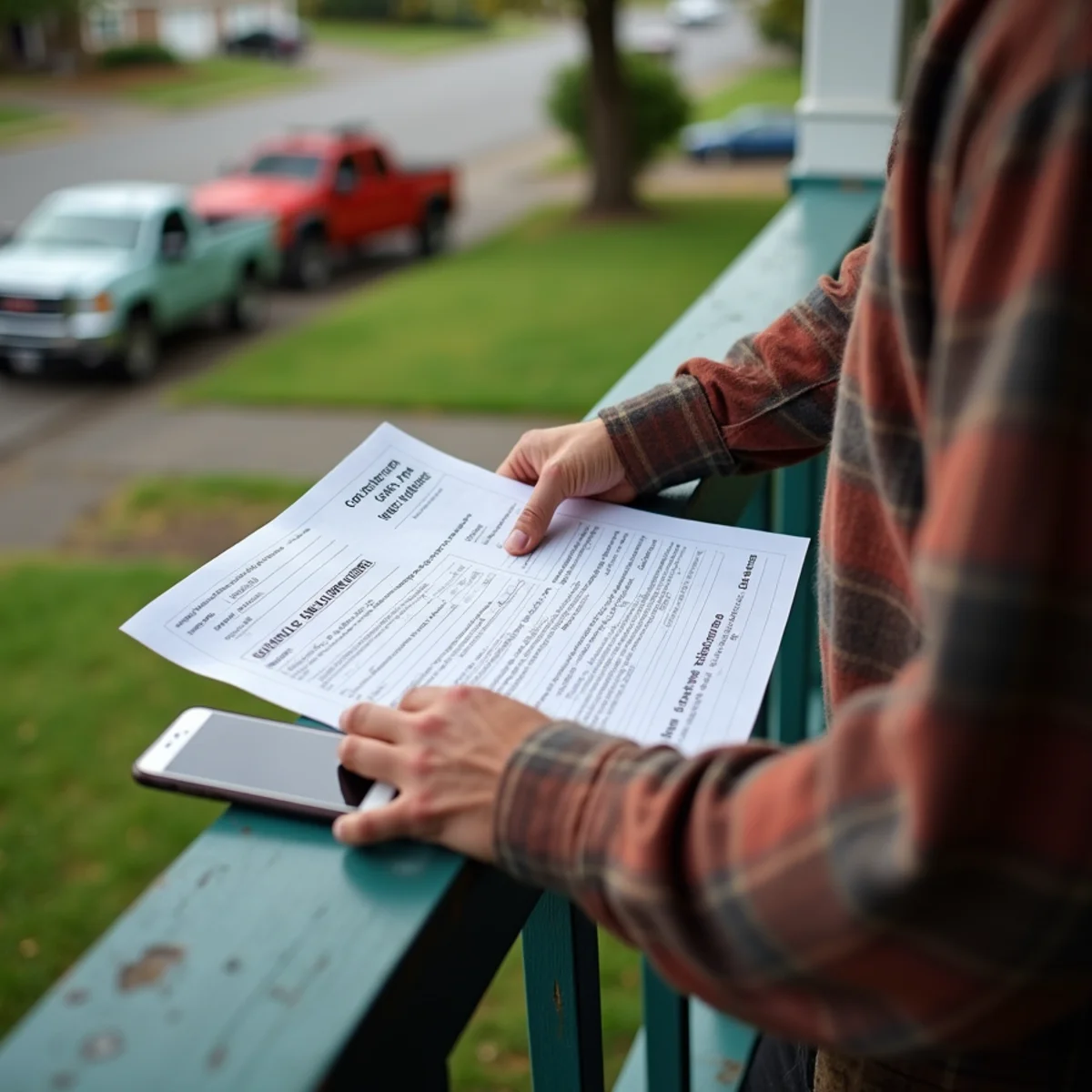
A certificate of insurance, or COI, is a one-page summary of active coverage. What matters is where it comes from. A legitimate COI is issued by the agent or carrier and sent to you directly, with you named as certificate holder. A PDF forwarded by the contractor is not verification — editing one is trivial. Getting an agent to email a fresh copy is trivial too, which is why the ask is fair.
- The named insured matches the legal business name on the L&I record.
- Policy dates cover the days your work is actually scheduled.
- General liability appears with per-occurrence and aggregate limits shown.
- Washington workers compensation is addressed, along with employer liability or stop-gap coverage.
- The agency name and phone number are printed on it, so you can call to confirm.
Spotting the Post-Storm Door-Knockers
After every real windstorm, crews from outside the area follow the damage. Some are fine. Many are not, and they share a set of habits.
- No written estimate — a number on a card with no scope, no cleanup terms, no address.
- Pressure to decide before they leave the driveway, with a discount that expires today.
- Cash only, or a large deposit demanded before work is scheduled.
- Magnetic door signs, out-of-area plates, no fixed local address you can find.
- Vague or irritated answers about the legal name, the UBI, or workers comp.
- A price quoted from the curb without walking the tree or the drop zone.
Homeowners hiring tree service in Longview and out through Vancouver see this every winter, and the damage shows up weeks later — a topped tree that now has to come out entirely, a rutted lawn, a stump ground into a sprinkler line. None of it is recoverable from a company you cannot find again.
If You Are Hiring for Someone Else
Boards, property managers and business owners carry a heavier version of this, because the exposure is not only their own. Most management agreements require vendor insurance documented before work starts, and many require the association named as an additional insured. That is routine for HOA and commercial property tree care, and a contractor who finds the request unusual has not worked much commercial ground.
Ask Us the Same Questions
We would rather be checked than taken on faith. Ask for our legal business name and UBI, look us up on Contractor Verify yourself, and we will have our agent send a current certificate of insurance straight to you. Ryan walks every estimate personally, the on-site estimate is free, and you get a written scope before anyone starts a saw. Call (208) 635-2100 and we will come look at your tree.