
Cowlitz County · 98632
Tree Service in Columbia Heights, WA
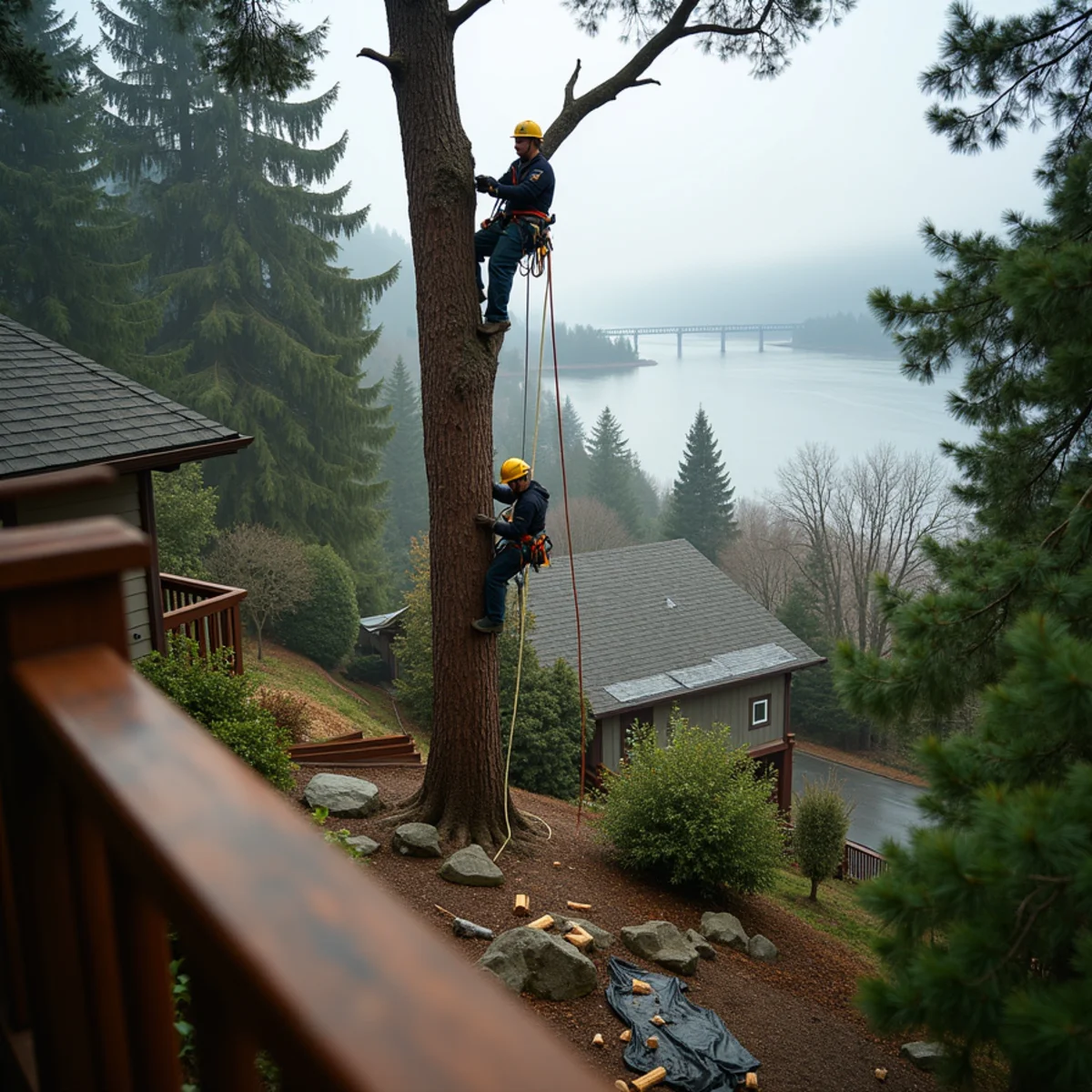
People up here pay for the view twice — once when they buy the house, and again about twenty years later when the firs below the deck have quietly grown across the Columbia and taken the Lewis and Clark Bridge with them. Most Columbia Heights calls start with somebody standing at a window describing what they used to be able to see.
- Free On-Site Estimates
- Licensed & Insured
- Based in Kelso
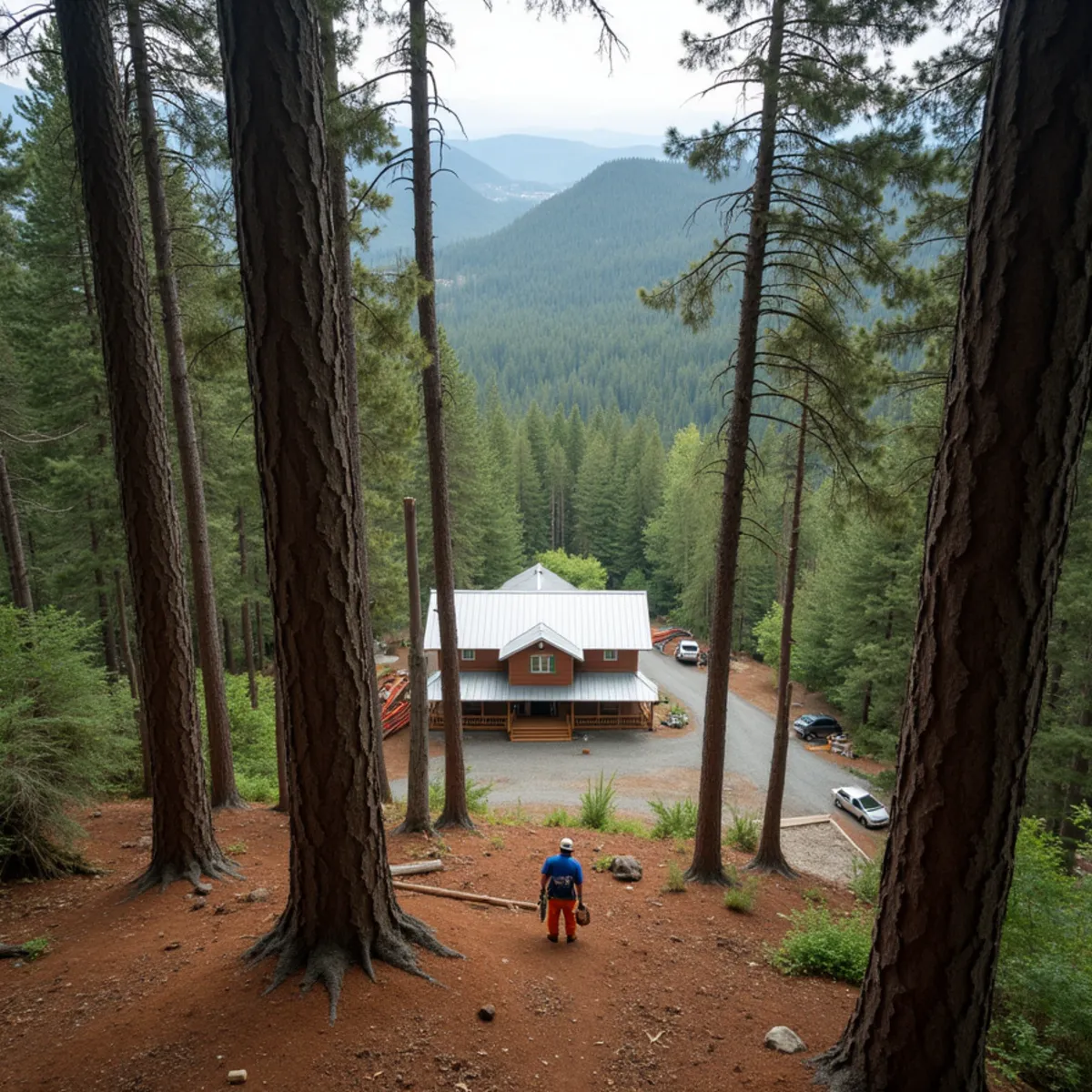
Columbia Heights is the address in Longview where the ground finally stops being flat. Houses sit stepped into a west-facing grade, most of them below the road, with the lot falling away toward the river on the far side of the living room glass. That single fact — the yard is downhill from the driveway — shapes everything about how tree work gets done here, from where the truck parks to which direction a spar can safely go.
The tree mix is what you would expect on a slope that was logged, replanted and then subdivided: Douglas fir doing most of the growing, cedar in the wetter draws, bigleaf maple where the fill ran deep, and volunteer alder, cherry and laurel that seeded into the lower bank on their own. Those volunteers are usually the ones sitting square in the middle of the sightline.
View Enhancement Pruning in Columbia Heights Is Surgery, Not a Haircut
The mistake we get called to undo is topping. A topped Douglas fir on an exposed hillside puts out a cluster of weakly attached shoots off the cut, grows back into the view within a few seasons, and turns into the hazard tree you pay to remove later. It also looks like what it is from every other house on the hill. There is a better way to get the same window.
Before anything gets cut, we stand where you actually sit. Not in the yard — in the chair by the window, or at the rail on the deck. Sightlines on a slope change dramatically with a few feet of elevation, and the limb that is killing your river view from the couch is often not the one that looks obstructive from the lawn. Once we know the line, we can be precise about how little we have to take.
- Windowing — removing selected interior limbs to open a gap at the exact height of your sightline, leaving the tree read as a tree
- Crown raising and skirting to recover the foreground water view under the canopy
- Crown reduction back to live lateral leaders on the one or two trees actually carrying the line, never a flat top
- Full removal of self-seeded alder, cherry and laurel that nobody planted and nobody will miss
- Staged work across two seasons where taking everything at once would leave a bank bare and unstable
Steep Driveways, Retaining Walls and Getting Wood Back Up to the Street
Here is the part homeowners rarely think about. On a flat Longview lot, gravity is on the crew’s side — everything falls toward the chipper. In Columbia Heights the chip truck is parked up on a narrow switchback street and the tree is fifty feet below it, so every round, every limb and every wheelbarrow of brush has to come uphill. That is the real cost driver on this hill, more than the height of the tree.
It also means we almost never simply fell into a downhill yard. A stem dropped downslope keeps traveling and reaches far past where the same tree would land on level ground — straight toward the retaining wall, the hot tub or the roof below. So sections get roped and lowered under control, or we set a crane on the street and pick the tree out over the house. Which one depends on the turnaround, the wall and the overhead lines.
Hazard Trees on the West Longview Hillside
Cut-and-fill construction leaves a lot of these lots with a bench of imported soil sitting on compacted subgrade. Roots run sideways through the loose material instead of anchoring into anything, and after a long stretch of Southwest Washington rain that fill behaves less like ground and more like a sponge. Then the wind comes up the river corridor, loads a crown that has been growing for forty years, and the whole root plate rolls out of the bank.
Worth walking out to check before winter: soil heaving or cracking uphill of a trunk, a bulging rockery, bare roots showing where runoff has stripped the slope below a trunk, and a thinning top on an otherwise big healthy-looking fir. None of that means the tree is coming down tomorrow. It means the question deserves an answer instead of a guess.
What Happens to the Stump on a Slope
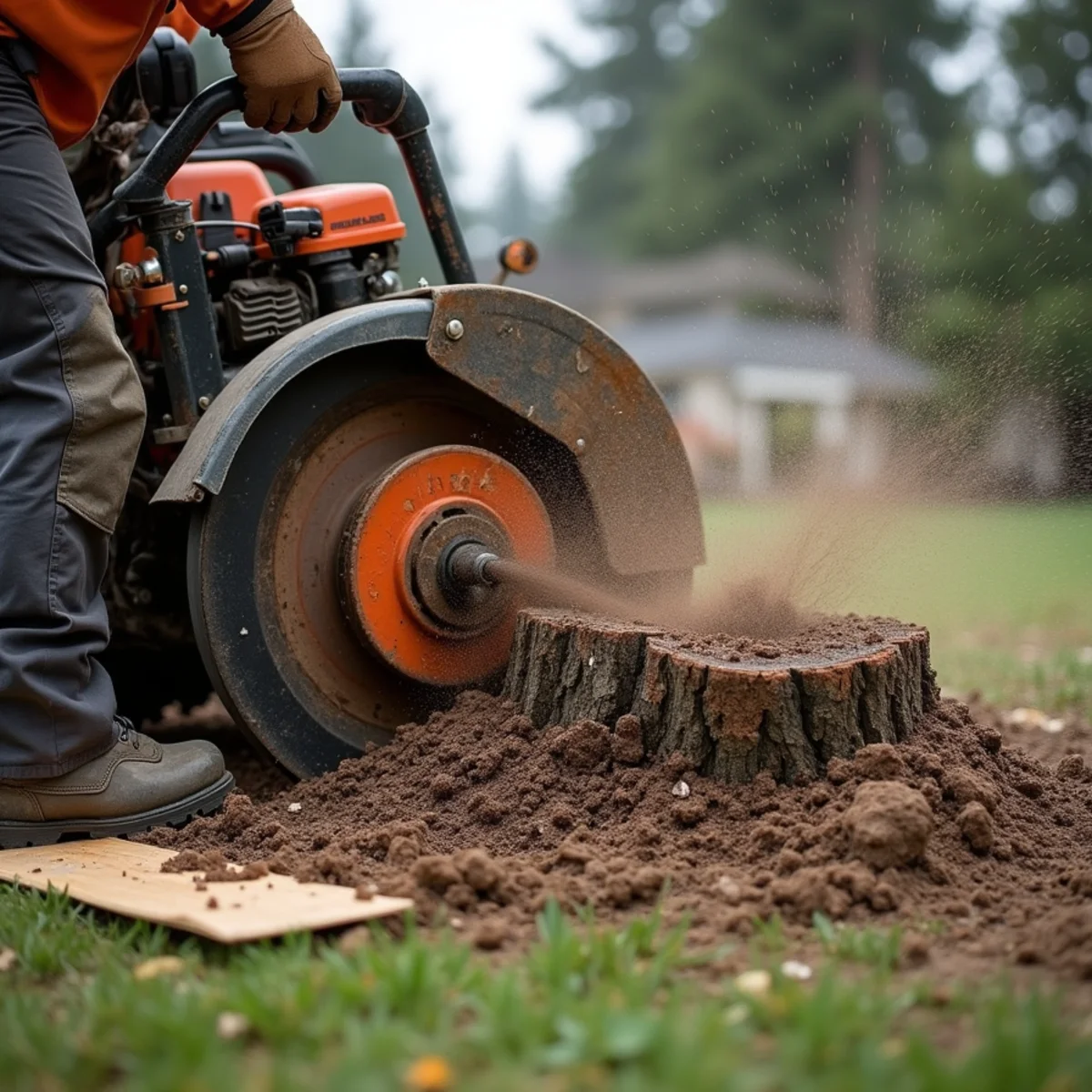
Grinding on a grade is its own problem. The machine has to sit somewhere it cannot slide, which sometimes means winching it into position or cutting a small bench above the stump. On a steep bank we may also recommend leaving the root mass in the ground for a season, because those roots are still holding soil that has nothing else holding it. If that is the call, we say why — and suggest something low to plant in its place that will never grow back into the view you just paid to open.
Neighborhoods & Areas We Cover in Columbia Heights
Tree Services We Provide in Columbia Heights
- View Enhancement & Vista Pruning
- Hazard Tree & Limb Removal
- Tree Trimming & Pruning
- Tree Removal (Large & Tight-Quarter)
- Stump Grinding & Removal
- Tree Risk Assessment & Arborist Reports
Free on-site estimate in Columbia Heights.
Columbia Heights Tree Service Questions
Local Tree Care Reading
Useful If You Own Trees Near Columbia Heights
Free On-Site Estimates
Need a tree looked at in Columbia Heights?
Ryan Norris will come out, walk it with you, and tell you straight whether it needs work. Free, and no pressure either way.
- 34 Google reviews
- Licensed & Insured
- Free On-Site Estimates
- Based in Kelso, WA