
Mason County · WA
Tree Service in Mason County, WA
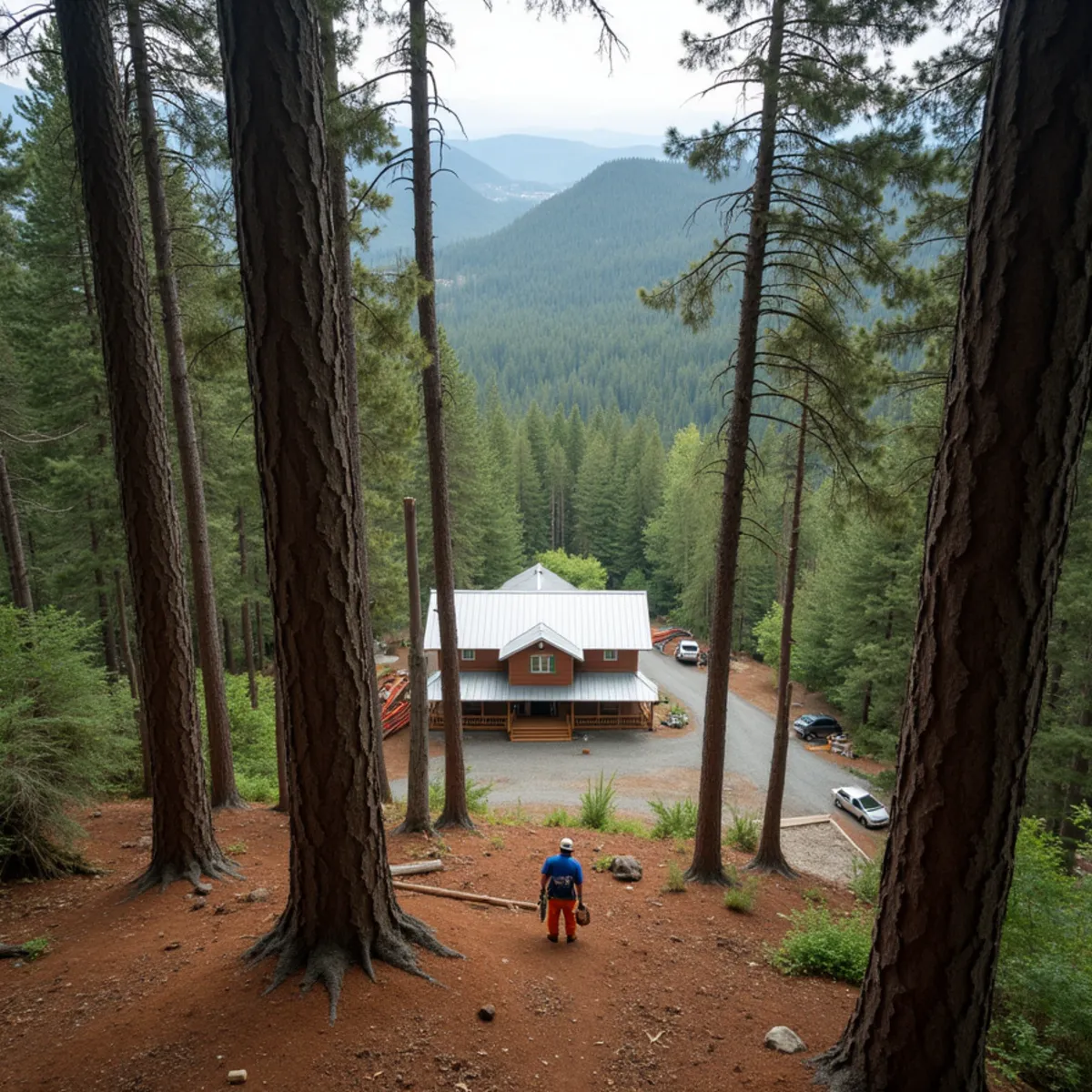
Mason County wraps the bottom of Hood Canal and runs back into the southeast Olympics. Most of the hard tree work here is decided by access, not by the tree — there is simply nowhere to put it once it comes down.
- Based in Kelso, WA
- Planned & larger-scope work
- Licensed & Insured
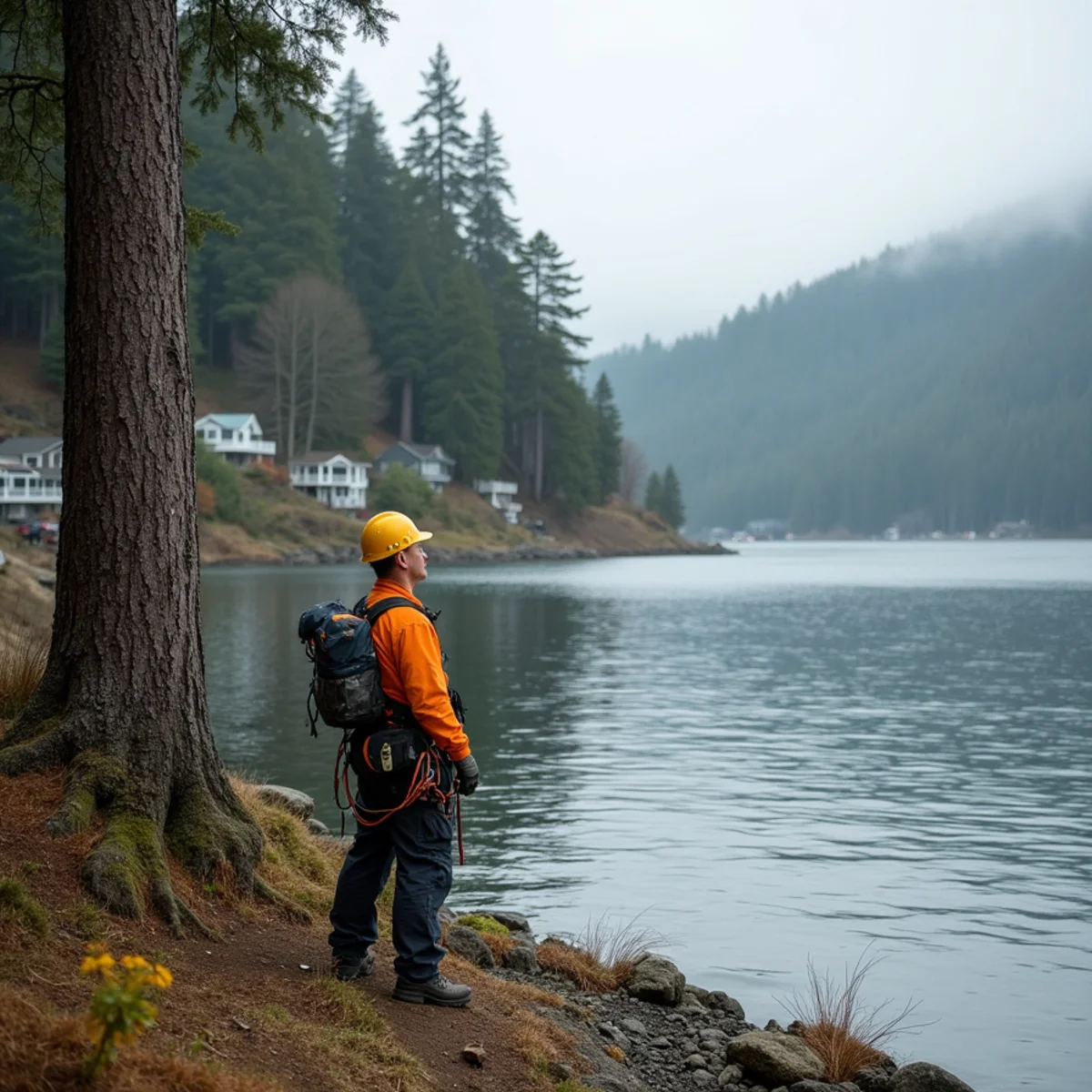
Ask anyone who has worked a shoreline lot on Hood Canal what the hard part is and they will not say the cutting. They will say the eighteen feet of flat ground between the house and the bank.
A Fjord Does Not Leave Much Room to Work
Hood Canal is a glacial trough, not a bay. Ice gouged it deep and left the walls steep, which is why so much of the west shore is a narrow bench caught between the water and the hill. The house, the highway, the drainfield and the driveway all share that bench, and the firs stand on the slope directly above it.
There is frequently nowhere to drop a tree and nowhere to stack the wood once it is down. Rigging it out in pieces over a roofline, or setting a crane in the only level spot on the property, is not an upsell — it is the only geometry the lot allows. Between Hoodsport and Lilliwaup a single removal is as much a logistics problem as a cutting problem, and the honest quote reflects that.
The shoreline is also where the redcedar trouble shows. Cedars along the canal have been losing their tops on thin, fast-draining ground through a run of dry summers. A cedar dying back from the crown is a different conversation from one that is simply old: some hold and keep going, some are only ever going to shed, and telling them apart is worth doing before you spend money either way.
The Skokomish Bottom Behaves Like Nowhere Else
The Skokomish floods more readily than almost any river in the state, and it does it because the channel has filled with sediment until high water has nowhere to go but sideways. Large parts of that valley bottom spend some portion of most winters saturated.
The trees answer accordingly. Cottonwood and alder do fine there and then lie over in soft ground with the root plate still intact, which is why they so often come down whole rather than breaking. Firs planted along the edge of the bottom by somebody who did not know how high the water gets fail more slowly — thinning crown, then root disease, then a lean that gets worse each year. Anything down there gets judged on soil and water table first and species second.
Shelton Grew Around the Mill, and Its Trees Show It
Shelton has been a timber and seedling town for generations, Christmas trees included, and plantation Douglas fir still runs right up to the neighborhood edge on several sides. That history matters the moment a lot gets developed. A fir that grew up inside a closed stand has a narrow crown, a long clear stem and very little taper, because its neighbors did the work of holding the wind off it.
Take those neighbors away and the survivor is suddenly a mast with a flag on top, standing in wind it has never had to carry. Released edge trees like that are the ones that come over in the first hard southwester after a clearing job, often years after anybody connected the two. Deciding which stems to keep is worth doing before the excavator shows up, not after.
Towns, Islands and Shoreline Communities in Mason County
Choose your area below for what the ground does there, how tight the access runs, and which rules apply that close to the water.
Cities & Communities We Cover in Mason County
What We Take On in Mason County
Have a larger job in Mason County?
Mason County Questions
Tree Care Reading
Guides Worth a Look
Free On-Site Estimates
Planning larger tree work in Mason County?
Call and describe the scope. We are based in Kelso — if a closer company serves you better, we will tell you.
- 34 Google reviews
- Licensed & Insured
- Free On-Site Estimates
- Based in Kelso, WA