
Cowlitz County · Clark County
Emergency & Storm Damage Tree Service in Washington
Storm and hazard-tree emergencies answered outside business hours, with photos taken before anything gets cut.
- Free On-Site Estimates
- Licensed & Insured
- 34 Google reviews
The call usually comes at an odd hour. A south wind ran up the river all night, and at five in the morning somebody in Kelso walks outside to find a fir laid across the driveway with its top resting on the garage. Nobody is hurt. Nothing is on fire. But the car is trapped, the gutter is folded under the weight, and there is a fifteen-inch limb hanging forty feet up that no sensible person wants to stand beneath.
That is the shape of most storm work in Southwest Washington. It is rarely dramatic. It is logistics. Something very heavy is somewhere it should not be, and it has to be taken apart in an order that does not make the situation worse — because a tree on a roof is holding weight, and the wrong first cut lets all of that weight move at once.
What Counts as a Real Emergency Tree Service Call
We would rather you called and were wrong than sat on something serious for three days. Still, it helps to know which situations genuinely jump the schedule and which can wait until a normal weekday. The dividing line is not how ugly it looks. It is whether the situation can get worse on its own while you wait.
- A tree or large limb in contact with a house, garage, shop, fence line or vehicle — the load is live and it moves as wood settles and rain soaks it.
- A driveway or only access road blocked, especially where somebody in the house has a medical appointment, a shift to get to, or limited mobility.
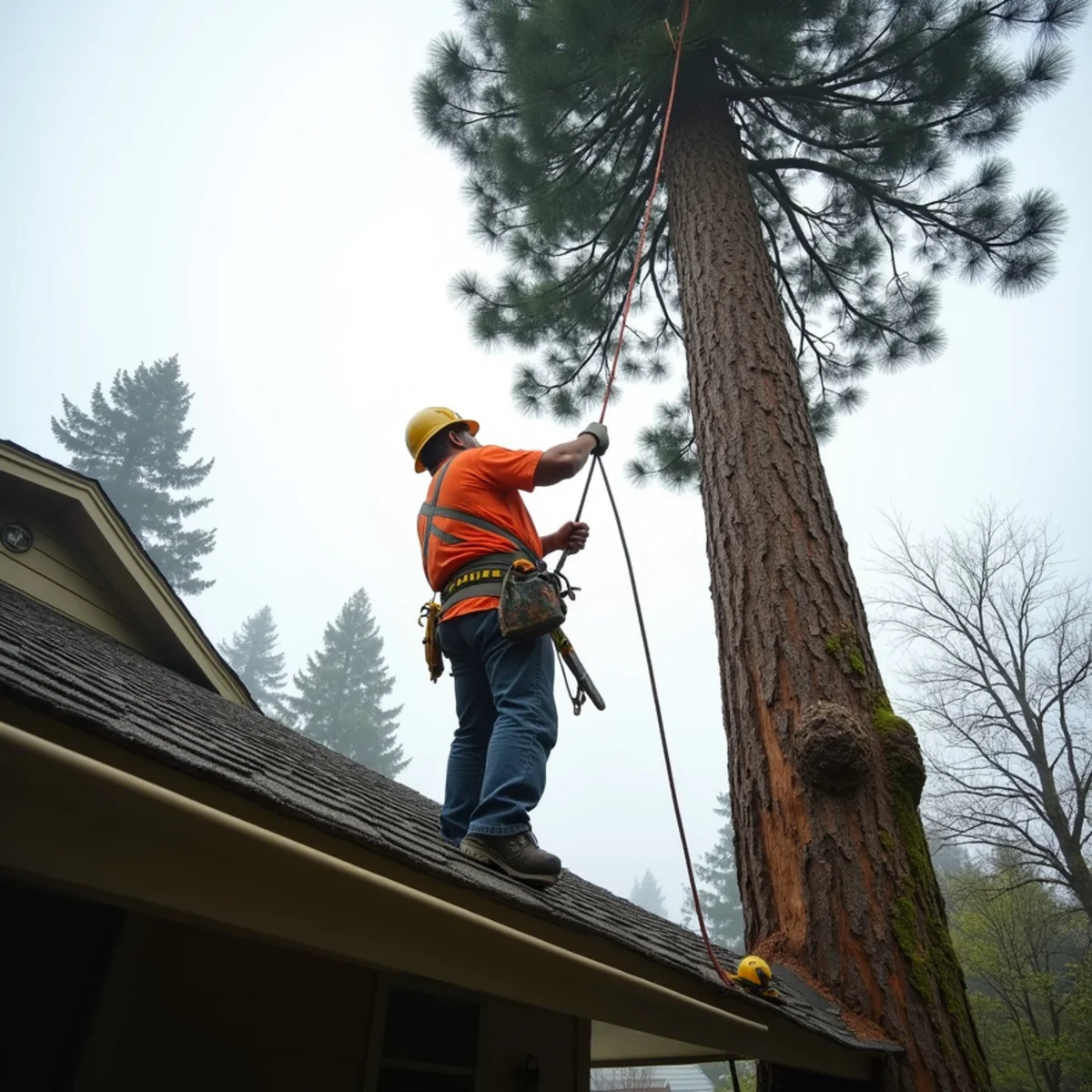
- Hangers — broken limbs caught in the canopy overhead. They come down in no wind, on no schedule, and they are the single most common way people get hurt after a storm.
- A trunk that shifted during the storm, with fresh soil cracking or a root plate lifting. That tree is already failing and the next gust finishes it.
- Anything touching or near a power line, which we treat as energized until the utility says otherwise.
- A tree hung up against another tree, leaning on it rather than reaching the ground. That is stored energy, and it releases sideways.
Photograph It Before Anyone Starts Cutting
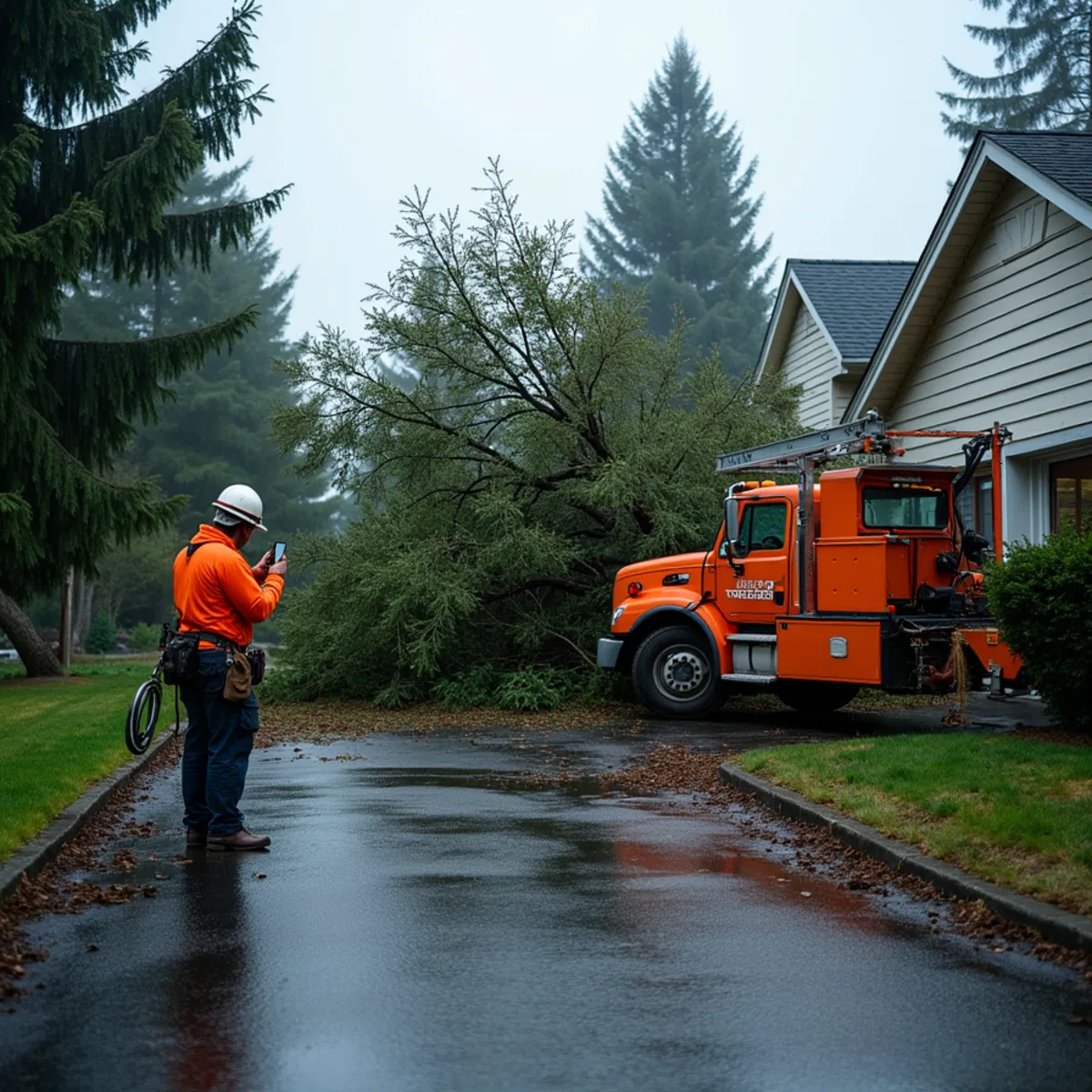
This is the advice we give most often on the phone, and it costs you nothing. Before a saw touches anything, take photos. Wide shots from several angles that show the whole tree and the whole structure. Close shots of the point of contact. Photos of the broken root plate or the failure point on the trunk. Then the interior, if water is getting in.
Once we cut that tree into rounds and chip the brush, the physical evidence of how it failed is gone forever. Your adjuster is going to ask what hit what and from which direction, and the difference between a smooth claim and a contested one is frequently just whether somebody spent four minutes with a phone camera first. If the situation is unsafe, shoot from a distance or from a window — no photo is worth walking under a hanger for.
After-Hours Response, Described Honestly
Plenty of tree companies put a 24/7 banner on the truck. We would rather tell you how it actually works. Ryan answers the phone outside business hours for storm and hazard-tree emergencies. If it is genuinely urgent — structural contact, blocked access, immediate danger — that call gets a real answer and, in most cases, same-day attention. We have gone out for a homeowner with a pine branch driven into the roof and had it off within the hour.
What we will not do is promise a crew standing by at three in the morning in a wind event, because during the worst hours of a real storm nobody should be climbing anyway. Wind loads shift, hangers drop, and working aloft in that is how crews get killed. During the storm we stabilize and secure. The cutting starts when the wind lays down, and we are usually on the road before daylight.
An insurance claims adjuster once called us directly about an elderly customer of his who had a tree down and nowhere to turn. We had people on site within a couple of hours. That call came from somebody who spends every working day watching how contractors behave after storms, which is about the best reference this trade offers.
Power lines change the order of operations
If a tree is on a conductor, the first call is the utility, not us. Cowlitz PUD and Clark Public Utilities handle vegetation on their lines, and the service drop running to your meter is its own separate question depending on who owns what. Never approach a downed line and never judge whether it is live by looking at it. Once the utility clears the area or drops the circuit, we can take the rest of the tree down.
Wind, Ice, and the Weeks That Break Trees Here
Two patterns produce most of the storm damage tree removal work in Cowlitz County and Clark County. The first is the wet-ground windstorm: November and December rain saturates the soil, then a south or southwest system funnels up the Columbia and the root plates give out. Whole healthy Douglas firs go over sideways with twelve feet of root standing in the air.
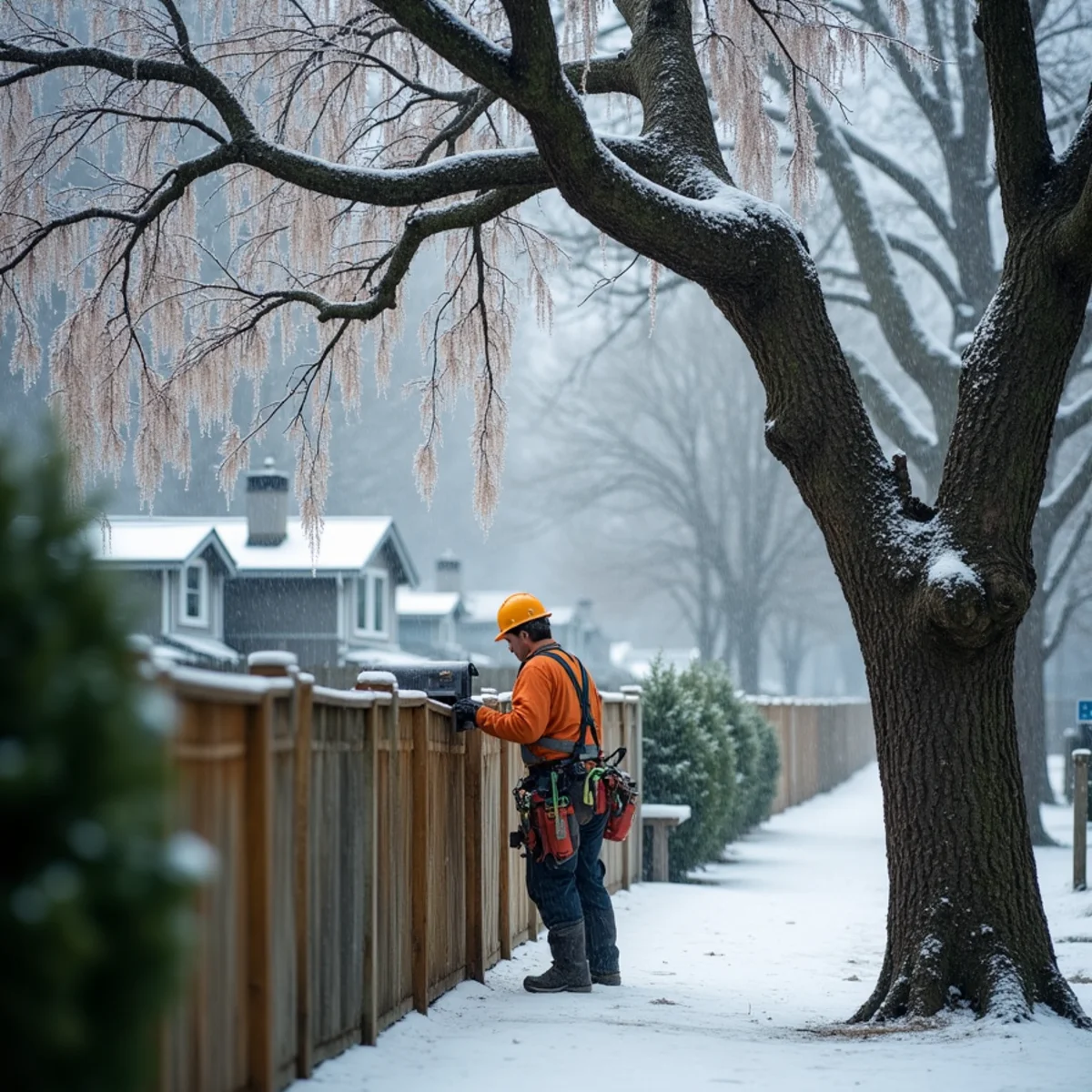
The second is the east wind coming out of the Gorge into Camas, Washougal and east Clark County, sometimes carrying freezing rain. Ice loading is different damage entirely. It does not uproot trees, it snaps them — tops out of firs, whole scaffold limbs off bigleaf maple, and the brittle upper wood of birch and ornamental plums. After an ice event we spend more days pulling hangers out of canopies than we do removing anything.
Hangers are the part people underestimate
The tree on the roof gets everyone’s attention. The broken limb wedged sixty feet up in the neighboring fir does not, and it is more likely to hurt somebody, because the roof damage is already done and the hanger has not happened yet. Rope off the area underneath it, keep kids and dogs out, and do not park there. We clear hangers as their own call, and it is usually a short one.
Signs You Need Emergency & Storm Damage Response
How a Emergency & Storm Damage Response Job Runs, Start to Finish
Call and describe what you are looking at
Make the area safe from a distance
Document before we cut
Relieve the load in the right order
Clear hangers and secure what remains
Clean up and hand off the paperwork
What Drives the Price of Emergency & Storm Damage Response
Emergency & Storm Damage Response on Real Jobs
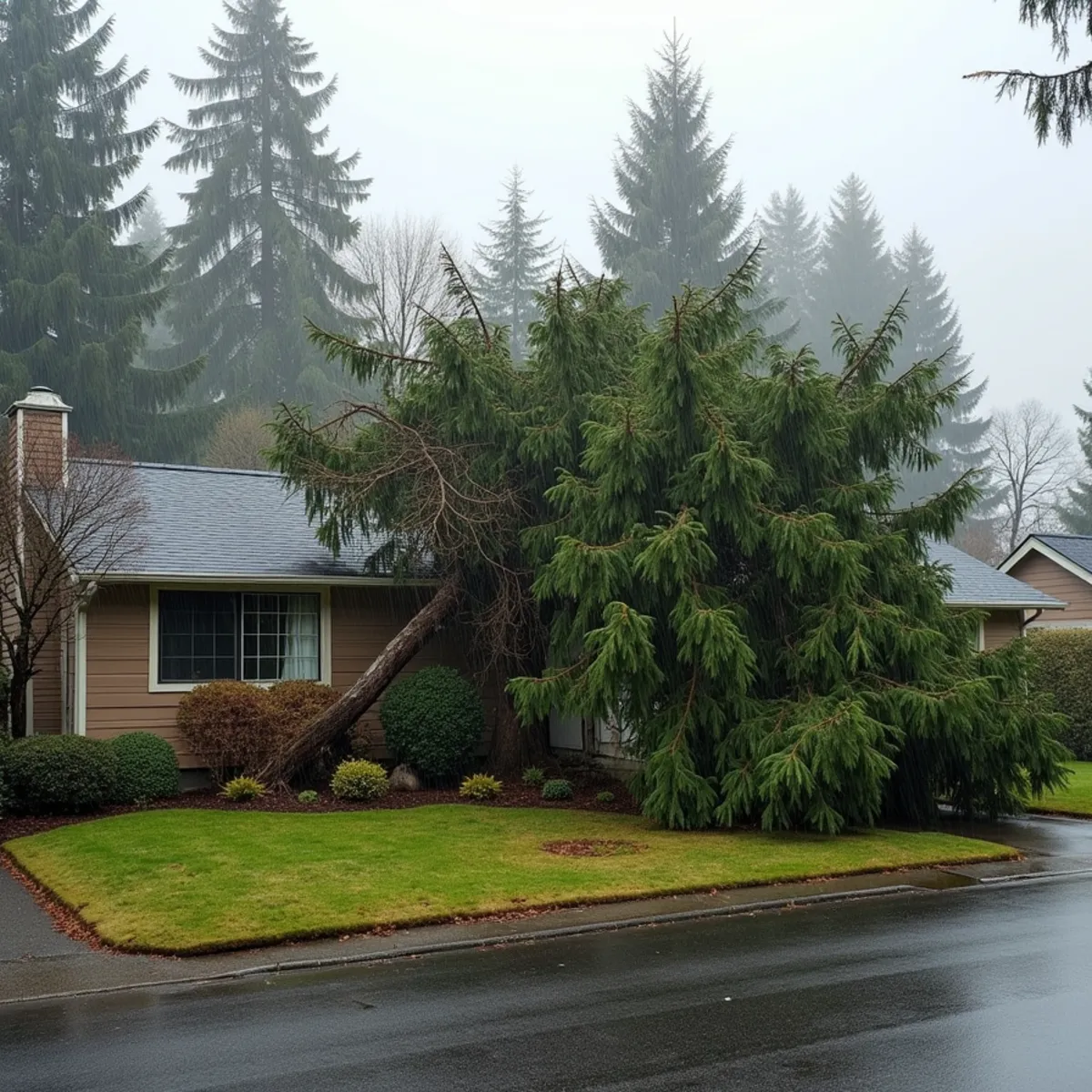
South wind on saturated ground is how most of these start. 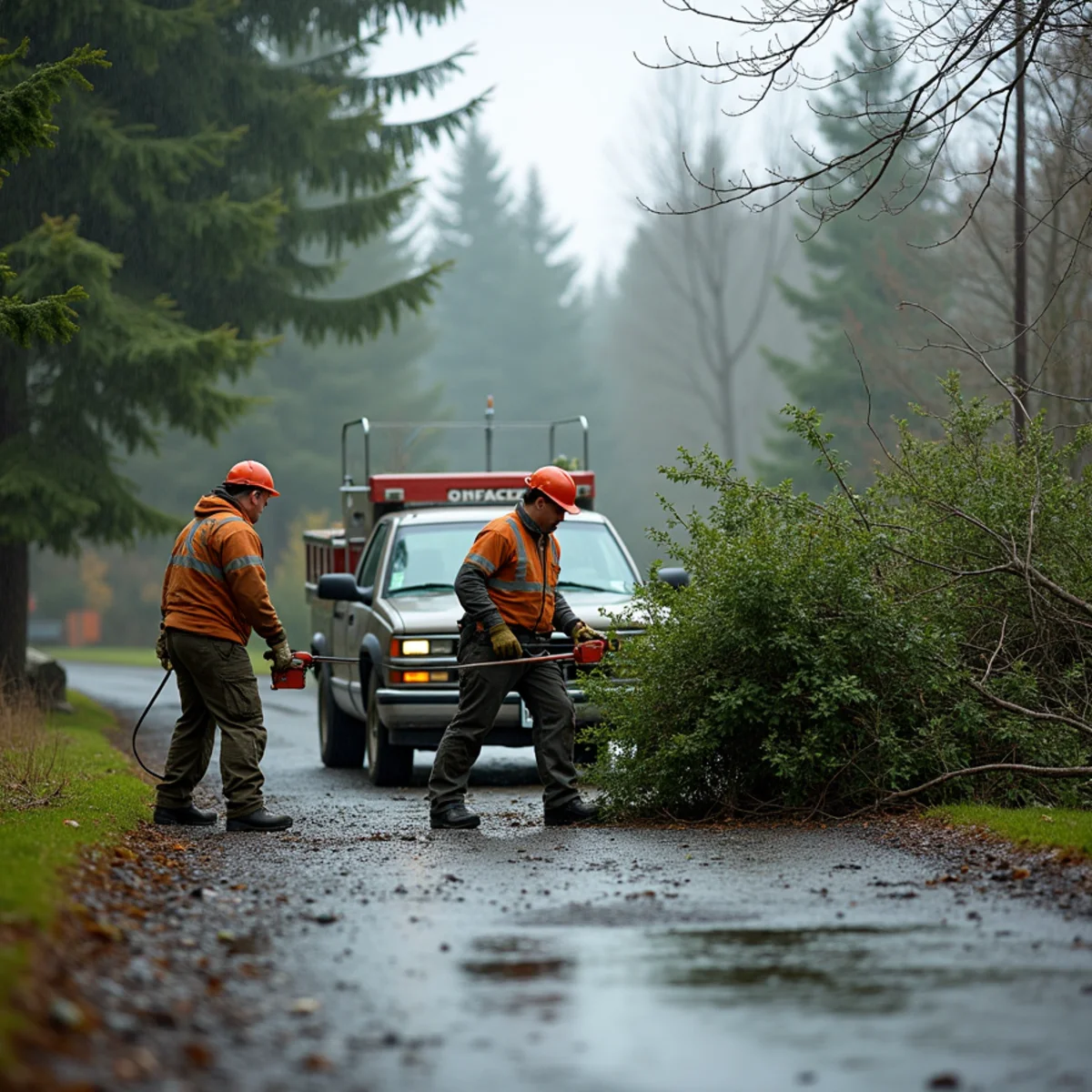
Blocked access and structural contact jump the schedule. 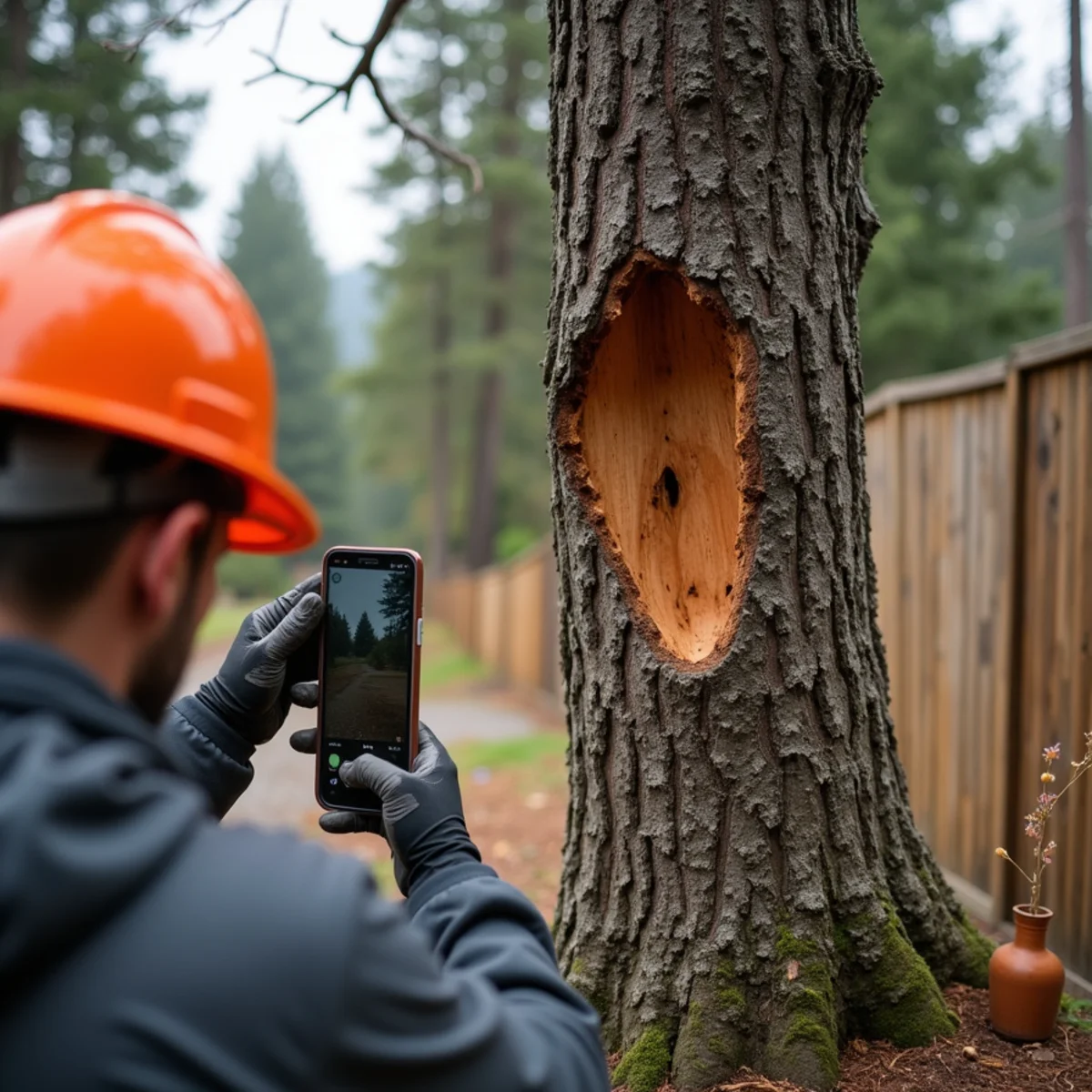
Photos first — once it is in pieces the evidence is gone.
Get a written price for your emergency & storm damage response job.
Emergency & Storm Damage Response Questions, Answered
Often Booked Together
Related Tree Services
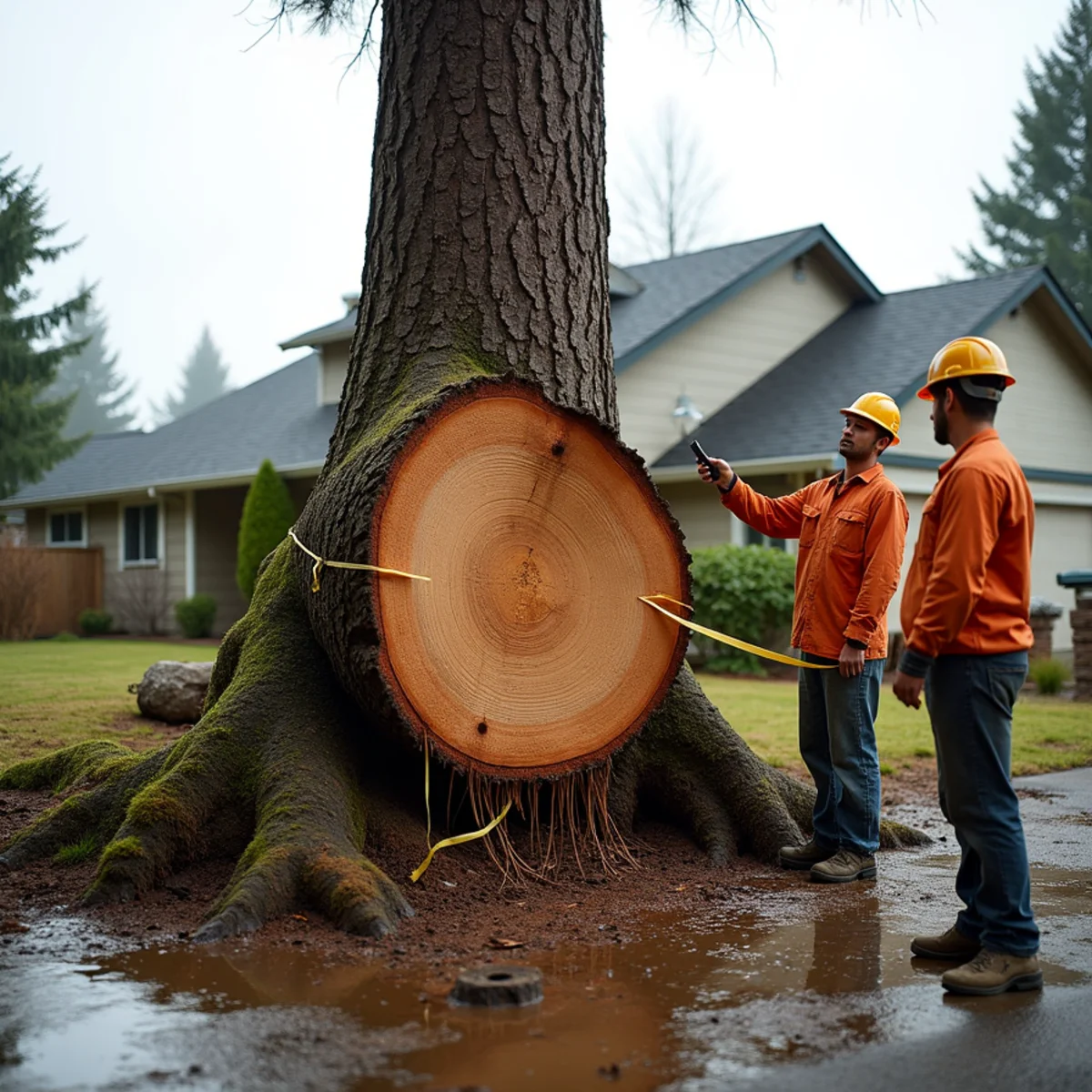
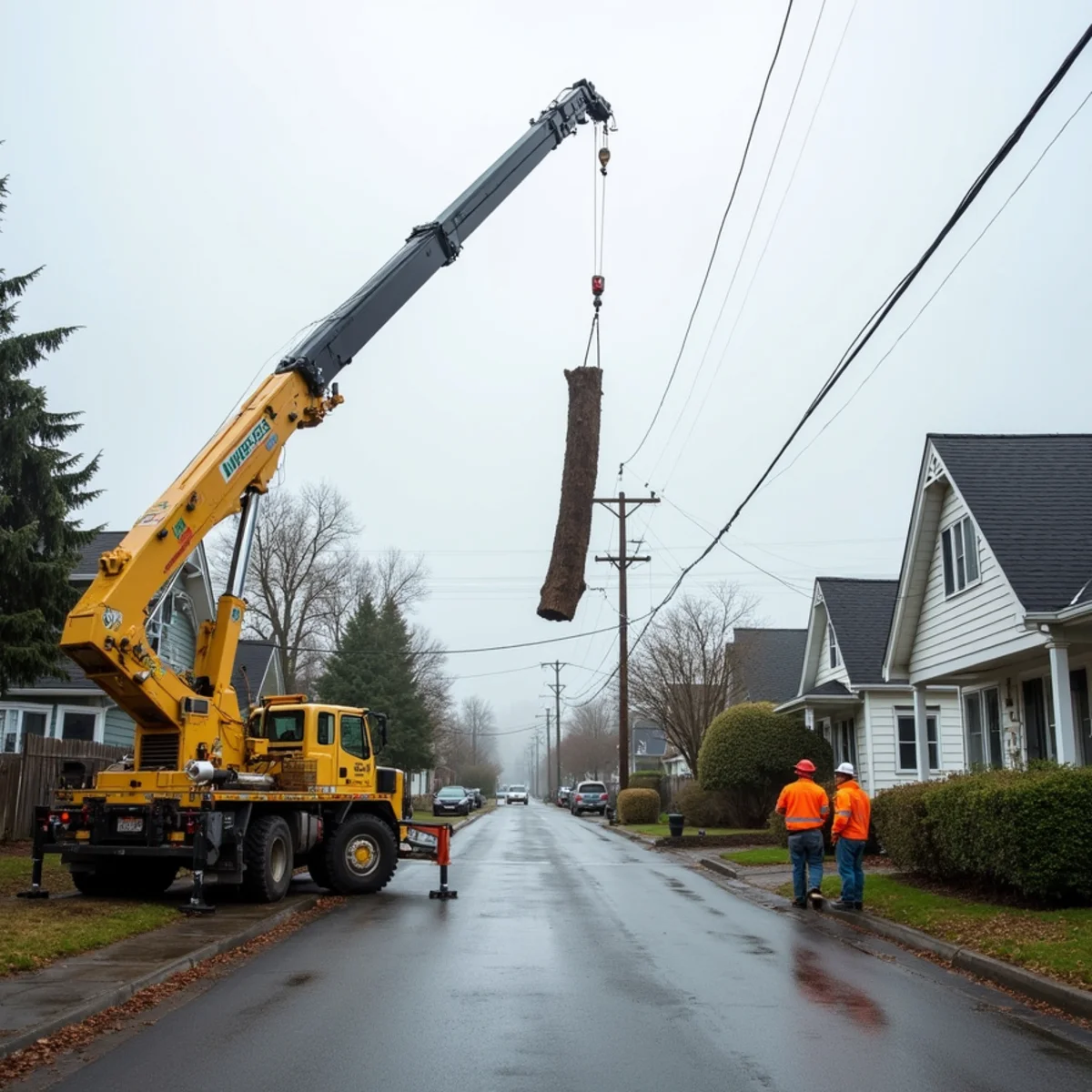
Worth Reading First
Before You Book This Work
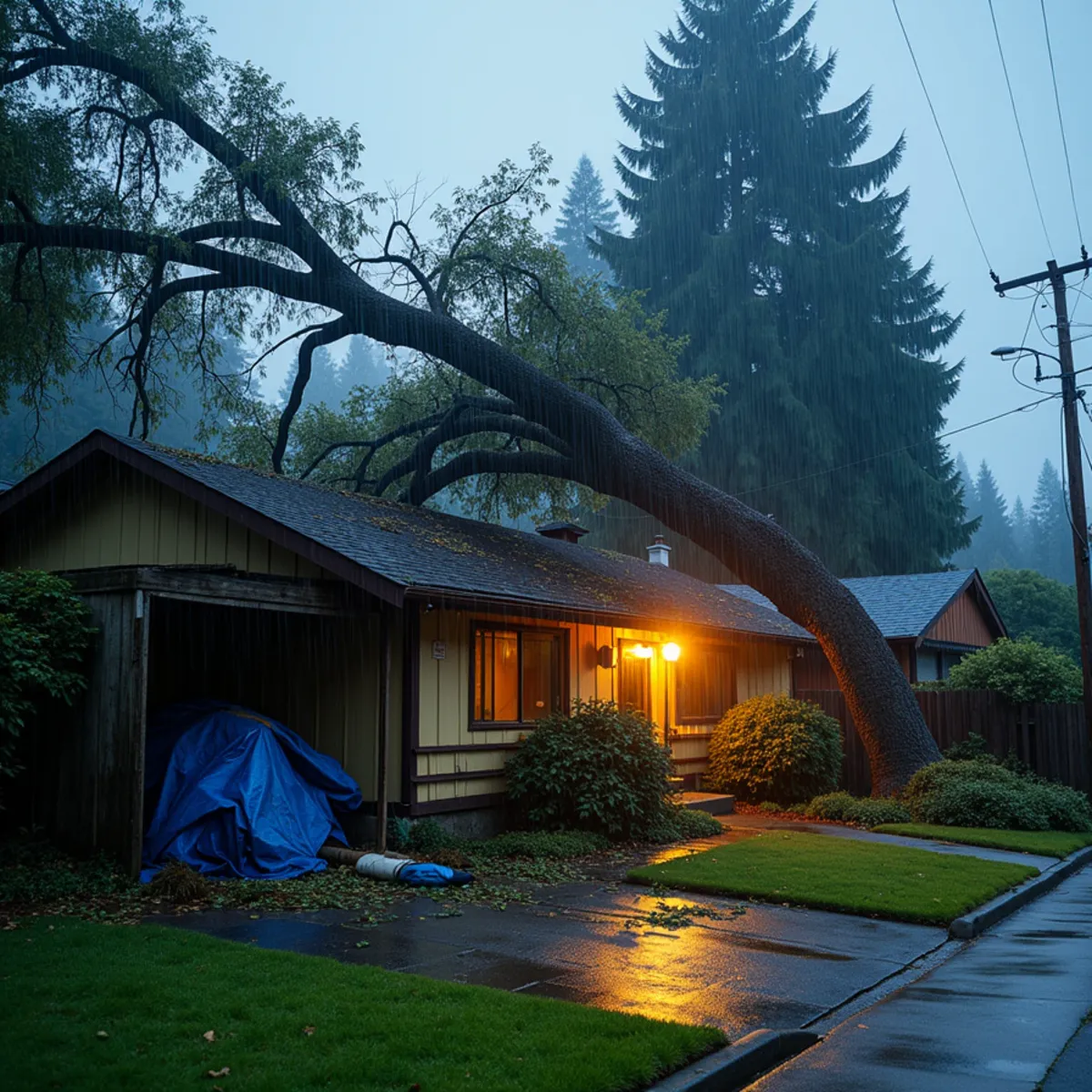
Storm & Emergency
A Tree Just Hit Your House: What to Do in the First 24 Hours
Free On-Site Estimates
Need emergency & storm damage response? Let’s take a look.
Ryan Norris walks every estimate himself. Free, on-site, and you’ll get a straight answer about whether the work is necessary at all.
- 34 Google reviews
- Licensed & Insured
- Free On-Site Estimates
- Based in Kelso, WA