
Clark County · 98685
Tree Service in Lake Shore, WA
Most of Clark County worries about Douglas fir. On the east shore of Vancouver Lake, the tree that actually puts a limb through a roof is black cottonwood, and it tends to do it on a still, warm afternoon with no storm anywhere in the forecast.
- Free On-Site Estimates
- Licensed & Insured
- Based in Kelso
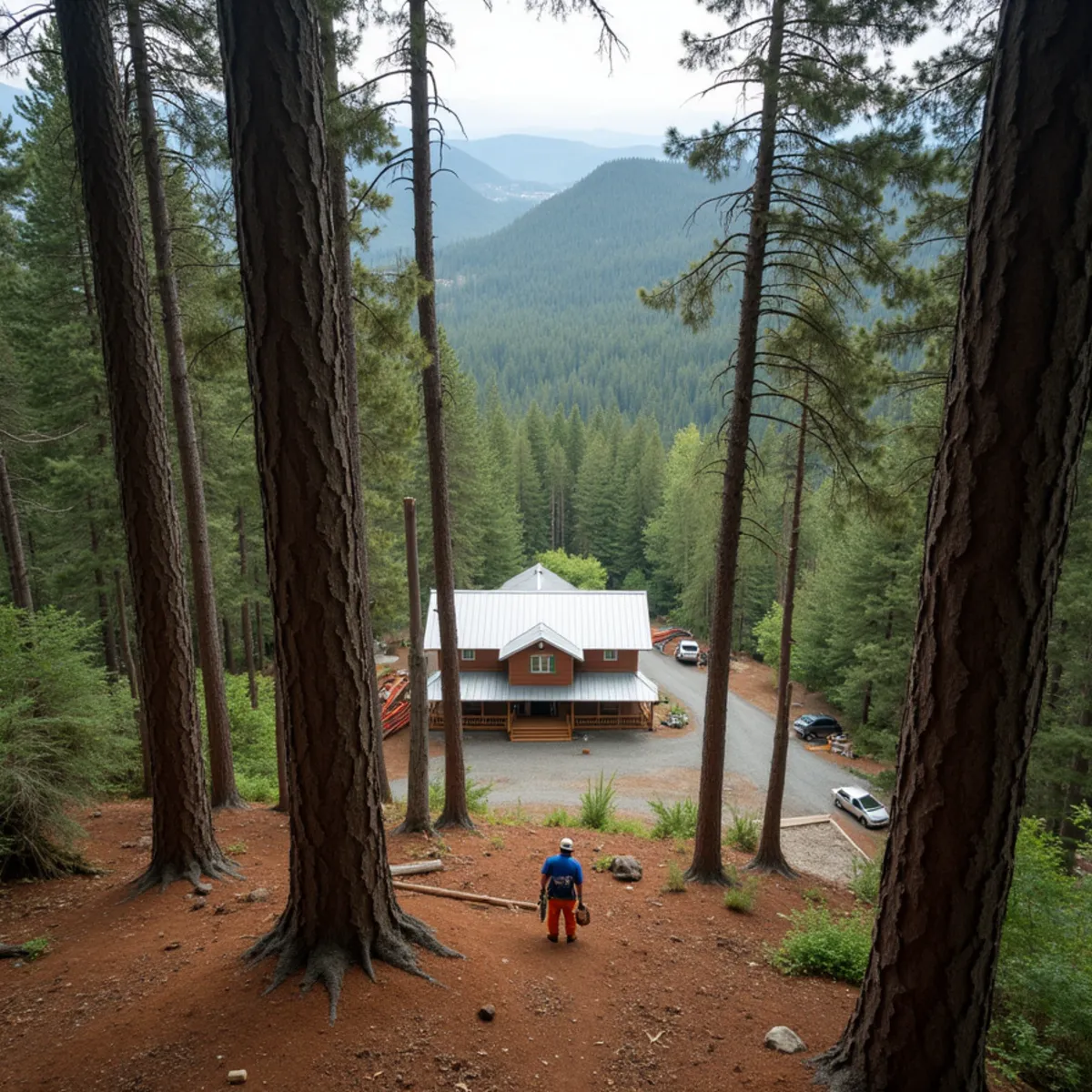
Lake Shore sits on ground that stays wet. The lake is right off the back of a lot of these properties, the water table is high through most of the year, and the trees that took over that ground are the ones built for it — black cottonwood, Oregon ash, willow, and alder filling in the low corners. Every one of those is fast wood. They put on height in a hurry and they hold onto it poorly, which is a very different problem than the fir-and-cedar work we do on the east side of the county.
Cottonwood Sets the Rules for Tree Work in Lake Shore
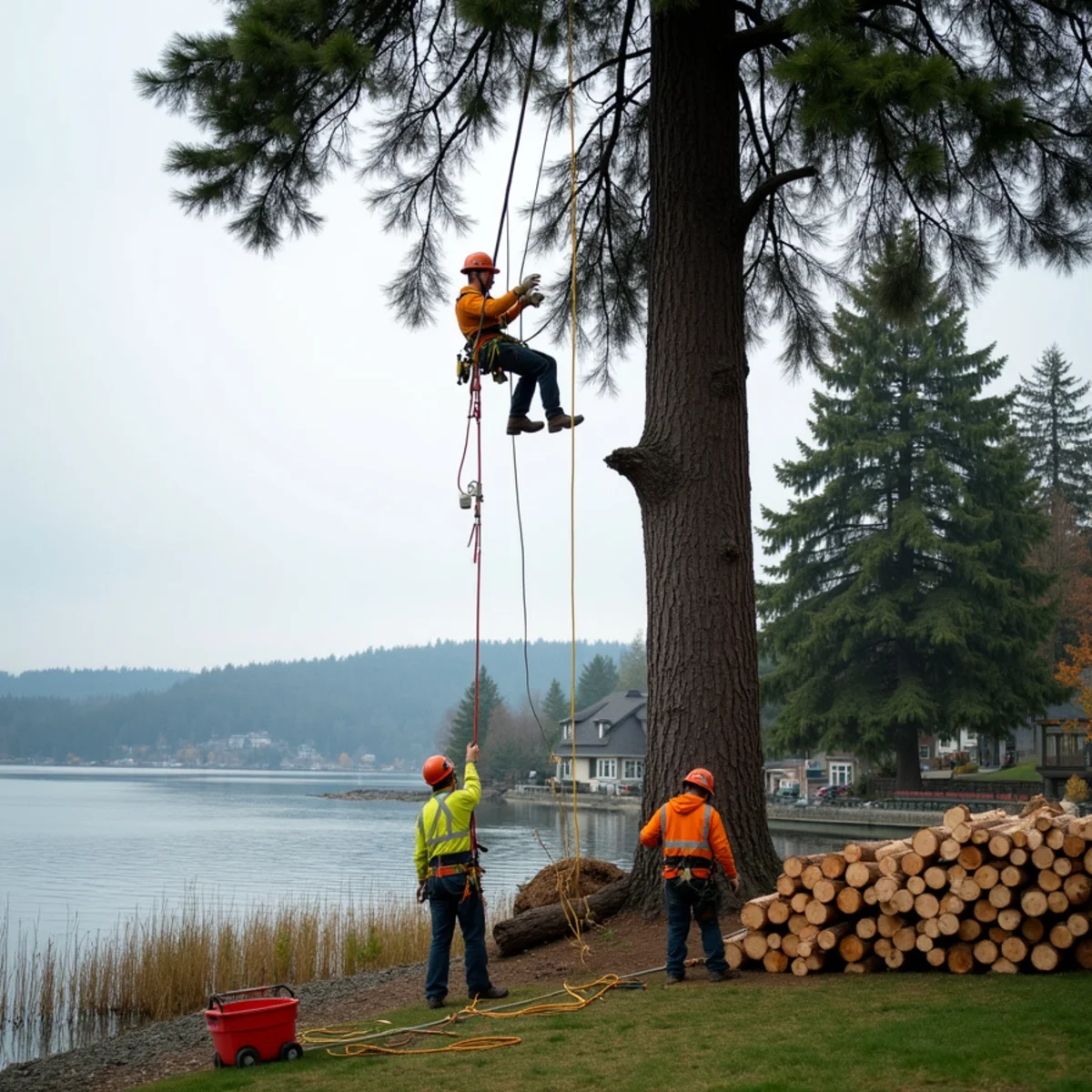
Black cottonwood is the tallest hardwood in the Pacific Northwest, and along the lake it gets there fast. The trouble is what happens after. Cottonwood is famous among climbers for shedding heavy limbs in dead calm air on hot afternoons, with no wind event and no visible warning. A limb that comes off a mature cottonwood is not a branch you drag to the curb — it is a log with a canopy on it, and it lands wherever gravity puts it. Sheds, boat covers, docks, parked cars and the corner of a deck are the usual casualties.
Every species along this shoreline lets go in its own particular way, and knowing which failure to expect from which tree is most of the job:
- Black cottonwood — sheds full-size limbs in dead calm air, and decays from old wounds downward while the crown still looks green
- Oregon ash — holds dead wood high for years, then gives up all of it in one wet-wind night
- Willow — splits at the base, usually at a union that a skirt of low growth had been hiding
- Red alder — short-lived, and once heart rot starts it snaps mid-trunk rather than tipping
- Douglas fir on raised or filled house pads — roots hit water, stay shallow, and the whole plate tips together
None of that means a tree has to come out. It means a big soft-wooded tree hanging over the part of your property you actually use has earned a real look, from underneath, rather than a glance from the driveway.
Saturated Ground and Winter Wind Off Vancouver Lake
Roots need oxygen. In soil that sits wet for months, they stay shallow and spread wide instead of anchoring deep, so what holds a sixty-foot cottonwood upright is essentially a broad plate of roots resting in soft ground. Through most of the year that is plenty. In December, after two weeks of rain, a steady wind across open water is enough to start the plate working. That is why the leaners we get called about on this side of the lake almost always show up in winter, and why a lean that appeared in the last month is treated as urgent rather than watched.
Shoreline and Buffer Rules on Lake Shore Waterfront Lots
Parcels close to the water can fall under shoreline and critical-area protections, and the rules for a lot with frontage are genuinely different from the rules for a house three streets inland. We will not quote you a code section off the top of our heads — the answer depends on your address and how your parcel is mapped. We check what applies before a saw comes out and tell you plainly whether the work needs sign-off first. Nobody should learn about a buffer after the tree is on the ground.
Opening a Vancouver Lake View Without Wrecking the Tree
People bought here for the water. Twenty years of unmanaged cottonwood and ash closes that view a foot at a time until one summer you notice the sunset is gone. The fix is windowing and crown reduction — taking specific limbs to open specific sight lines from the rooms and decks you actually sit in, and shortening leaders back to lateral branches that can take over as the new tips.
What we will not do is top anything. Topping a soft-wooded tree on wet ground is the worst version of this trade: you get a flush of weak regrowth attached to decaying stubs, a heavier crown within a few seasons, and a removal bill later that dwarfs what the pruning cost. Done properly, view work is something you repeat every few years on a light touch, and the tree keeps doing its job of holding the bank together.
One last thing worth saying about waterfront work: the drop zone on these lots includes things you cannot rake up afterward — a neighbor’s fence, a dock, a moored boat, and open water behind all of it. Ask whoever you hire to confirm they are licensed and insured before anyone leaves the ground, us included. Then get somebody to actually walk it. Ryan does that himself, it costs nothing, and if the honest answer is that your tree needs nothing this year, that is the answer you will get.
Neighborhoods & Areas We Cover in Lake Shore
Tree Services We Provide in Lake Shore
- Hazard Tree & Limb Removal
- Tree Removal (Large & Tight-Quarter)
- View Enhancement & Vista Pruning
- Emergency & Storm Damage Response
- Tree Risk Assessment & Arborist Reports
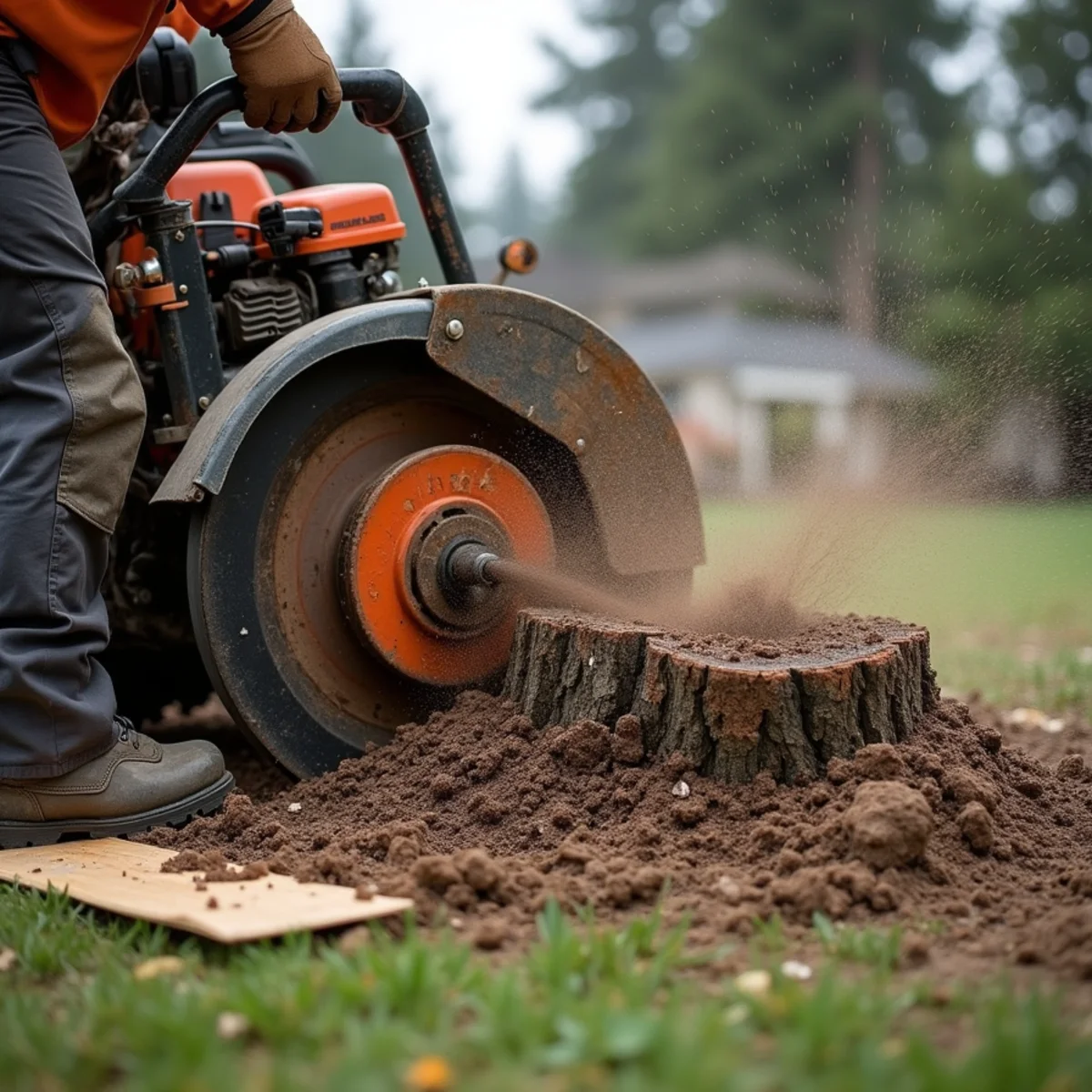
- Stump Grinding & Removal
Free on-site estimate in Lake Shore.
Lake Shore Tree Service Questions
Local Tree Care Reading
Useful If You Own Trees Near Lake Shore
Free On-Site Estimates
Need a tree looked at in Lake Shore?
Ryan Norris will come out, walk it with you, and tell you straight whether it needs work. Free, and no pressure either way.
- 34 Google reviews
- Licensed & Insured
- Free On-Site Estimates
- Based in Kelso, WA