
Clark County · 98607 · 98604 · 98606
Tree Service in Green Mountain, WA
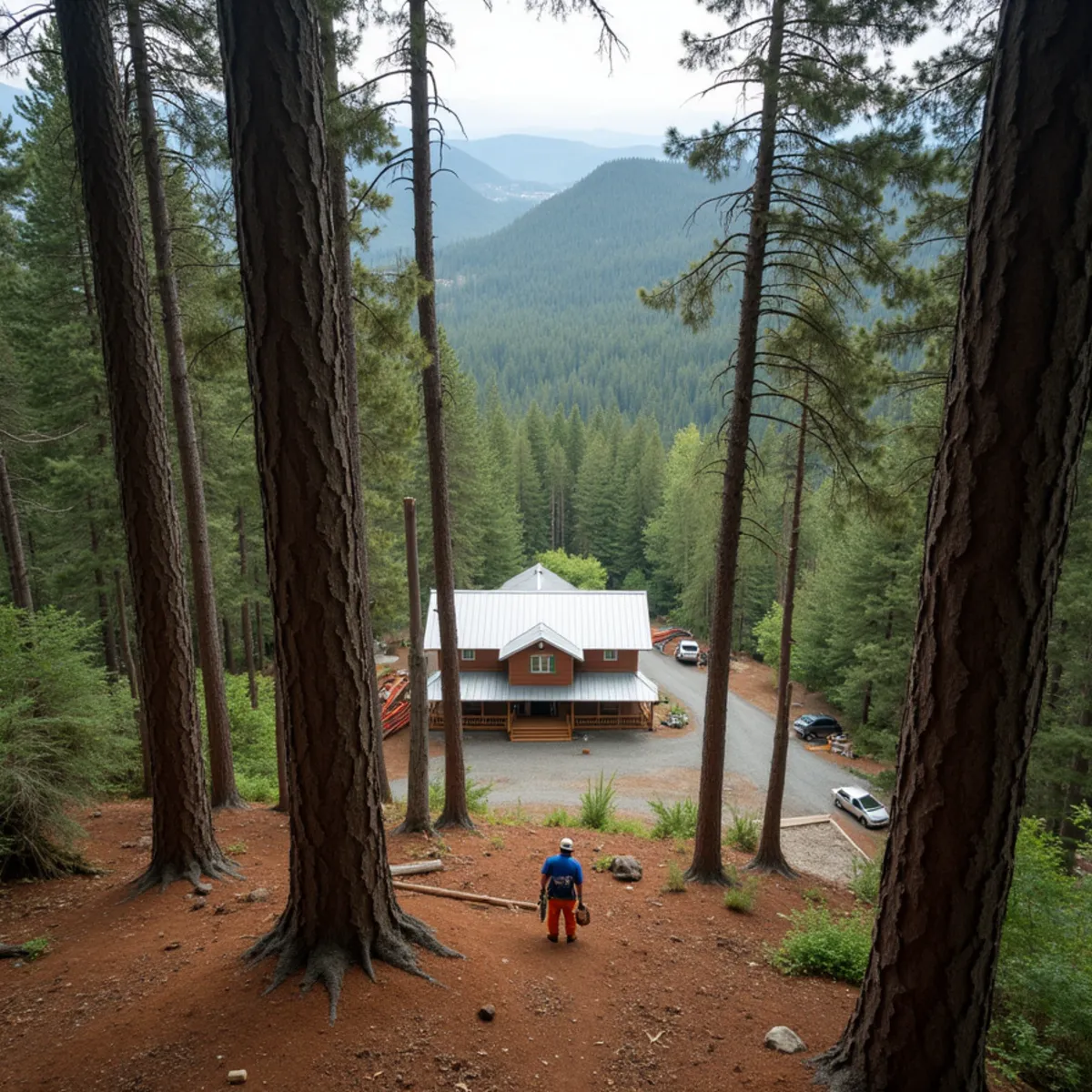
You can feel where Green Mountain starts. The road tips up, the open fields quit, and second-growth fir closes in from both shoulders — and from there on, tree work stops being yard work and becomes sidehill work.
- Free On-Site Estimates
- Licensed & Insured
- Based in Kelso
The climb up out of the flats is short, but it changes three things about a tree job at once. Grade replaces level ground. The stand thickens into more or less continuous Douglas fir and hemlock. And most of the houses sit on a bench that somebody cut and filled decades ago to make a flat pad on a hillside. All three of those show up in the estimate.
Root Disease Up Here Runs in Pockets, Not in Straight Lines
Dense second-growth fir on foothill ground in this part of the state carries root disease, and it does not spread the way people expect. It moves outward slowly through root contact, so what you end up with is a pocket — a rough circle where the trees in the middle are already down or dead, the ones on the rim are thinning at the top and throwing unusually heavy cone crops, and the ones just outside look perfectly healthy. From the kitchen window it reads as a random gap in the woods. From underneath it is a pattern, and the pattern tells you which trees are next.
This is the failure mode that catches people out here, because an affected fir can hold a full green crown right up until the root plate lets go in a wet December wind. No lean, no dead top, no warning. What we read instead is the base: flattened or missing buttress roots, a stem that goes into the ground like a telephone pole, staining at the flare, and the stumps of whatever already came out of that pocket. If the hazard tree you called about is standing inside one, the trees around it deserve to be looked at the same afternoon rather than one more phone call every winter.
Old Skid Roads and Landing Fill Still Decide Where a Tree Goes
This ground was logged, more than once, and the roads and landings from that work are still under the moss. A good number of the houses up here are built on an old landing, because it was the only flat spot on the parcel. Trees that seeded into the loose fill on the downhill edge of those benches grew fast in well-drained material and then ran out of anything solid to hold. They lean downhill out of habit, and when one goes it takes a wedge of the bench with it.
Old skid trails matter for a second reason: they are often the only way to get a machine in. A grade cut for a crawler forty years ago is still the best route for a chipper or a small tracked loader once the alder is knocked off it. We hunt for those on the walk-through, because the difference between carrying brush three hundred feet uphill by hand and driving to the stump is most of a working day.
Sidehill Work Is Not Flat Work With a Slope Added
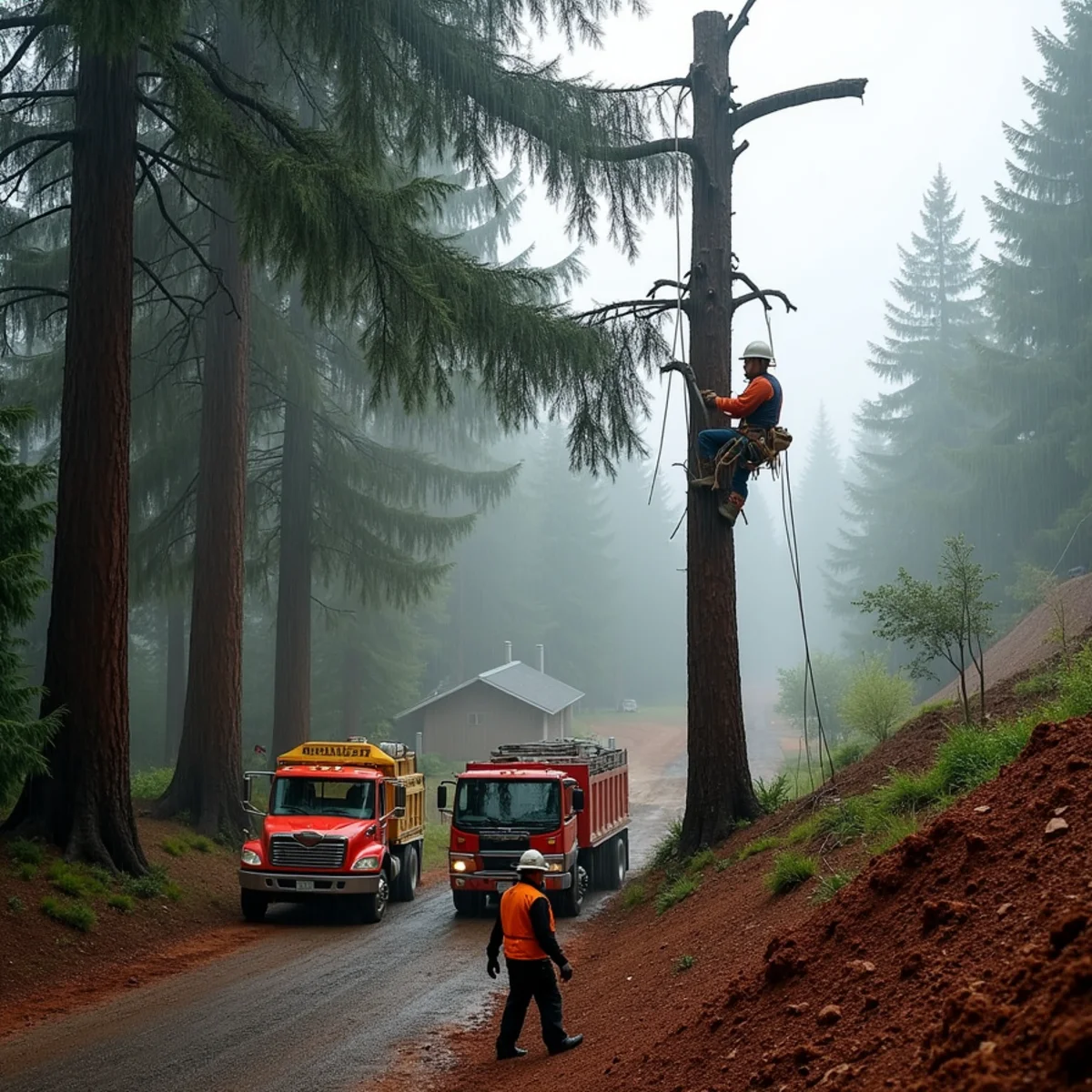
On level ground a faller picks a lay and the tree goes there. On a sidehill, gravity has already picked, and the only honest question is whether we can talk it out of the obvious answer. Fighting a heavy side lean uphill is how people get hurt, so the plan usually works with the slope instead: fell downhill into a chute where one exists, or climb it and take it apart in pieces small enough that nothing gets away and runs at the house below.
Rigging on a slope also changes what the rope has to absorb, because a piece that swings out over falling ground keeps accelerating past where it would have stopped on the flat. Blocks go higher, pieces come off smaller, the day runs longer. That is not padding — it is why a fir behind a Green Mountain house prices differently than the same fir on a level lot in town, and we would rather explain it at the estimate than defend it afterward.
Snags, Wildlife Trees and Leaving Something Standing
Not every dead tree on a wooded parcel needs to come out. If a snag can fall in any direction without reaching the house, the driveway, the well head or the neighbor, it is doing more good standing than it would in the woodshed — pileated woodpeckers, owls and bats all use them, and the roots hold that hillside together for years after the top dies. We will tell you when that is the situation, and we will tell you just as plainly when it is not.
When one does have to come down, we can often cut it to a fifteen-foot habitat pole rather than take it to the dirt, which keeps the wildlife value and removes the reach. Our shop is in Kelso, this is a regular run for us, and there is no travel charge to come look. Licensed and insured, free on-site estimates, and the person who tells you a tree can stay is the same person who would be climbing it if it could not.
Neighborhoods & Areas We Cover in Green Mountain
Tree Services We Provide in Green Mountain
- Hazard Tree & Limb Removal
- Tree Removal (Large & Tight-Quarter)
- Tree Risk Assessment & Arborist Reports
- Emergency & Storm Damage Response
- Lot Clearing, Brush & Invasive Vegetation Removal
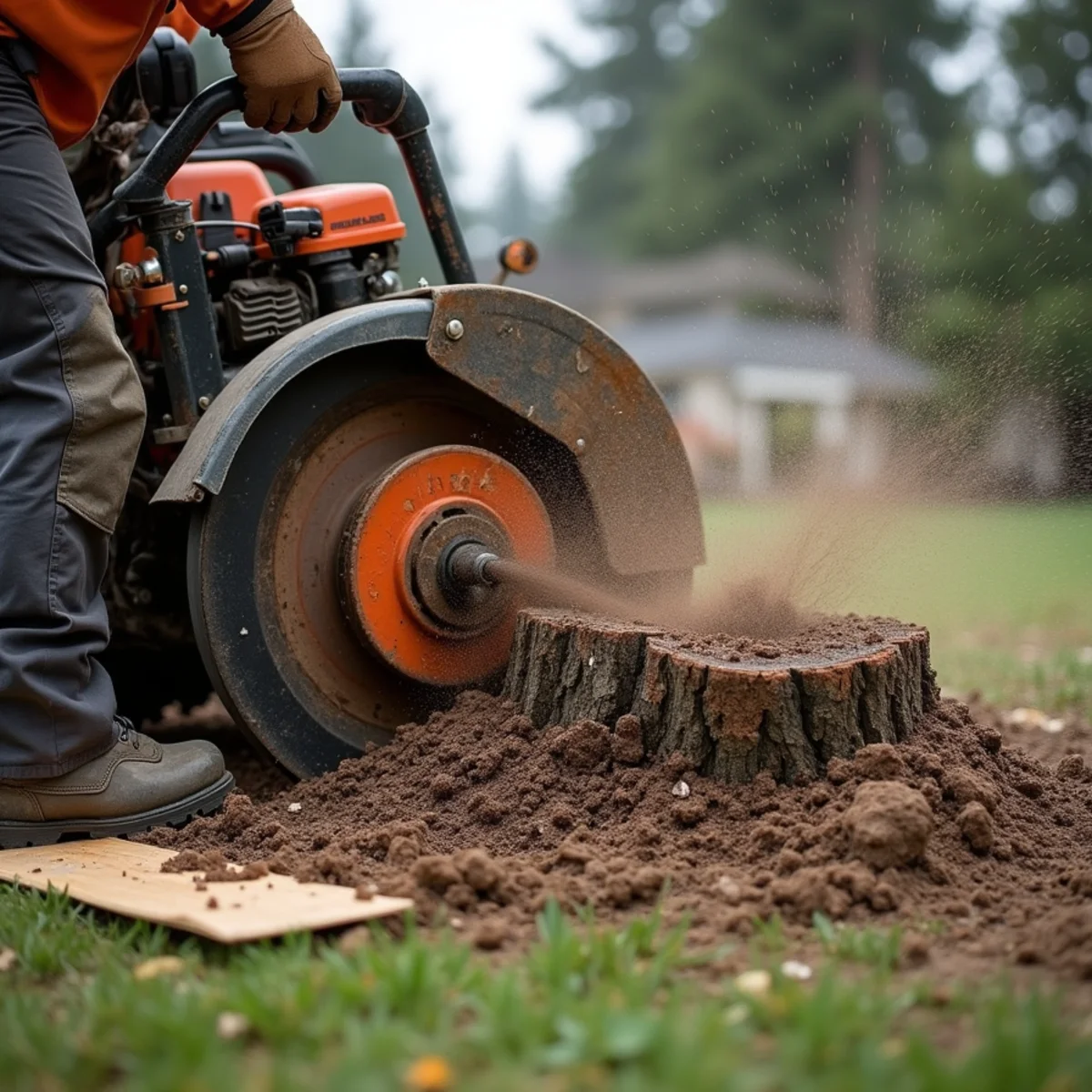
- Stump Grinding & Removal
Free on-site estimate in Green Mountain.
Green Mountain Tree Service Questions
Local Tree Care Reading
Useful If You Own Trees Near Green Mountain
Free On-Site Estimates
Need a tree looked at in Green Mountain?
Ryan Norris will come out, walk it with you, and tell you straight whether it needs work. Free, and no pressure either way.
- 34 Google reviews
- Licensed & Insured
- Free On-Site Estimates
- Based in Kelso, WA