
Cowlitz County · Clark County
Commercial, HOA & Property Management Tree Care in Washington
Boards, managers and facility crews need paperwork, predictable scheduling and a vendor who works around tenants. That is the job we are set up for.
- Free On-Site Estimates
- Licensed & Insured
- 34 Google reviews
A property manager called us in February about a row of Douglas firs behind a fourplex off Ocean Beach Highway. Two of them had thrown limbs onto the carports over the winter and the owner wanted an answer. What the manager needed before anything else was a certificate of insurance, because the management agreement did not allow a contractor on site without one, and the last outfit that bid the job never sent theirs. The certificate went out before the written estimate did.
That is the half of commercial work nobody advertises. The tree side is the same tree side we do on a residential lot in Kelso — same climber, same rigging, same cleanup. What changes is everything wrapped around it: who signs, who gets billed, how the invoice has to read for a board packet, when we are allowed to make noise, and where forty tenants park while we do it.
The Paperwork Lands Before the Crew Does
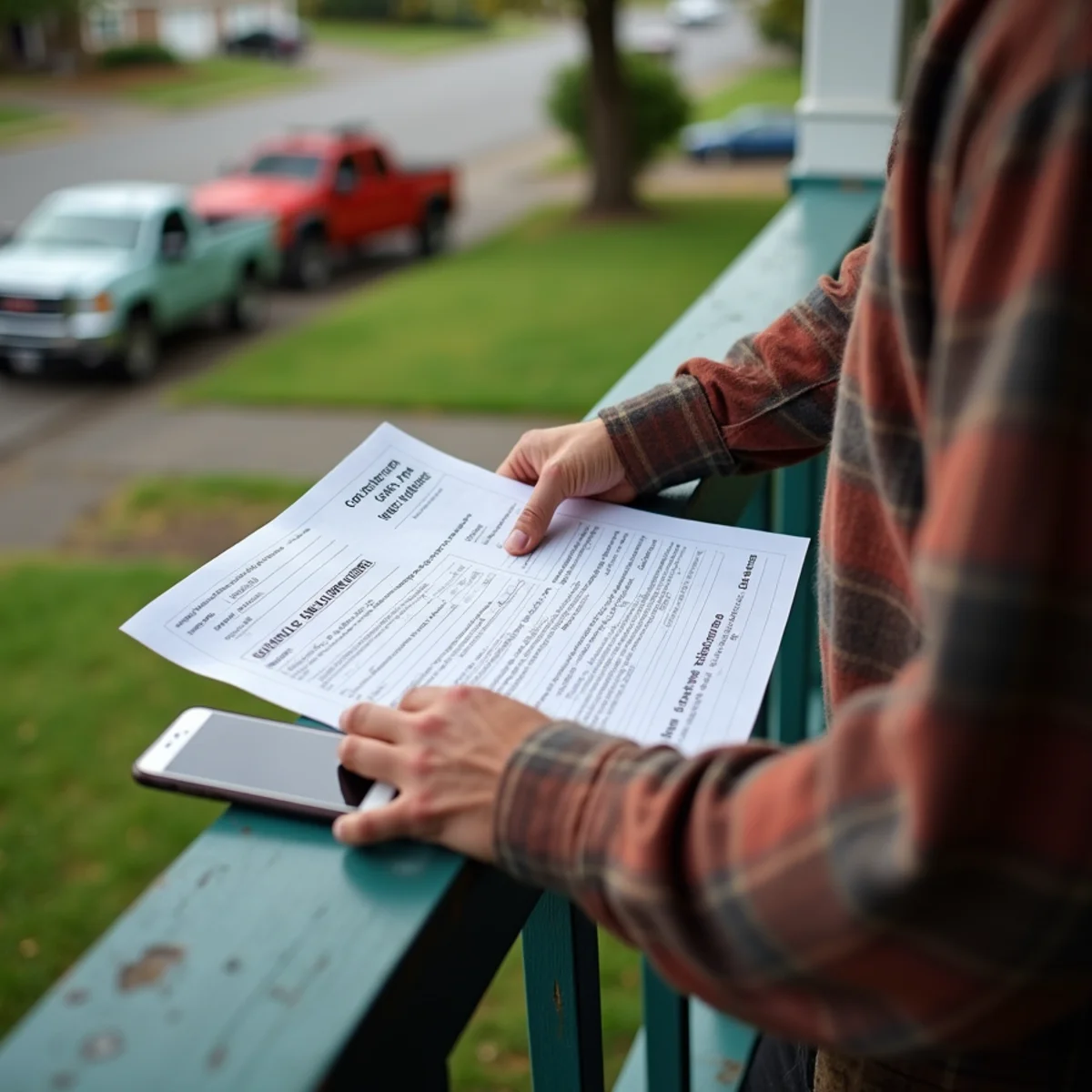
Most property management tree service in Longview, Kelso and Vancouver stalls at the vendor file, not at the bid. Boards get burned by contractors who quote fast and then cannot produce documents, so managers have learned to ask up front. Ask us up front. We are licensed and insured in Washington, our status is verifiable through the state lookup rather than on our say-so, and the routine documents move as a packet instead of one email at a time.
- A certificate of insurance issued by our carrier with the association, ownership entity or management company listed as certificate holder.
- An additional insured endorsement when the management agreement or vendor policy calls for one — requested through the carrier, not typed up by us.
- A completed W-9 for your vendor file before the first invoice, so accounting is not chasing it at the end of the month.
- Invoices coded per property, per building or per work order, which matters when one manager runs six sites and each has its own operating account.
- Net terms, because a board that approves payables once a month cannot pay on completion no matter how much it wants to.
- Scope written plainly enough that a board member who missed the walkthrough understands what was bought.
Tree Inventories and Condition Ratings Instead of Guesswork
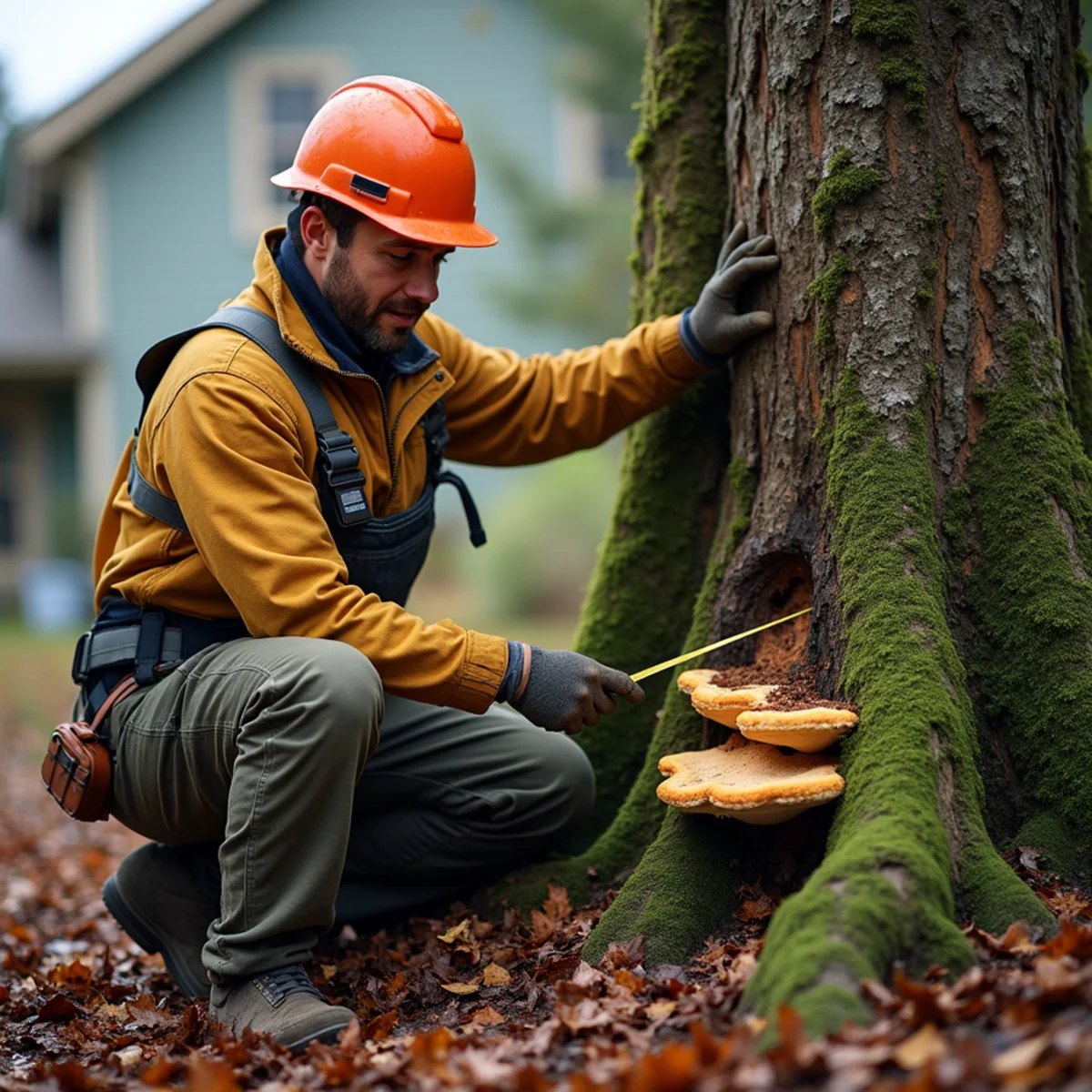
The most useful thing we do for an HOA is rarely the pruning. It is the walk. We go the whole property with the manager or a board member, note every tree in the common areas, and record species, rough size, location by building or drive aisle, condition, and what it needs. Then each tree gets a priority so the list is decision-ready rather than a wall of information.
Priorities land in four bands and we keep them blunt. Immediate means there is a defect over something that matters — a carport, a playground, a unit. This season means it should be handled inside the year but nothing is going to fail next week. Next cycle means it goes in the budget. Monitor means leave it alone and look again, which is a real answer and one boards almost never get from a bidder.
That inventory turns a vague complaint into a plan. Instead of "the trees on the north side look bad," a manager walks into a meeting with eleven trees, four of them flagged, two of them urgent, and a phased sequence that spreads the cost over three years. HOA tree maintenance in Washington goes wrong most often because the work only gets funded after something falls.
Scheduled Cycles Cost Less Than Emergency Callouts
Commercial properties in Southwest Washington fail in predictable ways. Deadwood accumulates in maples along parking rows. Sweetgums and lindens drop the same limbs every wind event. Canopy creeps down over drive aisles until a garbage truck or a moving van tears a branch out and leaves a wound that never closes. None of that is dramatic. All of it gets expensive when it is only ever addressed after the fact.
A cycle fixes it. Most properties we maintain run on an annual or every-other-year rotation, with a fall pass before the wind season and a lighter spring pass for clearance and sight lines. Clearance over drive aisles is set for a loaded truck, not a sedan. Sidewalk clearance is set so nobody ducks, which is where slip-and-trip complaints and ADA questions start. Sight lines at entrances, around monument signs and over exterior lighting get checked on the same pass, because a light fixture buried in a canopy is a security issue before it is a tree issue.
Working Around Tenants, Parking and Business Hours
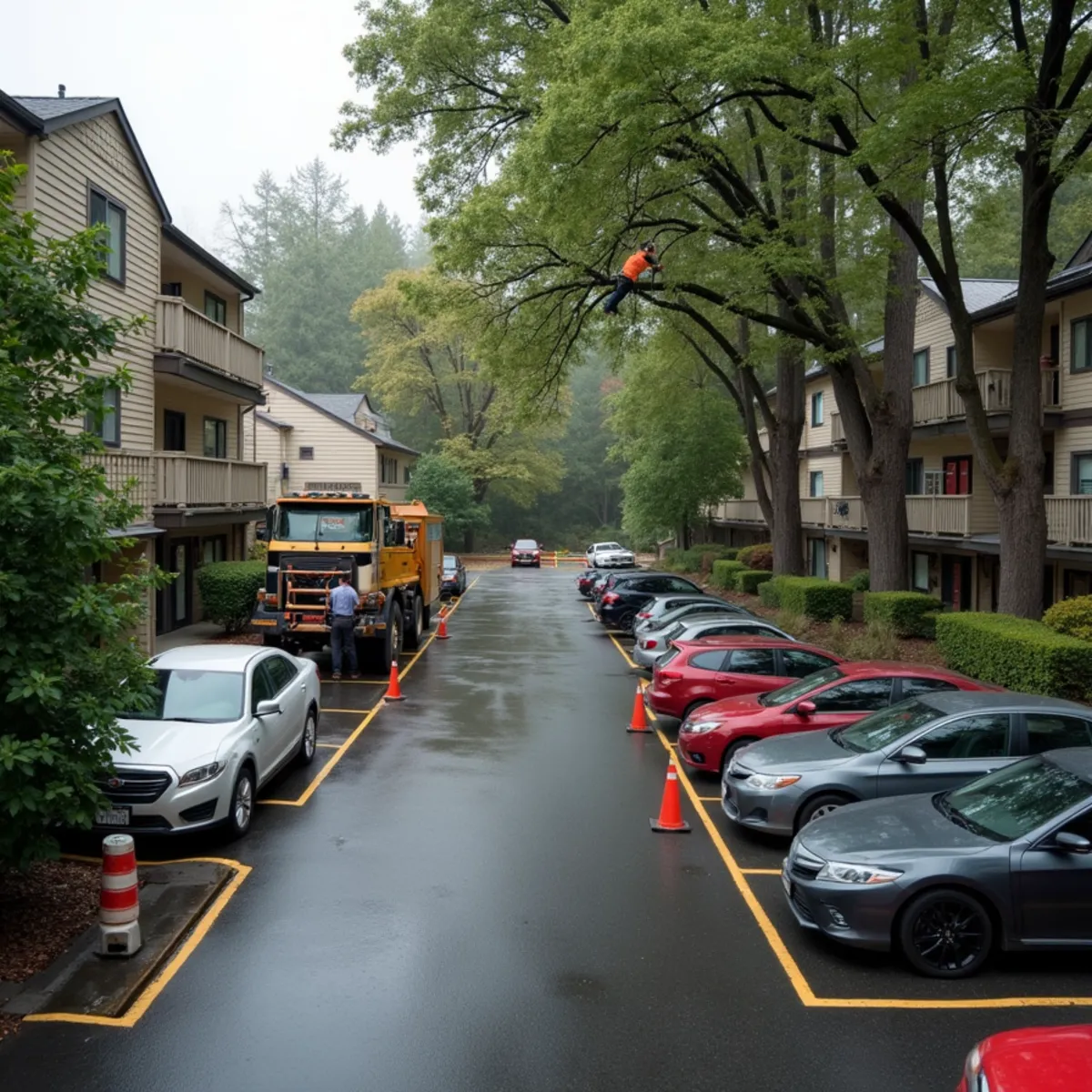
On occupied property, scheduling is most of the difficulty. Cars have to move, and tenants do not read notices the first time. We give managers a dated notice they can post and slide under doors, we stage by building so only one lot section is closed at a time, and we can start early or work weekends when a site cannot lose midday parking. For retail and office, that often means the work happens before the doors open.
Mobile home parks get their own approach. The lanes are narrow, the setbacks are tight, and there are awnings, skirting, utility pedestals and propane tanks under everything. Nothing gets dropped in a park. It comes down on ropes in small pieces, and if the lane will not take a chip truck we carry brush out rather than drive over somebody’s water line.
Industrial sites near the Port of Longview and Industrial Way
Industrial work adds a layer. There are check-in procedures, site orientations, hi-vis requirements, rail spurs, yard traffic and laydown areas that cannot be blocked. We coordinate with whoever runs safety on site, work to their rules rather than ours, and schedule around shipping and shift changes. Cottonwoods along the sloughs and fence lines in that corridor are a recurring problem — fast, brittle, heavy, and usually leaning over something that has to keep operating.
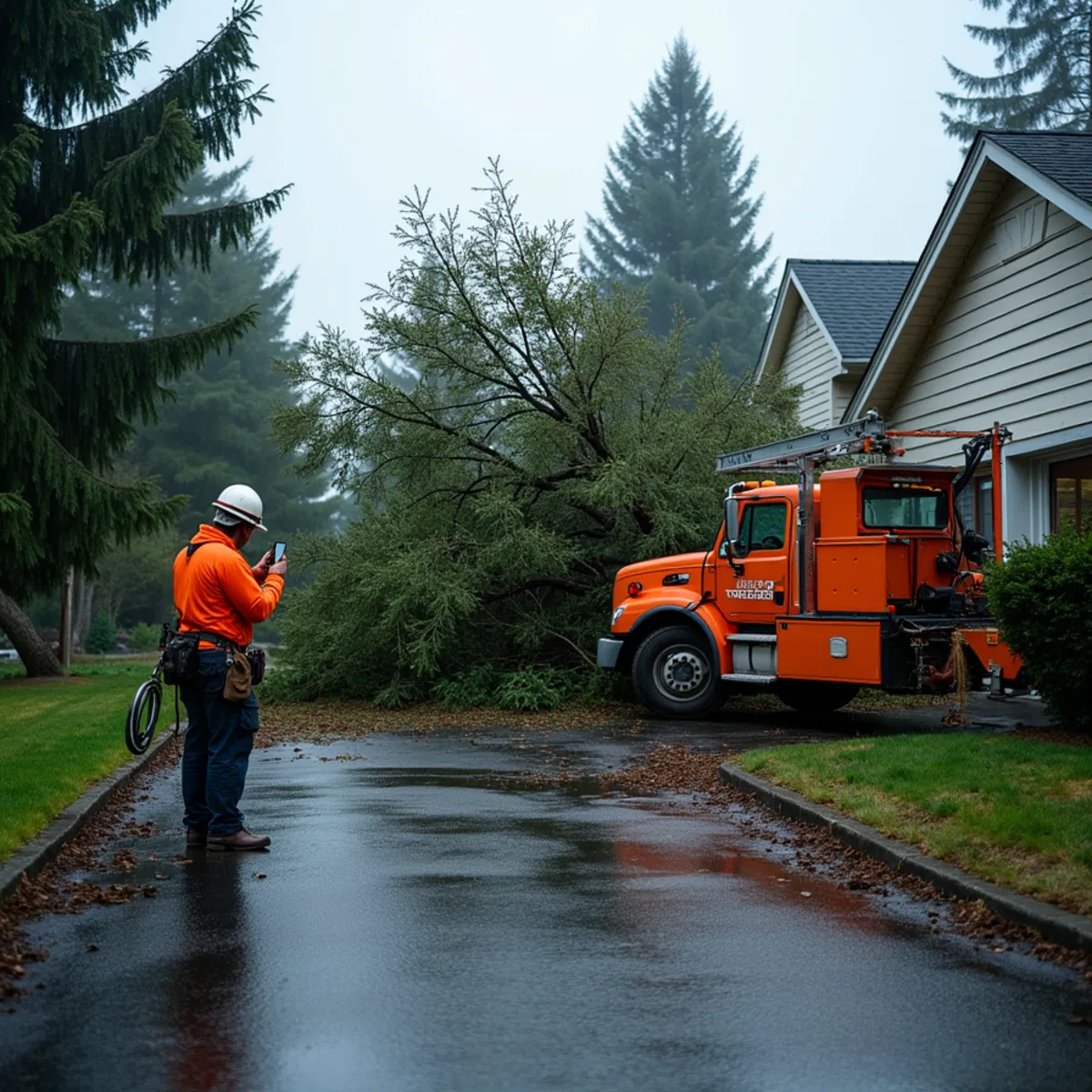
Storms are the other half of commercial life here. When the south wind comes up the river in December, managers with several properties need to know which one to send someone to first. Call us and we will tell you what we are seeing, get to the sites with structural contact or blocked access first, and document what failed with photos before anything is cut, because that documentation is what an adjuster or an owner will ask for later.
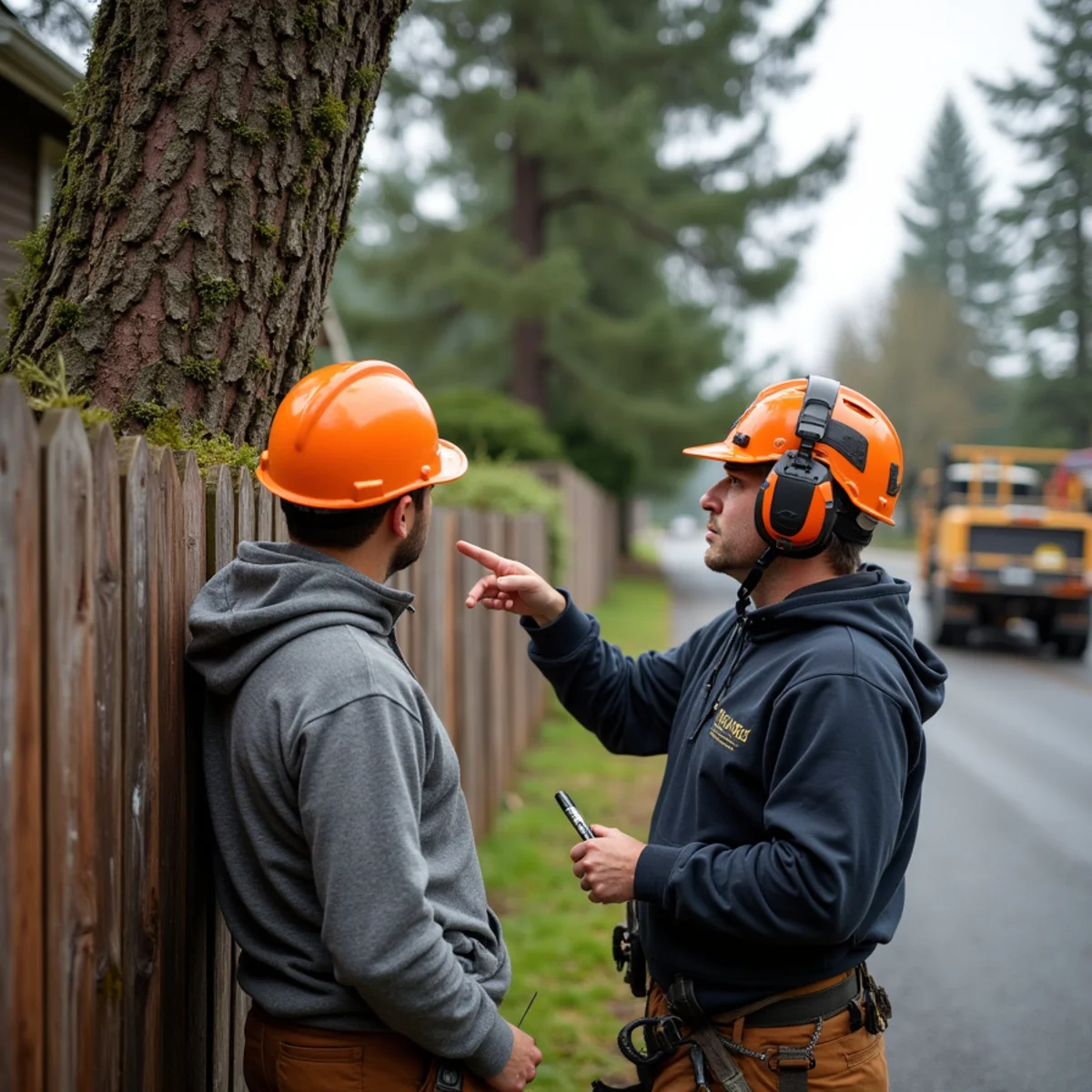
Ryan walks every property himself, including the commercial ones. The person who writes the inventory is the person who climbs the tree, which means nothing gets bid off a drive-by and nothing gets promised that the crew cannot deliver.
Signs You Need Commercial, HOA & Property Management Tree Care
How a Commercial, HOA & Property Management Tree Care Job Runs, Start to Finish
Walk the property with us — no charge
Inventory and condition ratings
Proposal and vendor packet together
Scheduling and tenant notice
The work, staged to keep the site running
Close-out and the next cycle
What Drives the Price of Commercial, HOA & Property Management Tree Care
Commercial, HOA & Property Management Tree Care on Real Jobs
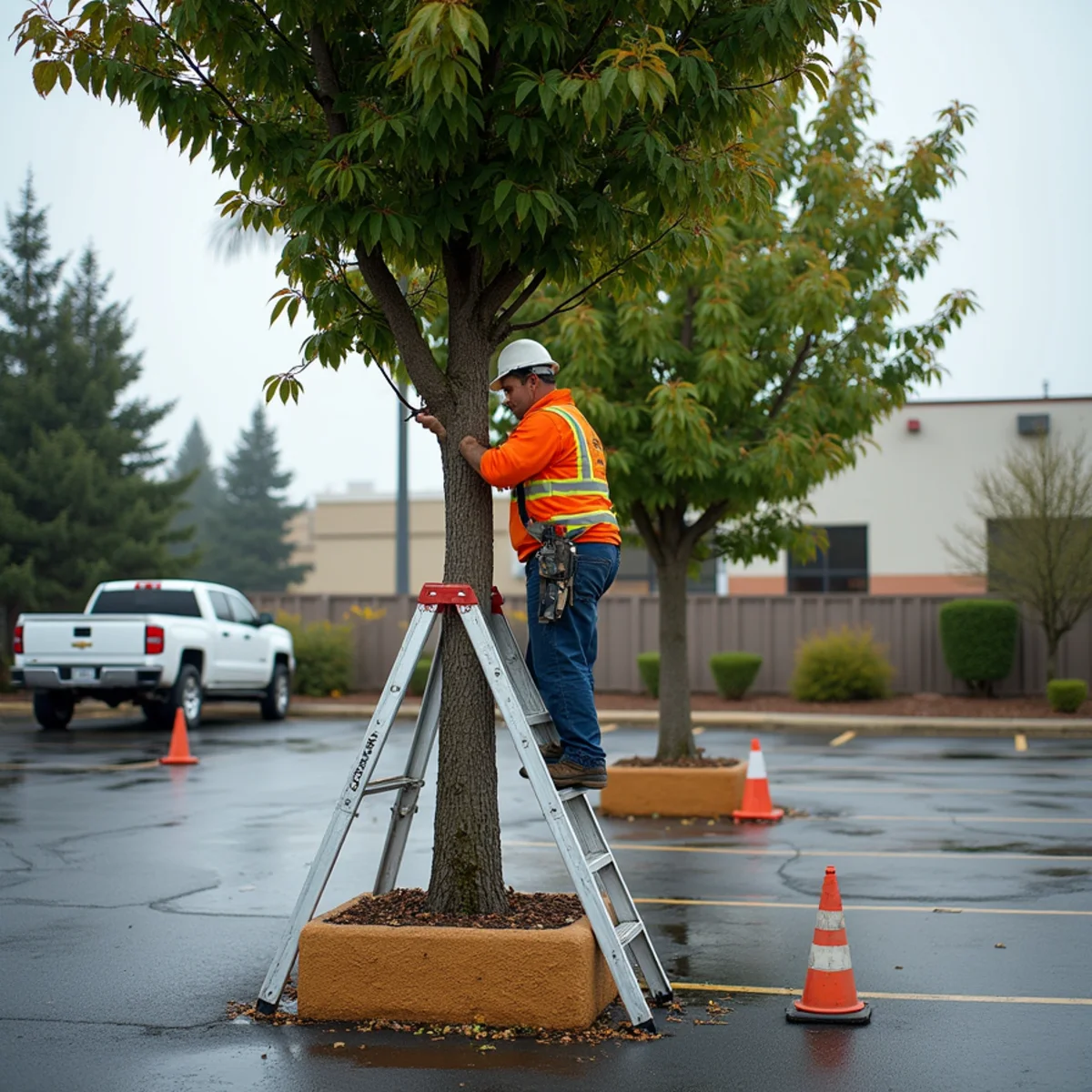
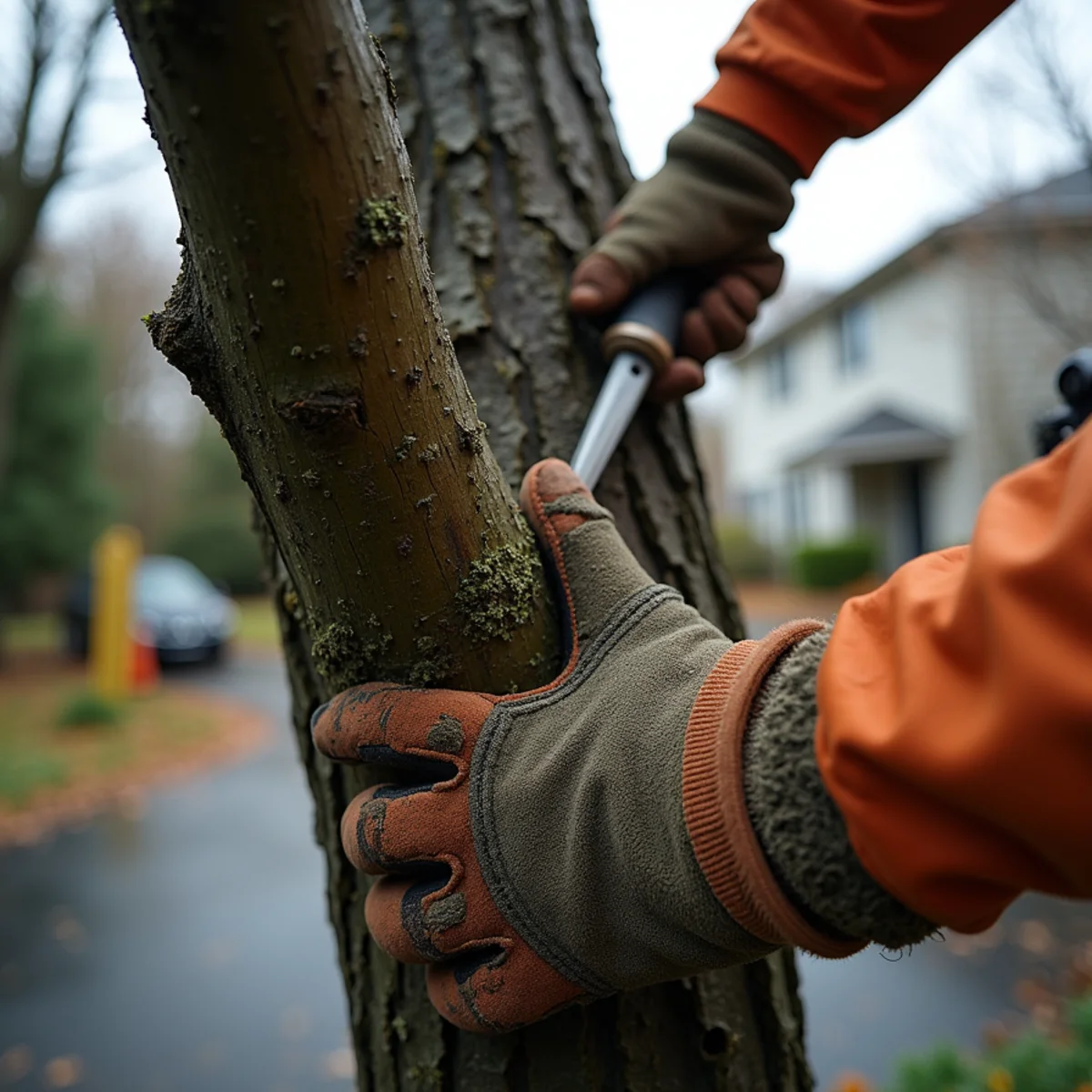
Clearance and liability pruning on a set cycle. 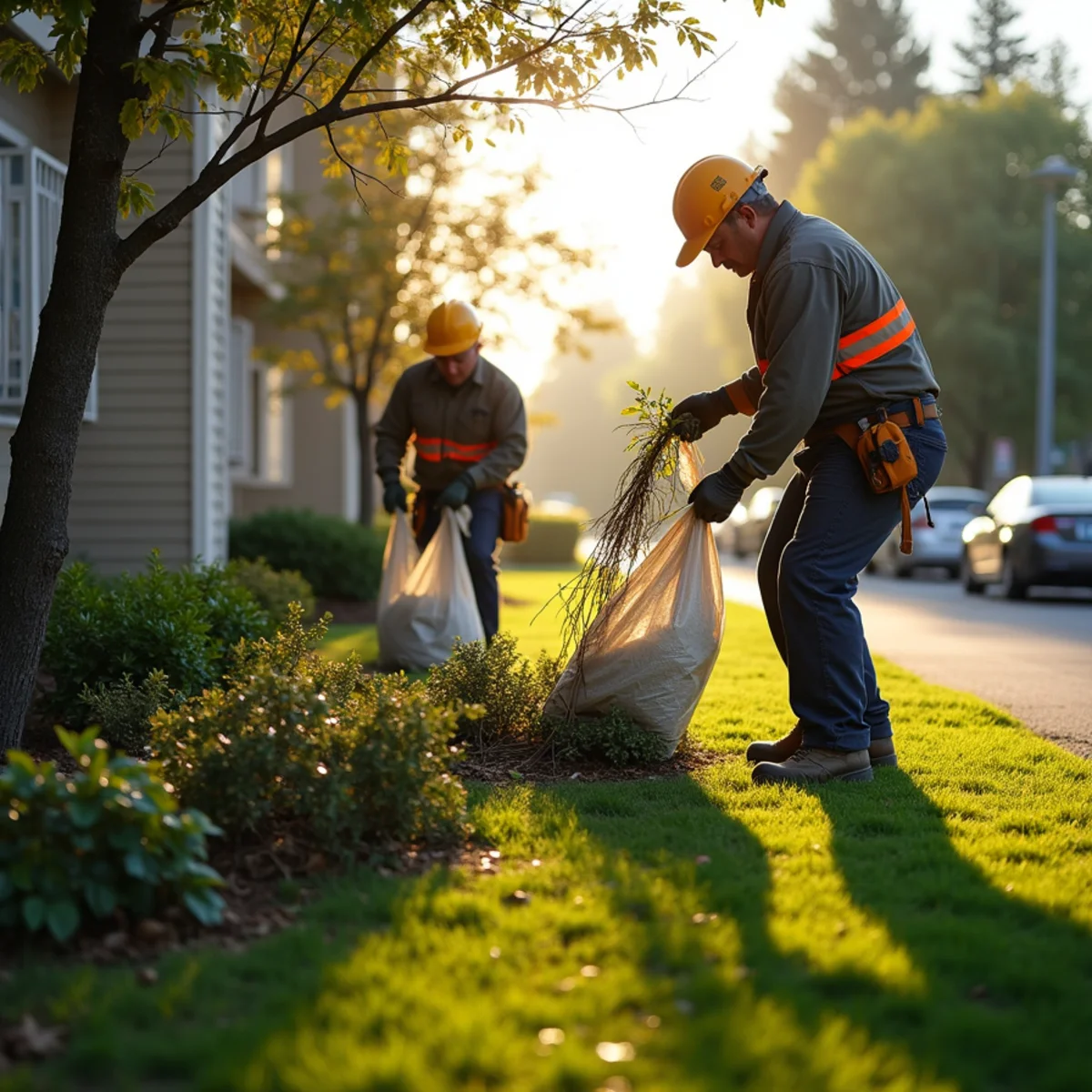
Early starts so tenants are not woken by a chipper. 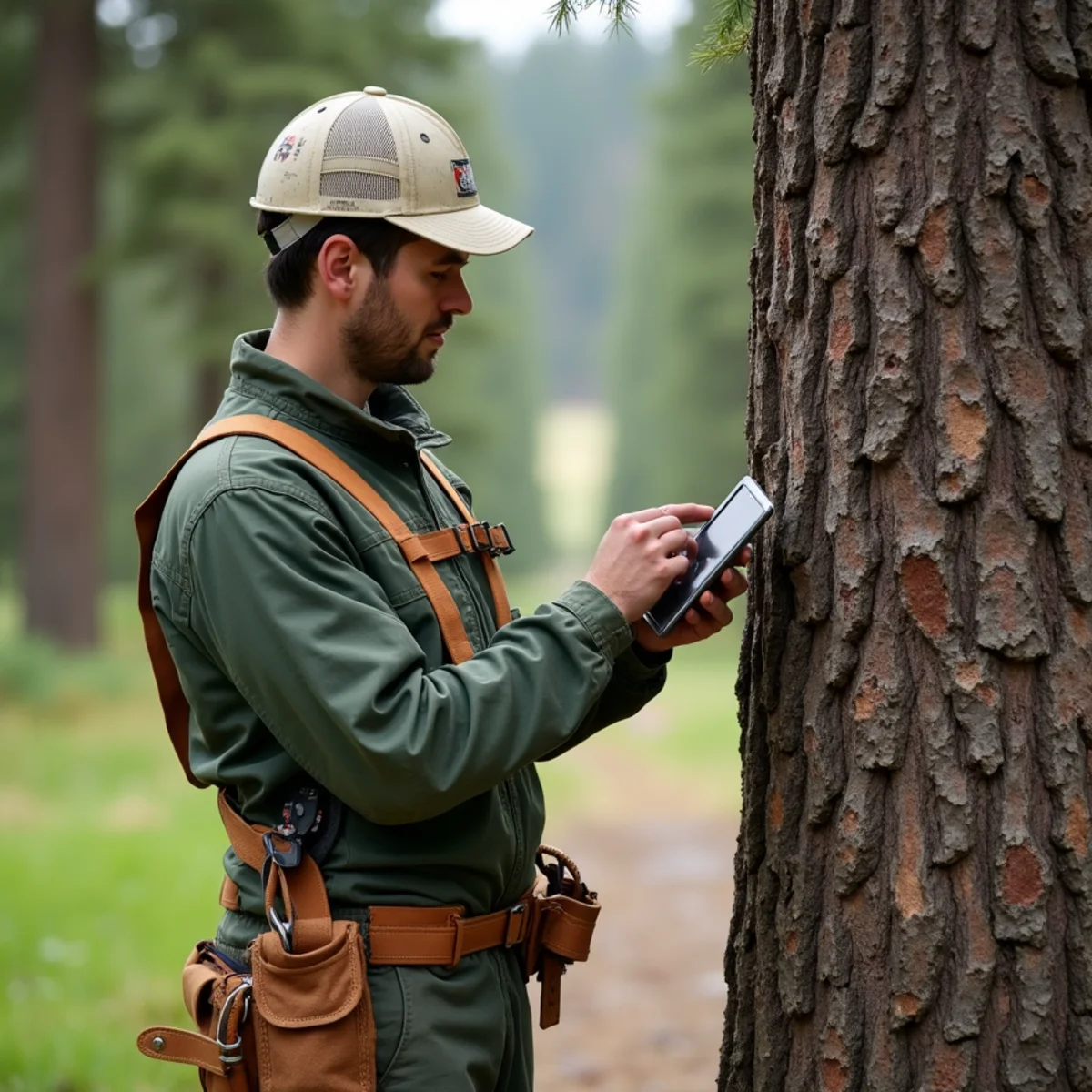
Inventory, condition rating, multi-year budget.
Get a written price for your commercial, hoa & property management tree care job.
Commercial, HOA & Property Management Tree Care Questions, Answered
Often Booked Together
Related Tree Services
Worth Reading First
Before You Book This Work
Free On-Site Estimates
Need commercial, hoa & property management tree care? Let’s take a look.
Ryan Norris walks every estimate himself. Free, on-site, and you’ll get a straight answer about whether the work is necessary at all.
- 34 Google reviews
- Licensed & Insured
- Free On-Site Estimates
- Based in Kelso, WA