Crane Tree Removal in a Tight Backyard: Longview, WA Homeowner Guide
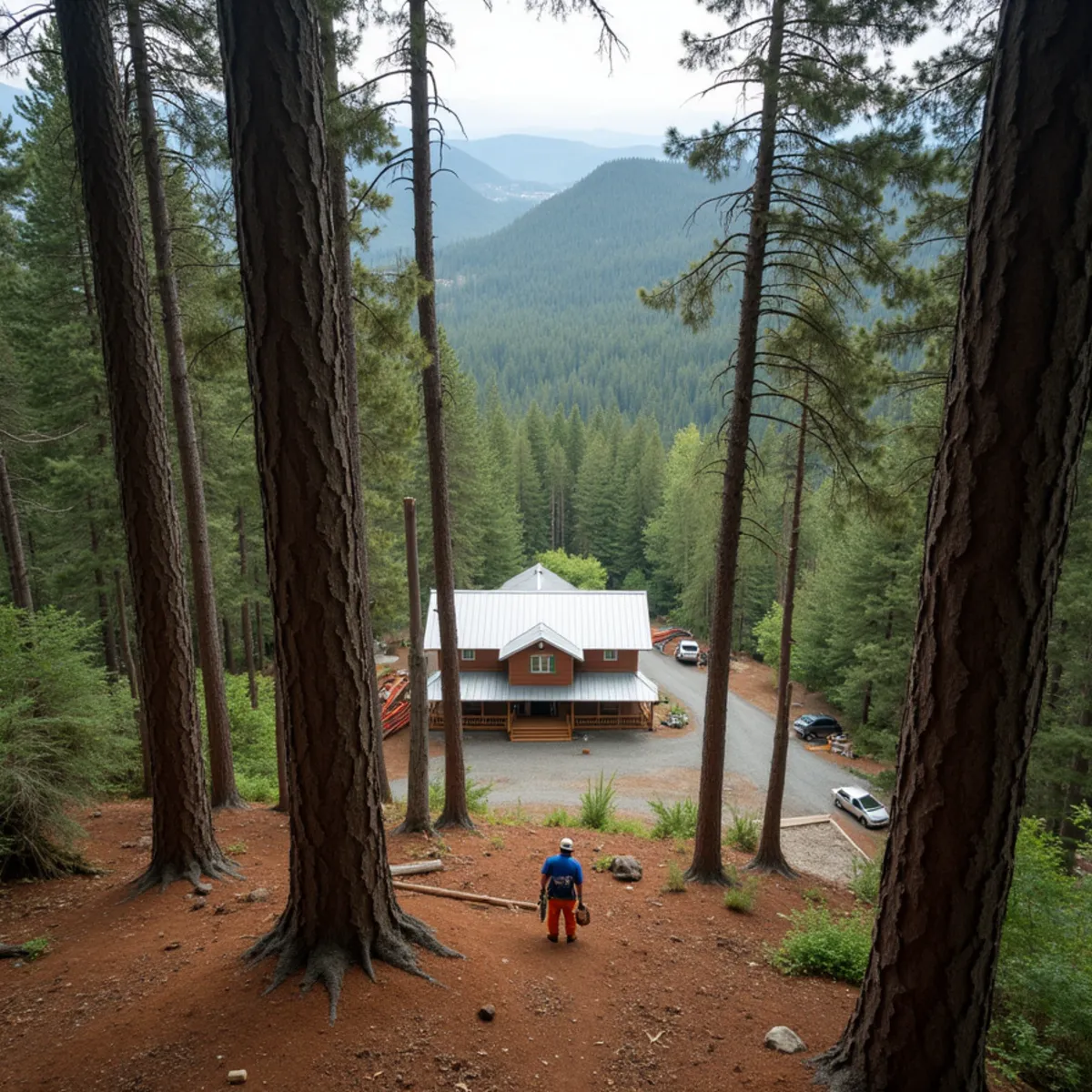
A homeowner off Ocean Beach Highway called about a Douglas fir in the back corner of the lot. Big tree, healthy top, standing about twelve feet off the house with a detached shop on the other side. The only way in was a gate between the house and the neighbor's fence, barely wide enough for a wheelbarrow. No truck, no chipper, no skid steer. That is where the crane question comes up.
Most people frame it wrong. It is not crane versus climber — a crane job still has a climber in the tree setting chokers and making the cuts. The real question is whether the wood leaves the yard through the air or through the gate. Hours, risk, price and the state of your lawn all follow from that.
Start With What the Wood Weighs
Green Douglas fir is heavier than it looks. A section of trunk two feet across and eight feet long is a load two grown men cannot budge, and it still has to reach the street. Rigging it down a rope makes the tree itself the crane: every pound runs through the rigging point, the block and the trunk below. Sound wood handles that fine — ordinary tree removal work we do every week.
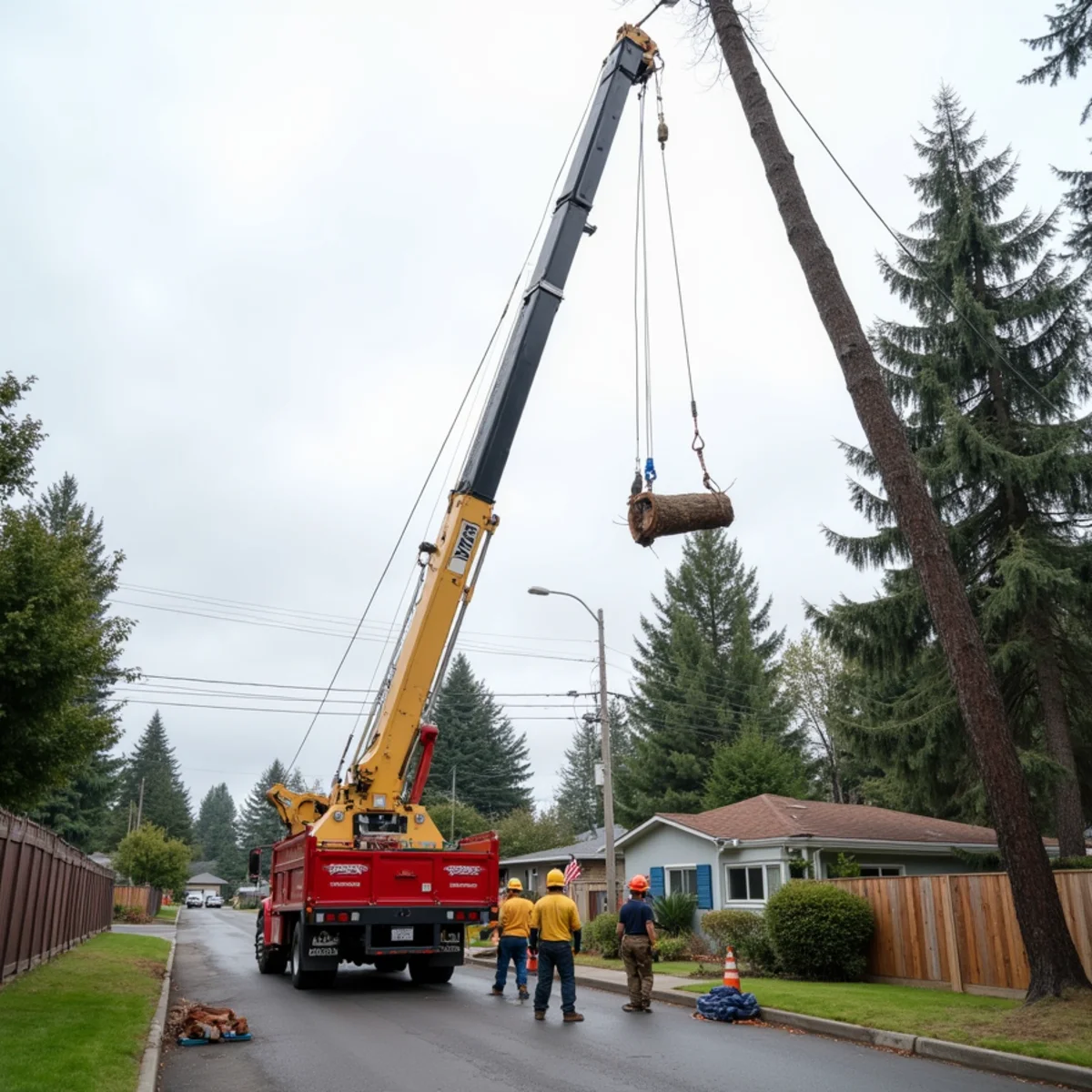
The math changes when the landing zone shrinks. Piece size on a rigged takedown is limited by what the spar and rigging can absorb without shock-loading, and smaller pieces mean more cuts, more lowers, more time aloft, more hand-carrying. A crane does not care about any of that. It takes the top in one pick and sets it where the chipper is already parked.
When Climbing Stops Being the Right Answer
There are jobs where a crane is convenient, and jobs where climbing is not defensible. The second list is short and specific.
- Advanced decay in the trunk or root collar. A climber's life and the rigging load both depend on wood that holds an anchor. Hollow butts, open seams and conks at the base mean nobody should be tied into that stem — that is a straight hazard tree removal call, with the crane carrying the weight through the cut.
- A split or cracked union below the work. Anything that can move while a climber is above it is disqualifying.
- No rigging path. Every lowered piece needs somewhere to swing and land, and a tree ringed by a roofline, a fence and a drainfield has no landing zone at any piece size.
- Long-dead spars where the bark is shedding and the sapwood will not hold a spur.
- A hard lean already committed over a structure. Cutting that top down by hand changes the loading with every cut; a crane holds it steady instead.
What a Lift Plan and Outrigger Setup Actually Require
A crane day is mostly setup. Before the first pick the operator builds a lift plan: estimated weight of each piece, the radius it sits at from the crane, and chart capacity at that radius. Capacity falls off fast as the boom reaches out, so where the machine sets up matters more than its rated tonnage.
- Find a set position with a clear line to the tree and firm, level ground under all four outriggers.
- Confirm what is under the pads. Water meters, sewer laterals, septic tanks and thin driveway aprons all live where a crane wants to sit, and pads concentrate a huge load into a small patch of ground.
- Check overhead — service drops, primary conductors, and the boom's swing radius over the neighbor's roof.
- Set the pick order top down and estimate every piece, so no lift is a guess.
- Decide where each piece gets set down and processed, usually the street rather than the yard.
Then the climber goes up, chokes the piece and cuts with the crane already holding the weight. The section flies out over the house instead of coming down through it. The load never travels across your backyard. Our crane-assisted tree removal setups exist for yards where nothing can.
Street Staging: The Longview Grid vs Kelso Hillsides
Access is the real difference between the two sides of the valley. The old Long-Bell street grid in Longview is wide, flat and straight, with alleys behind many blocks — close to ideal: level setup, short radius, room to swing. The complications there are parking-strip trees and overhead service drops, not the geometry.
The hillside neighborhoods above Kelso are a different problem. Driveways run steep and narrow, houses sit above or below the road on cut-and-fill benches, and the only level ground is often the driveway itself. Sometimes the answer is a longer boom set farther out at reduced capacity. Sometimes a crane simply will not fit and we climb it — better said at the estimate than on the morning of the job.
The Street, the Permit and the Paperwork
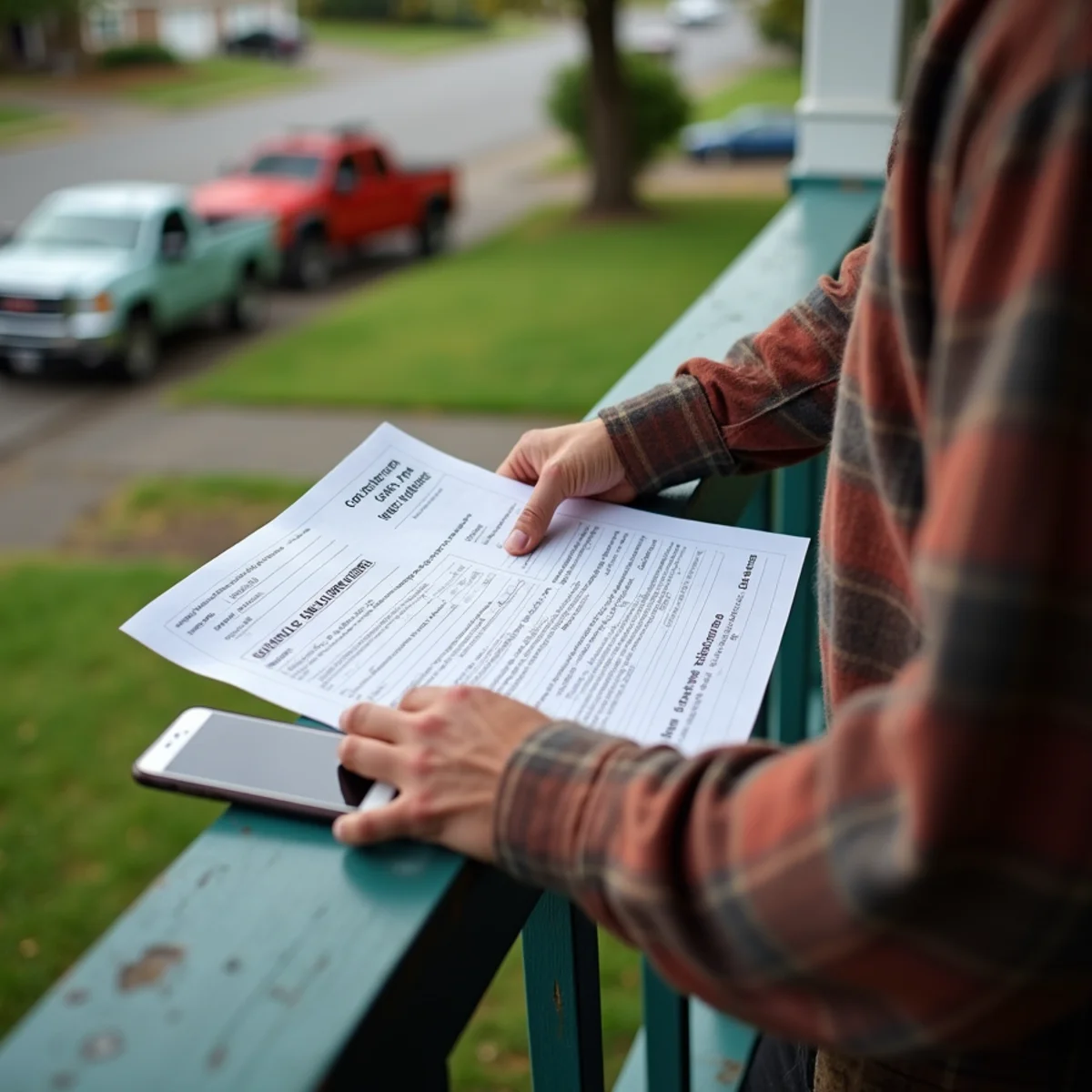
If the crane sets up in the public right-of-way, that is generally handled separately from the tree work. Cities and counties here typically use some form of right-of-way use, lane closure or temporary obstruction approval, and the categories differ by jurisdiction and street classification. The removal itself may also be regulated when the tree stands in the right-of-way, inside a critical-area or shoreline overlay, or under a subdivision condition. Verify with your city or county for your parcel; we check before scheduling.
Ask for our certificate of insurance before anyone sets up. We are licensed and insured and will hand it over without being chased. This is general information, not legal advice — your own policy, insurer or attorney governs your situation.
Higher Hourly, Often Lower Total
A crane costs more per hour than a climber and a chipper, and most people stop there. What that skips is how much a crane compresses the schedule. A backyard-locked fir that takes a climbing crew most of two days to rig, lower, carry and clean up can come out in a morning when every piece lands beside the chipper. Fewer crew-hours, less turf to repair, and a far shorter window with heavy wood over your roof.
It does not always pencil out. If the crane cannot get close enough, if setup eats half the day, or if the tree is small enough to rig out in an hour, climbing wins. Where both work, we price both.
How to Decide
Walk it in this order. Is the wood sound enough to trust with a climber? Is there a rigging path for pieces of any workable size? Is there firm, level ground within reach of the tree? Two clear noes and the crane is probably the shorter, cheaper day. For a straight answer on your tree, Ryan walks every estimate himself, on site, free — call (208) 635-2100 and we will tell you which way we would do it, including when climbing is smarter.