Who Pays If a Neighbor's Tree Falls on My House in Washington?
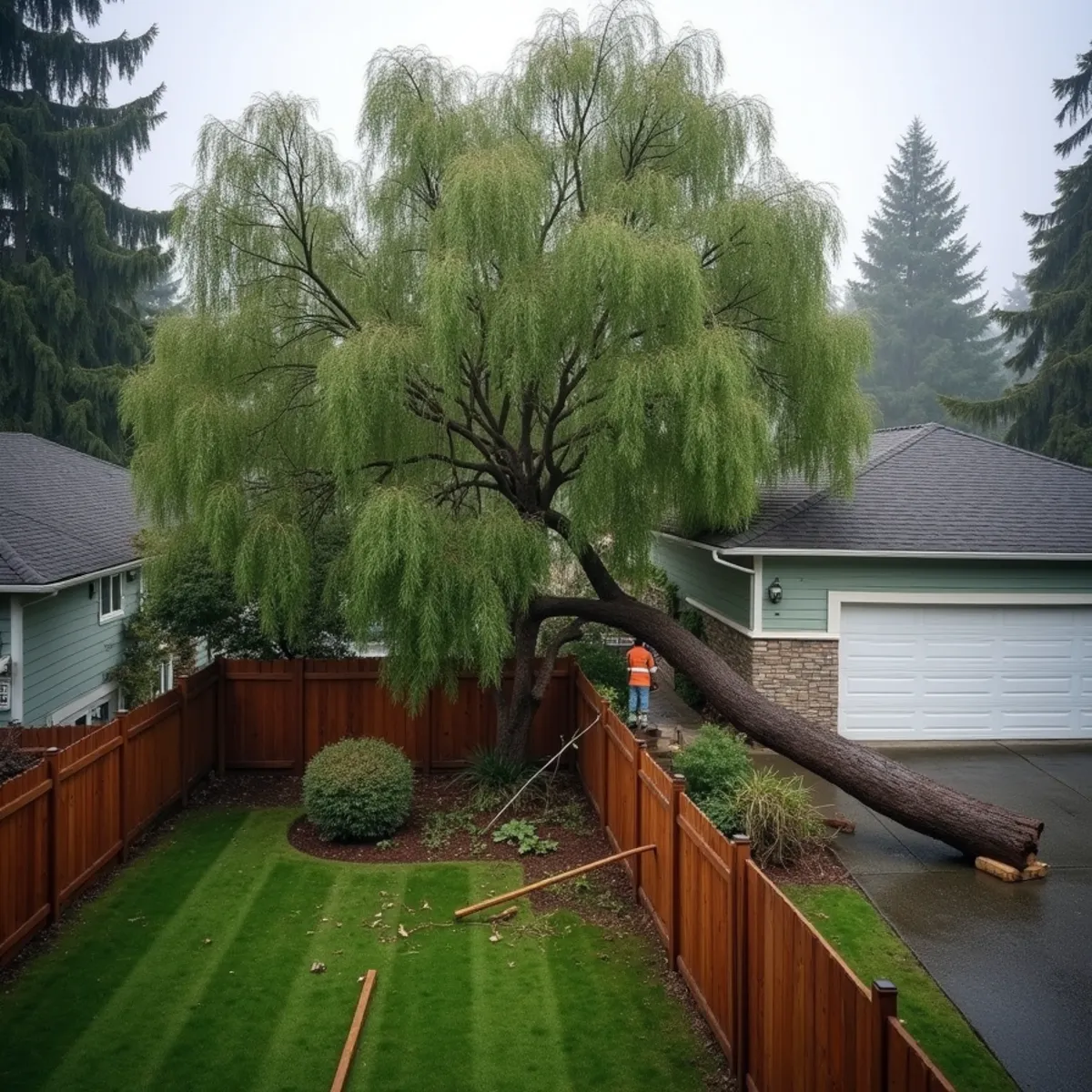
The call comes the morning after the first real December blow. A bigleaf maple that stood on the far side of a fence for forty years is lying across a garage roof, and two households are in the driveway looking at it — each certain whose problem it is, and each certain of the opposite answer.
Before anything else: I climb trees for a living, I am not an attorney. What follows is general information about how these situations usually get sorted out in Washington, not legal advice. Your policy language, your insurer, and if it goes that far your own lawyer decide liability on your claim.
The First Answer Is Usually Your Own Policy
When a tree lands on your house, the repair usually starts with your own homeowners policy, no matter which side of the line it grew on. That is not a loophole. Property coverage is built around damage from falling objects, and a neighbor's fir is a falling object. You file, you pay your deductible, and your carrier decides whether to pursue the neighbor's insurer for what it spent.
Homeowners hate hearing that, but the upside is real. You are not waiting for a neighbor to admit anything. You get the roof dried in while the fault question runs on a separate track. Chasing the neighbor first is how people end up with a tarp on the house in February and nothing else.
A Healthy Tree in a Windstorm Is Not the Same as a Known Hazard
The distinction that matters most is between an act of nature and negligence. A sound tree that fails in a real windstorm is generally treated as nobody's fault — the owner had no way to know it would come apart. A tree with obvious defects the owner knew about and left standing is a different conversation, because now the question is what a reasonable person would have done.
What separates the two is evidence of what was visible before the storm. These push a failure toward the negligence side:
- Conks or mushrooms at the root collar — decay working through the base for years, visible from the kitchen window.
- A lean that visibly changed, with cracked or heaved soil on the opposite side.
- A split or open seam in a codominant union, the tight V bigleaf maple grows all over Southwest Washington.
- A standing dead tree over a house or driveway — the hardest case to defend.
- A written assessment already in the owner’s hands saying the tree was a risk.
That last one is why we get called to write reports on trees nobody has hired us to touch. A written tree risk assessment and arborist report turns “I thought it looked bad” into a dated document naming a specific defect on a specific tree.
Why Written Notice Changes the Picture
A mention over the fence rarely survives a dispute. Two neighbors remember it two different ways and neither can prove a thing. Written notice does what a conversation cannot — it establishes a date on which the owner knew. From that date forward the owner is making a choice rather than being unaware.
This is not about picking a fight. Most people, handed a plain report describing a cracked union over a child’s bedroom, deal with it. Around Longview plenty of these end with the neighbor calling us the same week. The letter exists for the few that do not. Keep it simple:
- Have the tree looked at from your side of the line and get the findings in writing — species, defect, likely direction of failure, what sits underneath.
- Photograph it from several angles with something in frame for scale, dates intact.
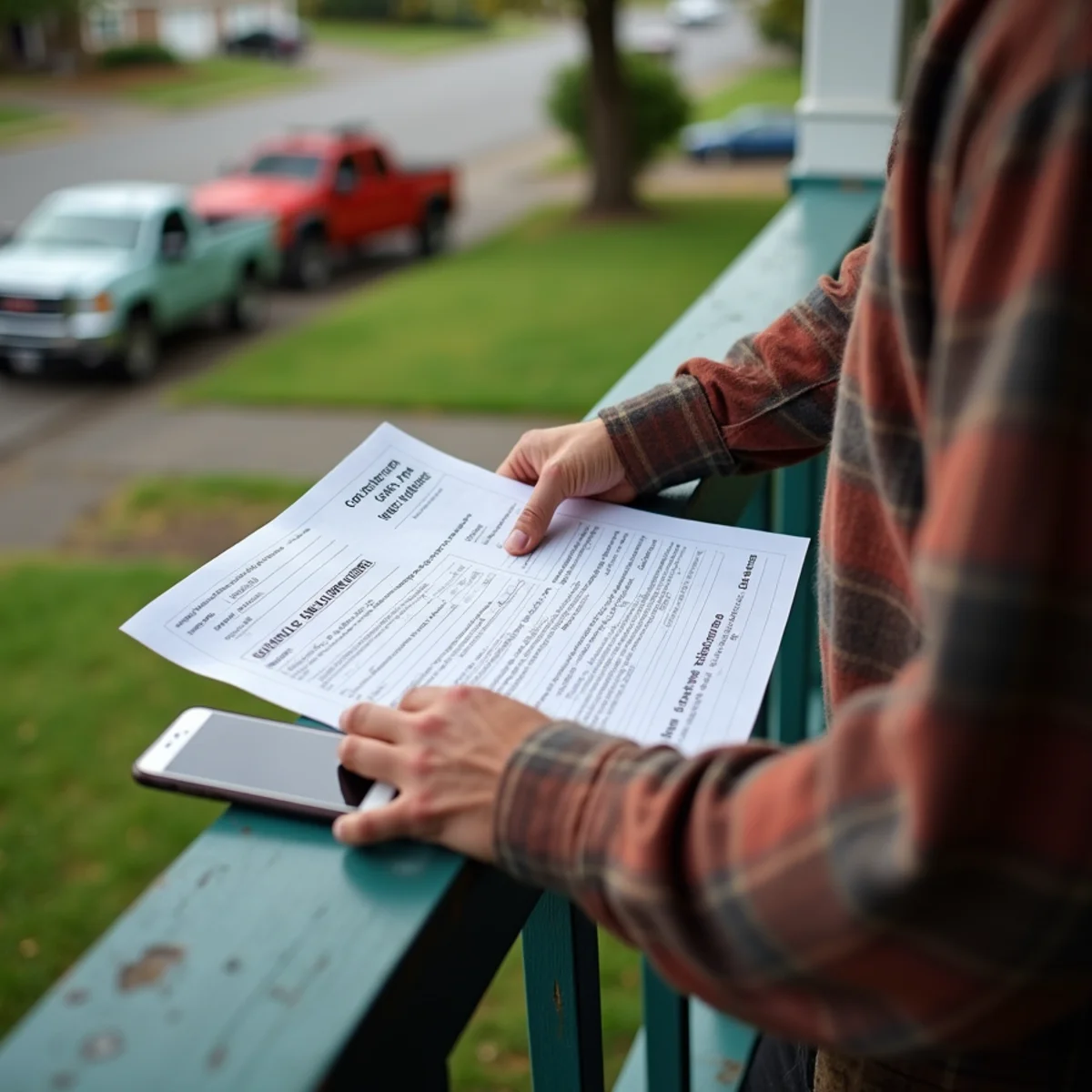
- Write a short, polite letter. Say what you observed, attach the assessment, ask them to have it evaluated. No threats, no borrowed legal language.
- Send it in a way that creates a record — certified mail, or an email you keep.
- Put everything in one folder. If it never matters, you spent twenty minutes.
Your Right to Trim, and Where It Stops
Washington property owners generally have the right to cut back branches and roots that cross onto their side of the line, at their own expense. What gets homeowners into trouble is the boundary itself. You may trim to the line. You may not cross it, step into the neighbor’s yard to cut, or trim so hard from your own side that you kill or destabilize the tree.
Washington treats damaging or destroying someone else’s tree as a serious matter, and the damages a court can award are not limited to the value of the firewood — they can be multiplied. Topping a neighbor’s fir for a view is one of the more expensive mistakes a homeowner can make. If the work is beyond your own ground, ask in writing and get a yes in writing.
Cities and counties add a second layer, and their tree rules are not uniform. In Vancouver and other incorporated areas, trees can be protected by size, by a critical-area or shoreline overlay, or as street trees in the right-of-way, which usually belong to the city rather than the adjoining owner. HOA conditions add another set. Verify with the city or county for your parcel before anyone starts a saw.
If It Has Already Fallen
Once the tree is down, your job shifts from prevention to documentation.
- Assume any tree touching a wire is energized. Stay out from under it and call the utility first.
- Photograph everything before a single cut. Once the tree is in pieces, the evidence of how it failed is gone.
- Call your own carrier the same day, even if you are certain the neighbor is at fault.
- Keep receipts for tarps, board-up, lodging and whatever else the failure costs.
- Get the structure covered and dried before anyone argues about who pays.
Photographing the failure surface and writing up what let go is the core of our storm damage insurance documentation, and it is the step homeowners skip in the rush to clear a driveway. If the tree is still standing but has started to come apart, hazard tree removal is the next call — a partly failed tree is far less predictable than one already down.
The Move That Actually Protects You
Most of these disputes trace back to a tree that had been visibly failing for two or three years while both households looked at it and said nothing. Written notice, sent early and politely, costs very little. A new roof and a soured relationship with the person you live beside cost a great deal. If a tree on either side of your line has you thinking every time the wind picks up, we will look at it honestly and put what we find in writing. The on-site estimate is free, Ryan walks it himself: (208) 635-2100.