
Cowlitz County · Clark County
Storm Damage Insurance Documentation in Washington
A storm claim is won or lost on what was recorded before the saw started. We record it, write it up, and deal with the adjuster so you do not have to.
- Free On-Site Estimates
- Licensed & Insured
- 34 Google reviews
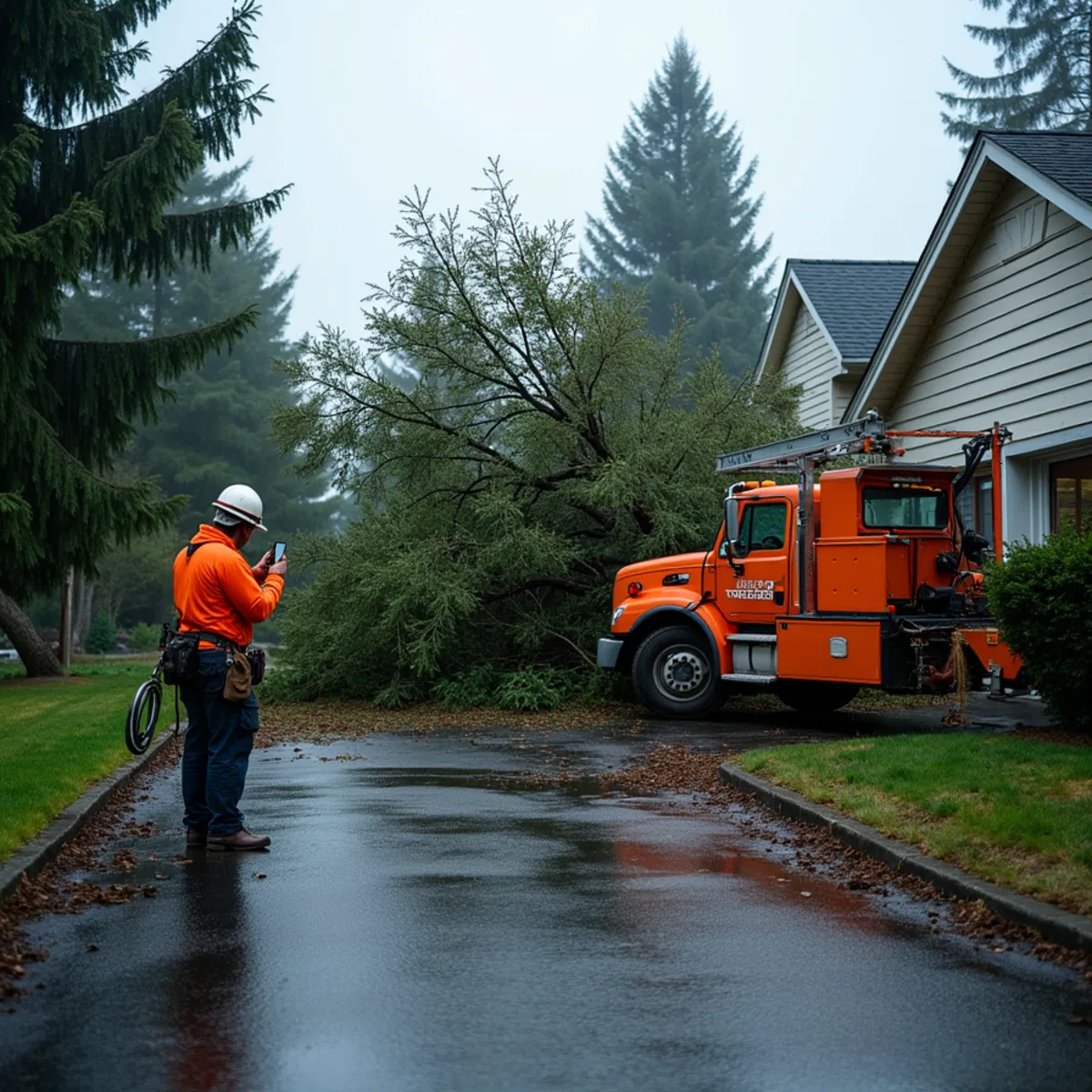
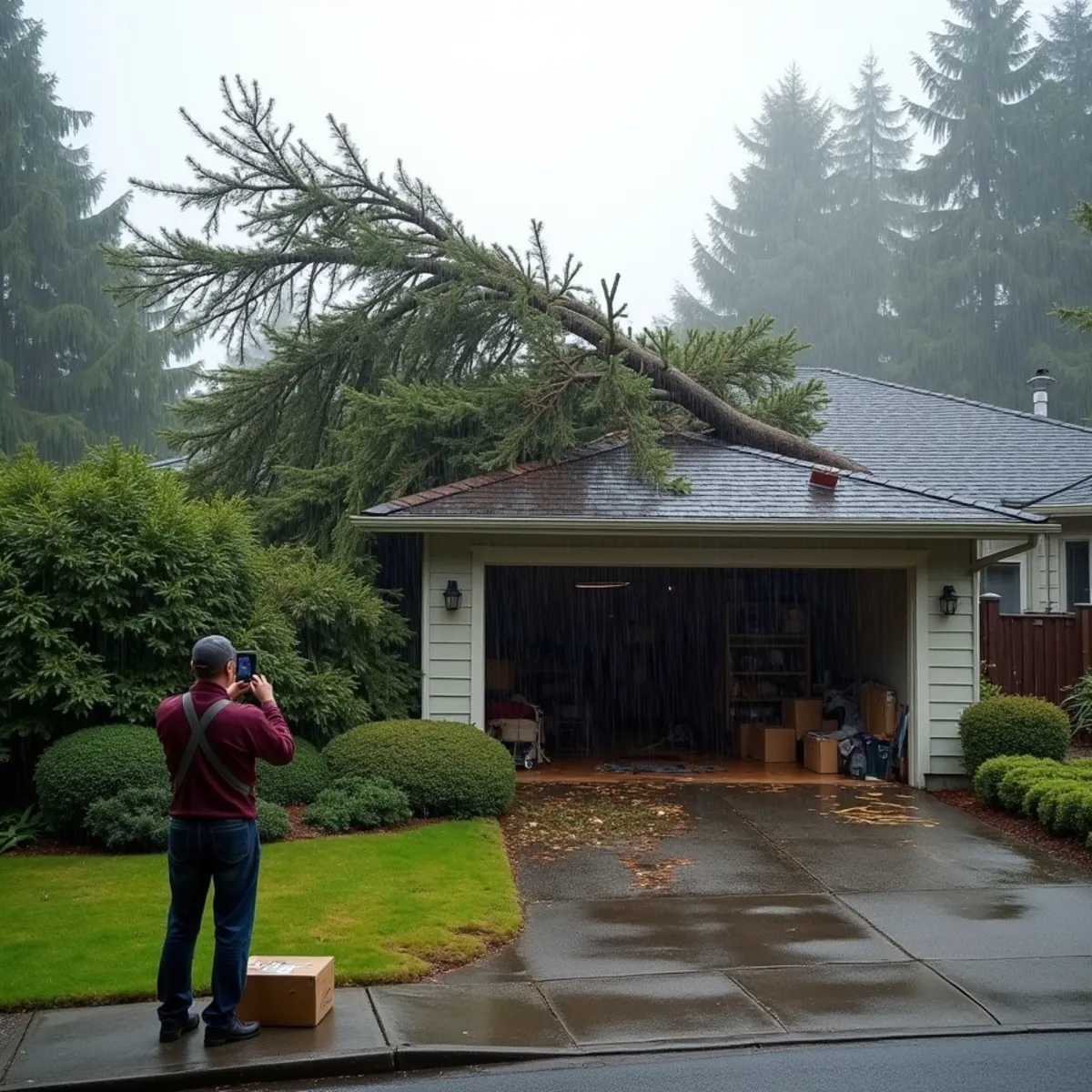
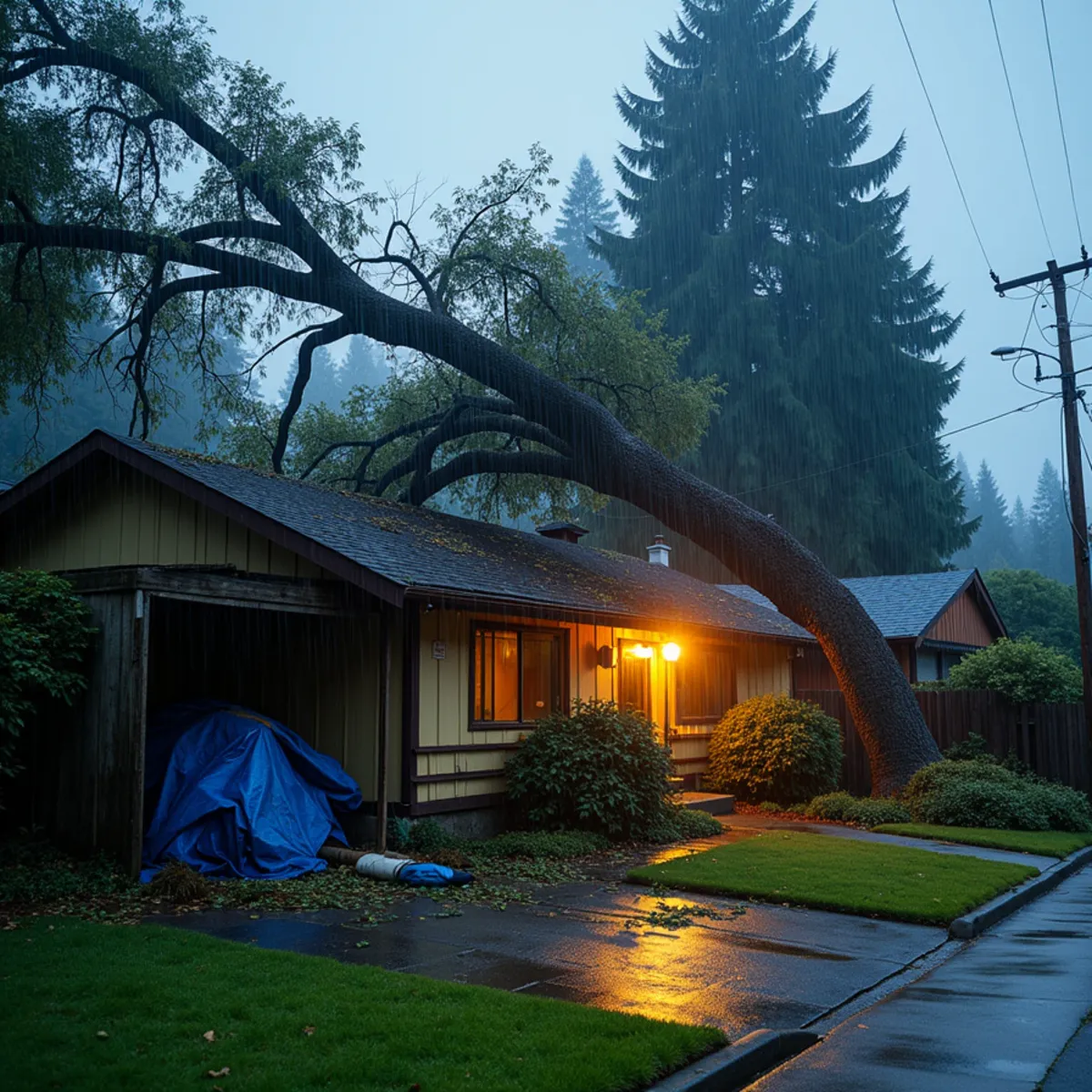
A December wind pushed a fir out of a bank in Kelso and put the top third of it through a garage roof. The homeowner called us at seven in the morning, and the first thing she asked was how fast we could get it off. Reasonable question. It was also, at that exact moment, the wrong one — because the moment a tree comes off a building, the proof of how it got there goes into the chipper with everything else.
Insurance carriers pay on evidence. Not on your description of the storm, not on the neighbor who saw it happen, and not on a handwritten total scrawled on the back of a business card. They pay on photographs with context, measurements, a scope of work broken into line items, and a coherent explanation of what failed and why. Almost none of that can be reconstructed after the cleanup. Fifteen minutes of documentation before the first cut is the cheapest work anybody does on a storm job.
Photograph the Failure Before Anything Gets Cut
When we roll up on a structure hit, the camera comes out before the saws do — assuming nobody is in danger and no conductor is involved. If someone is trapped or a line is down, that changes everything and we deal with the hazard first. Otherwise we walk the whole scene and shoot it methodically, then hand the file to you so it is yours, not ours.
- Wide shots that place the tree, the structure and the property line in one frame, so an adjuster reading a file in Boise can tell whose tree it was and where it stood.
- The point of impact from several angles, including inside the building where the ceiling, rafters or siding are broken.
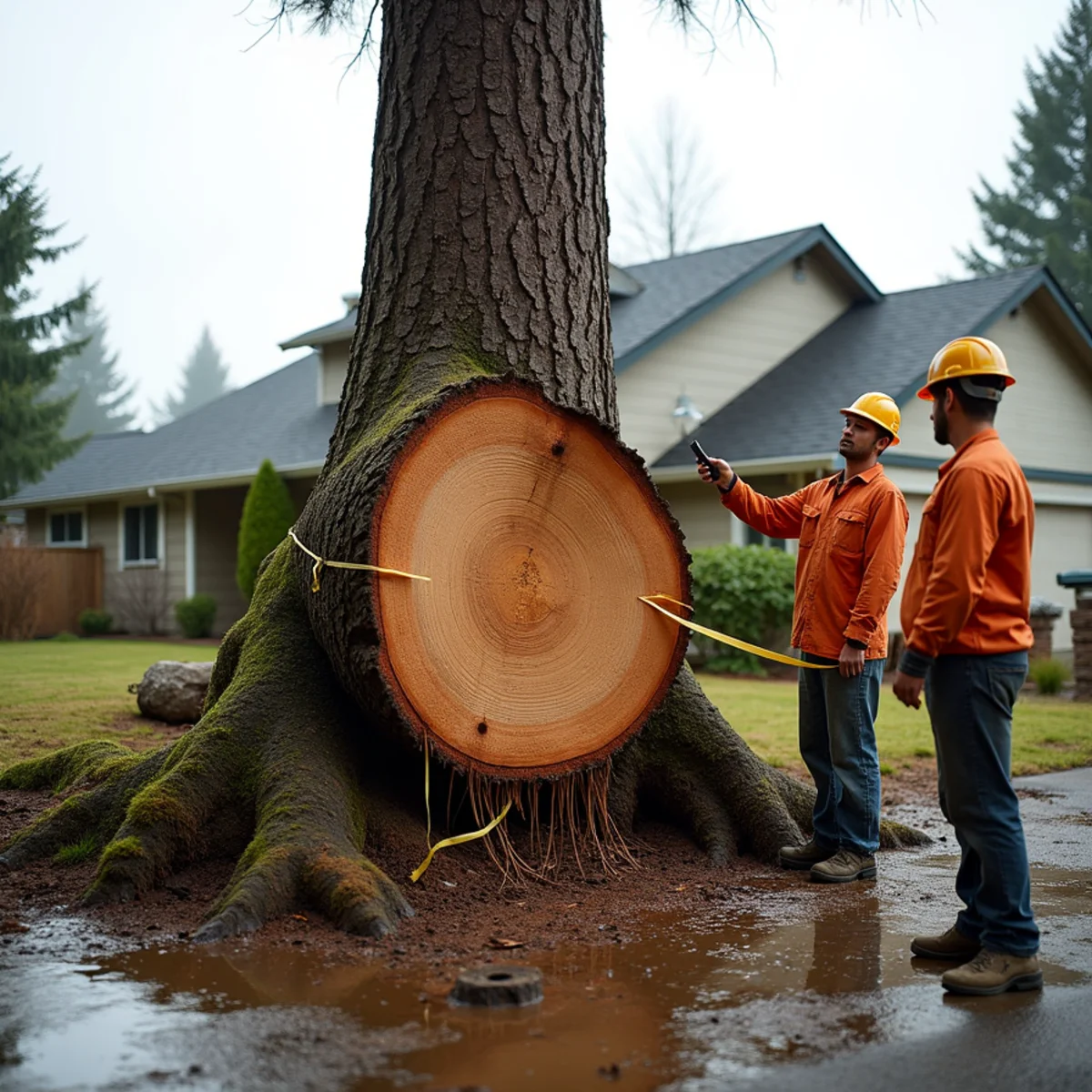
- The stump, the root plate and the soil around it — this is the single most valuable photo on a claim, because it shows whether the tree uprooted, snapped, or came apart at a defect.
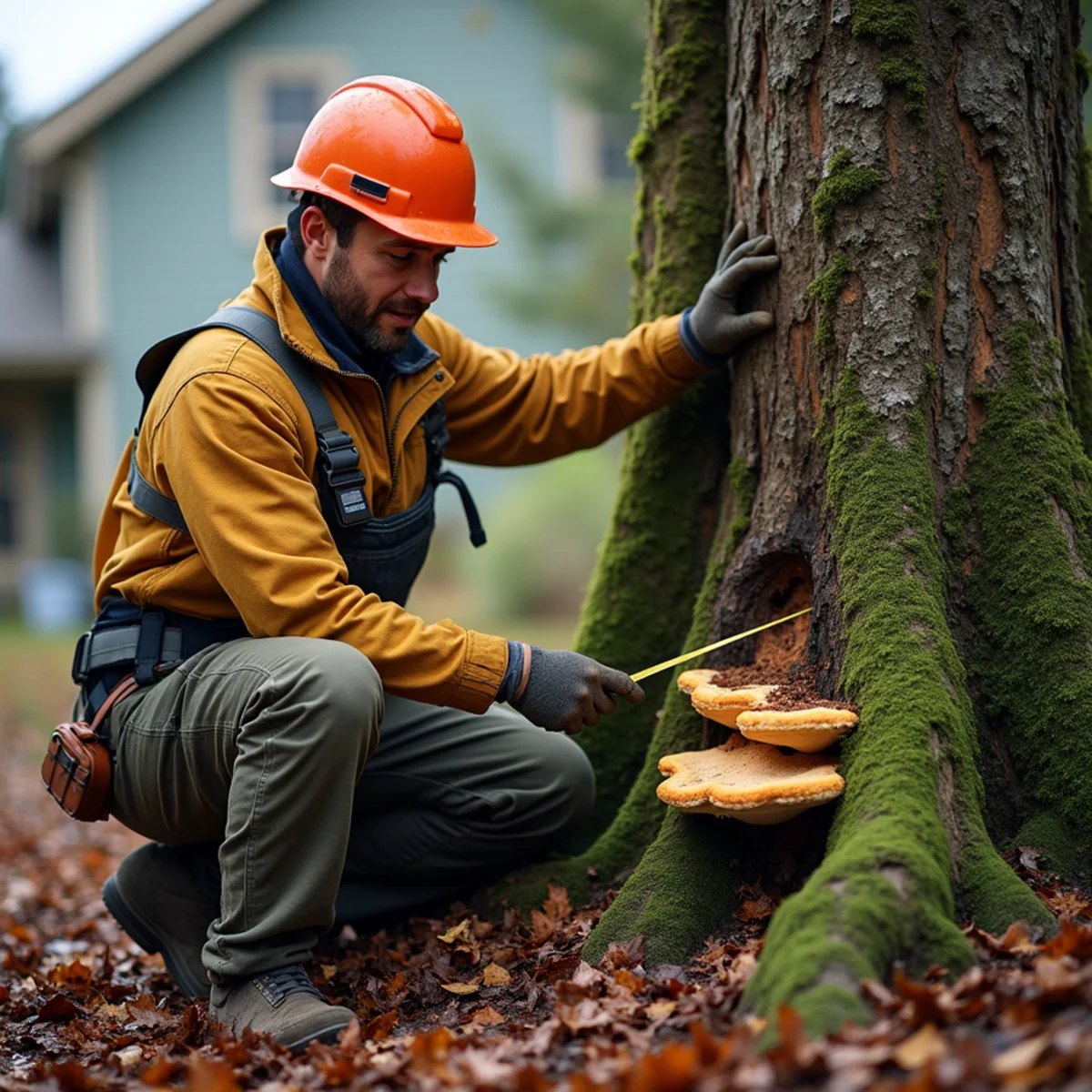
- Trunk diameter with a tape in frame, plus rough height. Removal cost tracks size, and an adjuster who cannot see size will estimate low.
- Fences, vehicles, sheds, decking, gutters, landscaping and anything else the tree touched on the way down. Secondary damage gets missed constantly.
- Short video walking the site, narrated plainly. It costs nothing and it settles arguments about scope weeks later.
One of the reviews we are proudest of came from a homeowner whose adjuster needed pictures of the damaged structures and got them from us the same day. That is not a special favor. It is just how we run a storm job.
An Itemized Estimate the Adjuster Can Actually Work From
Adjusters are not being difficult when they push back on a one-line bid. They are working inside estimating software that wants tasks broken out, and a single number gives them nothing to approve. So we write it out the way they need to read it.
- Emergency stabilization and make-safe work separated from the full removal, because carriers frequently treat those differently.
- Cutting the tree off the structure listed as its own task, with the rigging or crane time it required.
- Removal of the remaining stem and canopy, hauling, chipping and stump grinding as distinct lines.
- Access constraints named in writing — backyard-locked, hillside driveway, hand-carry distance — because those are the hours an adjuster cannot see from a photo.
- Debris removal broken out separately from structural work, since it is often handled under its own limit.
Cause-of-Failure Letters
Sometimes a carrier wants more than photos. If a claim hinges on whether the tree was healthy before the storm or was already decayed and neglected, we will write a plain-language letter describing what we found at the failure — root plate condition, decay in the butt, a split union, wind direction, the state of the soil. We describe what we observed and nothing else. We do not guess at coverage, and we do not tell your adjuster what the policy says. Your policy governs, always.
Direct Billing to Your Carrier
Where the carrier permits it, we will invoice them directly rather than making you front the whole job and wait on reimbursement. That means our paperwork goes to the adjuster in the format they asked for, we answer their follow-up questions ourselves, and you deal with your deductible instead of the full ticket. We have done it, it works, and it takes a real load off a household that just lost a garage roof.
It is not automatic. Some carriers insist on paying the insured. Some want a supplement filed before they will approve anything past the initial scope. We will tell you which way yours is going as soon as we know, and we will not hold the emergency work hostage while it gets sorted out.
When We Tell You Not to File
Plenty of storm calls are not worth a claim. If a fir dropped a limb across the driveway and the whole job is a couple of hours of cutting and chipping, filing may cost you more in deductible and claim history than simply paying for the work. We will say that out loud. We would rather do a small job honestly than help you open a file that never pays out.
Signs You Need Storm Damage Insurance Documentation & Claim Support
How a Storm Damage Insurance Documentation & Claim Support Job Runs, Start to Finish
Call and describe the hit
Hazard control first
Full photo and video record
Itemized written estimate
We talk to the adjuster
Work, cleanup and billing
What Drives the Price of Storm Damage Insurance Documentation & Claim Support
Storm Damage Insurance Documentation & Claim Support on Real Jobs
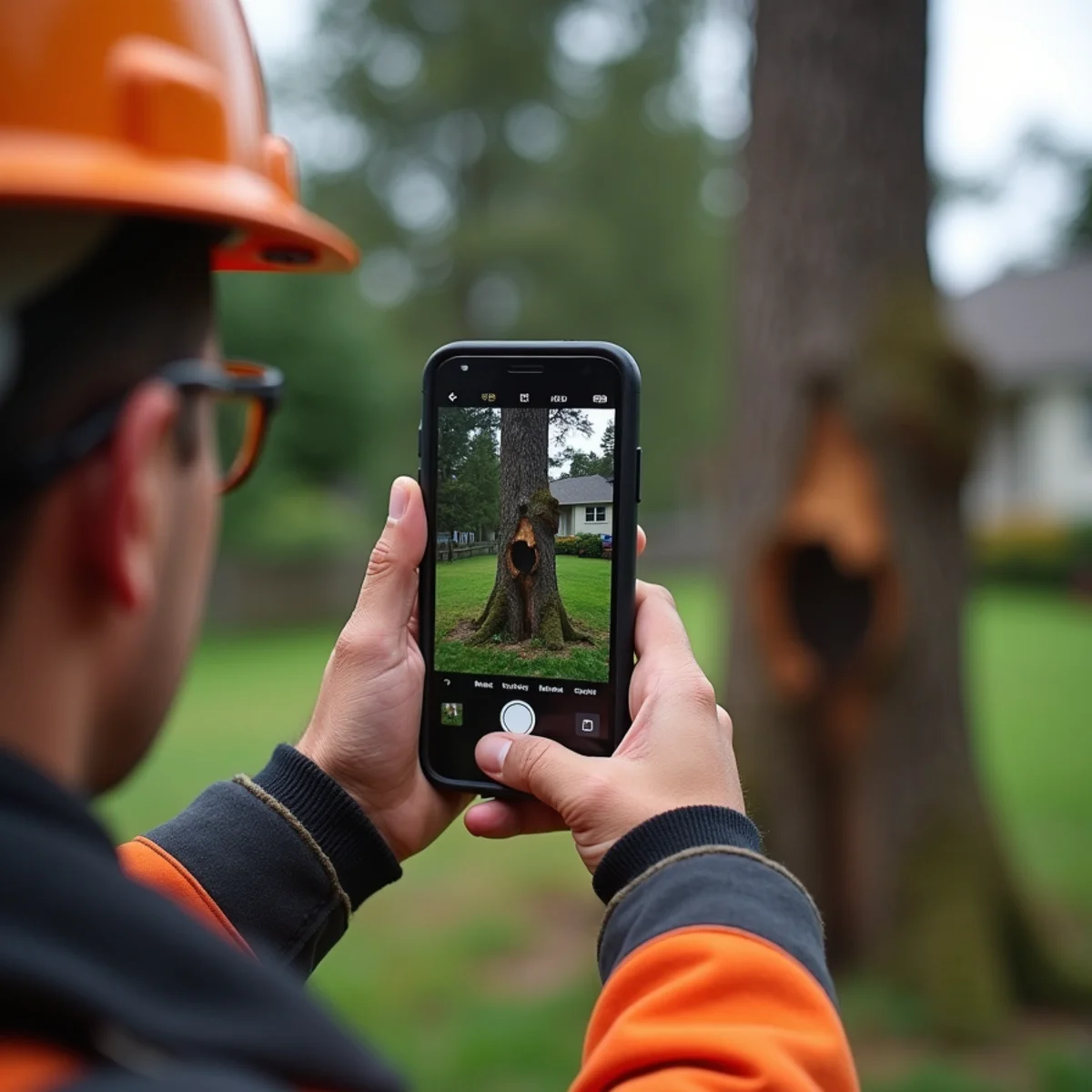
Cause-of-failure photos before a single cut. 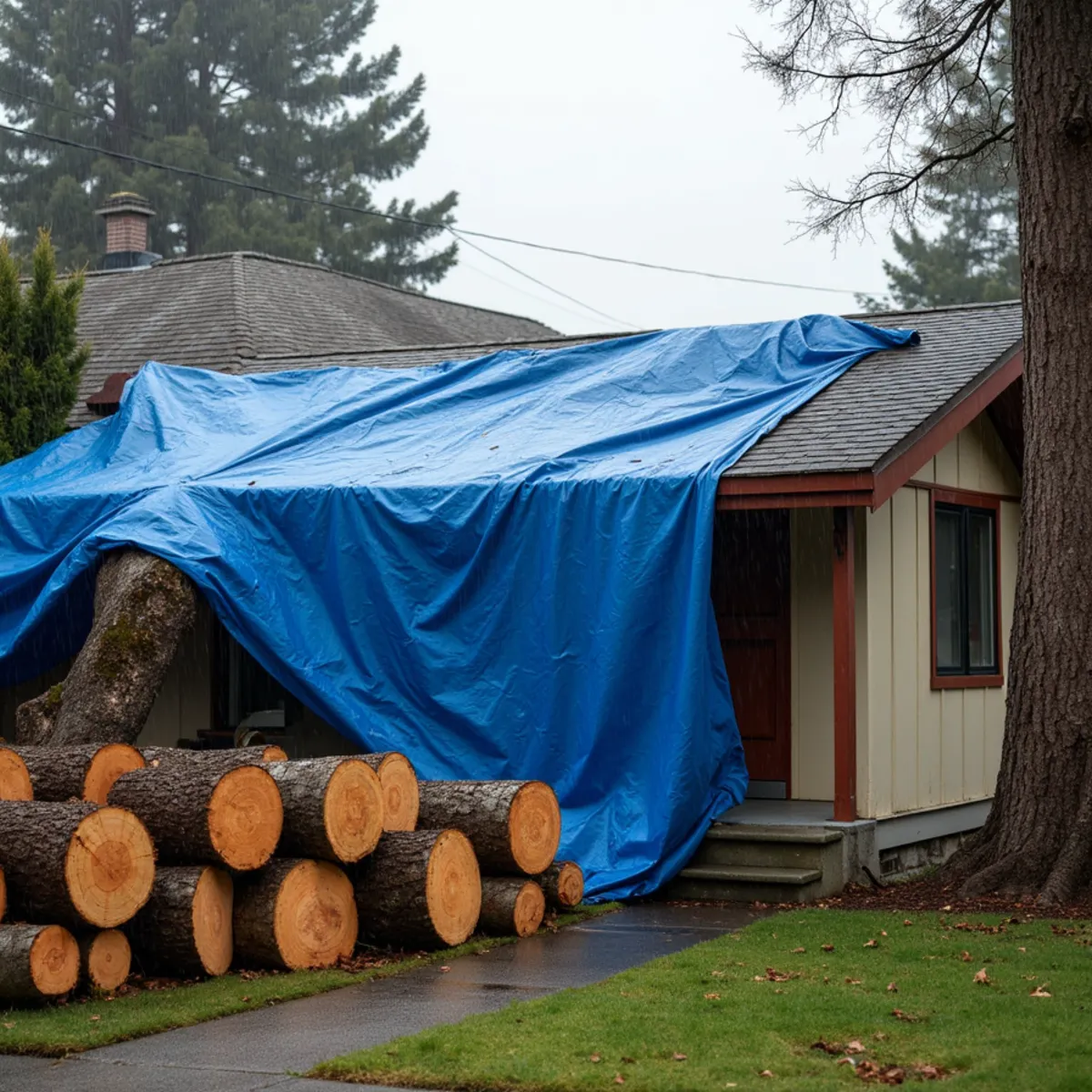
Mitigation first, full repair on the carrier’s timeline. 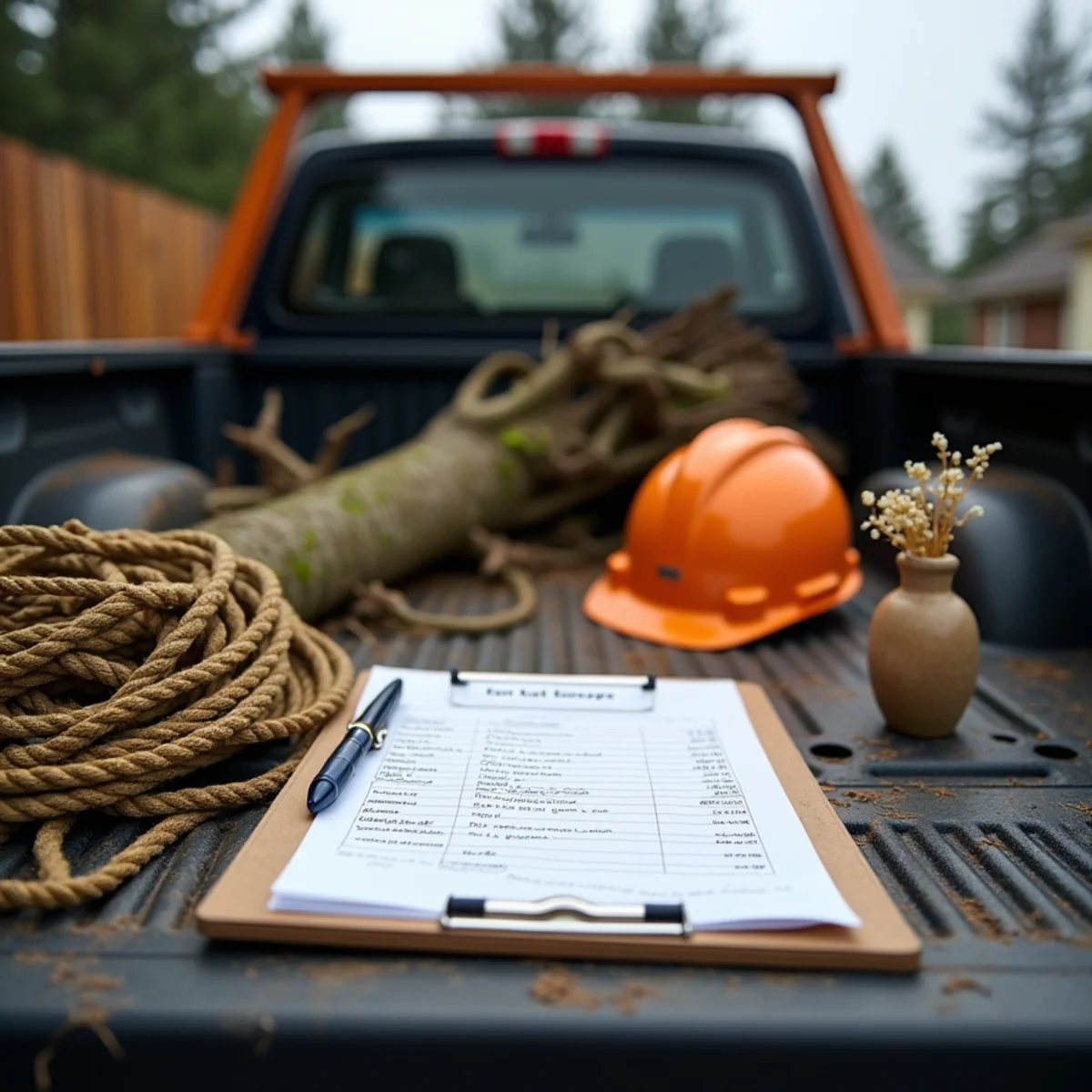
An itemised scope your adjuster can actually work from.
Get a written price for your storm damage insurance documentation & claim support job.
Storm Damage Insurance Documentation & Claim Support Questions, Answered
Often Booked Together
Related Tree Services
Worth Reading First
Before You Book This Work
Cost & Planning
Does Homeowners Insurance Cover Tree Removal in Washington?
Storm & Emergency
A Tree Just Hit Your House: What to Do in the First 24 Hours
Free On-Site Estimates
Need storm damage insurance documentation & claim support? Let’s take a look.
Ryan Norris walks every estimate himself. Free, on-site, and you’ll get a straight answer about whether the work is necessary at all.
- 34 Google reviews
- Licensed & Insured
- Free On-Site Estimates
- Based in Kelso, WA