
Vancouver · Clark County
Tree Service in Village at Fisher’s Landing, WA
Almost everything green in this neighborhood was planted inside about a decade, from a short list of nursery stock, at roughly the same size. That is normal for a planned development, and it means the trees here are going to reach the end of their good years together rather than one at a time.
- Free On-Site Estimates
- Licensed & Insured
- Based in Kelso
You can read a subdivision by its plant list. Out here it was flowering pear along the streets, a birch or a plum in the front lawn, arborvitae down the side fence, and a row of something evergreen screening the tract behind. Every one of those choices made sense at planting. Thirty-odd years on, three of them are why the phone rings.
The Flowering Pears Are All the Same Age
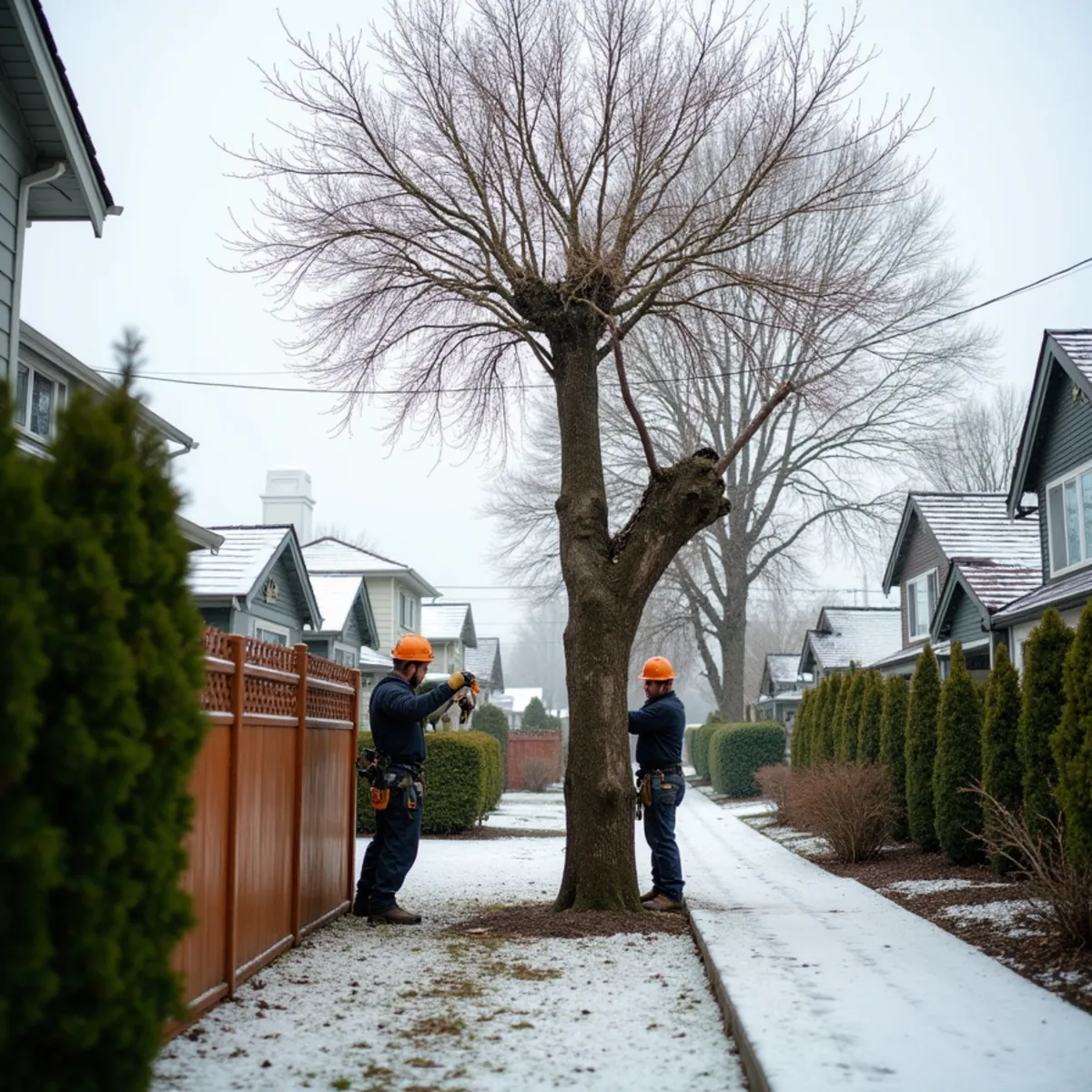
Ornamental pear was the default street tree of late-eighties and nineties development across Clark County. It grows fast, flowers early, tolerates poor soil and asks for nothing. It also builds a crown of steep, tightly stacked branch unions that nobody thinned in year five, and those unions start letting go somewhere around the thirty-year mark.
When one goes, it usually goes in ice or heavy wet snow, and it tends to peel a stem straight down the middle rather than break a limb cleanly. If a pear on your street has already lost a section, look hard at the rest of the block — they were planted the same week and they are built the same way. Some can be reduced and thinned into a longer life. Some are better replaced now, on your schedule, with something that will still be standing in forty years.
Hedges That Quietly Became Trees
Arborvitae and laurel went in three feet apart along these fence lines to make a screen in a hurry, and they did. Now they are twenty-five or thirty feet tall, brown and hollow through the middle where no light gets in, leaning away from each other, and pushing on a fence that was never meant to hold anything up. Snow flops them over and they rarely stand back up straight.
There is no pruning that puts foliage back on bare interior wood on a conifer hedge, so the honest choices are to top-and-hold it at a height you can maintain, or to take the row out and start over lower. We will tell you which one you are actually looking at rather than selling you a trim that buys two years.
Small Lots, Shared Fences, No Drop Zone
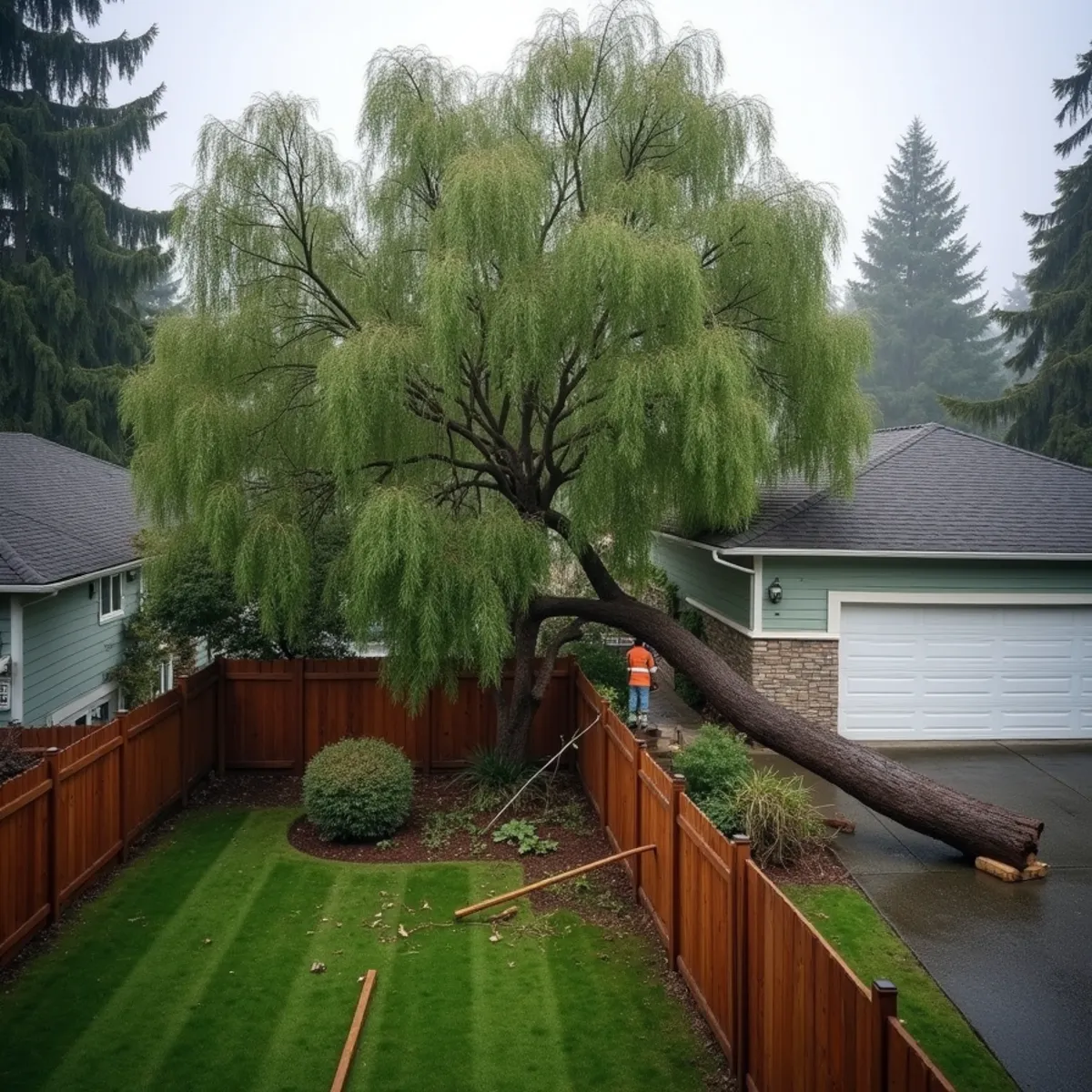
Lots here are compact and the houses sit close. A back-yard removal usually means everything comes down on a rope, brush gets hand-carried through a side gate to a chipper parked on the street, and at least one neighbor has a patio directly under the work. Gate width decides whether a stump grinder can get in at all, which is the kind of thing we measure at the estimate instead of guessing at.
We knock on doors before rope goes over a fence. It costs ten minutes and it prevents the conversation nobody wants to have afterward.
The Tract Behind Your Fence Probably Is Not Yours
Planned neighborhoods are full of common tracts — the greenbelt strip, the entry planting, the buffer behind the back fence. Those are usually association property, which means the tree leaning toward your roof may not be one you can hire anybody to touch. Sorting that out first saves everyone a difficult letter later, and it is the first thing we check when a call comes from this side of SE 164th.
Streets & Areas We Cover in Village at Fisher’s Landing
What We Do Most in Village at Fisher’s Landing
Free on-site estimate in Village at Fisher’s Landing.
Village at Fisher’s Landing Tree Service Questions
Local Reading
Useful If You Own Trees Around Village at Fisher’s Landing
Free On-Site Estimates
Need a tree looked at in Village at Fisher’s Landing?
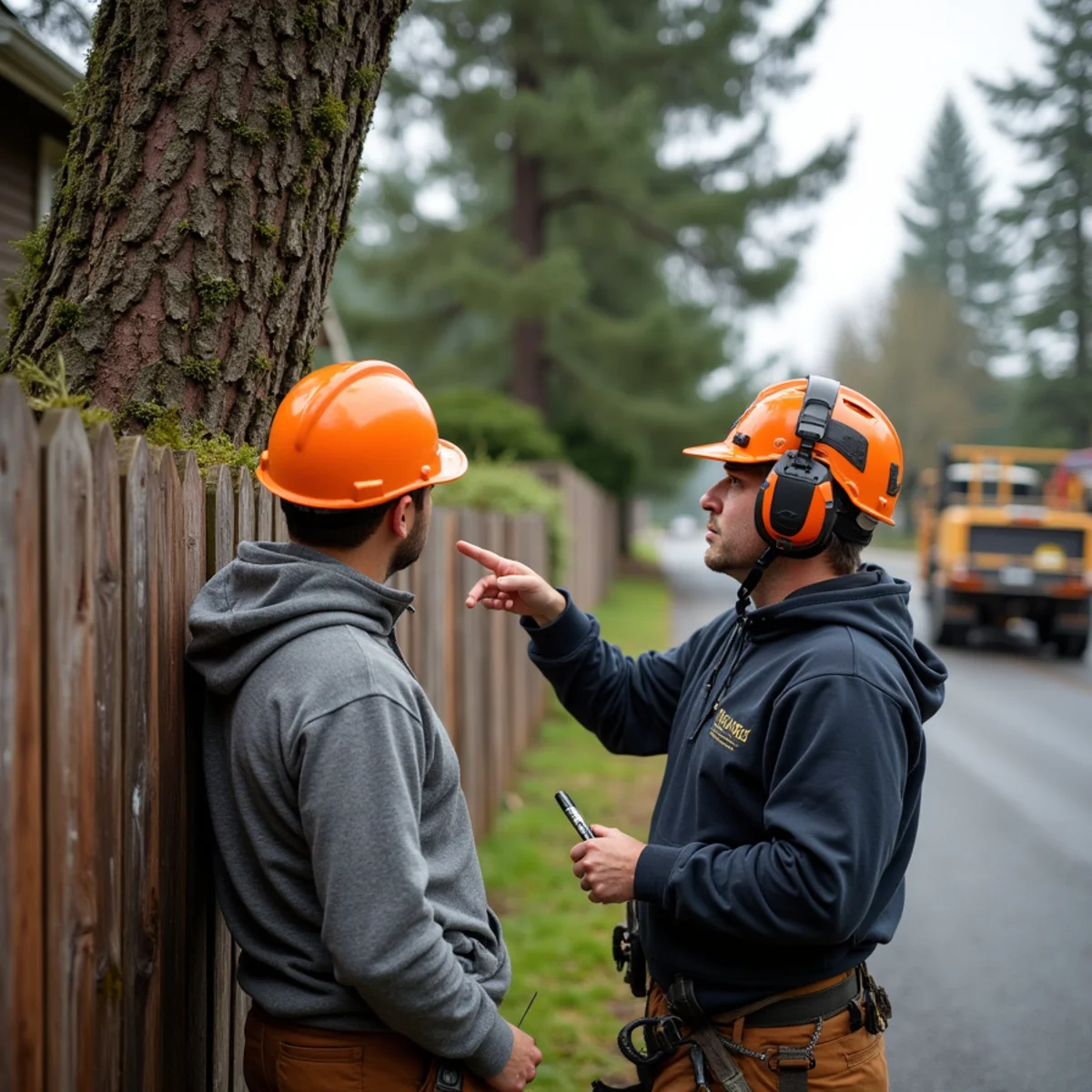
Ryan Norris will come out, walk it with you, and tell you straight whether it needs work. Free, and no pressure either way.
- 34 Google reviews
- Licensed & Insured
- Free On-Site Estimates
- Based in Kelso, WA