
Lewis County · 98591
Tree Service in Toledo, WA
Toledo sits on the Cowlitz upstream of Castle Rock, and the river hands this town the same two problems it hands us at home — bottomland that stays soaked from November to March, and south wind that runs straight up the valley with nothing to break it.
- Free On-Site Estimates
- Licensed & Insured
- Based in Kelso
Ask anyone farming the bottomland here which trees they keep an eye on and you will get the same answer. It is not the fir up on the hill. It is the cottonwood down along the river, and there is a good reason for that.
Cottonwood Along the Cowlitz Is What Gets Us Called to Toledo
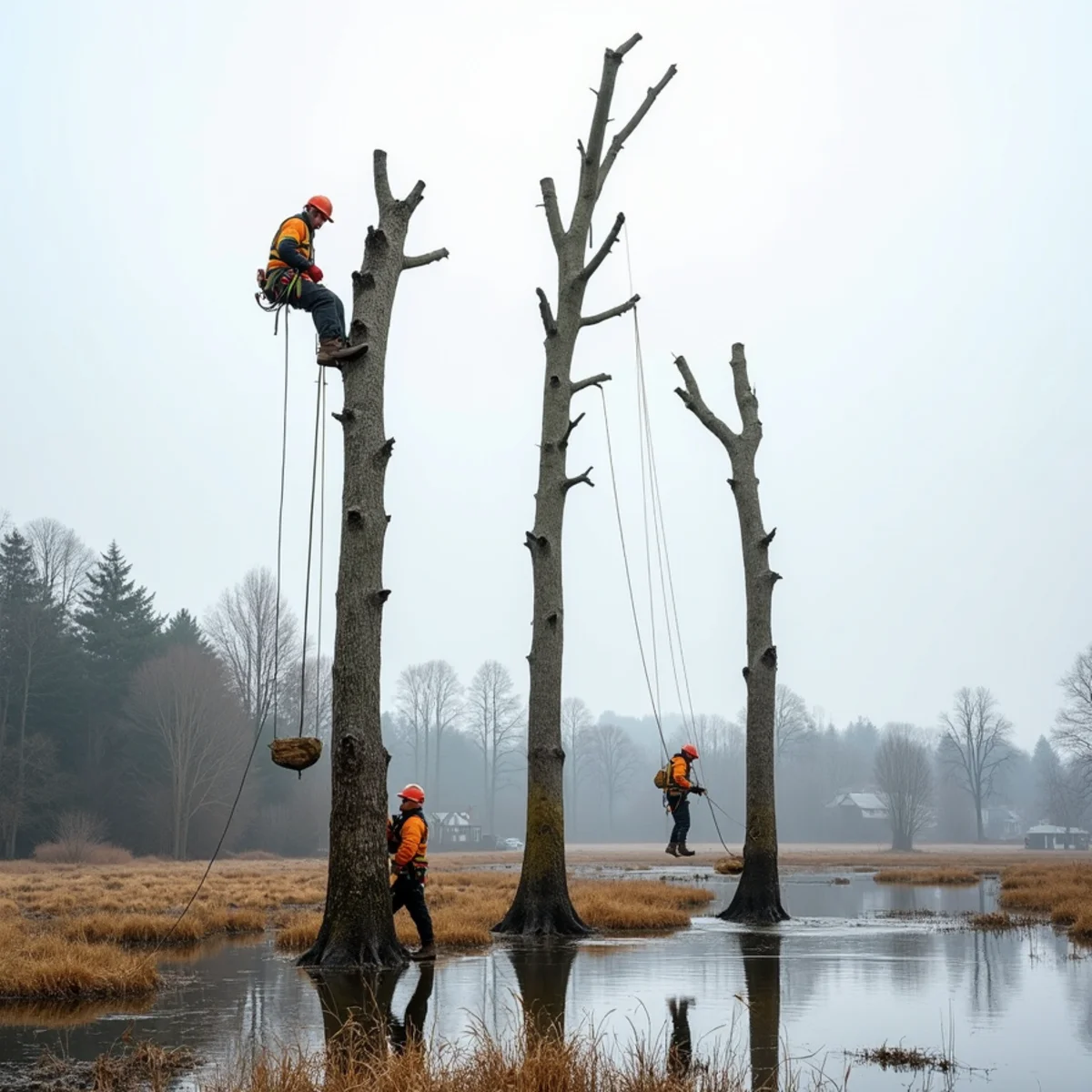
Black cottonwood is the fastest-growing hardwood in the Pacific Northwest, and the river ground around Toledo grows it about as well as anywhere in Washington. That speed is exactly the problem. The wood is soft and light, it is weak in bending, the branch attachments are poor, and a mature cottonwood carries enormous limbs a long way out from the stem. They drop. They drop in July with no wind at all, because heat and internal water pressure alone can shed a limb the size of an ordinary tree, and they drop hard in a winter blow.
They also hollow out from the inside while looking perfectly healthy from the road. A cottonwood can hold a full green crown on a stem that is mostly shell, which is why we pay close attention to conks, seams, old wounds and pockets of dead wood high up. On a working place the real question is usually not whether a big riverside cottonwood is a hazard — it is whether it is a hazard to anything. Standing over a hay field it can stay for years. Standing over a barn, a corral, a shop or the driveway everybody walks down, it is a different conversation.
What we read on a bottomland tree
- The ground — soft, saturated, undercut by the river, or heaved on the upwind side
- The stem — cavities, vertical seams, fruiting bodies, old topping cuts that started decay
- The unions — included bark and codominant leaders that split under snow or wind load
- The crown — deadwood, hangers and long lateral limbs reaching over something that matters
- The targets — what actually sits underneath, and how often people or livestock are there
Second-Growth Fir on the Toledo Hillsides Fails a Different Way
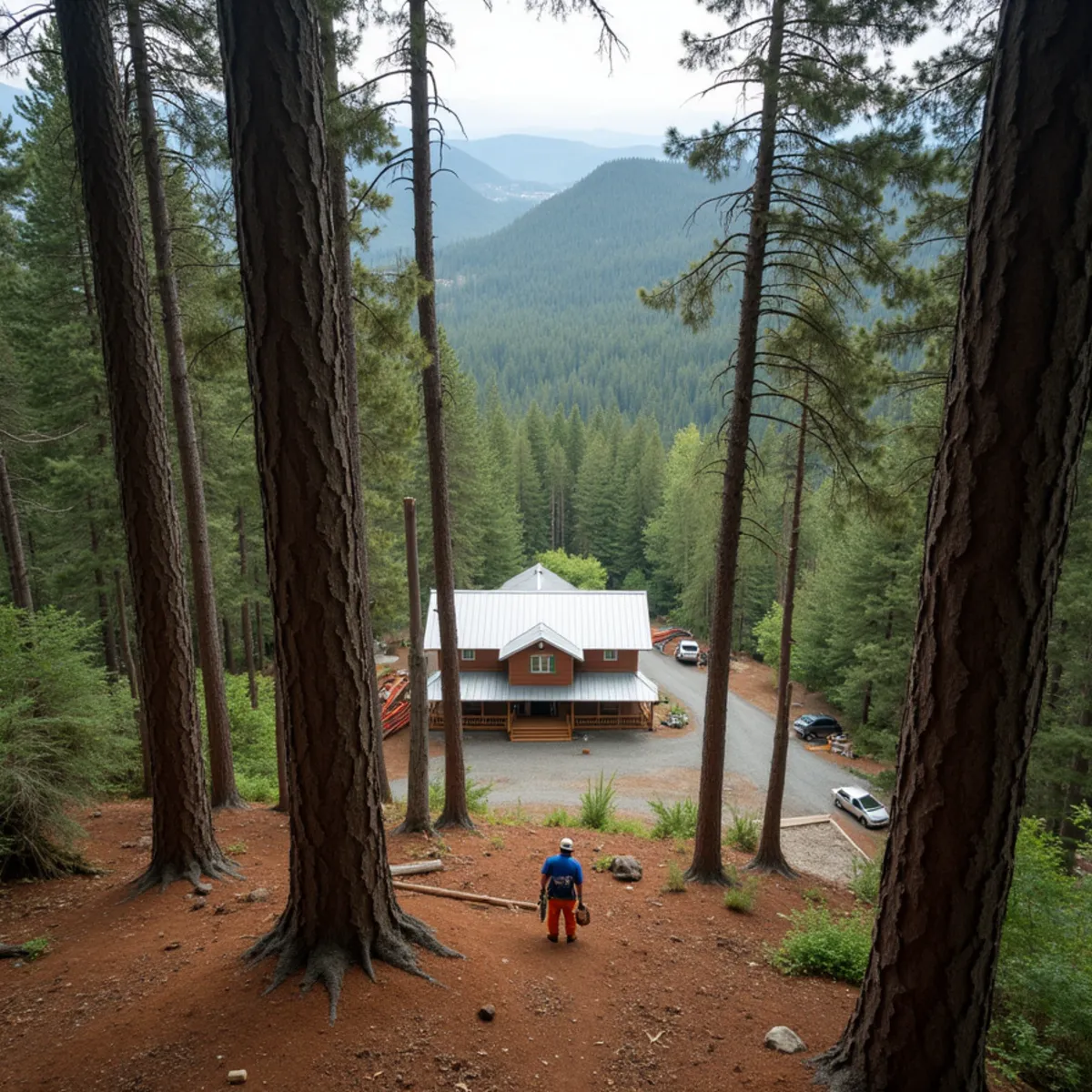
Get up off the flat and the species mix flips. The forested slopes around town are mostly second-growth Douglas fir, a lot of it grown in tight, then thinned unevenly or opened right up when somebody set a house in the middle of it. Those trees are the classic windthrow candidate: tall, small-crowned, raised in the shelter of their neighbors, and now standing at a brand new edge with nothing upwind of them.
A fir that spent forty years inside a stand never had to build the trunk taper or the root spread of an open-grown tree. Remove what surrounded it and the full wind load it never carried arrives all at once. We see that failure over and over after a genuine south blow, and it is why we get careful about which trees stay when someone clears around a homesite. Choosing the wrong keepers can cost you more trees than the clearing did.
Storm Work Around Toledo, the Airport Flat and the Farm Roads
The same weather that hammers Castle Rock and Kelso keeps right on going upriver. When a hard south wind loads a saturated valley floor, trees come out root plate and all — perfectly sound wood in ground that simply stopped holding. Out across the flats near Ed Carlson Memorial Field and along the Jackson Highway there is very little to slow that wind down before it reaches your place.
If a tree does come down on you, the order of operations matters. Get people away from the trunk and the root plate, treat every wire in the mess as live and call the utility, then photograph everything before anything gets moved. We document what we remove — before, during and after — because the insurance adjuster asks later and nobody remembers the details three weeks on.
Riverfront Rules We Check Before Quoting Anything in Toledo
Property on or near the Cowlitz can fall inside shoreline or critical-area rules, and what governs one parcel may not govern the one next door. We are not going to recite code sections at you or guess. During the free estimate we look up what applies to your specific address and tell you plainly whether the tree is yours to take, whether anything has to be filed first, and who to call if the decision is not ours or yours to make. Finding that out before the saws come off the truck is a great deal cheaper than finding out afterward.
Neighborhoods & Areas We Cover in Toledo
Tree Services We Provide in Toledo
- Hazard Tree & Limb Removal
- Emergency & Storm Damage Response
- Tree Removal (Large & Tight-Quarter)
- Storm Damage Insurance Documentation & Claim Support
- Tree Trimming & Pruning
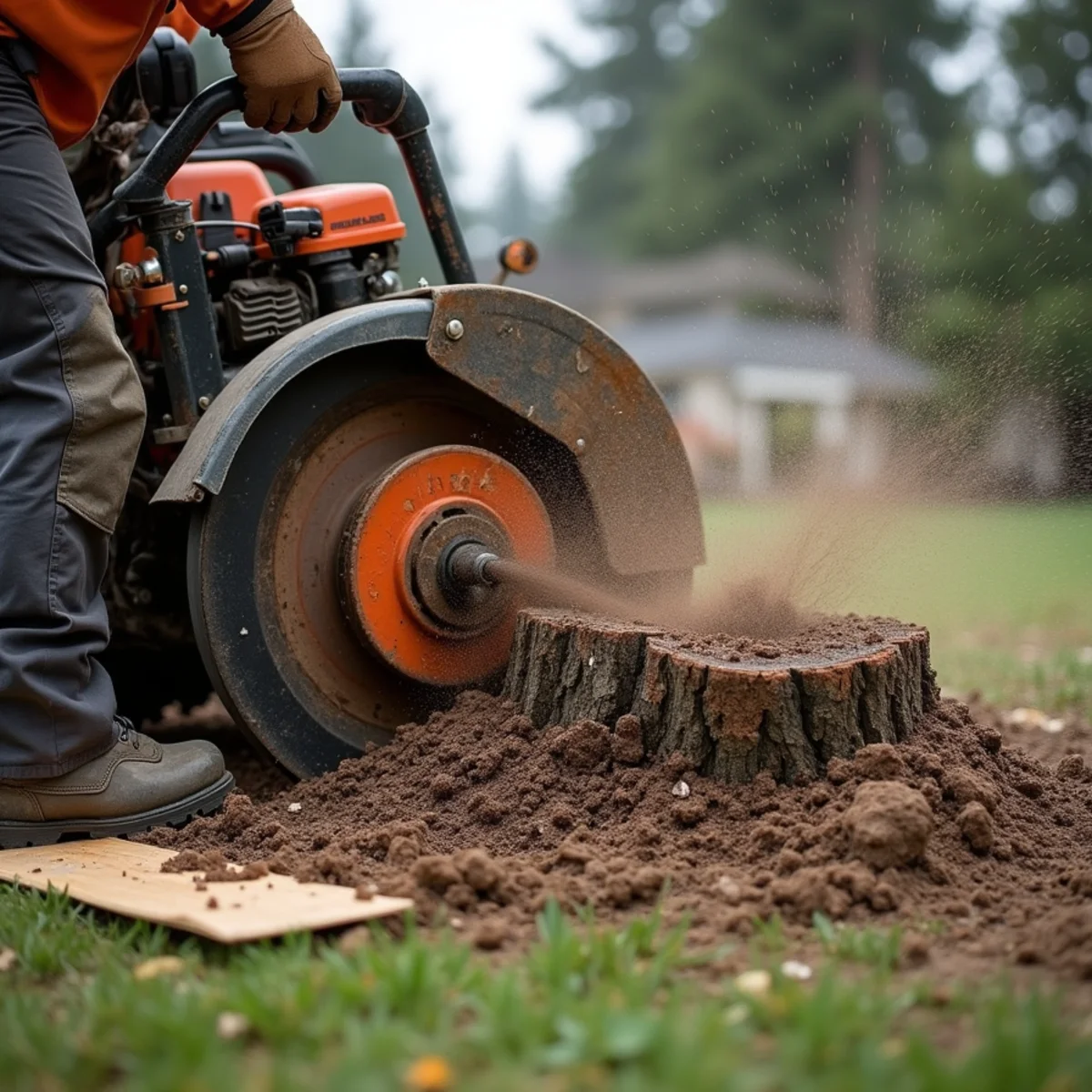
- Stump Grinding & Removal
Free on-site estimate in Toledo.
Toledo Tree Service Questions
Local Tree Care Reading
Useful If You Own Trees Near Toledo

Free On-Site Estimates
Need a tree looked at in Toledo?
Ryan Norris will come out, walk it with you, and tell you straight whether it needs work. Free, and no pressure either way.
- 34 Google reviews
- Licensed & Insured
- Free On-Site Estimates
- Based in Kelso, WA