Why a Douglas Fir Gets Uprooted in a Washington Windstorm
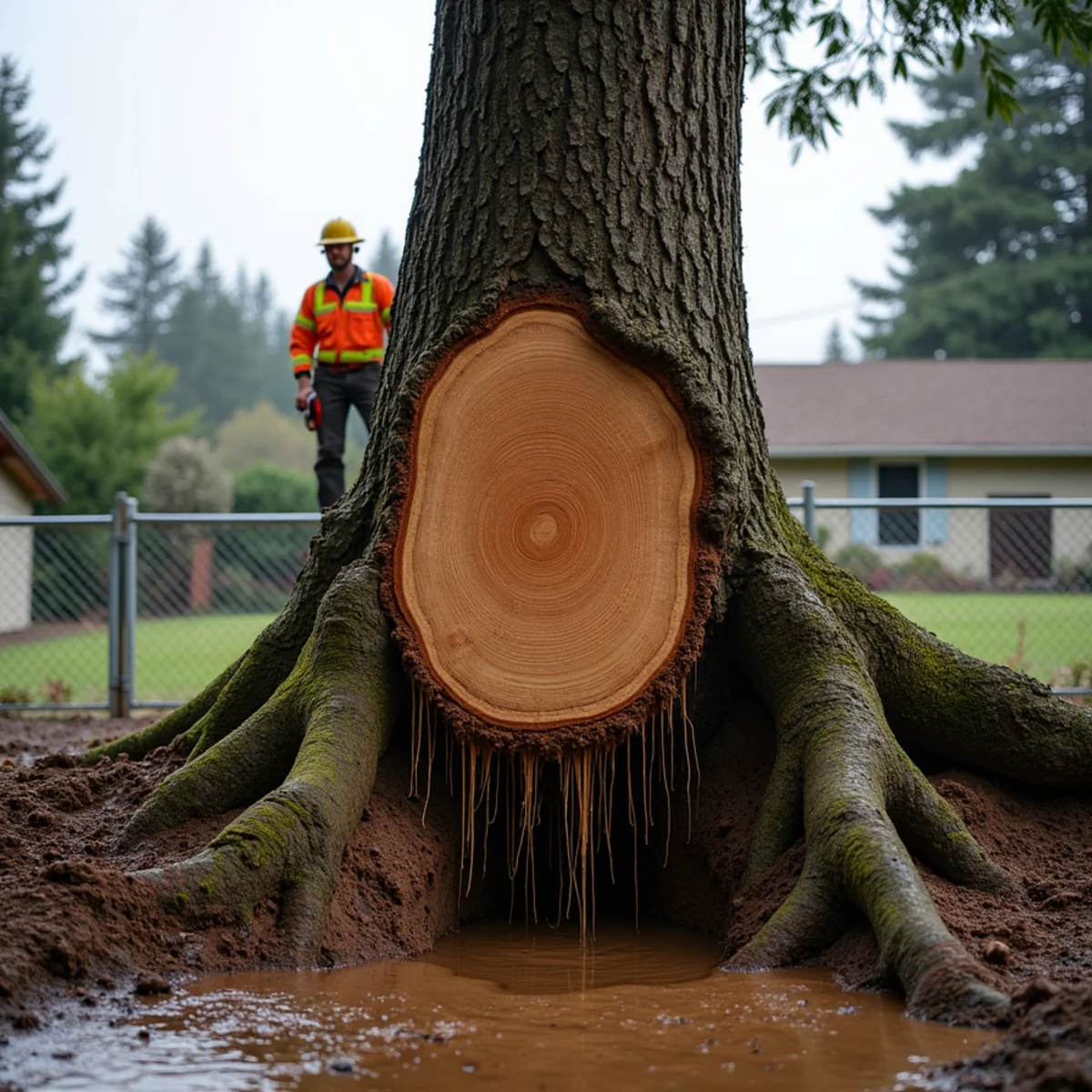
The call usually comes the Monday after a south wind. It blew hard out of the southwest most of the night, the power flickered around two in the morning, and by daylight there is a Douglas fir across the driveway with a wall of roots and dirt standing on end where the base used to be. The homeowner says the same thing every time: that tree was healthy. Green top to bottom, no dead limbs.
They are usually right. The fir was healthy. Here, that is part of why it went over.
The River Valley Aims the Wind at You
The Columbia is the only sea-level gap through the Cascades for a long way in either direction, and our winter storms arrive out of the south and southwest. That air funnels into the valley, squeezes between the hills on both banks, and comes out the far end faster and rougher than it went in. Anybody who has driven north from Kalama on a December evening with the truck pulling toward the shoulder knows it.
Timing is what makes it dangerous. The hardest wind comes between late fall and the end of winter, onto ground that has been taking rain for months. Dry August soil holds a root plate like concrete. February soil holds it like wet cake. Same tree, same gust, different outcome.
Windthrow, Explained Without the Jargon
A tree that uproots is not broken. It is levered out of the ground. Three things decide whether that happens.
- Sail area. A Douglas fir holds every needle through winter, so it carries full sail in the exact season the storms come. The bigleaf maple beside it is bare and takes a fraction of the load.
- Leverage. Wind force lands high and the base becomes the fulcrum. On a hundred-foot fir, a steady push in the crown becomes an enormous turning force at the roots.
- Soil shear. The plate resists that force only while the soil gripping it stays strong. Saturated soil loses strength, and windward roots pull through soft ground rather than snapping.
That is the whole story. Nothing in it requires decay, disease or a single dead branch. It is a healthy sail on a long lever, anchored in ground that went soft.
What Is Under the Tree Matters More
Douglas fir on this side of the Cascades does not send down the deep taproot people picture. It builds a broad, fairly shallow plate of structural roots, and that plate quits growing downward wherever the oxygen quits: at a high winter water table, at compacted hardpan, or at the bottom of the fill trucked in during grading.
That is why we ask about lot history on the flats inside the dike districts and on the newer building pads around Woodland. A fir on two feet of imported fill over old floodplain silt has a root plate about the footprint of a backyard trampoline holding up a tree as tall as a grain elevator. From the street it looks identical to a fir in deep native soil. Sorting out that difference on site is most of what a written tree risk assessment is for. Other things shrink a plate quietly:
- Fill, gravel or piled bark over the root flare, smothering the shallow roots doing most of the anchoring.
- A driveway, shop pad or utility trench through the root zone, so the tree loses its anchor on one side.
- A high winter water table drowning anything that grows deeper, common near the sloughs.
The Most Dangerous Fir on the Block Just Lost Its Neighbors
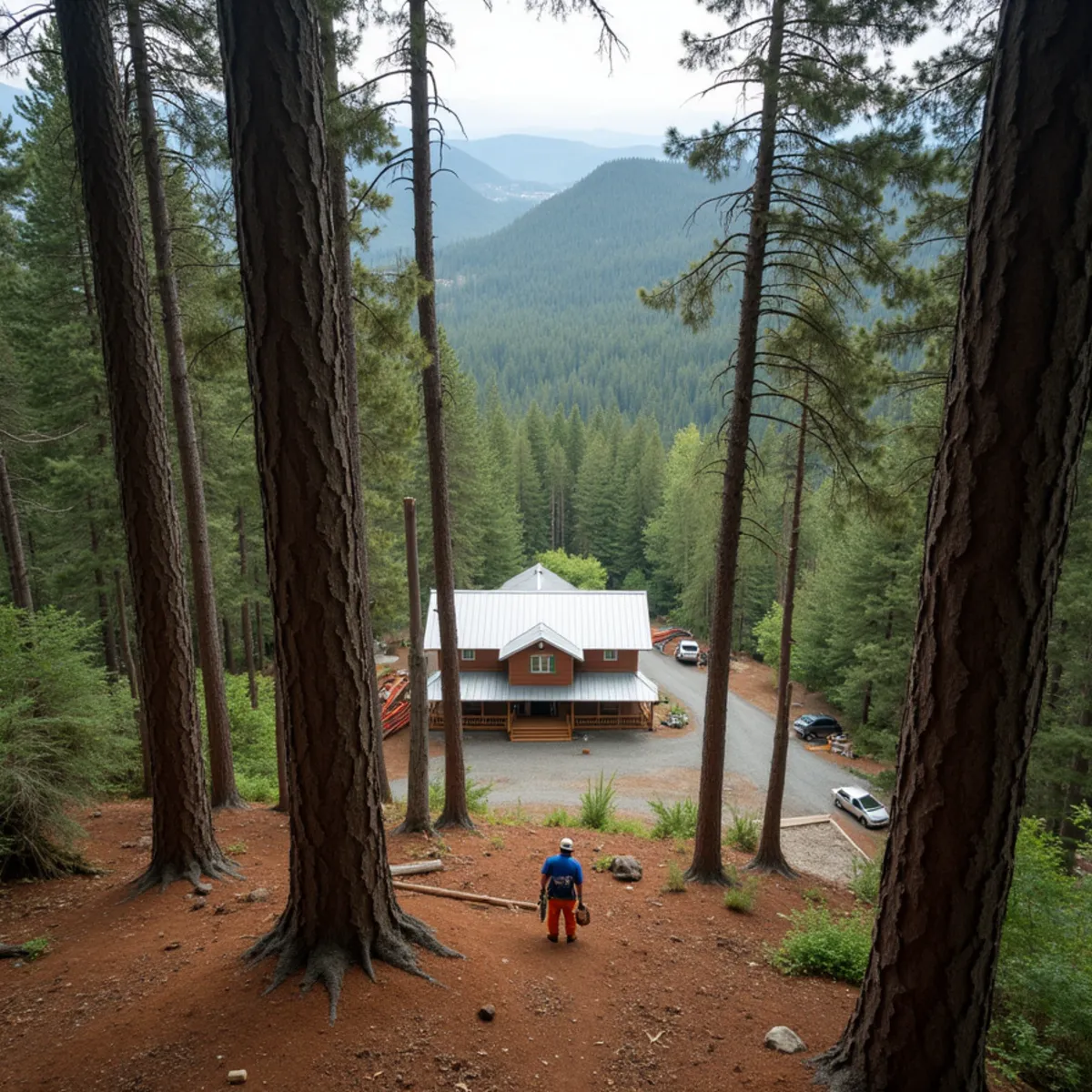
Trees that grow up inside a stand grow up sharing the load. Wind hits the outside of the canopy, the group sways together, and the tree in the middle spends forty years never feeling much of it. So it builds accordingly: tall and slender, little taper, a modest root plate, and a crown that starts high because everything lower was shaded out.
Then somebody clears the lot next door for a house pad. That sheltered fir is suddenly the front row, carrying wind it never carried, on a lever it never trained for, over a root plate sized for a job it no longer has. A fresh edge is turbulent too: air does not slide smoothly past a wall of trees, it rolls and slams into it. Those edge trees are what we take down after nearly every serious blow, and it is why hazard tree removal calls cluster along new property lines.
One note, because it always comes up: who is responsible when an edge tree fails onto a neighbor’s shop depends on the policies and facts involved. This is general information only, and your policy, your insurer or your attorney governs your situation.
Warning Signs You Can Read From the Ground
- Root plate heaving: a low ridge or crescent of raised soil, usually opposite the lean.
- Soil cracked open in an arc around the base, often hidden under lawn, ivy or needle duff.
- A lean that changed. A fir leaning the same way for thirty years is usually fine. One that leaned further last winter is not.
- Sudden exposure: a clearcut, a road cut, a neighbor thinning, or a windthrow gap that opened upwind.
What Can Be Done Before the Next Storm
Not every exposed fir has to come down, and we say that as the outfit that would get paid to take it down. A proper crown reduction shortens the lever and lets more wind through, which is skilled pruning and not topping. Where the defect is a split union or codominant top, cabling, bracing and tree preservation has kept a lot of good trees standing, though canopy hardware does nothing for a plate already moving. Beyond that:
- Thin in stages. If you are clearing, take trees out over a few seasons and leave a feathered edge, not a wall.
- Protect the roots you have. Keep fill and parked equipment off the flare, and route trenches around the root zone.
- Remove what cannot be fixed. A tall, freshly exposed, shallow-rooted fir over a bedroom is not a pruning problem.
Before the Next South Wind
Most of the firs we clean up after a storm were readable before it. The heaved soil was there in October. The clearing upwind went in last summer. Nobody was looking at the ground, because the tree looked fine, and it was fine right up until the night the wind and the wet arrived together. Get eyes on your big firs while the weather is calm. Ryan walks every estimate himself, the on-site estimate is free, and you will get a straight answer on whether the tree stays or goes. Call (208) 635-2100.