Laminated Root Rot in Douglas Fir: A Washington Symptom Walkthrough
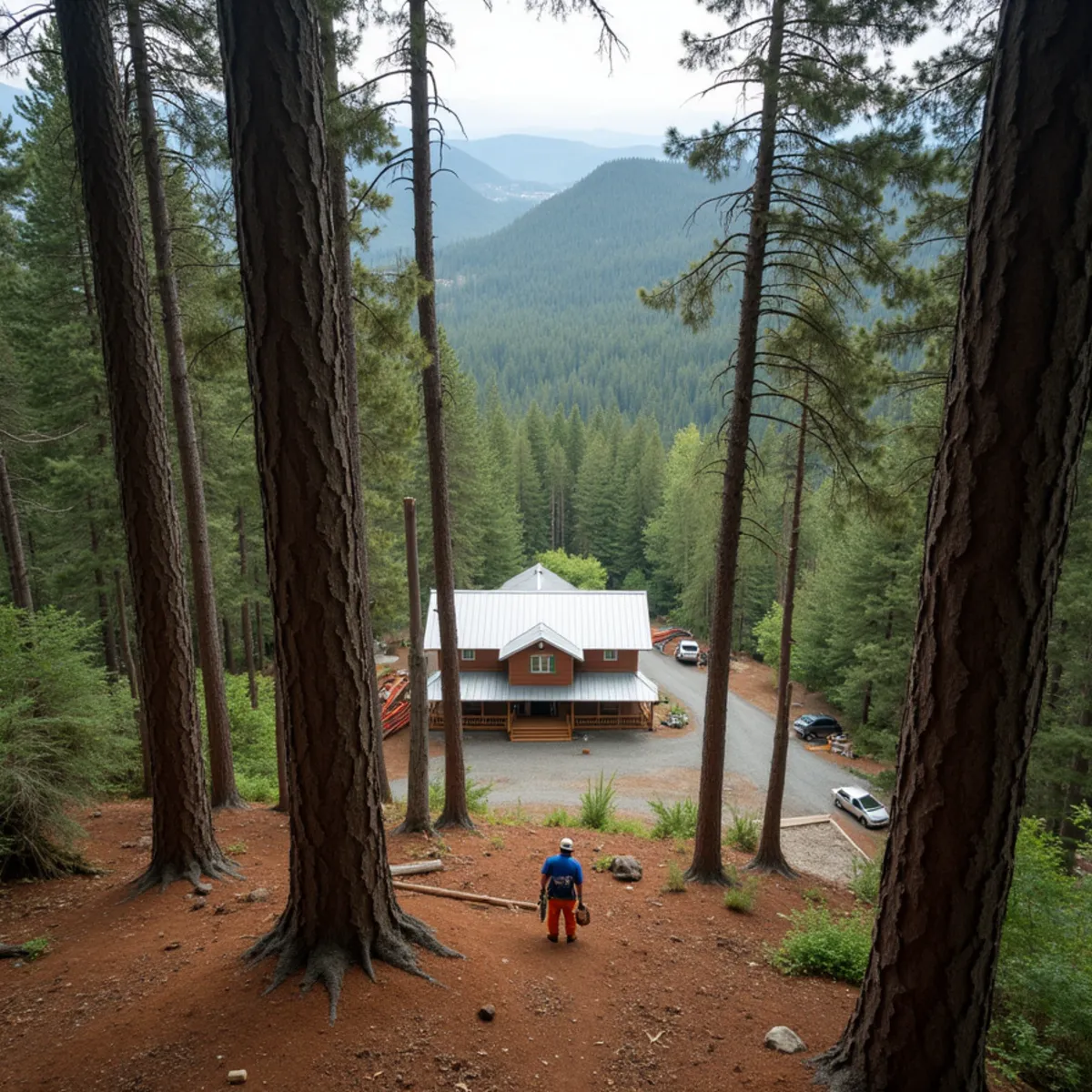
A homeowner up the Toutle valley called us one spring about a fir that had thrown an odd crop of cones the year before. By the time we walked the property, the story was bigger than one tree. A rough circle about the width of a house stood thin and yellow-green against the darker stand behind it, two dead-topped firs near the middle. Off to one side lay a tree blown over that winter, its root wad barely a wad — short roots snapped off close to the trunk.
That circle is the signature of laminated root rot, one of the most common root diseases in Douglas fir across western Washington. It is worth learning to read, because it does something homeowners find hard to believe: it takes a tree's anchoring roots apart while the crown still looks green from the driveway.
Look at the Shape of the Damage, Not the Single Tree
Most tree problems present one tree at a time. Root disease presents as a pocket. Stand back and read the canopy as a whole: a rough circle of firs shorter, thinner and paler than their neighbors, dead or dying trees toward the middle, healthier ones around the rim. The center is where the disease has worked longest. The edge is where it is working now.
It travels root to root, where a diseased root touches a healthy one, and it persists for years in the stumps of trees already gone. Cut down the one dead fir in your yard and the infected roots are still in the ground, still touching the tree behind it. That is why our tree risk assessment and arborist report on a root disease site covers the whole pocket and a buffer around it.
Symptoms, Roughly in the Order You Will See Them
- A thinning, off-color crown. Foliage shifts from deep green toward dull yellow-green, needles come in shorter, and the canopy looks see-through from underneath.
- A distress cone crop. A struggling conifer will sometimes set a heavy crop of cones, well past what its same-sized neighbors are doing, putting what energy it has left into reproduction. One heavy year proves nothing. A heavy crop on a thin tree inside a thinning pocket is a pattern.
- A staghorn top. The upper crown dies back and sheds its fine branches, leaving stubby bare limbs sticking out like antlers.
- Slowing height growth. Compare this year's leader against the spacing of the whorls below it. Short internodes near the top mean the tree has been losing ground for several seasons, not one bad summer.
- Fungi and crusts at the root collar, where the buttress roots leave the trunk.
- Windthrow with a short, broken root wad. A sound fir usually lifts a wide plate of soil and roots. A root-diseased fir snaps off close to the trunk and lies down with almost nothing attached.
About Those Mushrooms
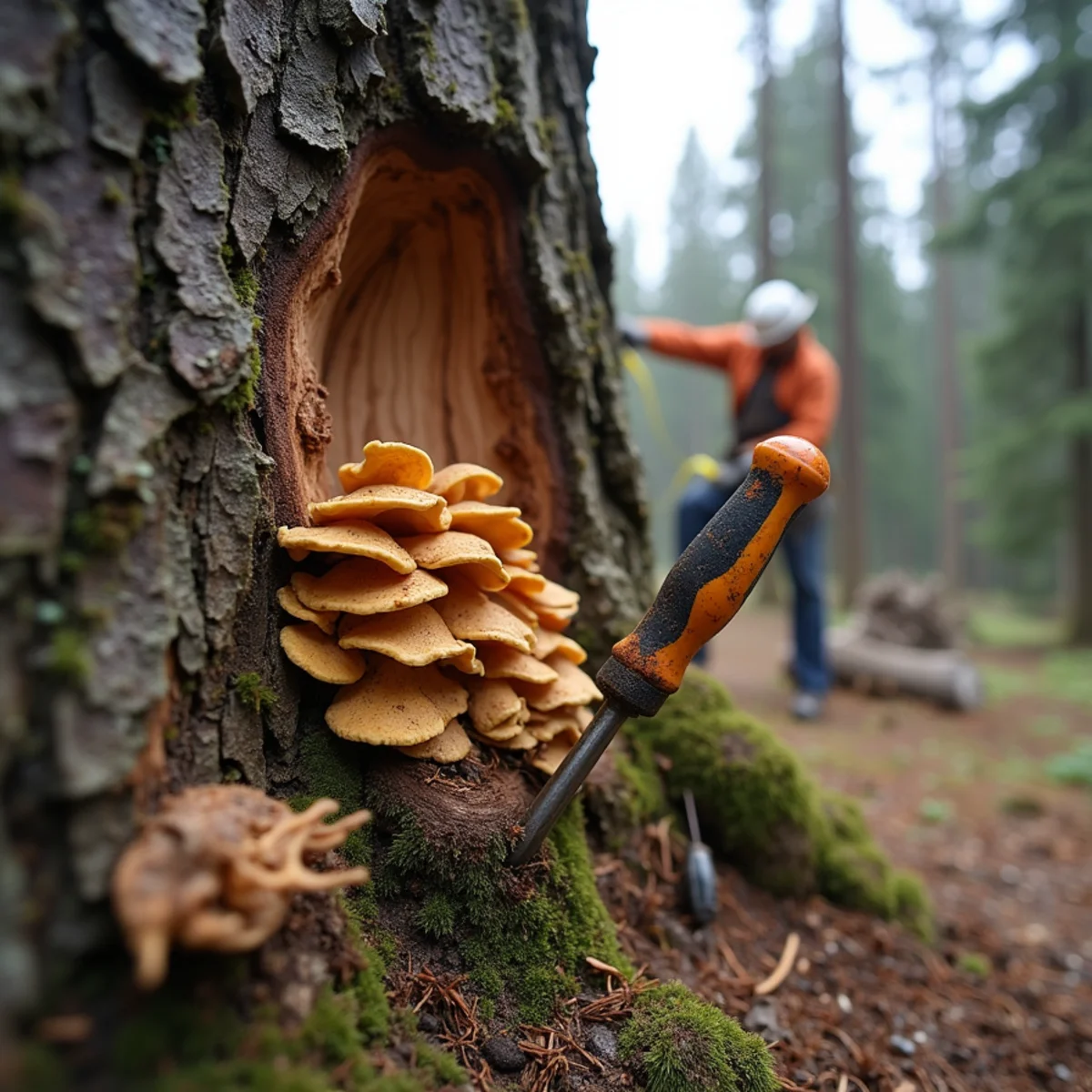
Fruiting bodies at the base of a conifer do not identify the disease on their own. Several root diseases run in this country and they do not look alike at the collar. Honey mushroom puts up obvious clumps and white fans under the bark. Laminated root rot is quieter — its fruiting structures are inconspicuous, often a buff crust tucked into the duff, and frequently absent when you want a clue.
The name comes from what the wood does. Split an excavated structural root and infected wood separates into thin sheets along the growth rings, pitted and stained reddish-brown. That confirmation happens below ground with a shovel, not from the porch.
Green Crown, Hollow Anchor
Here is the part that gets people hurt. The disease works on the large woody roots and the butt of the trunk — the parts holding the tree up — while the fine absorbing roots keep working for a while. A fir can carry a decent-looking crown while the wood in its buttress roots has gone soft enough to pull apart by hand.
The tree is losing anchorage, and the test comes the first night a hard south wind pushes up the valley onto ground soaking since October. When we get called for hazard tree removal after a storm and the root wad is short and punky, we walk the rest of the property before we leave, because there is rarely just one.
Why Taking Out One Tree Solves Nothing
Cabling is a real tool and we install it regularly — a split union, a heavy leader over a driveway, an old maple worth keeping. It is the wrong tool here. Cabling, bracing and tree preservation manages loads above ground. Nothing you fasten to a trunk helps a tree whose anchorage is gone.
What works is treating the pocket as one unit:
- Map it. Flag the obviously affected trees, then mark the healthy-looking ones on the rim, because those are next in line.
- Sort by target. A declining fir at the back of a pasture is a wildlife tree. The same fir uphill of a bedroom is another matter.
- Remove what is both infected and standing over something that matters, rather than clearing everything or pulling one tree and calling it handled.
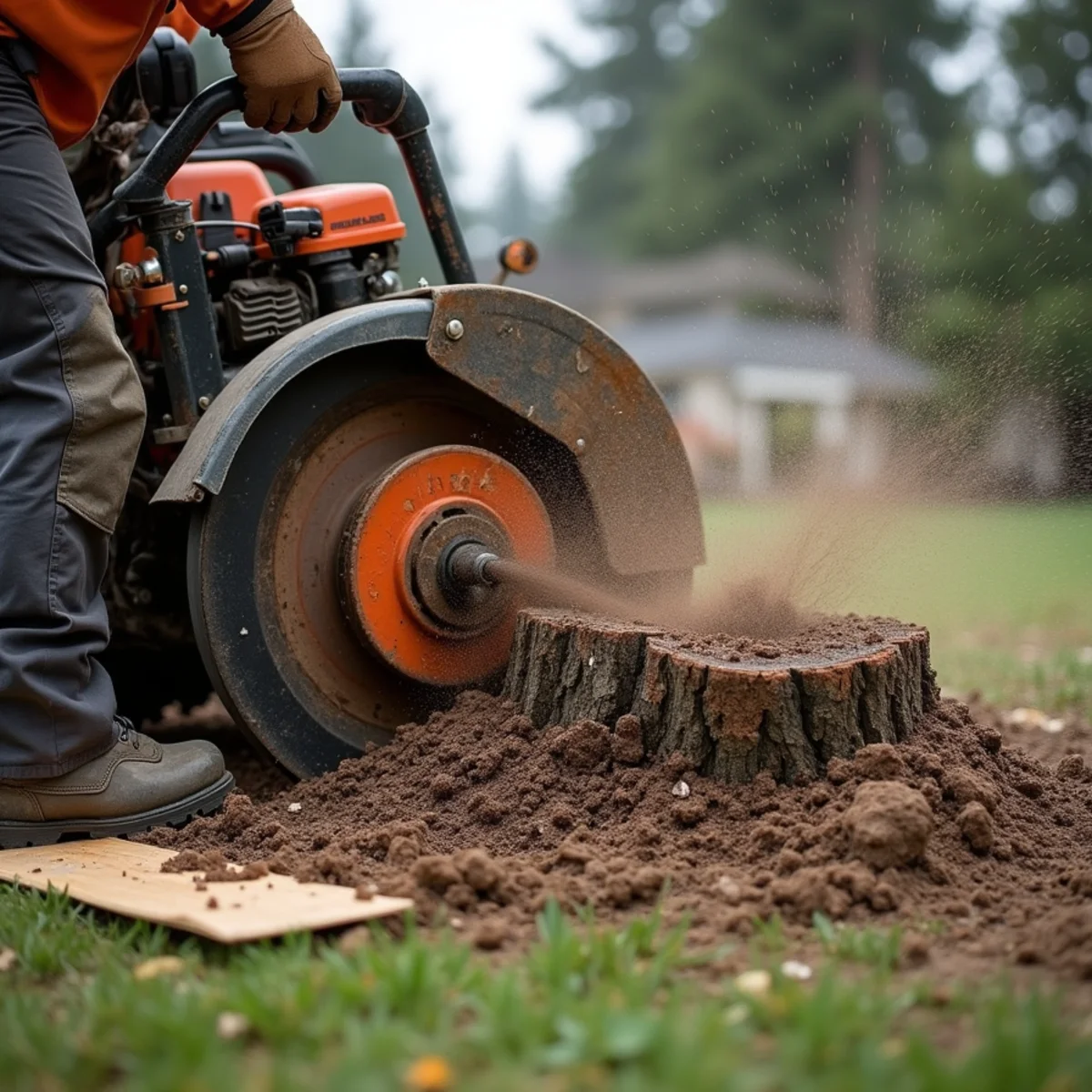
- Grind or pull stumps where access allows, since infected stumps are how the disease reaches the next tree.
- Re-check the rim every year or two. Slow disease rewards steady attention.
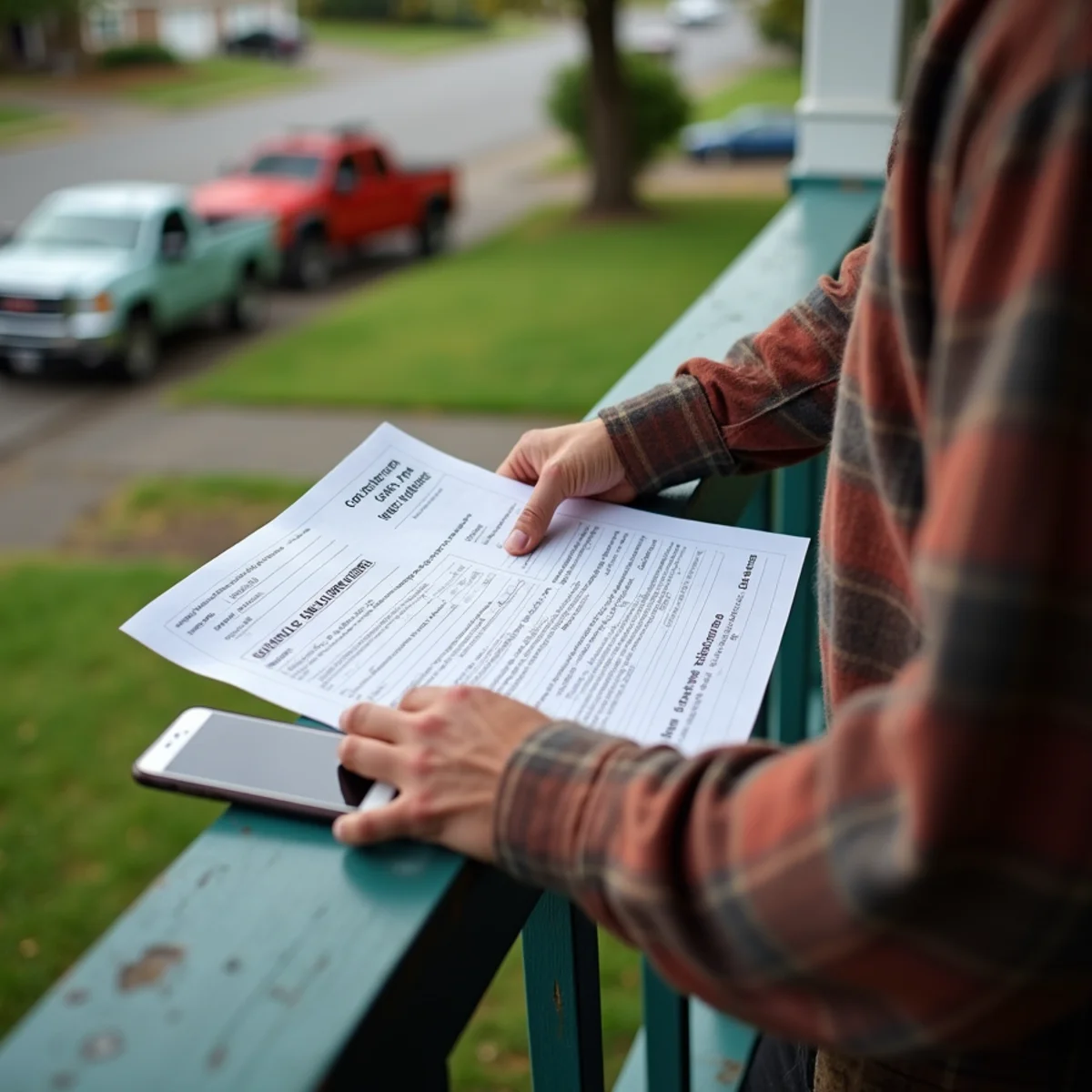
If the pocket straddles a property line, start the neighbor conversation early rather than after something fails — roots do not respect surveys. This article is general information; your own policy, insurer or attorney governs your situation.
Replant With Species That Do Not Feed It
The fungus survives in roots and stumps long after the trees are gone, so what you put back matters more than most homeowners expect. Douglas fir, grand fir and mountain hemlock are the species it prefers; replanting fir into a known pocket plants the same problem again. Western redcedar and the pines hold up far better, and hardwoods — red alder, bigleaf maple, birch, dogwood — are not on the menu at all.
On Castle Rock properties where we have cleared a center, the replanting plan leans on cedar and hardwoods through the old core and saves any fir for well outside the affected ground. Less satisfying than putting the same tree back in the same hole. The canopy stays up.
Get Eyes on It Before the Wind Does
Thin crowns, staghorn tops, a surprise cone crop, something fruiting at the base — none of those is an emergency by itself, and plenty turn out to be drought stress rather than disease. All of them are worth a look from someone willing to move duff and dig a root. Ryan walks every estimate himself, on-site and free, and will tell you plainly whether you have one stressed tree or a pocket that needs a plan. Call (208) 635-2100 and we will read the ground with you.