View Clearing Pruning on the Columbia River in Washington — Without Topping Your Trees
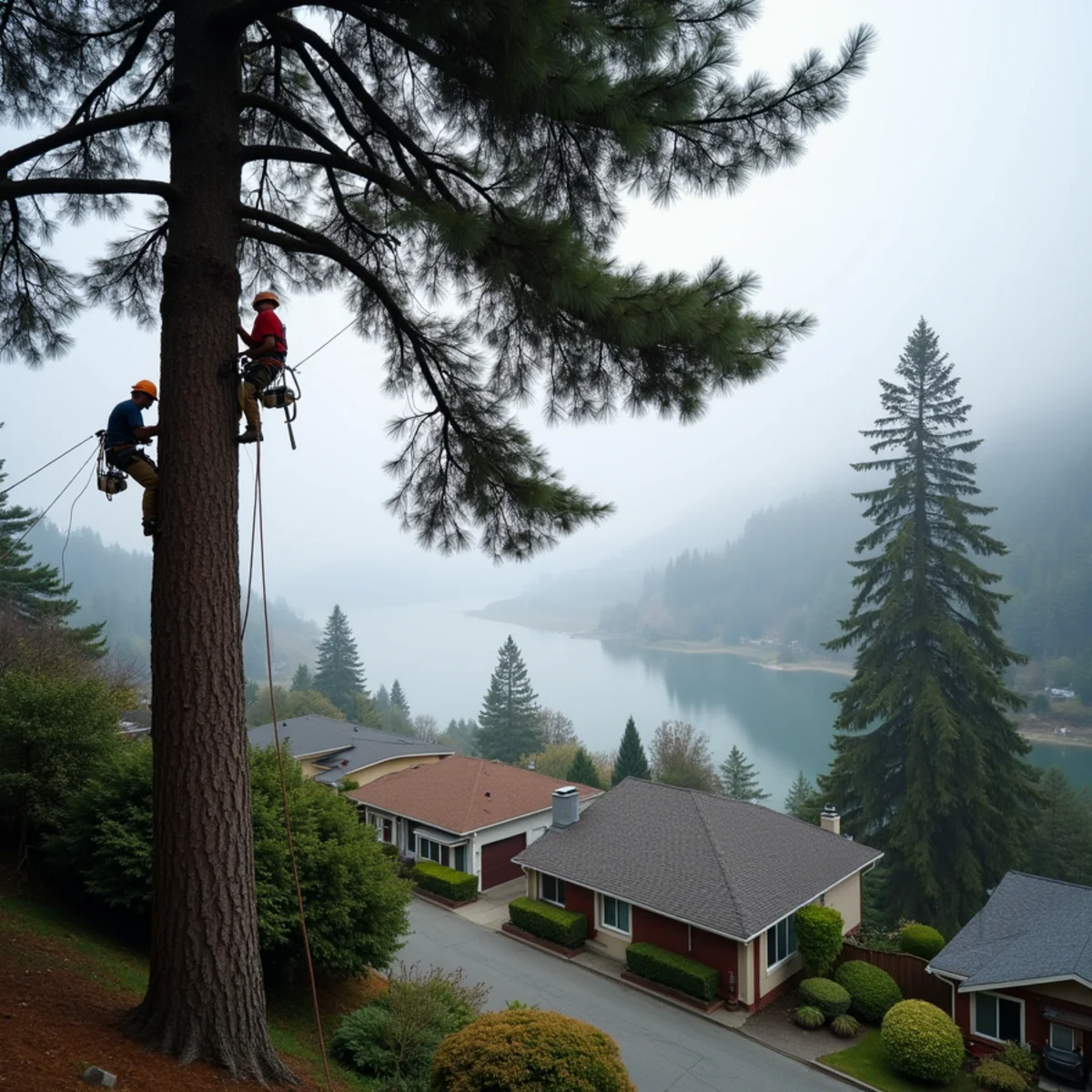
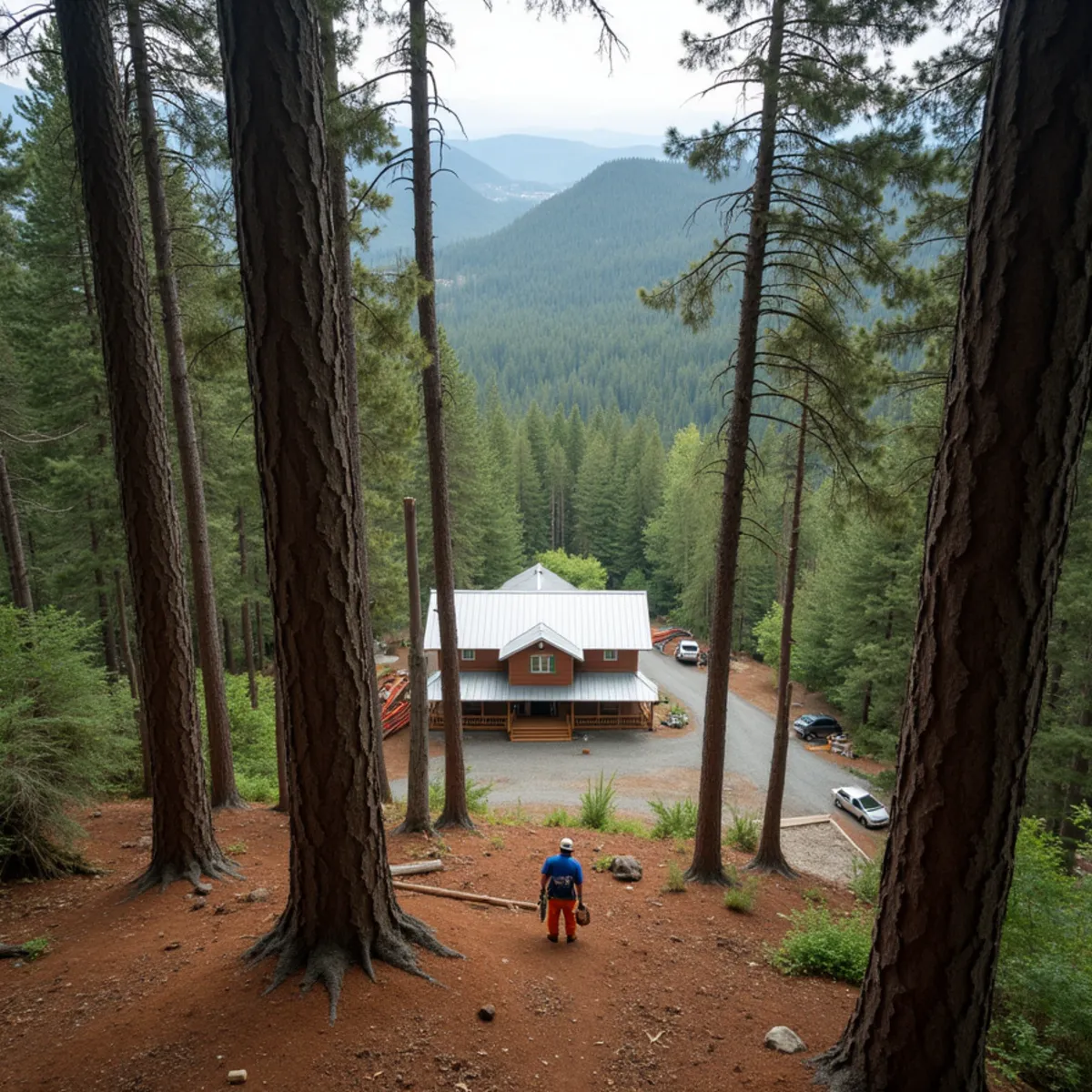
A house up in the Kelso Highlands looks south toward the river, and when it was built you could see water from the kitchen sink. Thirty-some years of Douglas fir later, the owners see six trunks and a wall of green. Nothing went wrong. The firs did what firs do here — add a couple of feet a year and never ask permission.
That is the call we get every spring from hillside lots — Columbia Heights, the bluff streets, the newer plats on the ridges. Somebody wants the view back, and the first idea is almost always the wrong one: cut the tops off.
Topping Buys One Season and Costs You the Tree
Topping means cutting a leader or a large limb back to a stub, with no lateral branch left big enough to take over the end of it. The tree reads that as an emergency, not a haircut. Dormant buds fire all at once and push out watersprouts — fast, upright shoots that grow quicker than the original leader did, because a full root system is suddenly feeding a fraction of the canopy.
Within two or three seasons those sprouts have closed the window you paid for, and closed it denser than before. The stub cannot seal the way a proper cut can, so decay works down into the heartwood while the new sprouts hang off the outside of it. That is what drops limbs on decks in a wet December wind, and how a view job turns into the tree removal a properly pruned tree would never have needed.
Windowing, Skirting and Reduction: What the Cuts Actually Are
View work is selective. You remove chosen branches in the right places instead of shortening everything to one height. Three techniques do most of it.
Windowing
Windowing removes whole branches from inside the crown to open sightlines through the tree rather than over it. The climber works to the line you actually look along — from the kitchen, from the deck chair — not to a shape that looks tidy from the driveway. You get a framed view, and from the street the tree still reads as a tree.
Skirting
Skirting, or crown raising, takes the lowest branches off and lifts the bottom edge of the canopy. Where the house sits above the trees — most bluff property here — it is often the single most effective cut, because the view is under the crown, not through it. It is also gentle on a conifer, since low limbs are the least productive anyway.
Crown Reduction
Reduction shortens a limb back to a lateral substantial enough to take over the end of it — a real branch that can pull sap, not a twig. That detail is the whole difference between reduction and topping. The tree keeps a leader, the wound closes, and the response is measured growth instead of a panic of sprouts. Those cuts plus deadwooding are what view enhancement pruning means as a specialty rather than a favor asked of a general trimming crew.
A Staged View Plan Beats a Single View Day
How a tree answers depends on how much live crown comes off at once. Taking a moderate share, letting it respond, and coming back is slower on paper and faster in practice, because you never trigger the regrowth that undoes the work.
- Year one: skirt, deadwood, and take the two or three limbs doing most of the blocking. If a tree in the group is already in decline, that is the one to remove outright.
- Watch a full winter and a full summer before deciding anything else. Leaf-off changes the picture entirely.
- Year two: window through the sightline that is left and reduce the specific leaders that grew into it.
People skip that last step. A view is a maintained condition, not a finished project. Folding the trees into a normal cycle of tree trimming and pruning every few years costs far less than letting things close in and paying to reopen them.
When the Tree Blocking Your View Is Not Yours
Two things are usually true at once. Branches reaching across the property line are generally yours to deal with up to that line, at your expense, provided the work does not kill or destabilize the tree. And there is generally no automatic right to a view — a view is protected when something in writing protects it, usually a recorded easement or height language in the CC&Rs of a platted subdivision. On the hillside plats around Prune Hill in Camas, that language is common enough to make those documents your first stop.
- Talk to the neighbor before you talk to a contractor. Most of these end with a shared plan and a split bill; the ones that start with a letter rarely do.
- Pull your plat, deed and HOA documents and look for view or height language. If an HOA is involved, get approval in writing first.
- Offer to pay. You are the one who benefits, and the neighbor is accepting changes to a tree they may like as it stands.
- Bluff and waterfront parcels often sit inside shoreline or critical-area overlays where vegetation removal is regulated separately. Verify the rules with your city or county for your parcel first.
This is general information, not legal advice. Your deed, your plat, your HOA documents, your insurance policy and, if it comes to that, your attorney govern your situation.
How Much View You Actually Come Away With
Here is the blunt part. Pruning cannot move a tree, and it cannot shorten a mature Douglas fir without wrecking it. If a hundred-foot fir stands squarely between your window and the river, no cutting makes that trunk transparent. What pruning does well is open the space around and beneath a canopy and turn a solid green wall into filtered, framed views with sky above them.
So the honest conversation on the bluffs above Kalama usually sorts the trees into three piles: ones that prune beautifully, ones where removing a single stem does more than pruning six, and ones staying put because they hold a slope or screen something you would rather not look at. One caution goes with all of it: hillside trees carry real wind load in winter, and stripping a crown while leaving a heavy top makes a tree less stable, not more.
Start With the View You Actually Want
The best view jobs start with a homeowner at a window pointing, and a climber next to them asking questions. If you want to know what is realistically recoverable from your lot, Ryan will walk it with you, sight the lines from inside the house, and say straight out what pruning can and cannot deliver. The on-site estimate is free — call (208) 635-2100.