A Tree Fell on My House in Washington: Who to Call in the First 24 Hours
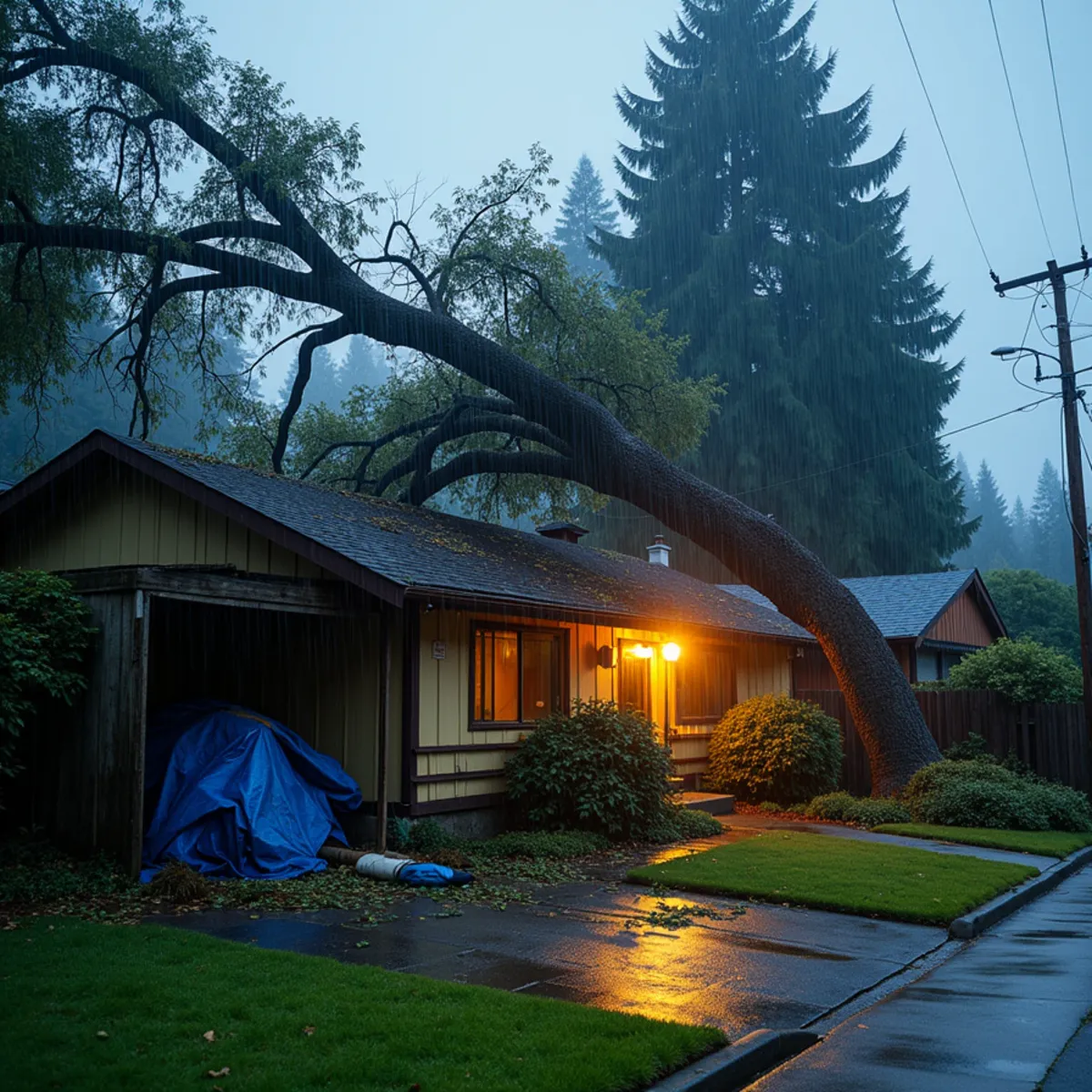
The call usually comes in before daylight. A south wind ran up the river overnight, the ground had been soaked for weeks, and the Douglas fir behind the garage is now lying across the roof. Nobody is hurt. The power is out. Rain is coming through the back bedroom ceiling, and nobody in the house knows what to do next.
What comes next is a sequence, and the order matters more than the speed. Nearly every expensive mistake we see after a storm — the denied claim, the ladder injury, the deposit handed to a truck that never came back — comes from someone doing reasonable things in the wrong order. Here is that order, from a crew that has stood in Kelso driveways at four in the morning.
Get Everyone Out From Under It First
A tree that has already fallen is not finished moving. It is held up by whatever limbs happened to catch, by a root plate that is torn but not fully out, and by roof framing carrying a load it was never designed for. Ceilings that looked fine at midnight are on the floor by morning.
- Move people and pets out of every room the tree touches or leans over, including the room directly below it upstairs.
- If a ceiling sags, if you hear cracking, or if a wall has moved, leave the house entirely and stand clear.
- Stay away from the upturned root ball. Those slabs can rotate back into the hole without warning.
- Do not pull, winch, or lever the tree off the structure. Moved wrong, it concentrates the weight in one spot.
Assume Anything Touching a Line Is Energized
This is the part where people get killed, and it is worth being blunt. A tree in contact with a conductor can energize the whole tree, the wet ground under it, a chain link fence forty feet away, or the gutter it rests on. A downed line does not spark or hum. It just lies there. Treat every line as live, including your own service drop.
If any part of the tree is on a line, or a line is down in the yard, that call goes to the utility — Cowlitz PUD or Clark Public Utilities, depending on which side of the county line you sit on. It does not go to a tree service. No reputable outfit here will touch an energized tree. Once the utility has made the area safe, a crew can take over.
The First 24 Hours, In Order
- Account for everyone. People first, then pets, then everything else.
- Look for power lines before anyone walks the yard. Stay back a full tree length.
- Call the utility for anything involving a line. Tell them a tree is on the conductor.
- Call 911 for injury, a gas smell, fire, or structural collapse. Otherwise keep that line free.
- From safe ground, photograph everything, from every direction, before a single cut is made.
- Call your insurance carrier and open a claim. Write down the claim number.
- Call a tree service for emergency make-safe work only: tree off the structure, access cleared, opening tarped.
- Kill power to the affected part of the house at the panel only if the panel is dry and safely reachable. Any doubt at all, wait.
- Keep every receipt — tarps, plywood, a motel room — in case your policy covers additional living expense.
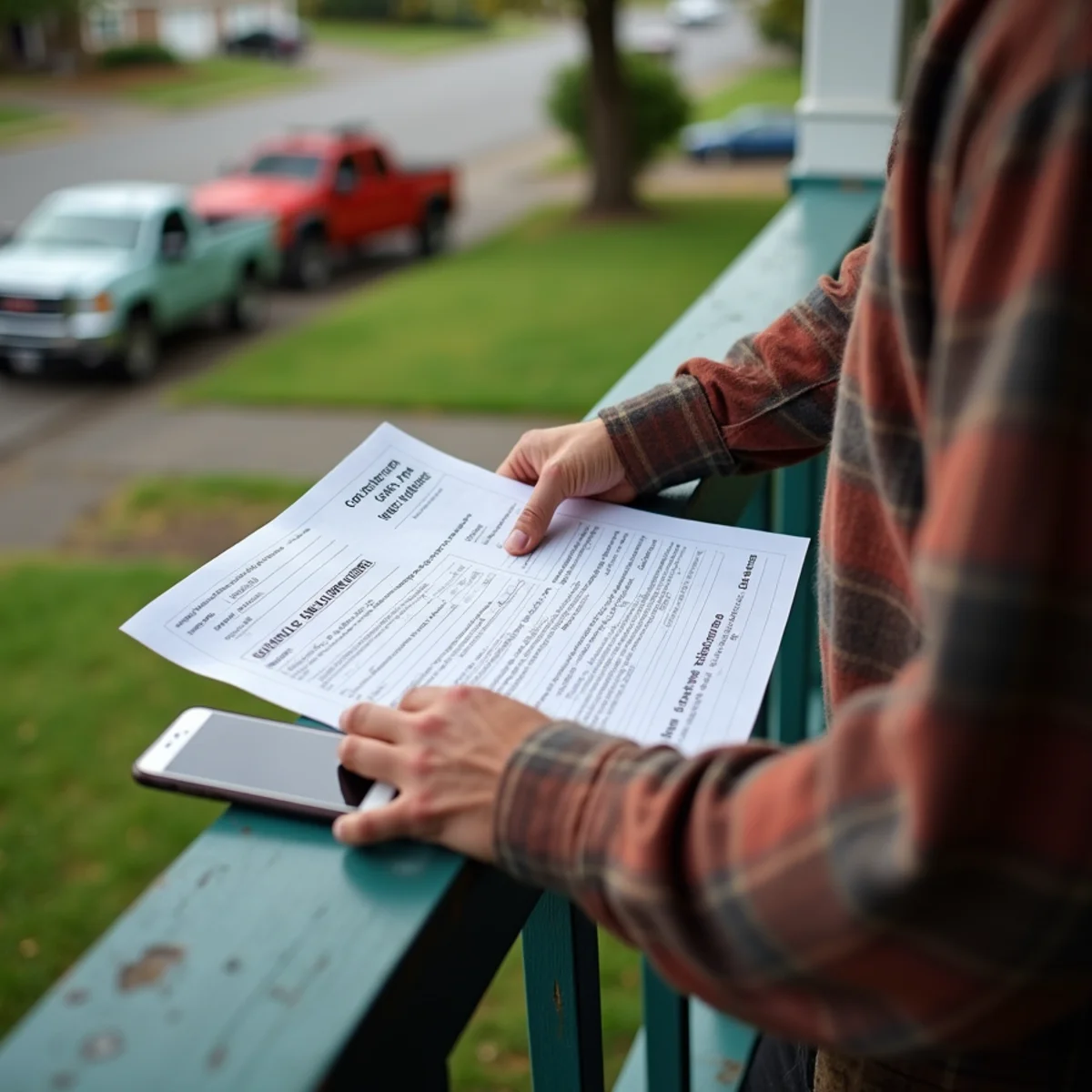
- Do not sign anything a stranger hands you in your driveway.
Photograph It Before Anyone Starts Cutting
Once a tree comes off a house, the evidence of how it failed is gone. The root plate gets hauled, the trunk becomes rounds, and the only record left is what you captured in the first hour. Adjusters work from photos, and the difference between a smooth claim and a slow one is usually how much you documented before the saws started.
Shoot wide, showing the whole tree and the whole house together so the scale is obvious. Then the impact point, the root plate, and any limbs still hanging. Then interior damage and wet insulation. Get the base of the tree, including decay at the root collar, since that often explains the failure. Careful storm damage insurance documentation is the cheapest work on a job like this.
Call Your Carrier, Then Ask for Emergency Mitigation Only
Homeowner policies generally separate two things: emergency mitigation, the work that stops further damage right now, and permanent repair, which happens later on a normal schedule. The first phase is getting the tree off the structure, clearing a safe path, and covering the opening before the next rain doubles the loss. That is what an emergency tree service for storm damage is for, and it is a different trade from the roofer who follows.
Ask your carrier three things while you have them: what your policy requires before mitigation work begins, what documentation they want, and what your deductible looks like on this claim. This is general information, not insurance advice — your own policy language, your insurer, and if it comes to it your attorney govern your situation.
The Trucks That Show Up Before You Call Anyone
After every real windstorm, crews with out-of-state plates work the damaged streets of Longview door to door. Some are legitimate. Many are not registered to work in Washington and carry no insurance that would cover dropping a limb through the roof next door. Washington maintains a public contractor lookup, and checking a company takes two minutes on a phone.
- Ask for the business name exactly as registered, then look it up yourself instead of trusting a card or a door magnet.
- Ask for proof of liability insurance and workers comp, and be suspicious of anyone irritated by the question.
- Be wary of a large cash deposit demanded on the spot, or a price that only holds "today."
- Get the scope in writing: what is cut, what is hauled, and what is not included.
Once the emergency is handled, there is a second conversation worth having before the next storm rather than after. The tree that fell is rarely the only one with a problem. If the neighbors just cleared a lot, or the same wet ground and south wind reach the rest of your firs, an honest hazard tree removal assessment sorts the risky trees from the fine ones.
The Short Version
Everyone out from under it. Assume every line is live and let the utility handle it. Stay off the roof. Photograph before you cut. Call your carrier. Get make-safe work done by someone you have actually checked out. The rest can wait until the sun is up. When you are ready for a crew, call Columbia Tree Professionals at (208) 635-2100 — on-site estimates are free, Ryan walks every one himself, and storm and hazard-tree emergencies are answered outside business hours.