Does Homeowners Insurance Cover Tree Removal in Washington?
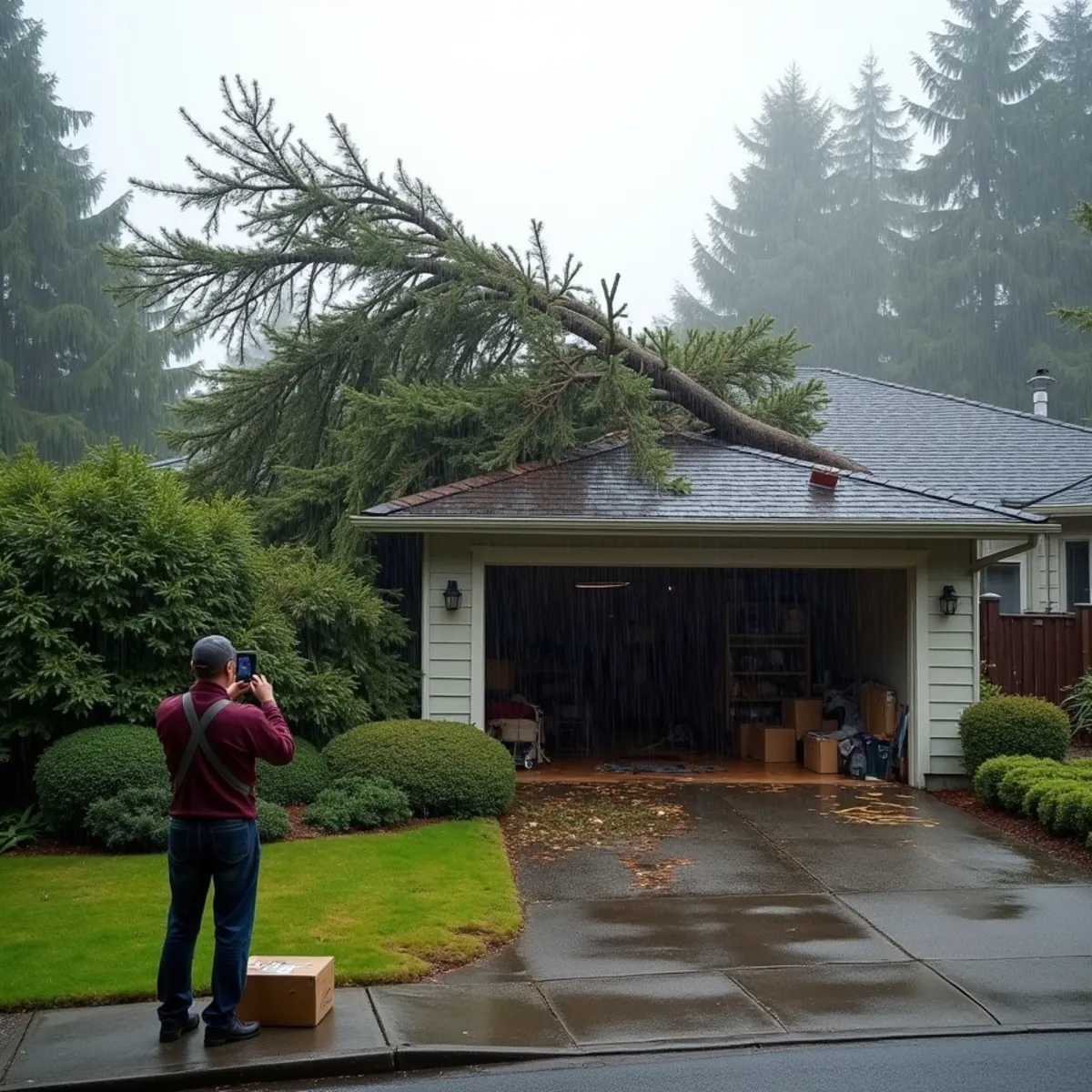
A February wind comes up the river overnight, and by morning a Douglas fir that stood sixty years at the back of a Kelso yard is lying across the fence with its top through a detached garage. The first call is to the insurance company. The second, usually within the hour, is to us — and the first question is always whether any of this is covered.
The answer depends almost entirely on where the tree landed, and that catches people off guard every winter. A policy does not think about a tree the way you do. You see an enormous mess and a bill you did not plan for. The policy sees one narrower question: was a covered structure damaged? Nearly everything follows from that.
Coverage Usually Follows the Structure, Not the Tree
Before going further: this is general information about how homeowners policies commonly work, not advice about yours. Policies differ by carrier, form and endorsement, and your own policy language, your adjuster and — if it gets that far — your attorney govern your situation. Read your declarations page and ask your agent direct questions.
With that said, the pattern across standard forms is consistent. If a tree damages something the policy covers, that damage is generally a covered loss, and getting the tree off the structure is generally part of the same claim. The tree was never the insured item. The building was.
- The dwelling — roof, siding, gutters, windows, framing.
- Detached structures — garage, shop, barn, greenhouse, well house.
- Fences and decks, often under the detached-structure limit rather than the dwelling limit.
- Personal property crushed underneath: patio furniture, tools in a shed, a boat under a carport.
- A vehicle — but usually under your auto comprehensive coverage, not the homeowners policy.
That last one surprises people. A fir through a truck windshield and the same fir through the garage roof behind it are two claims, two carriers, two deductibles.
The Tree That Falls in the Open Yard
Here is where the disappointment lands. A healthy tree that blows over and hits nothing but grass is typically not covered at all. No damaged structure, no claim, and the removal comes out of your pocket. It feels wrong — same wind, same tree — but the policy insures buildings and belongings, not landscaping.
Many policies do include a modest allowance for trees and shrubs damaged by a short list of named perils, along the lines of fire, lightning, explosion, theft and vandalism. Wind is frequently not on that list, which is unhelpful in a region where wind is the main thing putting trees on the ground. Some forms also address a downed tree blocking a driveway or a ramp used by a resident with a disability. Ask your adjuster about both.
Debris Removal Comes With Its Own Ceiling
Even on a clearly covered claim, the money available to haul the tree away is often capped separately from the money to repair the roof. Debris removal commonly sits under its own sublimit, written as a dollar cap per tree or per occurrence. That figure tends to be modest next to what it costs to rig a large conifer off a house in pieces, which is where homeowners get surprised.
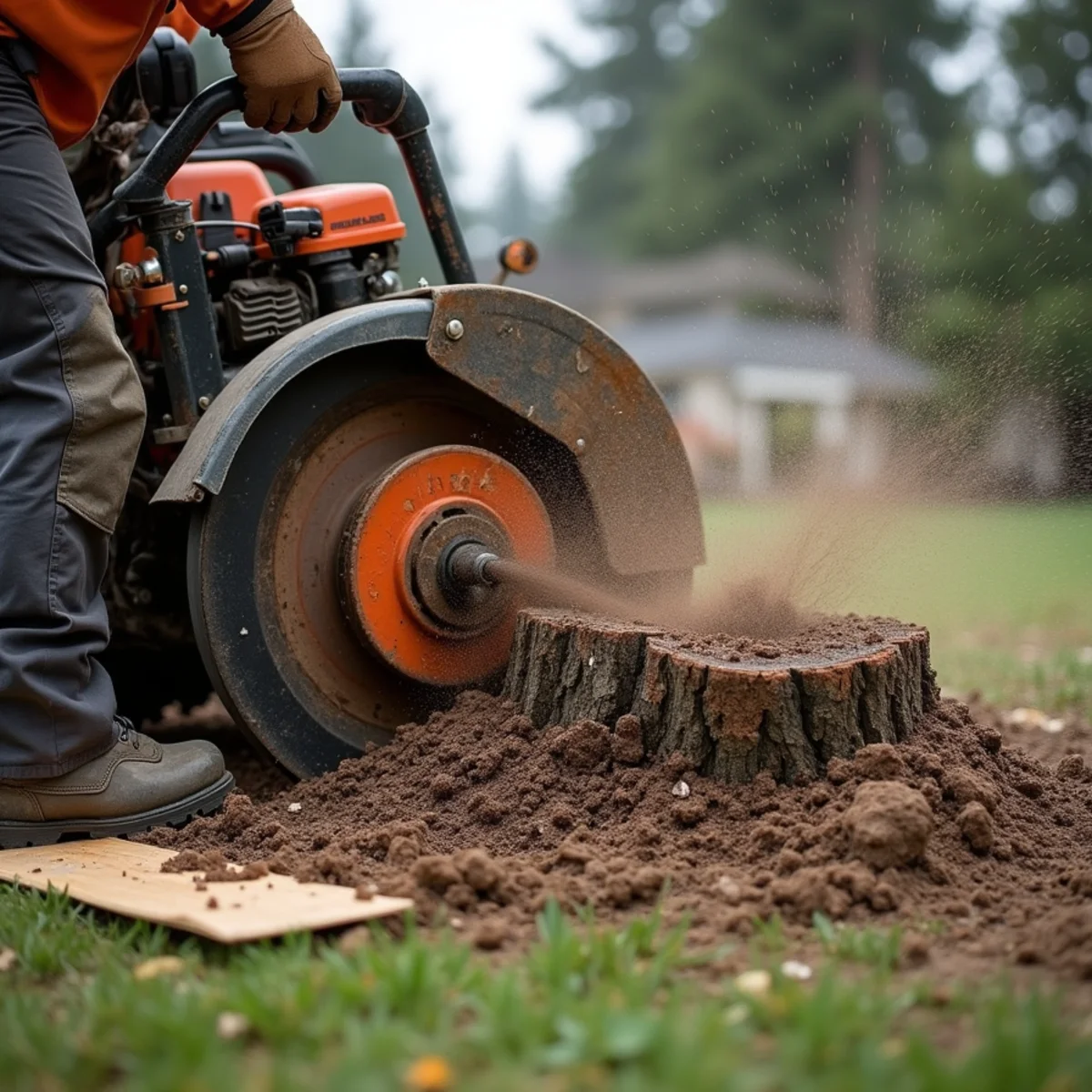
So the written scope matters more than the total. When we quote a storm job we break it apart — cutting the tree free of the structure, rigging the sections down, hauling debris, grinding the stump — so an adjuster can see which piece falls under which limit instead of staring at a lump sum. That itemization is most of what our storm damage insurance documentation work produces.
Do the Deductible Math Before You File
A mid-sized removal off a shed or a fence can land close enough to a deductible that filing accomplishes little beyond putting a claim on your record. Some policies carry a flat dollar deductible; others apply a percentage of the dwelling value to wind losses specifically, which makes the wind deductible considerably larger than the one you remember.
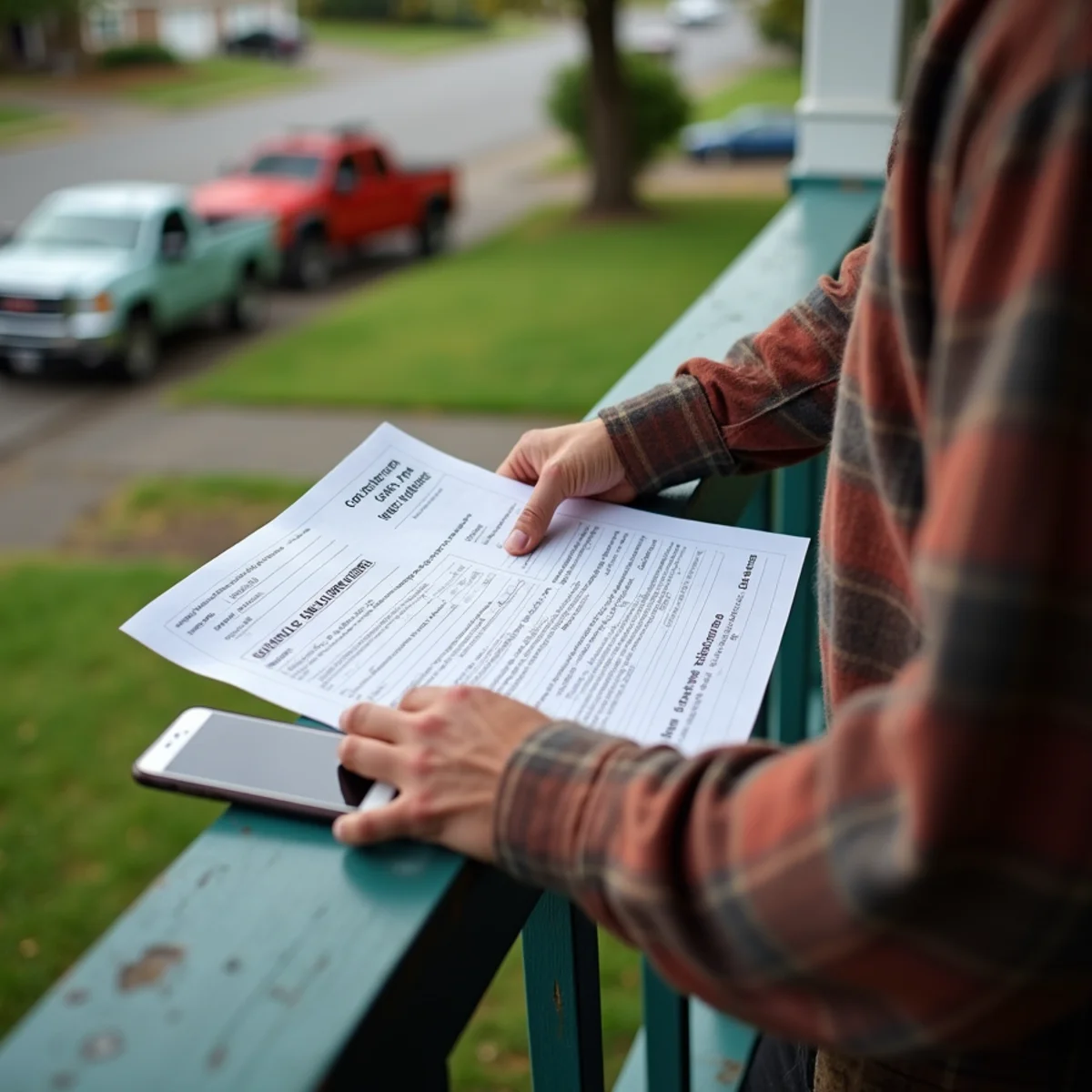
- Get a written scope covering removal, structure repair, debris hauling and stump work.
- Read your declarations page for the deductible, and check whether wind carries a separate one.
- Find the debris removal sublimit and whether it sits inside the dwelling limit or on top of it.
- Subtract. If what is recoverable is thin, ask your agent what filing does to your renewal first.
A Sound Tree and a Known Hazard Are Different Conversations
Everything above assumes the tree was sound and the wind was the cause. A tree that was visibly dead, hollow at the base, or leaning hard over a neighbor’s roof raises different questions. The general liability principle is that an owner who knew, or reasonably should have known, a tree was hazardous can carry responsibility for what it damages next door.
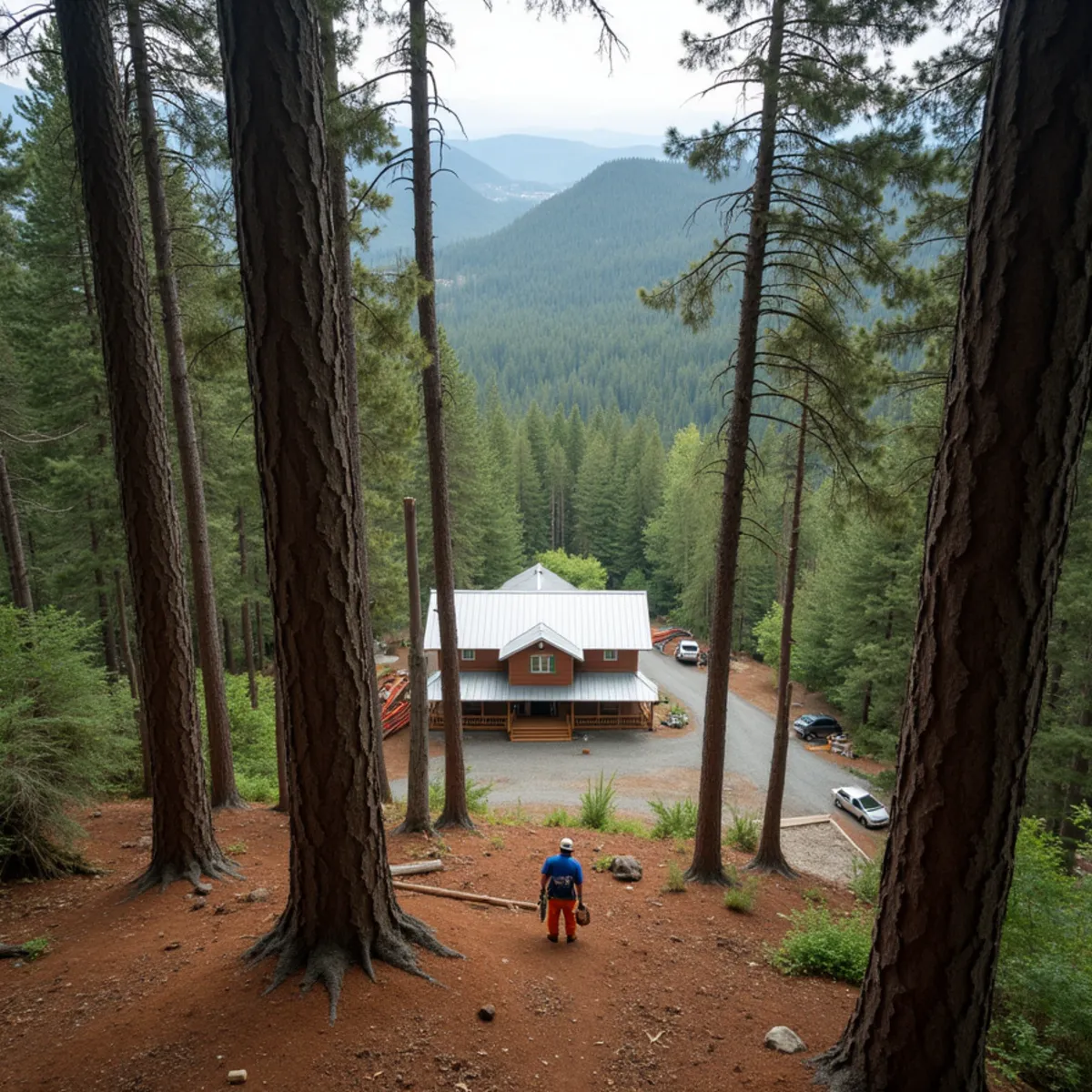
The practical takeaway is unglamorous: if a neighbor or an arborist has told you a tree is failing, a written record of what you did about it is worth having. We put assessments in writing for that reason, and a good share of the hazard tree removal work we do on fence lines around Battle Ground starts with someone deciding not to gamble on another winter.
Document Everything Before Anyone Starts Cutting
Once the tree is in pieces, the evidence of how it failed is gone. Adjusters work from photographs, and the ones taken before cleanup carry the most weight.
- Wide shots from several angles: the tree, the structure it hit, the ground it came out of.
- The failure point itself — root plate, split union, broken stem. That is what tells the story of cause.
- Close-ups of every contact point with the building, inside and out, including water stains.
- Anything damaged underneath, photographed where it lies before it gets moved.
- Receipts for tarps, plywood or a motel night — mitigation costs are often reimbursable.
- The written scope from your tree company, dated, before work begins.
When a tree is on a roofline and more wind is in the forecast, the sequence is stabilize first, document as we go, then invoice in a form the adjuster can use. That is the rhythm of an emergency storm damage response call in February, and it beats cutting first and reconstructing the paperwork later.
The Short Version
If the tree hit a covered structure, the claim is usually live, though debris removal may be capped well below the real cost. If it fell in the open and hurt nothing, the removal is probably yours to pay for. Either way, photograph it before it moves and get the scope in writing. If a tree came down in Cowlitz or Clark County, we will come look, tell you plainly what the removal involves, and leave paperwork you can hand to your adjuster. The on-site estimate is free — call Columbia Tree Professionals at (208) 635-2100.