
Cowlitz County · Clark County
Wildfire Defensible Space & Fuel Reduction in Washington
Thinning, limbing and dead-wood removal that gives fire somewhere to stop before it reaches your roofline.
- Free On-Site Estimates
- Licensed & Insured
- 34 Google reviews
In October of 2022 the smoke column off Nakia Creek was visible from most of east Clark County, and a fair number of people in Amboy, Yacolt and Chelatchie spent a couple of evenings with the truck loaded and the horses in the trailer. Fire on this side of the Cascades in the middle of a wet-country autumn was not what anyone had planned around. That is largely why it stuck.
The calls sound different now. A homeowner up the Coweeman wants to know how far back to cut. Somebody above Silver Lake has forty-year-old firs standing so tight you cannot walk between them. A family that just closed on acreage off the Cougar–Yale corridor wants the place to still look like woods when we leave, not like a fire lane. All of that is workable. It is mostly a question of what comes out, and in what order.
Defensible Space Zones, and Why the First One Is Only Five Feet
Defensible space is measured outward from the walls of the structure, not inward from the property line, and the order you work in matters more than the total acreage you touch. Most homes burn from embers, not from a wall of flame arriving through the trees. Embers land in the leaf litter against the foundation, in the roof valley, in the bark mulch under the deck. That is where the money is best spent first.
- Zone 0 — the first five feet out from the siding. Nothing here should catch an ember and hold a flame. Gravel instead of bark mulch, no juniper or arborvitae against the wall, no firewood under the eaves, no limbs over the roof.
- Zone 1 — five to thirty feet. Irrigated lawn and green plantings are fine. Conifers get limbed up, dead material comes out of the crowns, and canopies get separated so fire cannot walk tree to tree across the yard.
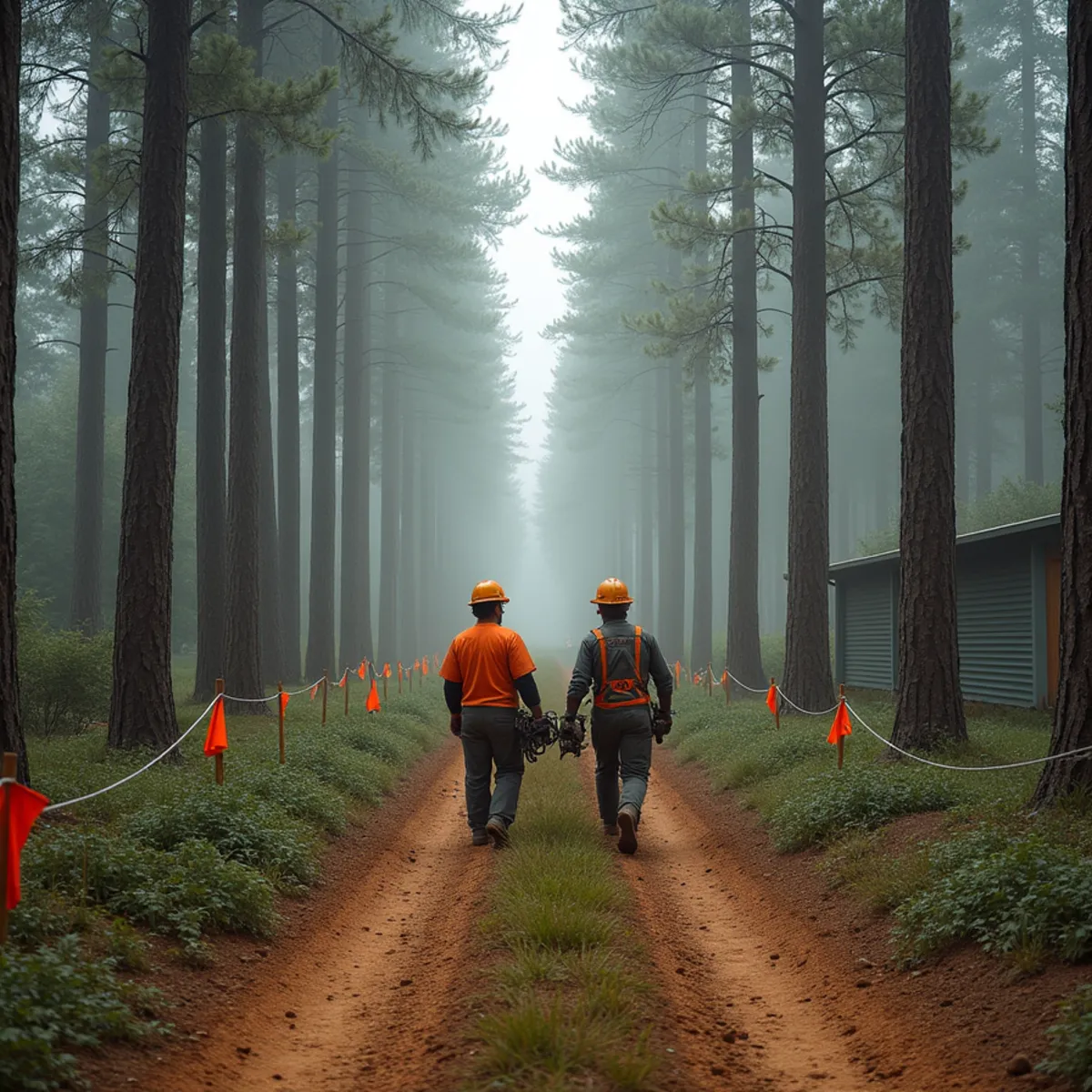
- Zone 2 — thirty to a hundred feet, farther on the downhill side. This is thinning, not clearing. The goal is fewer stems and broken-up fuel continuity, not a parking lot with a house in the middle.
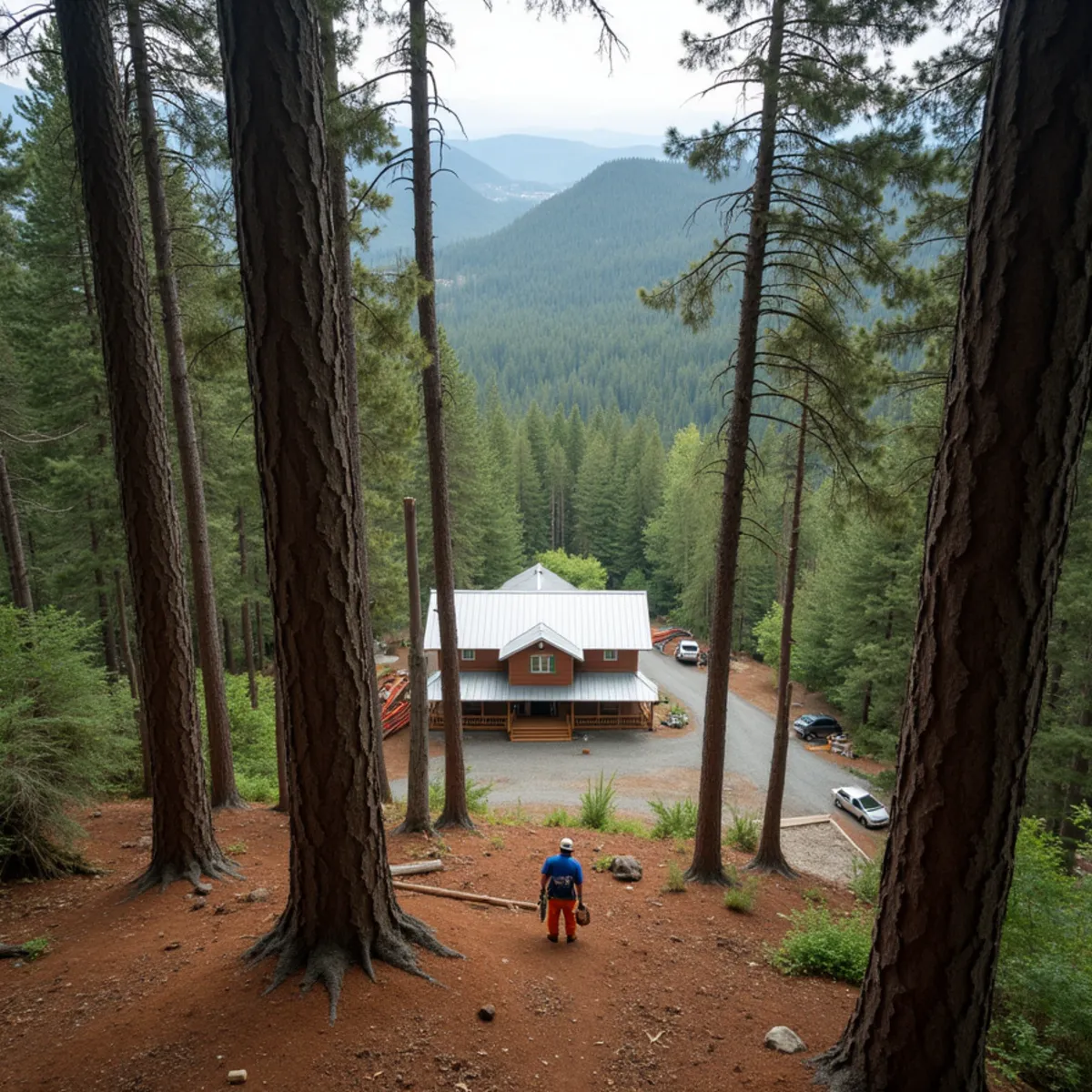
Slope changes every number above. Fire runs uphill far faster than it moves across the flat, so a house sitting above a draw needs Zone 2 pushed well down the hill while the uphill side stays tighter. On steeper ground east of Amboy and up the Coweeman we routinely extend the downslope work past the standard hundred feet. On a bench lot near Battle Ground we often recommend less than the books say.
Ladder Fuels Are What Puts Fire in the Crowns
A surface fire moving through duff and grass is a manageable event. A crown fire is not. What connects the two is ladder fuel — the unbroken vertical column of burnable material that lets flame climb into the canopy. In our woods that means vine maple and hazel thickets under a fir stand, a skirt of dead lower limbs still attached to the trunks, and suppressed hemlock that will never make a timber tree but carries fire beautifully.
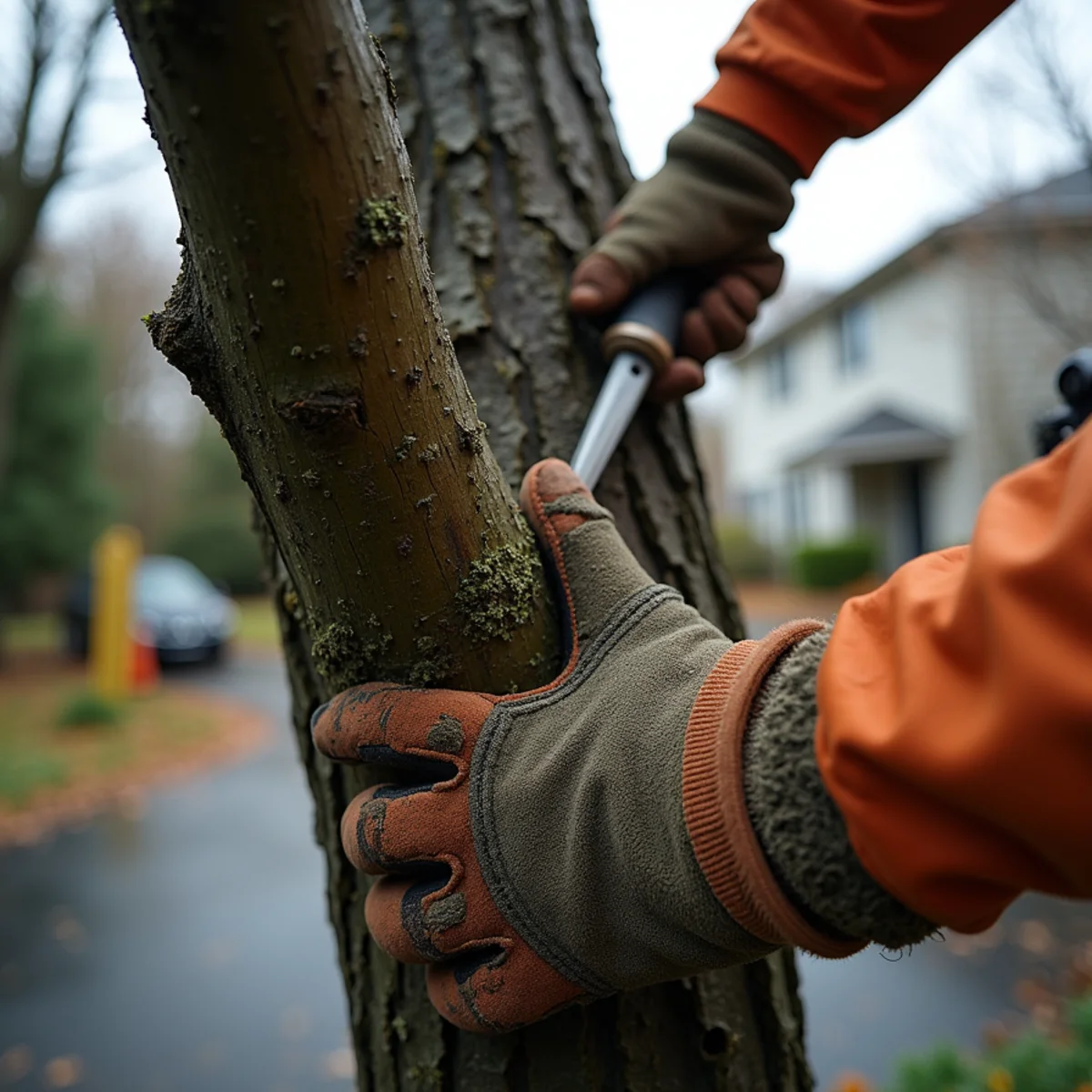
The fix is limbing up and spacing out. On mature conifers we generally take the lowest live limbs off to somewhere between six and ten feet, and we do not strip more than about a third of a tree’s live crown in a single season — a limbed-out flagpole is a stressed tree, and stressed trees invite the beetles. On smaller stems the rule flips: never limb higher than roughly a third of the tree’s total height, so a fifteen-foot fir stops at five feet and no more.
- Dead lower limbs, still attached and cured dry, on every conifer inside the working zones.
- Understory brush growing directly under a canopy — vine maple, hazel, Scotch broom, and blackberry that has climbed into the lower branches.
- Suppressed stems that will never reach the canopy and are already dying from the bottom up.
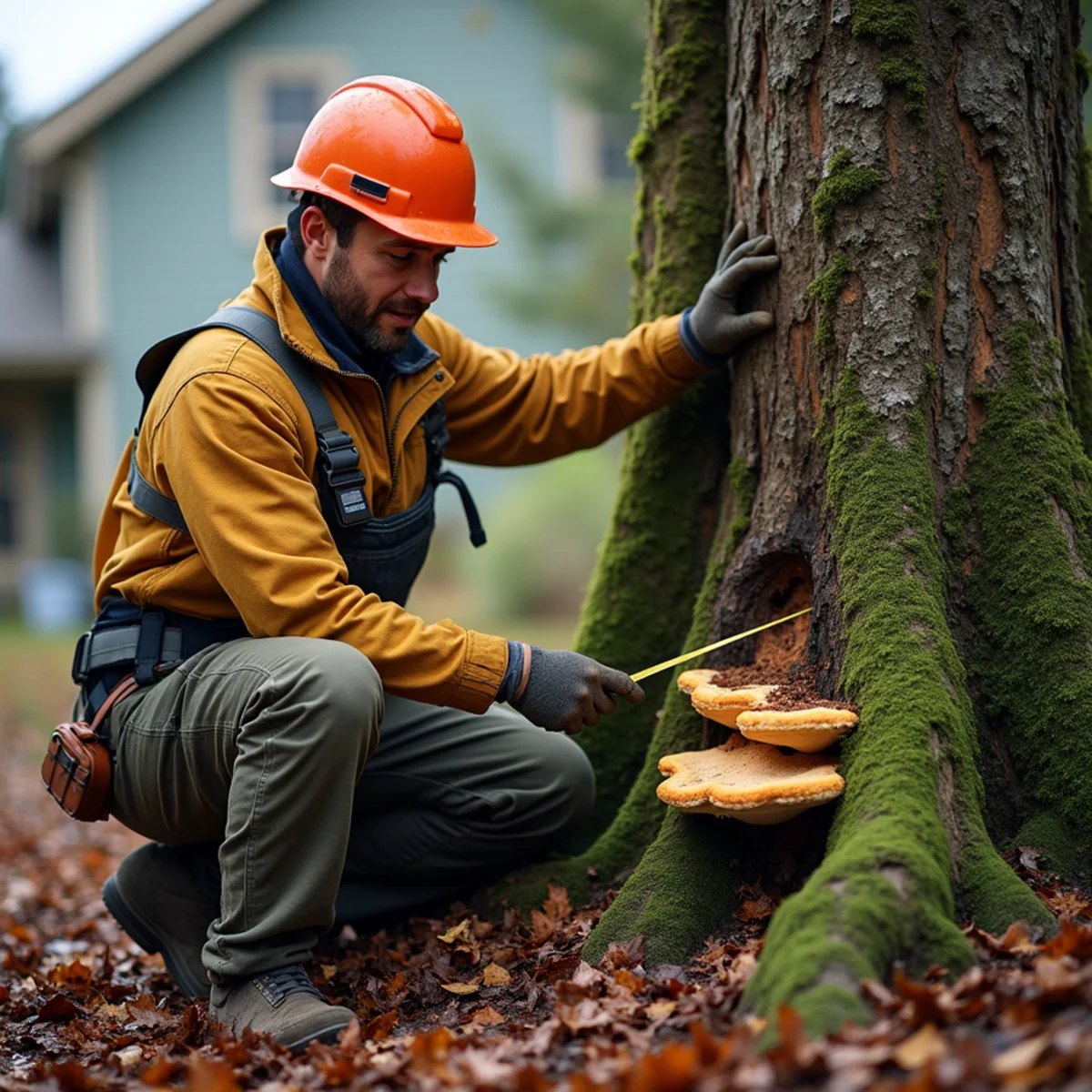
- Standing dead trees within striking distance of the house, shop, driveway or power drop.
- Needle and leaf litter out of gutters, roof valleys and deck framing, where embers most often find a home.
Thinning a Doghair Stand Without Turning It Into a Field
A lot of the acreage out here came back all at once after a harvest, and what grew is what foresters call doghair — hundreds of small-diameter stems to the acre, same age, all competing, most destined to die standing. That stand is a wildfire problem and a windthrow problem in the same breath. It is also the work people are most nervous about, because thinning looks drastic on day one.
Crown spacing in Zone 2 targets roughly ten feet between the edges of neighboring canopies on level ground, wider as the slope steepens. Getting there means choosing crop trees — the healthiest, best-formed stems with the deepest live crowns — and removing what crowds them. Two years on, the trees left standing have put on more diameter than a decade of crowding would have given them, and the property reads as managed woods. We mark before we cut, and we walk those marks with you.
Slash, Chips and What Actually Leaves the Property
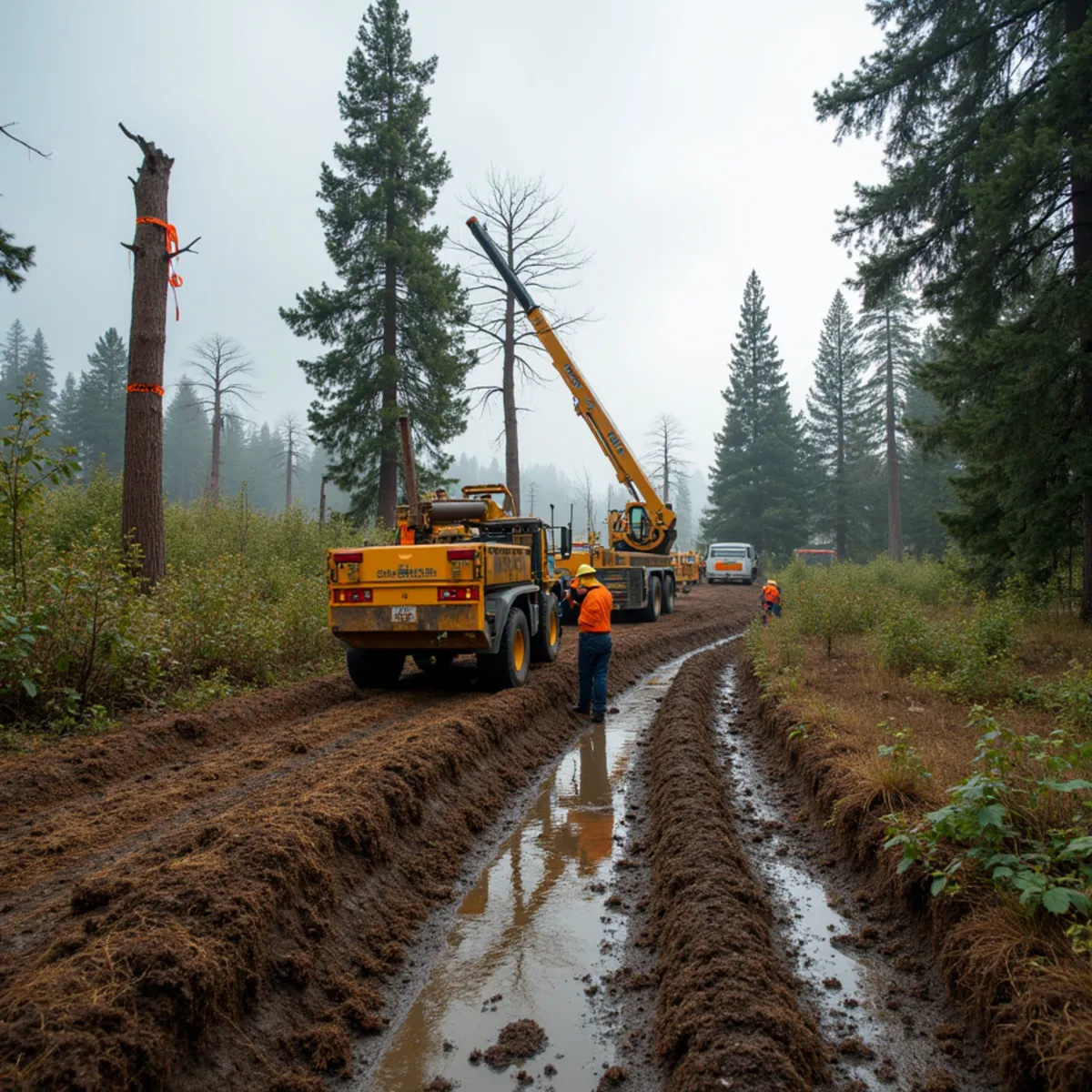
Fuel reduction produces fuel. That is the part nobody warns you about. A day of limbing and thinning throws off a startling volume of green slash, and a pile abandoned in the woods through one dry summer is worse than what you removed. We chip on site wherever the equipment can reach. Chips get spread thin and kept well back from the structure, or hauled off entirely. Larger wood is bucked to firewood length and stacked where you want it — which, for a fire plan, means away from the house rather than against it.
Yacolt Burn Country and the Rest of Our Ground
We work the rural edges of both counties: Yacolt, Amboy, Chelatchie, Battle Ground, La Center and Ridgefield on the Clark side, and Toutle, Silver Lake, Castle Rock, Kalama and the upper Coweeman on the Cowlitz side. Old Yacolt Burn ground has a character of its own — a century of regrowth, much of it even-aged, on terrain where access is the first question we ask. Ryan walks every one of these estimates himself, because you cannot write a thinning prescription off a satellite photo.
Firewise work is not a one-day purchase either. Brush returns and needles fall, and a Zone 1 that was clean in May carries litter again by September. Most people settle into a rhythm: the heavy thinning once, then a lighter pass every few years. And we will say it plainly if the highest-value hour on your property is spent cleaning gutters rather than running a saw.
Signs You Need Wildfire Defensible Space & Fuel Reduction
How a Wildfire Defensible Space & Fuel Reduction Job Runs, Start to Finish
A walk of the whole property, free
Zones drawn on your actual ground
A written scope, prioritized
Marking, and a walk-through before cutting
Limbing, thinning and dead-wood removal
Chipping, cleanup and the write-up
What Drives the Price of Wildfire Defensible Space & Fuel Reduction
Wildfire Defensible Space & Fuel Reduction on Real Jobs
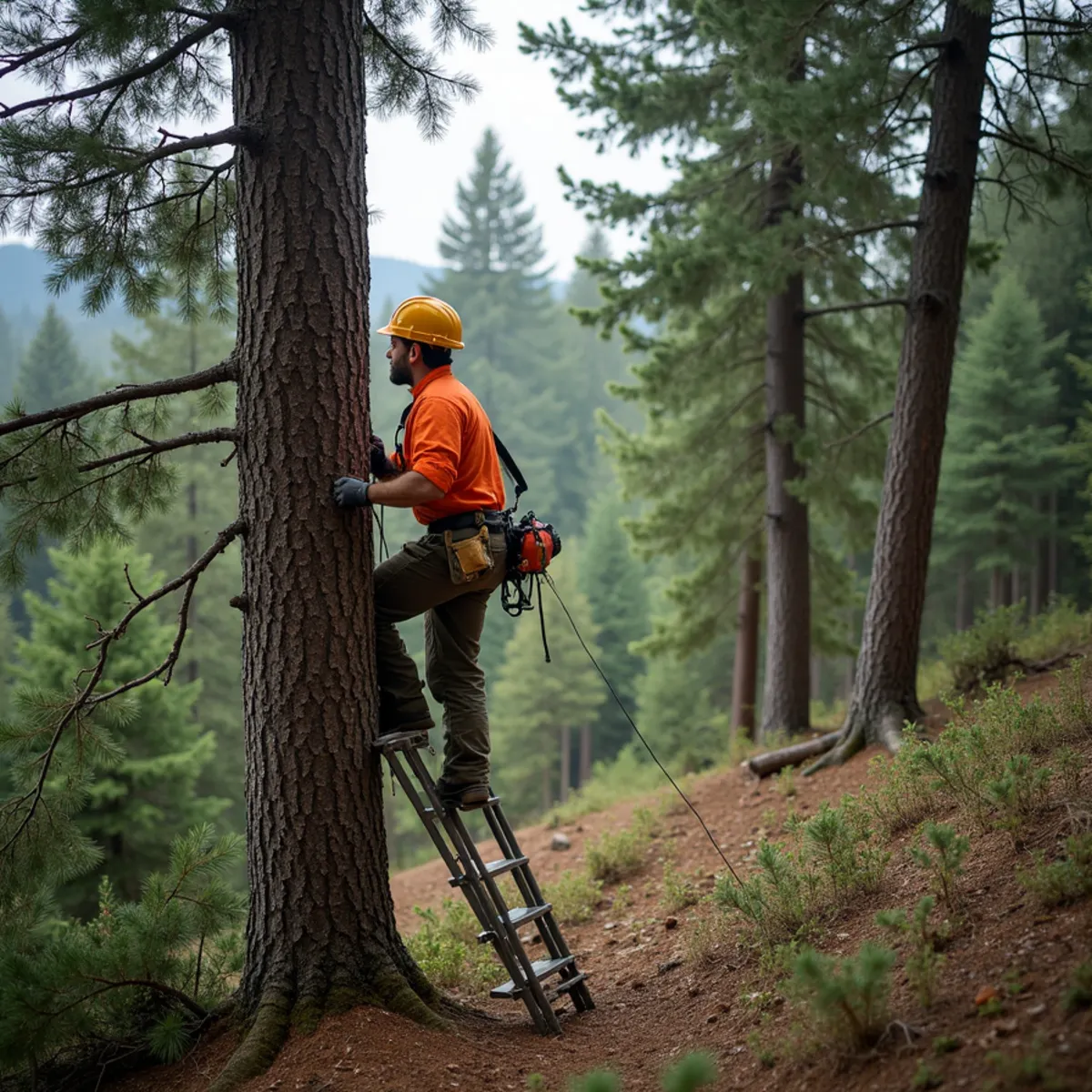
Break the ladder from ground fuel to crown. 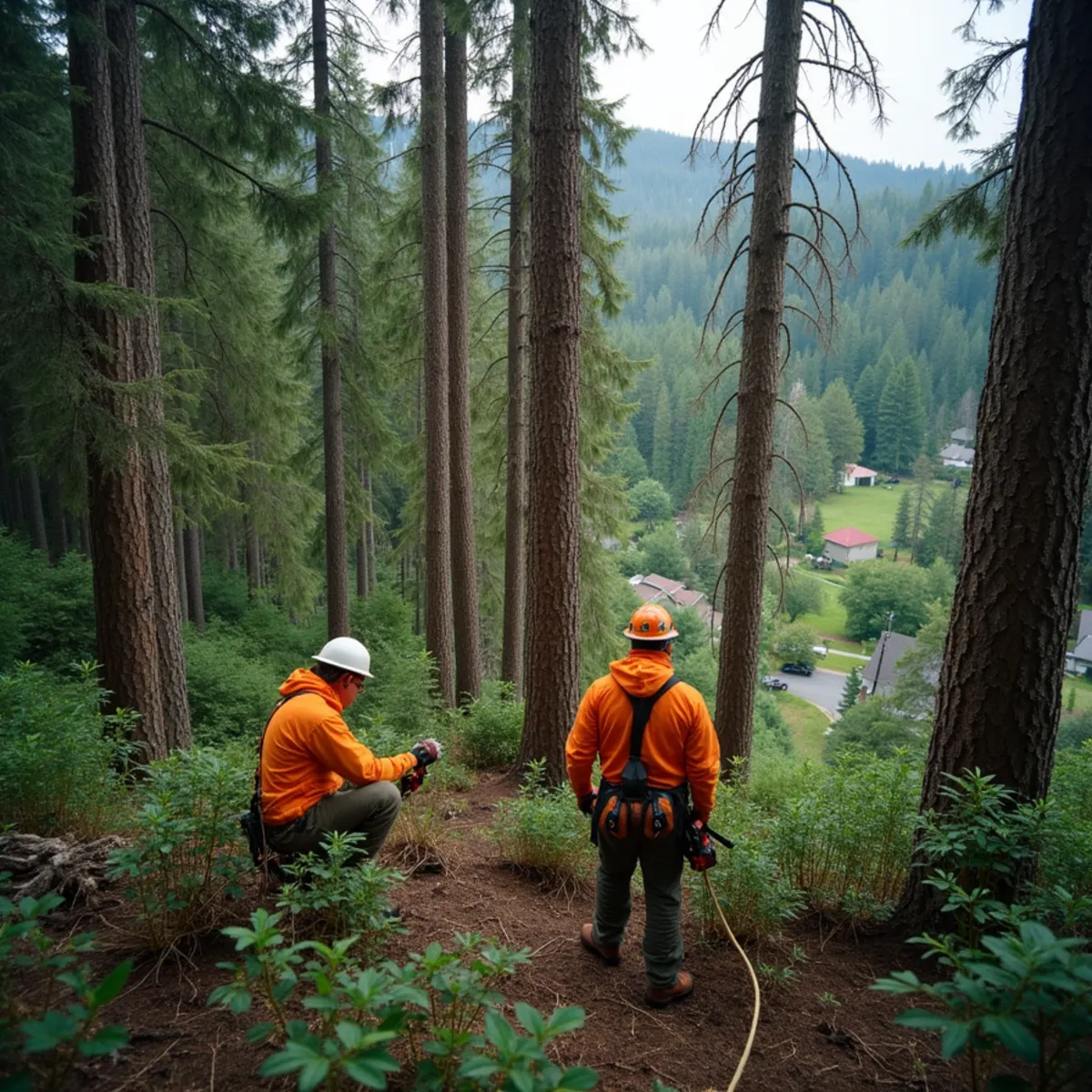
Doghair thickets uphill of a house are the worst case. 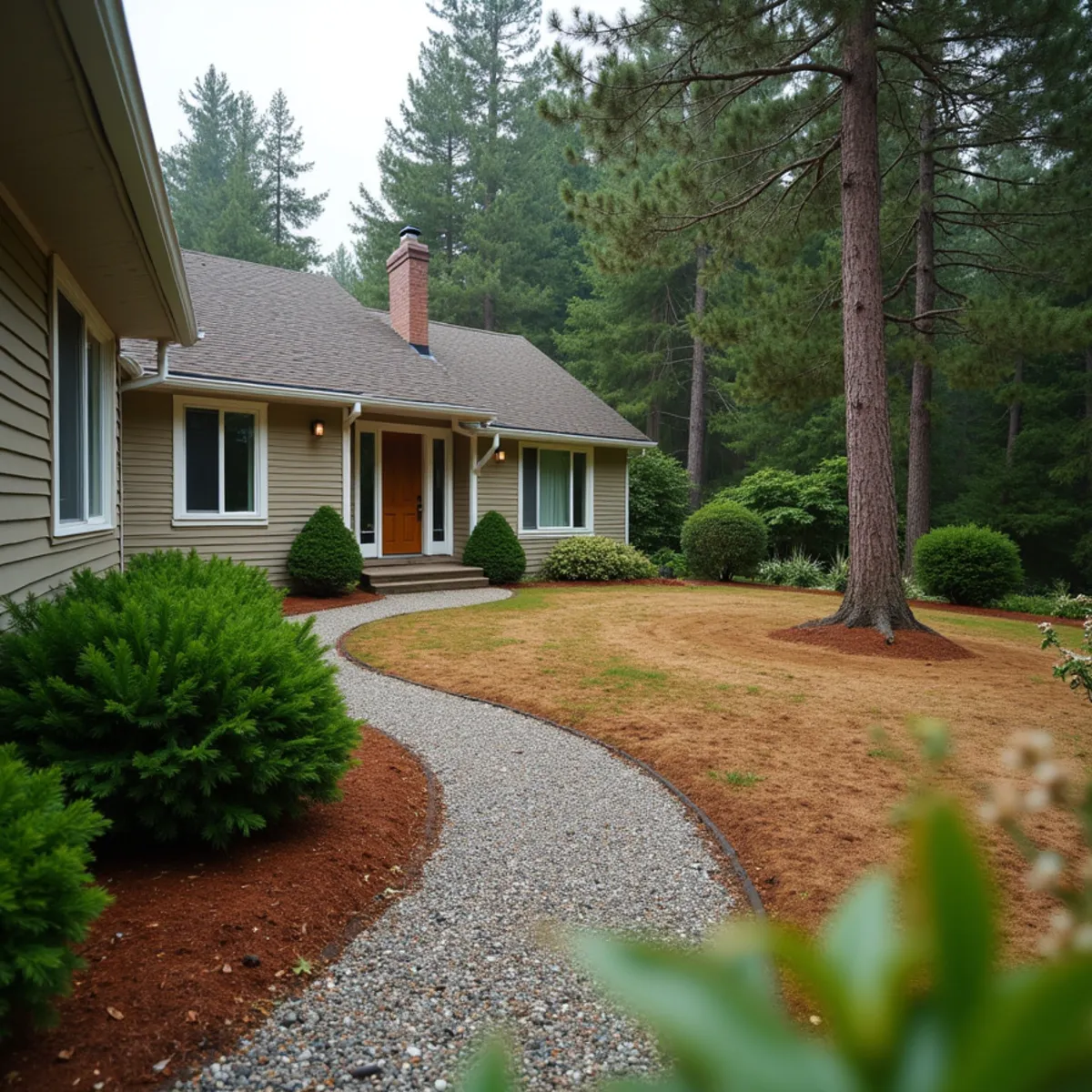
Zone by zone, closest to the house first.
Get a written price for your wildfire defensible space & fuel reduction job.
Wildfire Defensible Space & Fuel Reduction Questions, Answered
Often Booked Together
Related Tree Services
Worth Reading First
Before You Book This Work
Free On-Site Estimates
Need wildfire defensible space & fuel reduction? Let’s take a look.
Ryan Norris walks every estimate himself. Free, on-site, and you’ll get a straight answer about whether the work is necessary at all.
- 34 Google reviews
- Licensed & Insured
- Free On-Site Estimates
- Based in Kelso, WA