Tree Removal Permit Rules in Longview, WA and Cowlitz County
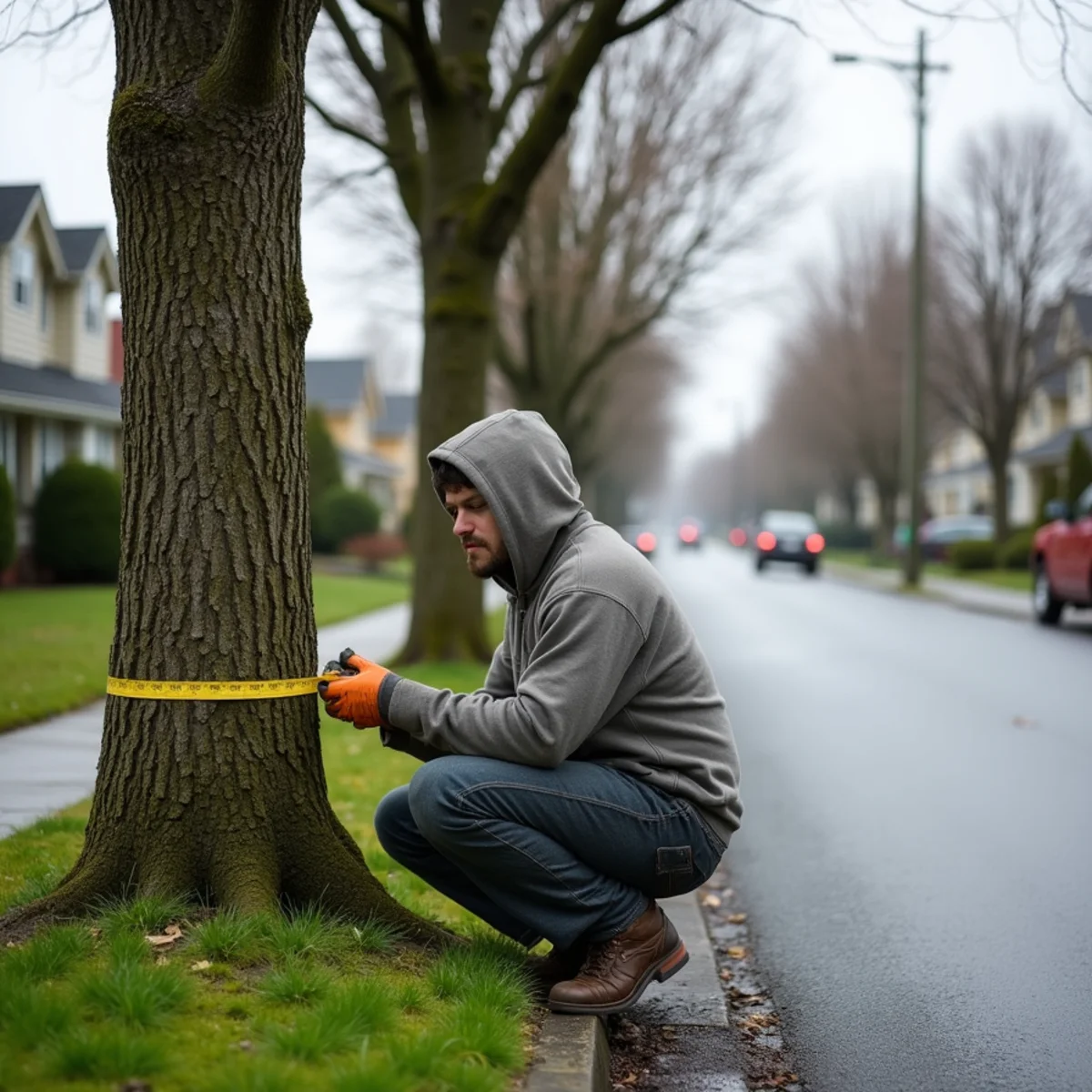
The call usually arrives in the same shape. Someone in Longview has a bigleaf maple leaning over the garage, a crew mentioned a permit, and now they are worried. Most of the time, on a private lot in this county, that tree is theirs to remove and nobody has to sign off on it.
That is the reassuring half of the answer, and it holds across most of Cowlitz County. The other half is the exceptions, and they are geographic. The tree in the strip between your sidewalk and the curb is not the same tree as the one in your back corner. A cottonwood on the bank of the Coweeman is not the same as a fir in a subdivision. Figuring out which one you have is most of the work.
The Default in Cowlitz County: Your Yard, Your Call
Washington has no statewide permit for cutting a tree in your own residential yard. Regulation happens locally, and the county rules that touch tree cutting aim at commercial forestry, land conversion and environmentally sensitive ground, not at the alder crowding your drain field. If the tree stands on your parcel, away from water, away from a steep slope, and outside the public right-of-way, you are generally free to take it down — a healthy tree you simply want gone, or a defect-riddled one bound for a hazard tree removal crew.
Both cities care far more about public trees and development sites than about a fir in your backyard. Still, generally free is not always free. The categories below are where homeowners get caught.
Street Trees and the Long-Bell Grid
Longview is unusual, and the reason is history. The town was laid out as a planned company city, and its street trees were planted on purpose as part of that design — a deliberate grid that has aged into large, structurally complicated trees. They sit in the public right-of-way, not on your lot, even though you mow around them and rake their leaves each October.
The right-of-way usually extends a few feet past the sidewalk toward the house, so a tree you have always thought of as yours may legally belong to the city. Removing, topping or heavily pruning a street tree in Longview is a city decision, and the same principle applies on Kelso streets. The practical test: if it stands in the planting strip, or lines up with the trees in front of your neighbors, assume it is a street tree until the city says otherwise.
- Trees in the planting strip between sidewalk and curb — almost always public, no matter who has been watering them.
- Trees in a median, traffic circle or boulevard island — public, and often original plantings.
- Trees in Lake Sacajawea Park and other city parks — city-managed, never a homeowner call.
- Trees on an alley or utility easement along a back lot line — your ground, but somebody else holds rights in it.
Water, Slopes and Critical Areas
The second real exception is environmental. Cowlitz County and its cities administer critical areas rules covering wetlands, unstable slopes, streams and habitat, plus shoreline regulations along the larger waterways. The Cowlitz and the Coweeman run through developed neighborhoods here, and lots backing onto them can sit inside a shoreline jurisdiction the owner never knew existed.
If your property touches or sits near a river, creek, wetland, pond, or a slope steep enough to worry a surveyor, treat vegetation removal as regulated until proven otherwise. Hillside lots above Kelso surprise people most, because the hazard mapping does not care that the tree stands in a mowed lawn. Buffer widths, exemptions for dangerous trees and replanting conditions vary by parcel, so verify with the city or county for your address before a saw comes out.
Subdivision Rules Are Not City Rules
Plenty of removals that are perfectly legal under city code still violate something. Newer subdivisions carry covenants governing landscaping, and some plats were approved with tree retention conditions — a required screen along a property line, specific trees on an approved site plan, or an open-space tract held in common. None of that appears in the municipal code; it lives in the recorded plat and your HOA documents, so read them first. This is general information rather than legal advice, and your own governing documents, insurer or attorney control your situation.
When Clearing Acreage Becomes a Forest Practices Question
The rules change again once you move from a yard tree to a stand of trees. Washington regulates commercial timber harvest and land conversion through the Department of Natural Resources, and clearing merchantable timber at scale — particularly to convert forested ground to another use — can trigger a Forest Practices Application rather than any local permit. County land use review often follows.
Do not guess at where that line falls. If you own rural acreage and you are thinking about opening up pasture, pouring a shop pad, or clearing a homesite, ask DNR and the county before the first tree drops. A driveway line or a fence row is usually routine lot clearing and brush removal, but the difference between that and a regulated harvest is worth confirming in advance, not in a violation letter.
How to Sort It Out in an Afternoon
- Pull your parcel number from the county assessor property search.
- Find the tree on the parcel map and note its distance from the sidewalk, from any water, and from the property line.
- Call the planning counter for the jurisdiction you are in — Longview, Kelso, or the county if you are unincorporated.
- Ask about your specific tree, and whether the parcel carries a shoreline, critical area or geologic hazard designation.
- Check the recorded plat and any CC&Rs, then write down the answer, the date and who gave it.
We run through most of that on estimates anyway. Ryan walks the property, tells you where the tree actually sits relative to the right-of-way and any mapped overlay, and where paperwork genuinely applies we handle the tree removal permit assistance side instead of leaving you to work out which counter to call.
The Short Version
In most of Cowlitz County, the tree in your yard is your decision. The exceptions are narrow and all about location: street trees on the planted Longview grid and Kelso streets, park trees, ground near the Cowlitz and the Coweeman, mapped critical areas and steep slopes, recorded subdivision conditions, and acreage-scale clearing that crosses into forest practices.
If you want a straight read on your tree and on what, if anything, applies to it, we will come look. Estimates are free and on site, we are licensed and insured, and storm and hazard-tree emergencies are answered outside business hours. Call Columbia Tree Professionals at (208) 635-2100 and we will walk the property with you.